Filter posts by category

sheet metal fabrication

aluminum alloy cnc rapid prototype

Outdoor Prototype Sheet Metal Fabrication: Material Selection Guide

In the development of outdoor products, prototype sheet metal fabrication represents a critical phase for validating designs and predicting mass production feasibility. Unlike controlled indoor environments, outdoor sheet metal fabrication prototypes must function as comprehensive “system test platforms”. Their purpose is to pre-emptively expose potential failure risks throughout the product lifecycle before commencing large-scale production. Consequently, the selection of prototype sheet metal fabrication materials extends far beyond mere compliance with drawing specifications. It constitutes a core strategic decision directly determining the efficacy of prototype testing, the control of development costs, and the smoothness of transition to stable mass production. From a professional prototype sheet metal fabrication perspective, the core logic in selecting outdoor prototype materials lies in systematically balancing functionality, environmental exposure, and manufacturing processes. This necessitates moving beyond the pursuit of single high-performance materials to establish a three-dimensional decision-making framework encompassing key performance indicators, specific environmental exposure scenarios, and manufacturability. Our objective is to identify and resolve potential future […]

Outdoor Prototype Sheet Metal Fabrication: Material Selection Guide Read More »

precision custom metal enclosure projects

Custom Sheet Metal Enclosure Fabrication for Industrial Automation

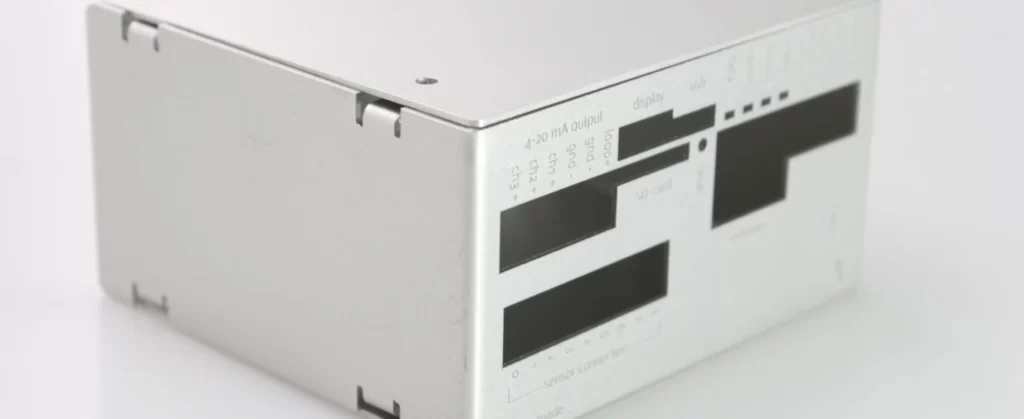
In the realm of industrial automation, enclosures are no longer mere protective covers but serve as critical system platforms housing precision control systems and ensuring long-term stable operation of equipment. Modern production lines impose multidimensional demands on sheet metal fabrication enclosures: they must withstand continuous vibration and impact, provide reliable IP protection and EMC shielding, and effectively manage thermal challenges arising from high power density. The core value of a successful sheet metal enclosure fabrication solution lies in delivering systematic responses to these complex operating conditions, rather than merely providing dimensionally accurate enclosures. This demands that sheet metal enclosure fabrication manufacturers treat the enclosure as an integrated engineering component from the project’s inception. Through a scientific sheet metal enclosure fabrication process, every step—from design simulation to welding and assembly—must precisely anchor to final performance metrics: structural integrity, environmental resilience, and maintainability throughout the entire lifecycle. This establishes a robust physical foundation for the reliable operation of automated equipment. This article

Custom Sheet Metal Enclosure Fabrication for Industrial Automation Read More »

sheet metal fabrication services

Custom Sheet Metal Fabrication: 5052-H32 vs. 6061-T6

Aluminum has become the material of choice for Custom Sheet Metal Fabrication in aerospace, automotive manufacturing, electronic equipment, medical devices, and other fields by virtue of its lightweight and easy-to-process characteristics. Among them, 5052-H32 and 6061-T6 are the two most widely used aluminum materials, but there are big differences in their compositions and properties, which present different advantages and limitations in the actual fabricated sheet metal. The choice of aluminum material has a direct impact on the quality, cost and service life of the product, so it is important to choose the right aluminum alloy. The following article will outline the key differences between 6061 and 5052 and analyze their common challenges and solutions in Custom Sheet Metal Fabrication. 5052-H32 and the main difference between 6061-T6 Forming: 5052 h32 aluminum advantage is obvious, suitable for complex bending, deep stamping and other needs of large deformation process; 6061 t6 aluminum forming difficulty is higher, need to preheat or anneal to reduce

Custom Sheet Metal Fabrication: 5052-H32 vs. 6061-T6 Read More »

stainless steel sheet metal fabrication services

The Hidden High Costs of Low-Cost Stainless Steel Sheets

The prevailing market preference for low-cost stainless steel sheets is precipitating profound challenges within the industry. Whilst price competitiveness remains the primary driver of procurement decisions, this pursuit frequently overlooks a fundamental principle: the initial cost of stainless steel sheets does not reliably predict total project expenditure.  Substandard stainless steel sheets frequently exhibit non-compliant chemical compositions and inadequate metallurgical processing, embedding significant technical risks within the supply chain. These hazards can precipitate premature material degradation, unplanned downtime, and compliance failures, ultimately translating into substantial hidden costs. This paper provides procurement specialists and engineers with a rigorous scientific framework for quantifying the hidden costs of low-cost stainless steel sheets. It focuses on failure mechanisms stemming from material science deviations—ranging from issues causing depletion of chromium/nickel/molybdenum elements that destabilise the passivation layer, to microstructural inconsistencies arising from improper thermomechanical treatment.  Understanding these factors is crucial for procuring critical stainless steel components, enabling us to move beyond price-based procurement models towards value-driven, risk-mitigating

The Hidden High Costs of Low-Cost Stainless Steel Sheets Read More »

aluminum sheet metal bending metal corner bracket parts

Custom Metal Corner Brackets: Definition, Advantages, and Applications

Custom metal corner brackets play a crucial role in ensuring structural stability and safety across various applications, including home furnishings, industrial equipment, medical devices, and construction projects. But do you truly understand this common hardware structural element? What exactly is it, and what are its advantages and disadvantages? This article will analyze metal corner brackets, covering their fundamental definition, pros and cons, application scenarios, and common issues to help you recognize and appropriately utilize them. What is a custom Metal Corner Bracket? A metal corner bracket is a structural connector made of metal, typically shaped like a right-angled L. Its core function is to reinforce, support, or connect two components that are perpendicular or at an angle to each other, ensuring structural stability, strength, and load-bearing capacity. Characteristics of Metal Corner Brackets Shape: Most commonly 90 degrees, though other angles (e.g., 45 degrees, 135 degrees) or adjustable designs exist. Metal corner brackets typically feature one or more triangular reinforcing ribs,

Custom Metal Corner Brackets: Definition, Advantages, and Applications Read More »

aluminum sheet metal bending metal corner bracket parts

About Aluminum Fabrication: 4 Things Need to Know!

Since its discovery in 1827, aluminum has become an important raw material in many fields such as aerospace, automotive manufacturing, medical devices, and industrial equipment. It has many advantages, such as light weight, durability, recyclability, good electrical conductivity, etc. But do you know some trivia about aluminum? Understanding the performance characteristics of aluminum can help you make full use of aluminium fab to meet your various needs, next, the article will introduce you 4 aluminum related knowledge in detail to help you fully recognize and understand aluminum alloy and aluminium fab. 4 Things about aluminum 5052 aluminum: the optimal choice for metal prototyping and batch sheet metal processing Not all aluminum has the same performance characteristics. 5052 aluminum belongs to the aluminum-magnesium non-heat treatment alloy, which retains the lightweight characteristics of aluminum and increases its tensile strength to 230MPa, and at the same time, has excellent ductility, bending, forming, and weldability. In the processes of stamping, cutting and bending in

About Aluminum Fabrication: 4 Things Need to Know! Read More »

custom metal bracket fabrication services

A Metal Bracket Design Guide

Metal Bracket is a core component in industrial manufacturing, equipment installation and support structures, and its performance and adaptability are directly related to the stability, safety and service life of the end product. Reasonable design and selection of Metal Bracket can ensure the long-term stability of the end product and reduce the maintenance cost at the same time. So, how do we design or select a Metal Bracket that perfectly fits the needs? The article will explain the core definition, manufacturing process, types, considerations, finishing, etc. to help you design a perfect and robust Metal Bracket for your application. What is metal bracket? A metal bracket is a basic and extremely versatile hardware component, usually made from sheet metal through a series of machining processes. Its core function is to provide structural support, fixation and connection, and it is a key component to ensure the integrity and stability of the whole system. Commonly used materials: steel metal brackets: low cost,

A Metal Bracket Design Guide Read More »

aluminum sheet metal bending metal corner bracket parts

How to custom aluminum sheet fabrication

Aluminum sheet fabrication services has become the ideal choice for many sheet metal fabrication projects due to its lightweight, corrosion-resistant, and easy-to-process characteristics. However, standard aluminum sheet is often difficult to meet the needs of unique projects, and custom aluminum sheet fabrication has become a key solution at this time. Custom aluminum sheet fabrication is a key solution. It allows the material to accurately match the size and functional requirements of the project, which not only optimizes the structural stability of the product and enhances the product’s use, but also reduces subsequent processing losses and lowers costs. In modern engineering construction, industrial manufacturing and various product development projects, material suitability directly affects the quality, efficiency and final results of the project. In this article, we will analyze how to custom aluminum sheet fabrication in detail, from the design process, aluminum material selection, machining process to surface treatment, our engineers will share with you their rich experience in aluminum sheet metal

How to custom aluminum sheet fabrication Read More »

custom aluminum alloy enclosures parts

Non-metal vs. metal enclosure: which enclosure is best suited for your application?

In the design and installation of electrical systems and equipment, the enclosure plays a vital role, it is not only the protective barrier of the internal components of the equipment, can resist the physical impact, dust, water vapor and other external environmental factors, and is directly related to the safety of the equipment performance and operational stability. Metal enclosure and non-metal enclosure is the mainstream of the market two types of electrical enclosure, both in the protection ability, electromagnetic shielding, weight, cost and applicable environment, there is no absolute advantages and disadvantages, the focus is on whether to match your equipment application scenarios. The article will analyze the advantages and disadvantages of the metal enclosure and non-metallic enclosure, and through the comparison to help you clarify the decision-making ideas, so that your project selected the most suitable “guardian shell” to ensure that the electrical equipment in the complex working conditions can be stable, reliable and efficient operation. What is electrical equipment enclosure Electrical equipment

Non-metal vs. metal enclosure: which enclosure is best suited for your application? Read More »

Choose the Best aluminium enclosure for Your Application

In the field of electronic equipment, industrial control, instrumentation, etc., aluminium enclosure is a key component to protect the precision components inside the equipment and ensure the stable operation of the equipment, and it is very important to choose the appropriate aluminum electrical enclosure to enhance the safety of the equipment and prolong its service life. This article will take you to a comprehensive understanding of aluminum enclosure, from its basic definition, and gradually analyze its advantages and disadvantages, applicable scenarios and selection of the details that need to be noted, and its multi-dimensional comparison with stainless steel enclosure, to make clear the main differences between the two, to help in your selection of custom aluminum enclosure when you and make a scientific and wise solution when you select the custom aluminum enclosure. What is an aluminum enclosure? aluminium enclosure is a kind of protective enclosure made of aluminum or aluminum alloy, which is widely used to protect all kinds

Choose the Best aluminium enclosure for Your Application Read More »

A Guide to EMI/RFI Shielding in custom metal fabrication

A Guide to EMI/RFI Shielding in custom metal fabrication

With the development of electronic equipment to high-precision, highly integrated, EMI and RFI shielding for many electronic equipment and electronic components to provide an important electromagnetic and radio frequency interference protection. Especially important in communication, medical, aerospace and other fields, without proper shielding, electronic devices may malfunction, degrade performance, or even fail completely. The article will detail how to achieve excellent EMI/RFI shielding in custom metal fabrication. First, it will clarify the definition of EMI shielding and RFI shielding, and then it will discuss the right choice of metal materials and the key factors to consider, which will help you choose the right metal shielding materials. Finally, a detailed look at the custom metal fabrication process and why you can trust Supro for your custom metal fabrication needs. What is EMI/RFI Shielding? EMI/RFI shielding is a technical means of preventing or weakening EMI (Electromagnetic Interference) and RFI (Radio Frequency Interference) by means of a physical barrier or material technology. Its

A Guide to EMI/RFI Shielding in custom metal fabrication Read More »

aluminum cnc machining metal prototype connection parts

metal prototype fabrication: How to Choose a Material and Technology

In the field of product development and innovation in the automotive, aerospace, medical device and other industries, metal prototype fabrication is the key to connecting the design concept with actual production, and the quality of the metal prototype will directly affect the performance and structure of the product. The quality of metal prototypes will directly affect the performance and structure of the product. Metal raw materials are processed into prototypes with specific structures and functions through specific machining processes, which provide an important basis for subsequent product optimization and mass production. The article will start from the basic definition of metal prototype fabrication, and analyze in detail how to choose the right metal material and its three mainstream processes. This article is designed to help you understand metal prototype fabrication and make scientific decisions. Supro offers high-quality custom metal prototyping for a wide range of applications. Choosing Supro for your metal prototype fabrication needs ensures fast production of high-quality, high-precision

metal prototype fabrication: How to Choose a Material and Technology Read More »

custom metal cabinets power coating services

Ultimate Guide to Custom Metal Enclosures: How Sheet Metal Bending & Welding Enhance Your Project

In the fields of industrial equipment, electronic communication, new energy, etc., customized metal enclosures (customized metal cabinets) are the core components for protecting precision parts. Their performance depends directly on the precision of sheet metal bending and welding technology. In this article, we will analyze in depth how sheet metal processing technology creates durable metal enclosures with high strength and high precision, and provide selection guidelines for enterprises. Part I: Sheet metal bending technology – the cornerstone of precision metal enclosures 1.1 Sheet metal bending process From the design drawing to the finished product, the manufacture of precision metal enclosures involves the following key steps: Material selection: Cold rolled steel, stainless steel or aluminum alloy sheet thickness and ductility to match the application scenario; CNC Bending Programming: Bending angle control with ±0.1mm accuracy is achieved through computer numerical control (CNC) equipment; Rebound Compensation: Calculate the amount of rebound for different metal characteristics to ensure bending dimensional stability. Case: An industrial

Ultimate Guide to Custom Metal Enclosures: How Sheet Metal Bending & Welding Enhance Your Project Read More »

aluminum sheet metal bending services

Sheet metal bending technology: 10 essential and important knowledge

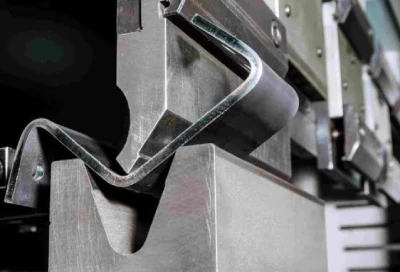
For the sheet metal manufacturing industry, having specialized manufacturing technology is one of the most important competencies. Superior manufacturing technology is demonstrated through the accumulation of extensive manufacturing experience, continuous technological updates, and advanced manufacturing equipment that optimizes the advantages of sheet metal bending in terms of low cost and high economic efficiency. In this article, Supro MFG’s team of senior sheet metal bending engineers, relying on 30 years of manufacturing experience, explains the technical knowledge and solutions of sheet metal bending that most designers are unaware of. 1.Types of bending molds Sheet metal bending tools (mold/dies) is one of the essential tools in the sheet metal forming process. Sheet metal bending molds are composed of upper and lower parts, with the upper mold representing the bending angle and the lower mold representing the forming angle. By applying pressure to the molds through the CNC bending machine, the sheet metal is pressed between the molds, and the sheet metal can

Sheet metal bending technology: 10 essential and important knowledge Read More »

China sheet metal fabrication services

About Sheet metal fabrication process

Cutting material: According to the unfolded graphics of the product design, use equipment or molds to cut the metal sheet, and pre-produce the required material size, which is helpful for the next sheet metal bending, deep drawing, sheet metal stamping and other sheet metal Forming work.Different cutting methods can be reasonably selected according to different materials, product requirements and quantity conditions. include: Laser cutting: Fast and efficient cutting of thin metal plates by laser beam, with flat cross section and no shape restrictions, suitable for large sheet metal parts, or cutting of complex shapes, but not suitable for high-thickness plates. Water jet cutting: suitable for thick metal plates, it can accurately cut complex shapes and neat sections, but the efficiency is low and the cost is high. Plasma cutting: suitable for cutting metal plates with a thickness of 10mm-50mm, it cannot be accurate, the section is not neat, and requires precision machining. Die blanking: It is suitable for cutting small-sized

About Sheet metal fabrication process Read More »

Scroll to Top