
Precision Milling, Turning & Rapid Prototyping
Custom CNC Machining Services in China
From one-off prototypes to repeat production, Supro MFG manufactures precision CNC machined metal and plastic parts with engineering review, controlled inspection and project-specific finishing support.
Rapid CNC Prototyping
Validate fit, function and manufacturability with CNC prototypes, engineering feedback and coordinated finishing options before production.
On-Demand CNC Machined Parts
Order custom components from prototypes and low-volume batches to repeat production, based on your drawing, material, tolerance and inspection requirements.
Direct Factory Quotation
Receive a process-based quotation covering material, machining time, setup, inspection and finishing—without unapproved substitutions or hidden scope.
China CNC Machining Manufacturer
Precision CNC Machining for Custom Metal & Plastic Parts
Supro MFG is a China-based custom parts factory providing CNC milling, CNC turning and multi-axis machining for prototypes, low-volume orders and repeat production. We machine aluminum, stainless steel, carbon and alloy steels, copper alloys, engineering plastics and other materials selected for the application.
Each RFQ is reviewed against the drawing, CAD model, material specification, tolerance, surface finish, inspection documents and delivery target. Our engineering team provides DFM feedback where geometry, tool access, wall thickness, threads, datum strategy or tolerances may affect cost and manufacturability.
One coordinated project can include machining, deburring, heat treatment, anodizing, plating, passivation, painting, marking and assembly. Upload your drawings for a factory quotation and manufacturability review.

Examples of Custom CNC Machined Parts
CNC Milling and Turning Capabilities
Custom CNC Machining Services
We select the machining route according to part geometry, tolerance, quantity and inspection requirements. Milling is suited to prismatic and multi-surface features; turning is efficient for rotational parts. Secondary machining, deburring and finishing can be coordinated within the same project.

CNC Milling Services
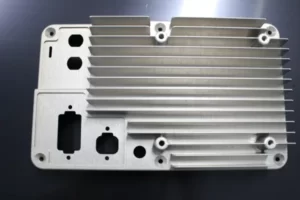
3-axis, 4-axis and 5-axis milling can produce pockets, slots, complex contours, compound angles, sealing faces and precision hole patterns. Process planning considers workholding, tool access, datum transfer and inspection strategy to control accuracy and repeatability.

CNC Turning Services
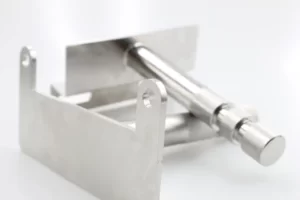
CNC turning is used for shafts, bushings, sleeves, pins, threaded components and other rotational parts. Operations may include facing, boring, grooving, threading, drilling and secondary milling, depending on the drawing and production route.
Metals & Engineering Plastics
CNC Machining Materials and Grades
Choose materials according to strength, weight, corrosion resistance, temperature, conductivity, wear and cost. The grades below represent common options; availability, certification and equivalent standards are confirmed during RFQ review.
Aluminum Alloy
stainless steel
Copper
steel
plastic
Other
Engineering Review, Controlled Production & Quality
Why Buyers Choose Supro MFG for CNC Machining
Our value is not a generic promise of “fast and cheap.” We help buyers control technical, quality and delivery risk by reviewing the complete RFQ scope before production and documenting the agreed manufacturing route.
In-House Machining & Inspection
CNC machining and dimensional verification are managed through a controlled production workflow. Inspection methods are selected from drawing requirements and may include calipers, micrometers, height gauges, gauges and CMM inspection where applicable.
Engineering & DFM Support
Our team reviews material, geometry, tool access, tolerances, threads, finishing and inspection requirements before production. DFM recommendations are shared when a change can improve manufacturability, consistency or total cost.
Responsive RFQ Review
Send 2D drawings, 3D files, quantity, material, finish and inspection requirements. We confirm missing information, identify manufacturing risks and prepare a project-specific quotation rather than relying on an instant generic price.
Transparent Factory Quotation
Quotations are based on material, setup, cycle time, tooling, inspection, finishing and documentation. This makes cost drivers visible and reduces the risk of later substitutions or omitted quality requirements.
Quality Documentation by Project
Production can include material certificates, First Article Inspection (FAI), in-process checks, final dimensional reports and third-party inspection support when specified and quoted. Quality records are aligned with the agreed project scope.
Surface Finishes for CNC Machined Parts
Finishing is selected according to corrosion resistance, wear, appearance, conductivity and assembly requirements. Common options include anodizing, plating, passivation, powder coating, painting, polishing, blasting and laser marking. Masking, cosmetic standards and critical dimensions should be identified on the RFQ drawing.

Powder Coating
Effectively wraps metal surfaces and resists rust with aesthetically pleasing custom colors.

anodic oxidation
Forms an oxide film on the surface of aluminum alloy to improve hardness, aesthetics, and corrosion resistance.

Brushed polished
It presents a glossy metallic texture with an even grain that enhances the aesthetics of the product.

sandblast
Cleaning the metal surface, presenting a uniform roughness and improving the adhesion of the paint.

mirror polishing
The metal surface is polished and honed to give a mirror-like finish, increasing the aesthetic effect of the part.

electroplated
A metal protective film, improve wear resistance, conductivity, reflectivity, corrosion resistance and enhance the role of aesthetic.

laser engraving
Commonly used for engraving on the surface of parts, logos, product descriptions, or complex patterns.

screen printing
Printing paint onto the surface of a product creates content of any shape and color that is hard-wearing and beautiful.
How CNC Machining Works
CNC machining is a subtractive process that uses programmed cutting tools to remove material from a workpiece. A 3D model and 2D drawing define geometry, dimensions, datums, tolerances and surface requirements; CAM programming then converts the design into toolpaths and machine instructions.
The production route may combine milling, turning, drilling, boring, threading and EDM. Accuracy depends on design, material, machine capability, workholding, tool condition, process control and inspection—not only on the machine type. For cost-effective results, apply tight tolerances only where function requires them.
For a project review, send your CAD files, drawing, quantity and inspection requirements.
We suggest that the design of thin-walled parts should meet the minimum thickness of 1mm or more, and the minimum thickness of plastic materials should be 1.5mm.
In the process of parts processing, the vibration of the equipment will affect the accuracy of the product fixation, will cause excessive processing or damage to the product, etc., and in the process of material processing, the cutting of the tool will increase the stress release inside the material, which will affect the accuracy ,
Reasonable wall thickness will help avoid the appearance of substandard products.
Many customers like to design complex geometric figures on products as corporate logos. We often recommend that customers design these texts so that the depth of the indentation does not exceed 0.5mm, which will greatly reduce the processing cost and avoid unnecessary wear of the embossment. .
At the same time, Supro MFG can provide better engraving services such as screen printing, laser marking, and etching.
For many CNC lathe machining shaft products, in order to ensure the concentricity of the product during the machining process, a process hole with a depth of about 0.5mm-1mm is often processed at both ends of the material for positioning. Without affecting the use, We will not do the treatment. If it is unavoidable in the customer's design, then we will fill in the process hole by welding and polish it.
Threaded hole is a very common part setting. Regardless of American thread and metric thread, please pay attention to the design of the bottom of the threaded hole. It is necessary to reserve a processing space of 1.5mm-2mm. This is the size of the leading bevel angle of the processing tool.
For weak steel materials such as plastics and aluminum, it can be designed to use steel wire thread coils or metal thread inserts to extend the life of the product at the threaded parts.

When CNC Machining Is the Right Process
CNC machining is well suited to prototypes and production parts that require precise geometry, repeatability, multiple material choices or features that are difficult to form with tooling.
- Suitable for metals and engineering plastics.
- No dedicated production mold is required for most geometries.
- Supports prototypes, bridge production and repeat batches.
- Complex pockets, contours, threads and precision hole patterns are possible.
- Tolerances and inspection plans can be matched to functional requirements.
- CAD/CAM revisions can be implemented without replacing a hard tool.
- Secondary finishing, marking and assembly can be coordinated.
How to Reduce CNC Machining Cost Without Sacrificing Function
Total cost is driven by material, stock size, setup count, tool access, machining time, tolerance, surface finish, inspection and order quantity. The most effective savings come from simplifying the process while protecting critical function.
- Identify truly critical dimensions, datums and GD&T requirements.
- Avoid unnecessary deep pockets, thin walls and hard-to-reach features.
- Use standard hole, thread, radius and stock sizes where practical.
- Separate cosmetic requirements from functional surface requirements.
- Choose material and finish according to the service environment.
- Provide annual or batch demand so setup and material purchasing can be planned.
CNC Machining FAQ
Supro MFG is a China-based custom parts manufacturer. We provide CNC milling, CNC turning and related inspection for prototypes and production parts. Heat treatment, specialized finishing and standard purchased components may be coordinated with qualified suppliers when required. Learn more about our factory.
Yes. We operate our own CNC machining and metal fabrication workshops. Project scope is reviewed against available equipment, material, tolerance and inspection requirements before we accept an order.
Yes. NDA requirements can be confirmed before detailed technical review. Customer drawings, specifications and proprietary information are limited to authorized personnel involved in engineering, production, quality and project communication. Contact us before sending sensitive files if an NDA is required first.
Yes. Our engineering team can review a concept, reference sample or functional requirements and help prepare manufacturable CAD data. STEP, STP, IGES, STL, DWG, DXF and PDF files are commonly used; the required format depends on the project.
Control begins with drawing and material review and continues through receiving inspection, First Article Inspection (FAI), In-Process Quality Control (IPQC), dimensional verification, surface-finish inspection and final release. CMM reports, material certificates and third-party inspection can be included when specified in the quotation.
Common methods include T/T, PayPal, Western Union and L/C. The payment schedule and channel are confirmed during quotation and order review.
Yes. PPAP Level 3 documentation can be provided when it is included in the agreed quotation and quality scope. State PPAP, FAI, material certificate and inspection-report requirements during RFQ review so the document package can be priced correctly.
Our quotation reflects the specified material, machining route, setup, tooling, inspection, finishing and documentation. We focus on traceable requirements and controlled production rather than reducing price through unapproved substitutions or omitted inspection.
There is no universal MOQ. Many projects begin with one or a few prototypes and transition to low-volume or repeat production. Feasibility and unit price depend on material, setup, cycle time, tooling, inspection and finishing.
Before production, we review material availability, fixtures, process sequence, finishing and inspection, then establish a project-specific plan. Progress is monitored against milestones and schedule risks are communicated when identified.
CNC Machining Guides


Request a Quote for Custom CNC Machined Parts
Send your 2D drawing or 3D model together with material, quantity, tolerance, finish, inspection documents and required delivery date. Our team will review manufacturability, clarify missing requirements and prepare a project-specific factory quotation.