Filter posts by category

Sheet Metal Bending

sheet metal bending services

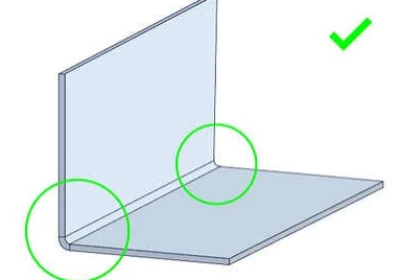
5 Solutions for Springback in Sheet Metal Bending

Springback is not merely a nuisance factor but an essential physical phenomenon in sheet metal bending processes that cannot be ignored. This post-forming elastic recovery, determined by material yield strength and elastic modulus, directly impacts final angle accuracy and flange dimensional stability. Uncontrolled springback in sheet metal bending processes leads to assembly failures, fit issues, and high scrap/rework costs. In lightweight applications involving advanced high-strength steels (AHSS) and aluminum alloys, sheet metal bend springback poses even greater challenges. Relying solely on historical compensation data tables is insufficient to address the variability inherent in modern material batches. This article details five sheet metal bend springback control strategies, spanning from tooling engineering to adaptive machine control, facilitating the transition from passive compensation to active springback management. Understanding the Mechanism of Sheet Metal Bend Springback In sheet metal plastic forming, bend springback represents the inevitable elastic recovery after unloading. Its physical essence lies in the fact that any bending deformation encompasses both elastic […]

5 Solutions for Springback in Sheet Metal Bending Read More »

aluminum sheet metal bending services

The Ultimate Guide On Sheet Metal Bending

In the field of metal processing and manufacturing, sheet metal bending is a very important process, which can accurately transform the shape of the sheet, from flat sheet to three-dimensional structure of the transformation. sheet metal bending process level will directly affect the accuracy, strength and appearance of the product quality, and it is widely used in aerospace, automotive manufacturing, It is widely used in aerospace, automotive, home appliance, construction and many other industries, so it is very important to have a comprehensive understanding of sheet metal bending! The article will analyze the knowledge of sheet metal bending in detail, first from its basic definition, then introduce the common types of technology, and finally list its main advantages and common applications to help you quickly and comprehensively understand sheet metal bending! What is sheet metal bending? Sheet metal bending is a cold working process in which a sheet metal is plastically deformed at a specific location by applying an external

The Ultimate Guide On Sheet Metal Bending Read More »

sheet metal bending radius

Analysis of Sheet Metal Bending Radius

The sheet metal bending radius is far more than just a default CAD parameter; it is a core factor in cost control, structural integrity, and assembly accuracy. Although most designers default to the theoretical minimum of “1 times the thickness,” this often conflicts with actual economic realities on the shop floor—approximately 95% of parts with a thickness of 0.125 inches or less are formed using a standard 0.030-inch bending radius to avoid frequent die changes. Excessively small bending radii can cause material cracking and unpredictable springback, particularly in high-strength materials such as stainless steel or 6061-T6 aluminum. Conversely, overly large or inconsistent radii can compromise K-factor calculations, leading to distorted flat patterns and costly tolerance stacking during multi-component assemblies. At Supro Mfg, we analyze and optimize this variable—from V-die openings to material grain orientation—to minimize waste and ensure mating features align precisely without secondary machining. This article provides an in-depth analysis of how to master sheet metal bend radii—from the

Analysis of Sheet Metal Bending Radius Read More »

aluminum bending process

Aluminum Bending Guide: How to Bend 6061-T6 Aluminum

As a high-strength, low-ductility alloy, 6061-T6 must strictly adhere to its mechanical limits during bending—unlike softer conditions, improper handling can cause fracture before yielding. Successfully bending 6061 aluminum requires mastering three critical variables: a minimum bend radius typically no less than three times the material thickness; Precise springback compensation based on its elastic modulus; and Strict control over the grain orientation of extruded profiles. At Supro Mfg, our aluminum bending technology integrates CNC press brakes with real-time angle verification systems, ensuring repeatable machining precision for structural components and aerospace applications. Whether you require prototyping or production-level aluminum bending services, understanding how heat treatment and die selection impact formability is crucial. This article provides a detailed breakdown of the technical essentials of 6061 T6 aluminum bending—from stress relief methods to crack prevention—ensuring your procurement decisions are based on engineering evidence, not guesswork. Contact our sales engineering team to discuss your project requirements. Key Considerations for Aluminum Bending When bending 6061 T6

Aluminum Bending Guide: How to Bend 6061-T6 Aluminum Read More »

aluminum sheet metal bending metal corner bracket parts

Custom Metal Corner Brackets: Definition, Advantages, and Applications

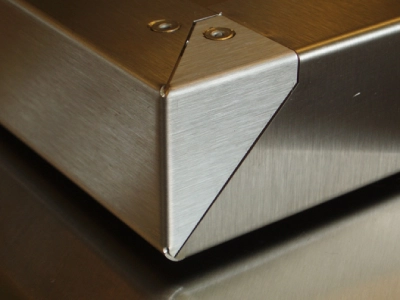
Custom metal corner brackets play a crucial role in ensuring structural stability and safety across various applications, including home furnishings, industrial equipment, medical devices, and construction projects. But do you truly understand this common hardware structural element? What exactly is it, and what are its advantages and disadvantages? This article will analyze metal corner brackets, covering their fundamental definition, pros and cons, application scenarios, and common issues to help you recognize and appropriately utilize them. What is a custom Metal Corner Bracket? A metal corner bracket is a structural connector made of metal, typically shaped like a right-angled L. Its core function is to reinforce, support, or connect two components that are perpendicular or at an angle to each other, ensuring structural stability, strength, and load-bearing capacity. Characteristics of Metal Corner Brackets Shape: Most commonly 90 degrees, though other angles (e.g., 45 degrees, 135 degrees) or adjustable designs exist. Metal corner brackets typically feature one or more triangular reinforcing ribs,

Custom Metal Corner Brackets: Definition, Advantages, and Applications Read More »

custom metal bracket fabrication services

A Metal Bracket Design Guide

Metal Bracket is a core component in industrial manufacturing, equipment installation and support structures, and its performance and adaptability are directly related to the stability, safety and service life of the end product. Reasonable design and selection of Metal Bracket can ensure the long-term stability of the end product and reduce the maintenance cost at the same time. So, how do we design or select a Metal Bracket that perfectly fits the needs? The article will explain the core definition, manufacturing process, types, considerations, finishing, etc. to help you design a perfect and robust Metal Bracket for your application. What is metal bracket? A metal bracket is a basic and extremely versatile hardware component, usually made from sheet metal through a series of machining processes. Its core function is to provide structural support, fixation and connection, and it is a key component to ensure the integrity and stability of the whole system. Commonly used materials: steel metal brackets: low cost,

A Metal Bracket Design Guide Read More »

aluminum sheet metal bending metal corner bracket parts

How to custom aluminum sheet fabrication

Aluminum sheet fabrication services has become the ideal choice for many sheet metal fabrication projects due to its lightweight, corrosion-resistant, and easy-to-process characteristics. However, standard aluminum sheet is often difficult to meet the needs of unique projects, and custom aluminum sheet fabrication has become a key solution at this time. Custom aluminum sheet fabrication is a key solution. It allows the material to accurately match the size and functional requirements of the project, which not only optimizes the structural stability of the product and enhances the product’s use, but also reduces subsequent processing losses and lowers costs. In modern engineering construction, industrial manufacturing and various product development projects, material suitability directly affects the quality, efficiency and final results of the project. In this article, we will analyze how to custom aluminum sheet fabrication in detail, from the design process, aluminum material selection, machining process to surface treatment, our engineers will share with you their rich experience in aluminum sheet metal

How to custom aluminum sheet fabrication Read More »

A Guide to EMI/RFI Shielding in custom metal fabrication

A Guide to EMI/RFI Shielding in custom metal fabrication

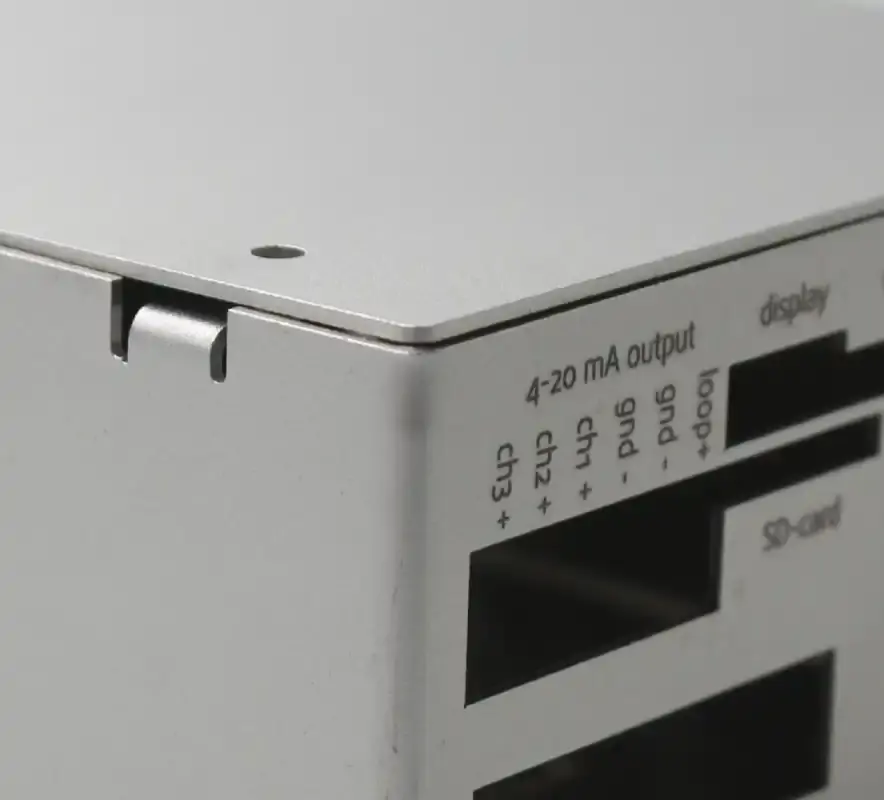
With the development of electronic equipment to high-precision, highly integrated, EMI and RFI shielding for many electronic equipment and electronic components to provide an important electromagnetic and radio frequency interference protection. Especially important in communication, medical, aerospace and other fields, without proper shielding, electronic devices may malfunction, degrade performance, or even fail completely. The article will detail how to achieve excellent EMI/RFI shielding in custom metal fabrication. First, it will clarify the definition of EMI shielding and RFI shielding, and then it will discuss the right choice of metal materials and the key factors to consider, which will help you choose the right metal shielding materials. Finally, a detailed look at the custom metal fabrication process and why you can trust Supro for your custom metal fabrication needs. What is EMI/RFI Shielding? EMI/RFI shielding is a technical means of preventing or weakening EMI (Electromagnetic Interference) and RFI (Radio Frequency Interference) by means of a physical barrier or material technology. Its

A Guide to EMI/RFI Shielding in custom metal fabrication Read More »

custom sheet metal fabrication for aluminum Electrical enclosure manufacturing

Custom Sheet Metal Bending Designer’s Guide

This guide provides an overview of the main sheet metal bending process techniques, their advantages and disadvantages as well as product design considerations, and there is also a detailed discussion on practical tools and material selection. It is beneficial for you to explore the most economical sheet metal bending manufacturing process, and you can make better use of the technology to avoid some common mistakes and wastage, and to make your design solution more satisfying for the DFM program. If you have doubts and questions about our technical articles, you can feel free to contact our team of online engineers, and we are very much looking forward to discussing and exchanging ideas in depth with you. What is sheet metal bending? CNC sheet metal bending manufacturing is a manufacturing process for forming thin sheet materials. Many engineers underestimate the flexibility and cost-effective features of the sheet metal bending manufacturing process. In the field of sheet metal fabrication, bending is a

Custom Sheet Metal Bending Designer’s Guide Read More »

aluminum sheet metal bending services

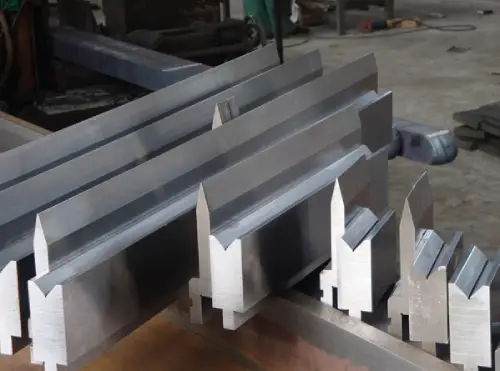
Sheet metal bending technology: 10 essential and important knowledge

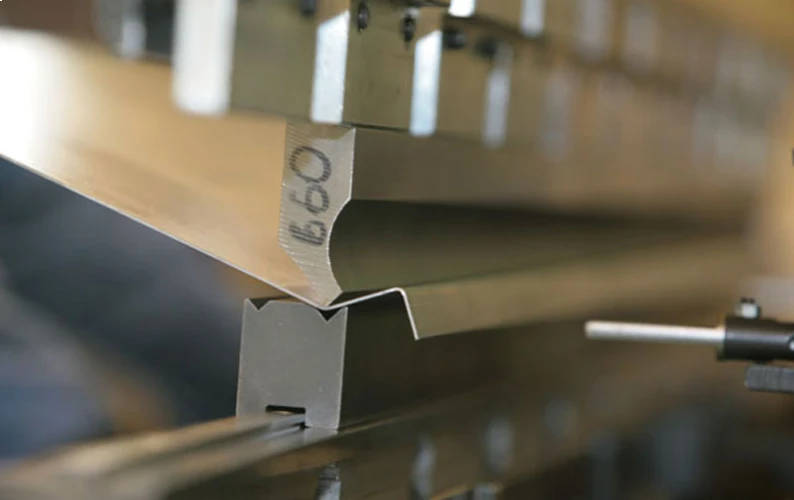
For the sheet metal manufacturing industry, having specialized manufacturing technology is one of the most important competencies. Superior manufacturing technology is demonstrated through the accumulation of extensive manufacturing experience, continuous technological updates, and advanced manufacturing equipment that optimizes the advantages of sheet metal bending in terms of low cost and high economic efficiency. In this article, Supro MFG’s team of senior sheet metal bending engineers, relying on 30 years of manufacturing experience, explains the technical knowledge and solutions of sheet metal bending that most designers are unaware of. 1.Types of bending molds Sheet metal bending tools (mold/dies) is one of the essential tools in the sheet metal forming process. Sheet metal bending molds are composed of upper and lower parts, with the upper mold representing the bending angle and the lower mold representing the forming angle. By applying pressure to the molds through the CNC bending machine, the sheet metal is pressed between the molds, and the sheet metal can

Sheet metal bending technology: 10 essential and important knowledge Read More »

Scroll to Top