
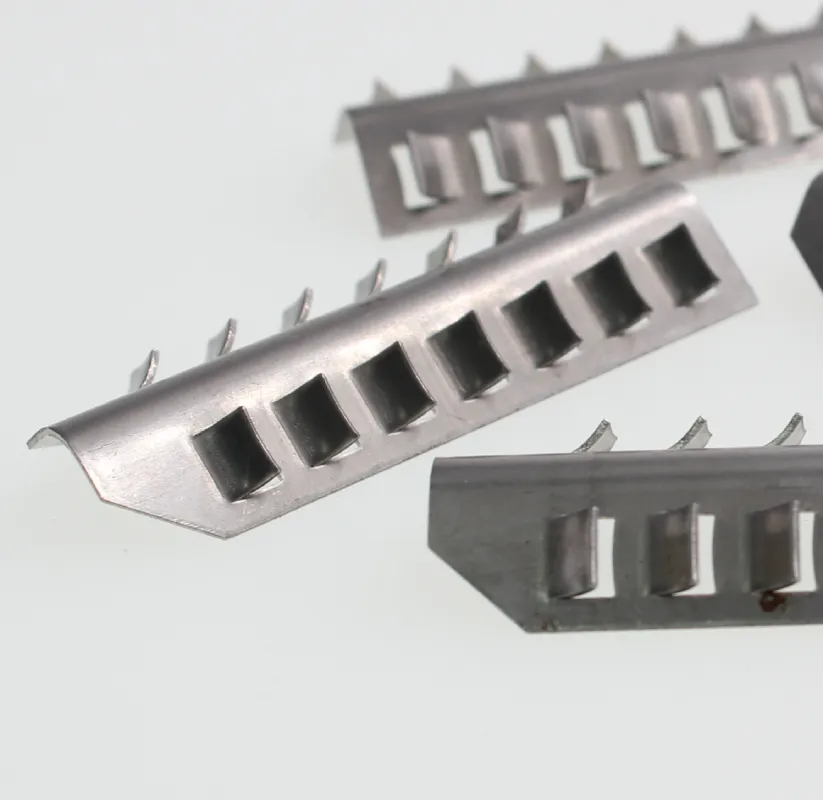
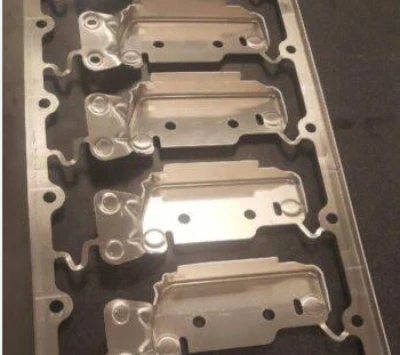

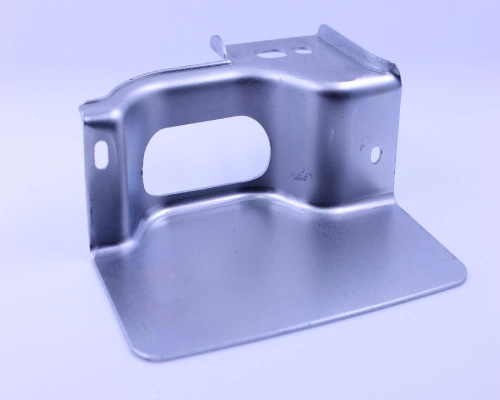
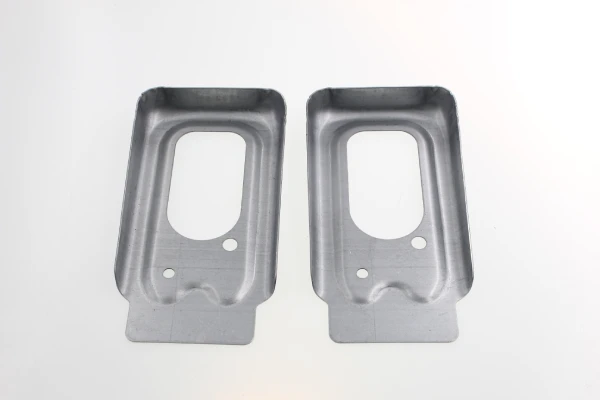
Within the comprehensive galvanized sheet metal fabrication process, welding serves as the critical operation determining the final product’s structural integrity and long-term durability—a precision task fraught with technical challenges.
The core contradiction in galvanized sheet metal fabrication welding stems from the physical properties of the zinc coating: zinc’s boiling point (approximately 907°C) is significantly lower than steel’s melting point (approximately 1500°C). This disparity causes the zinc layer to vaporize violently under the high temperatures of the welding arc, leading to issues such as weld porosity, severe spatter, and zinc vapor intrusion into grain boundaries—which may induce liquid metal embrittlement (LME).
These defects directly compromise joint strength and disrupt coating continuity, creating initiation points for future corrosion. Therefore, a successful galvanized sheet metal fabrication welding process extends far beyond achieving metal bonding; it constitutes a systematic engineering management process.
This paper will conduct an in-depth analysis of four core galvanized sheet metal fabrication welding processes: Gas Metal Arc Welding (GMAW), Resistance Spot Welding (RSW), Laser Beam Welding (LBW), and Brazing. It will focus on elucidating the unique technical mechanisms of each process.
Through comparative analysis of their strengths and weaknesses in heat input control, welding speed, deformation levels, zinc coating damage extent, and post-processing requirements, combined with specific application cases in automotive manufacturing, building HVAC systems, heavy equipment industries, this article provides a selection logic and practical solution for galvanized sheet metal fabrication welding processes based on material properties, product requirements, and production efficiency. The goal is to achieve an optimal balance between corrosion resistance and welded structural integrity.
Core Principles of Galvanized Sheet Metal Fabrication Welding Process
In galvanized sheet metal fabrication, the core engineering principle of welding processes is to establish a systematic control scheme addressing the metallurgical conflict introduced by the zinc coating. This conflict stems from the stark disparity in thermophysical properties between zinc (boiling point ~907°C) and the steel substrate (melting point ~1500°C).
The thermal cycling inherent in galvanized sheet metal fabrication welding inevitably causes the zinc layer to vaporize violently before the base metal. If uncontrolled, this process triggers a series of critical manufacturing defects. Zinc vapor trapped within the weld pool prior to solidification forms porosity, directly compromising joint integrity and fatigue life.
An even more severe challenge in galvanized sheet metal fabrication welding processes is liquid metal embrittlement. Under the tensile stress field of welding, molten zinc permeates along the austenite grain boundaries of steel, causing a sudden drop in joint plasticity and inducing microcracks. This phenomenon is particularly pronounced in high-strength steel applications and represents one of the primary root causes of structural failure.
Therefore, a successful galvanized sheet metal fabrication welding process does not aim to eliminate zinc’s influence but to manage it throughout the entire process. The core concept involves three dimensions of precision control: – Heat input management: Optimizing welding parameters to minimize the heat-affected zone and limit excessive zinc evaporation; vapor escape pathway design, planning directed exhaust channels for zinc vapor during joint preparation; and post-weld protection restoration, such as through cold spray zinc to reinstate cathodic protection in compromised areas.
Understanding this systematic approach is fundamental to evaluating the applicability and reliability of galvanized sheet metal fabrication welding processes. It demands elevating the practice from a mere joining operation to an integrated engineering discipline spanning design, production, and validation.
Types of Galvanized Sheet Metal Fabrication Welding Processes and Their Technical Suitability for Galvanized Sheets
Selecting the appropriate galvanized sheet metal fabrication welding process fundamentally involves technical adaptation to the characteristics of the zinc coating. The core principle lies in choosing a process that optimally manages the effects of zinc fumes and heat input, based on product requirements (joint strength, appearance, corrosion protection continuity) and production conditions (cycle time, automation level, cost).
Primary galvanized sheet metal fabrication welding processes can be categorized into four types, each with its specific technical adaptation logic.
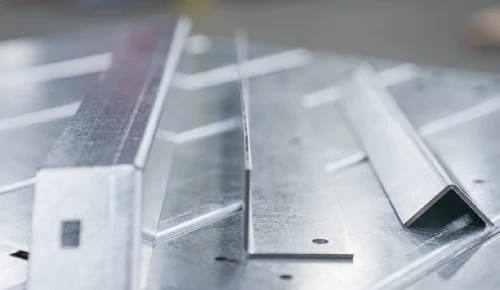
Gas Metal Arc Welding (GMAW/MIG) – The Most Adaptable Conventional Process
Among numerous galvanized sheet metal fabrication welding processes, Gas Metal Arc Welding (GMAW/MIG) stands as the benchmark solution for diverse joining needs due to its exceptional process flexibility and widespread equipment availability.
The adaptability of this galvanized sheet metal fabrication welding process manifests through proactive management of zinc vapor via parameter adjustments: Selecting welding wires with higher silicon and manganese content, such as ER70S-6, whose excellent deoxidizing capability helps stabilize the zinc-contaminated weld pool; employing an Ar + 2-5% CO₂ mixed gas to stabilize the arc and moderately oxidize the weld pool surface; Employing a pulsed spray transfer mode enables precise heat input control and reduces spatter.
Crucially, incorporating a 0.5-1.0mm root gap in joint design provides a controlled escape pathway for zinc vapor—a core adjustment distinguishing this process from standard carbon steel welding.
Resistance Spot Welding—The Preferred Choice for Efficient Automated Galvanized Sheet Metal Fabrication Welding Processes
In galvanized sheet metal fabrication production lines pursuing high efficiency and large-scale automation, resistance spot welding is an indispensable joining technology. Its mechanism involves applying pressure through electrodes while passing high current, utilizing contact resistance between plates to generate Joule heating and form a molten nucleus.
For galvanized sheets, the core challenge in adapting this process lies in zinc layer contamination of electrodes and its impact on heat generation distribution. The high resistance of the zinc layer causes initial heat generation to concentrate at the surface, necessitating systematic adjustments to the standard parameters of this galvanized sheet metal fabrication welding process.
Critical parameters for this galvanized sheet metal fabrication welding process include: selecting electrode materials like chromium-zirconium copper with high hardness and excellent conductivity, coupled with a robust internal cooling system to counteract mushrooming deformation of the electrode tip caused by zinc alloying; Current settings must be increased by approximately 10-30% compared to non-galvanized steel, often paired with a ramp-up/ramp-down current waveform to ensure sufficient heat penetration through the zinc layer for proper fusion.
Simultaneously, electrode pressure must be increased by 20-25%. This not only facilitates penetration through the zinc layer during initial current application to establish stable metal contact but also effectively suppresses spatter caused by zinc vaporization, ensuring consistent weld quality and prolonging electrode life.
Laser Welding—A High-Precision, Low-Distortion Welding Process for Galvanized Sheet Metal Fabrication
For galvanized sheet metal fabrication components requiring high precision, minimal thermal distortion, and superior appearance, laser welding is the preferred solution. Its mechanism utilizes a high-energy-density laser beam to melt or vaporize material within an extremely short timeframe, forming welds with high aspect ratios. The heat-affected zone width can be controlled below 0.5mm, thereby minimizing the area of zinc layer burn-off.
The adaptability of this galvanized sheet metal fabrication welding process centers on controlled zinc vapor escape. This is primarily achieved through precise joint design: zero-gap design is used for butt welds requiring no gap; however, for common lap welds, a precise gap (e.g., 0.1-0.2mm) is pre-set between the two sheets to serve as a buffer zone for vapor escape.
Simultaneously, inert shielding gas is introduced laterally into the joint area to effectively disperse accumulated zinc vapor plasma, stabilizing the galvanized sheet metal fabrication welding process. These measures collectively ensure laser welding achieves dense, defect-free welds with minimal heat-affected zones (HAZ) and virtually imperceptible deformation.
Brazing Process — Low-Temperature Joining Technology Maximizing Zinc Coating Preservation
When minimizing the heat-affected zone is essential to preserve the integrity of the zinc coating, brazing is the preferred galvanized sheet metal fabrication welding process. Its mechanism fundamentally utilizes a filler metal with a lower melting point than the base material. Through capillary action, this filler metal fills the tightly fitted joint gap, achieving a metallurgical bond at temperatures below the steel’s melting point.
Since this galvanized sheet metal fabrication welding process is typically controlled between 450°C and 900°C—below zinc’s boiling point—the base metal remains unfused, maximally preserving the zinc coating within the heat-affected zone.
This galvanized sheet metal fabrication welding process relies on precise heat source control and material compatibility: Common heat sources include flame brazing and induction brazing, requiring uniform, controllable localized heating to prevent overheating that could cause zinc layer oxidation or failure. Additionally, the process employs active flux to remove surface oxides from the zinc coating, enhancing flux wetting and spreading. Flux selection must balance melting point, joint strength requirements, and electrochemical compatibility with the galvanized layer.
Only 4 steps
online custom metal fabrication parts
Contact our experts team and experience the efficiency and economic benefits of digital metal fabrication services.
Upload Design Files
STL , STEP (.stp), IGES (.igs), (.ZIP), or PDF.
Also be a sample or an idea
Quote & Design Analysis
Instant factory quotes and DfM reports, the most reasonable solution.
Manufacturing Begins
Digital processes can initiate order tasks within 24 hours.
On-Time Delivery
Keeping delivery promises, approved by 3000+ Global Company buyers.
Comparative Analysis and Decision-Making for Galvanized Sheet Metal Fabrication Welding Processes
Comparative analysis of galvanized sheet metal fabrication welding processes is the core step in decision-making. This involves a systematic evaluation based on key performance dimensions rather than a simple ranking of advantages and disadvantages. Primary considerations include: the impact of heat input on the zinc coating, joint mechanical properties, process speed, and adaptability to product design.
Evaluation Dimensions | Gas Metal Arc Welding (GMAW/MIG) | Resistance Spot Welding (RSW) | Laser Beam Welding (LBW) | Brazing |
Heat Input and Deformation Control | Moderate. Heat input is relatively concentrated, but the heat-affected zone (HAZ) is distinct, with zinc layer burn-off width approximately 3-8 mm. Welding sequence must be controlled to manage distortion. | Extremely high, but only locally. Heat input is confined to the weld point, with the entire workpiece remaining cold and experiencing minimal deformation. However, the zinc layer surrounding the weld nucleus undergoes complete alloying. | Exceptional. High energy density, extremely narrow heat-affected zone (typically <1mm), negligible thermal distortion, and the narrowest zinc layer burn-off zone. | Low. Uniform heating throughout, with no steep temperature gradients, resulting in minimal deformation of the workpiece. |
Welding Speed and Productivity | Medium (Manual: 0.3–0.8 m/min; Automated: up to 1.5 m/min). High flexibility, but dependent on operator skill or robotic path programming. | Extremely high. The cycle time for a single weld point is typically less than 1 second, making it particularly well-suited for robotic automated assembly lines and the preferred choice for high-volume production such as automotive body manufacturing. | High (Continuous welding: 2–10 m/min; Remote scanning: up to several hundred meters per minute). Extremely fast. | Low. Heating, feeding, and cooling processes are slow, heavily reliant on operator skill, difficult to automate to a high degree, and result in low productivity. |
Zinc Coating Protection and Post-Treatment | Poor. The zinc coating within the HAZ is completely burned away, forming an anodic corrosion pathway. Post-weld localized application of high-zinc-content anti-corrosion coating is required to restore protection. | Localized issue. Alloying of the zinc layer on the solder joint surface disrupts coating continuity. Typically relies on overall electrophoretic coating of the body for subsequent compensatory protection. | Good. Although zinc coating evaporation occurs within the HAZ, its impact on overall corrosion resistance is relatively minor due to the extremely narrow affected area. Localized protection remains necessary for precision components. | Excellent. The base material remains unfused, and the original zinc coating is almost entirely preserved except for a very small area at the edges of the brazed joint, providing optimal continuity of corrosion protection. |
Joint Mechanical Properties | High. Capable of forming fully penetrated welds with strength comparable to the base metal. Excellent mechanical properties (strength, toughness) make it suitable for primary load-bearing structures. Vigilance is required regarding the risk of liquid metal embrittlement. | Moderate. Joint strength depends on the diameter of the fusion nugget and the thickness of the plate. | High. The weld exhibits a high depth-to-width ratio and high strength, but it is extremely sensitive to joint assembly accuracy (such as gap and misalignment). Otherwise, defects are likely to occur. | Low to moderate. Strength depends on the brazing alloy itself (typically lower than the base material) and the brazing rate. The joint exhibits good ductility but is not suitable for high-load primary load-bearing structures. |
Sensitivity to assembly clearance | Moderate. Root clearance (typically 0.5–1.5 mm) must be reserved and strictly controlled to ensure zinc vapor escape, with relatively loose clearance tolerance requirements. | Extremely high. Requires tight alignment between workpieces (clearance < 0.2mm). Any gap will cause a sharp increase in resistance, insufficient heat generation, resulting in incomplete fusion or spatter. | Extremely high. The most stringent requirements apply to joints, with an ideal gap of <0.1mm or 10% of the plate thickness. Lap welding requires precisely preset gaps to vent zinc vapors. | High. Relying on capillary action for filling, the solder gap must be precisely designed and maintained uniformly (typically 0.05-0.2mm) based on the solder’s fluidity. |
Decision-Making Logic for Process Selection
Based on the above comparisons, selecting an appropriate galvanized sheet metal fabrication welding process should follow a systematic decision-making logic. First, the product’s primary performance requirements must be clearly defined. If corrosion resistance is the primary objective (e.g., outdoor architectural components, food-grade piping), brazing or laser welding should be prioritized to maximize zinc coating retention. For high-dynamic-load primary load-bearing structures (e.g., heavy equipment frames), gas-shielded welding provides fully penetrated, equivalent-strength welds, making it a more reliable galvanized sheet metal fabrication welding process choice.
Second, evaluate production scale and cost structure. For ultra-high-volume, high-cycle production (e.g., automotive bodies), resistance spot welding offers clear advantages in speed and cost. For multi-variety, low-volume precision components (e.g., high-end electronic enclosures), laser welding becomes the preferred choice due to its flexibility, speed, and high quality. Gas shielded welding provides the optimal balance between versatility, flexibility, and overall cost, making it suitable for most non-extreme requirements in medium-volume custom galvanized sheet metal fabrication.
Applications of Custom Galvanized Sheet Metal Fabrication Across Industries
Custom galvanized sheet metal fabrication serves as a core manufacturing process meeting specific performance and cost requirements across industries. Its value extends beyond providing corrosion-resistant substrates; it transforms material potential into competitive advantages for end products through deeply integrated design, processing, and joining techniques.
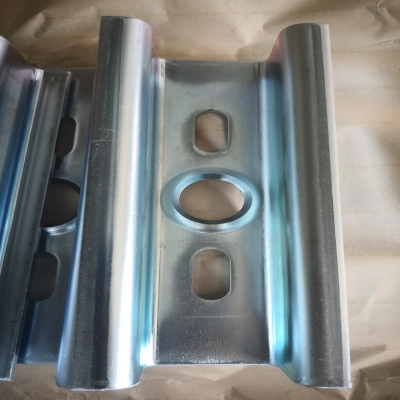
Automotive Manufacturing
In automotive manufacturing, the primary demands are efficiency, lightweighting, and collision safety. Consequently, resistance spot welding (RSW) is the preferred process for body assembly due to its high automation. For critical components like chassis, pulsed gas shielded welding is selected for its superior thermal control capabilities.
Building Modules and HVAC Systems
For building envelopes and HVAC ductwork systems, core requirements include decades of long-term durability and minimized maintenance costs. In this sector’s custom galvanized sheet metal fabrication, gas shielded welding is widely used for frame connections, while brazing or laser welding—with lower heat input—is employed for sealing and joining.
These galvanized sheet metal fabrication welding processes maximize the continuity of the zinc coating, preventing corrosion initiation points in the weld heat-affected zone. This ensures compliance with long-term corrosion protection standards like ASTM A123.
Electrical Enclosures and Industrial Machine Covers
Beyond corrosion resistance, electromagnetic compatibility (EMC) and grounding continuity are critical metrics for electrical enclosures and industrial machine covers. Gas-shielded welding produces dense welds that are the preferred method for ensuring low-impedance electrical pathways.
Following the galvanized sheet metal fabrication welding process, specialized high-zinc conductive coatings must be applied to repair welds, simultaneously restoring both corrosion resistance and electrical conductivity. This ensures products comply with electrical enclosure safety standards like UL 508A or IEC 61439.
Agriculture and Heavy Equipment
Agricultural and heavy equipment face the most severe combined mechanical-chemical corrosion environments. The galvanized sheet metal fabrication welding process must balance structural strength with extreme corrosion resistance.
Consequently, pulsed gas shielded welding is the mainstream galvanized sheet metal fabrication welding process, requiring low-hydrogen filler metals and strict thermal input control to prevent hydrogen-induced cracking. The most effective protective solution involves secondary hot-dip galvanizing of the entire component post-welding. This utilizes the zinc-iron alloy layer to provide sacrificial anode protection for high-stress weld zones, serving as the fundamental measure to ensure long-term reliable service of equipment in corrosive media such as salt and fertilizers.
Looking for a reliable custom sheet metal fabrication companies?
Talk To Supro MFG Expert Team
Contact us for competitive ex-factory prices,
and a full range of technical support services.
Conclusion
Any thermal joining process inevitably disturbs the integrity of the zinc coating. Therefore, the core objective of galvanized sheet metal fabrication welding is not to eliminate this impact, but to control such disturbance within acceptable, compensable limits through precise design and management. This ultimately achieves the optimal balance between structural integrity and long-term corrosion protection performance.
Supro is a professional galvanized sheet metal fabrication manufacturer. Leveraging advanced equipment, extensive manufacturing experience, and a specialized engineering team, we provide perfect galvanized sheet metal fabrication services to over 3,000 companies worldwide, offering genuine manufacturer quotes.
As an industry-leading galvanized sheet metal fabrication manufacturer, we deliver diverse products efficiently and on schedule. From product design and rapid sheet metal prototype fabrication to mass production, we provide expert technical support and exceptional quality. We offer one-stop manufacturing solutions and highly cost-competitive product supply!