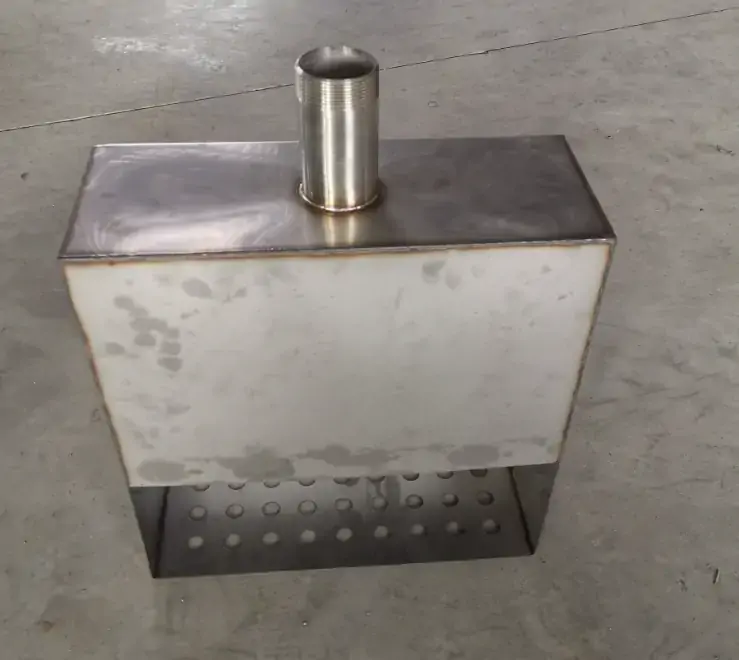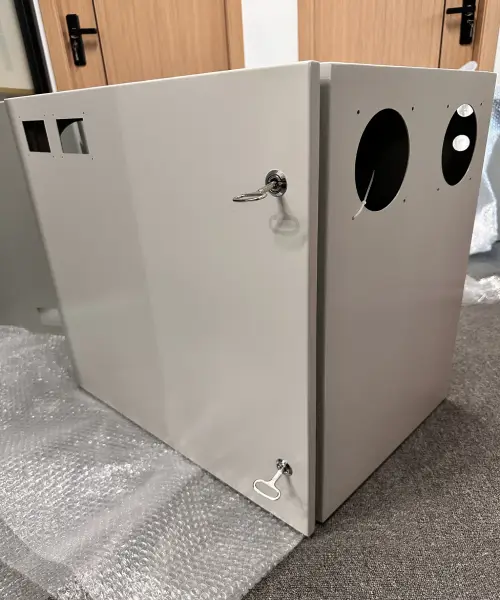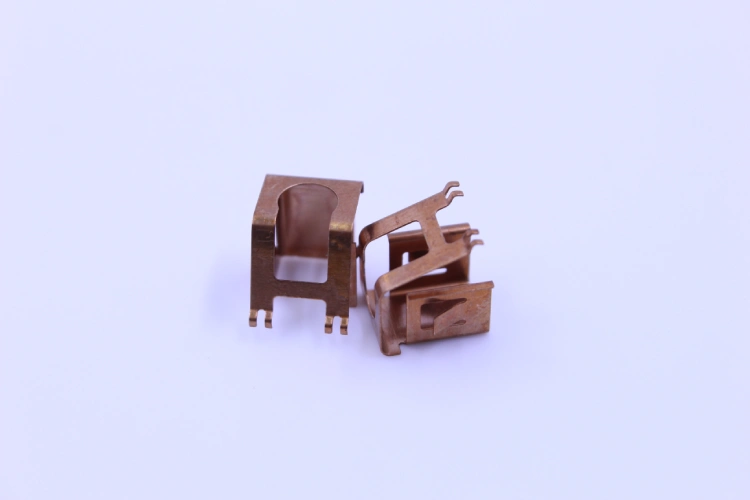

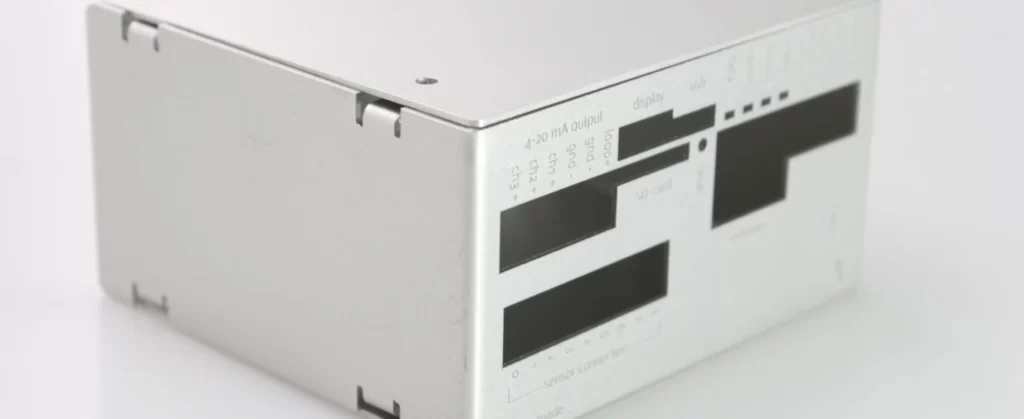
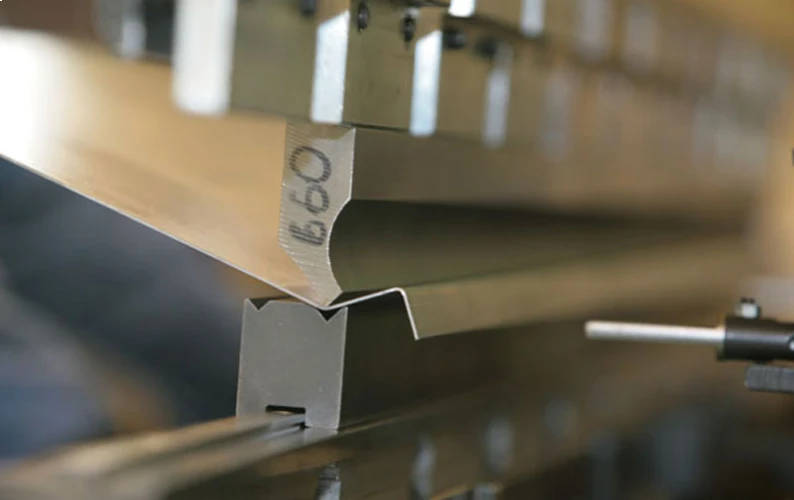
In the development of outdoor products, prototype sheet metal fabrication represents a critical phase for validating designs and predicting mass production feasibility. Unlike controlled indoor environments, outdoor sheet metal fabrication prototypes must function as comprehensive “system test platforms”.
Their purpose is to pre-emptively expose potential failure risks throughout the product lifecycle before commencing large-scale production. Consequently, the selection of prototype sheet metal fabrication materials extends far beyond mere compliance with drawing specifications. It constitutes a core strategic decision directly determining the efficacy of prototype testing, the control of development costs, and the smoothness of transition to stable mass production.
From a professional prototype sheet metal fabrication perspective, the core logic in selecting outdoor prototype materials lies in systematically balancing functionality, environmental exposure, and manufacturing processes. This necessitates moving beyond the pursuit of single high-performance materials to establish a three-dimensional decision-making framework encompassing key performance indicators, specific environmental exposure scenarios, and manufacturability.
Our objective is to identify and resolve potential future failures early in the development phase through scientifically informed material selection and rigorous validation. This provides robust, reliable foundations for project decision-making, ensuring cost control and quality compliance throughout the entire project lifecycle.
Core Principles of Prototype Sheet Metal Fabrication: Dual-Driven by Environment and Functionality
When undertaking prototype sheet metal fabrication for outdoor applications, the core principle is not merely material substitution or cost prioritisation, but adherence to a systems engineering philosophy driven by both environmental and functional considerations. This is paramount for controlling total lifecycle costs.
Spectrum Analysis of Environmental Severity for Sheet Metal Fabrication Prototypes
Professional prototype sheet metal fabrication commences with the quantitative deconstruction of environmental severity, rather than relying on the vague concept of ‘outdoor use’. We must translate the usage environment into a spectrum of testable engineering parameters based on international standards such as ISO 12944 or ASTM G50.
For instance, a sheet metal fabrication cabinet prototype deployed along the Florida coast requires an environmental spectrum explicitly incorporating: high-concentration chloride salt spray (corresponding to C5-M corrosion environment), intense ultraviolet radiation (annual irradiance ≥2800 kJ/m²), and the synergistic effects of high temperature and humidity (e.g., 35°C, 85% RH).
During the prototype sheet metal fabrication phase, our objective is not to simulate the entire lifecycle, but to proactively induce and expose potential failure modes of materials and coating systems under the most severe conditions through accelerated testing (e.g., 1000-hour salt spray testing per ASTM B117). This includes identifying potential failures such as filiform corrosion beneath galvanised layers or pitting corrosion in aluminium alloys.
This analysis, grounded in a spectrum of environmental severity, provides an indispensable empirical foundation for subsequently selecting specific prototype sheet metal fabrication materials, surface treatment processes, and sealing solutions.
Defining Functional and Failure Boundaries for Sheet Metal Fabrication Prototypes
Function-driven prototyping emphasises the prototype as a vehicle for validating design thresholds and performance boundaries.
The selection of prototype sheet metal fabrication materials must directly align with the product’s core functional requirements, be it structural load-bearing, electromagnetic shielding, or thermal management. The objective at this stage is to confirm, through measurable tests (e.g., salt spray testing, mechanical load testing), whether the combination of prototype sheet metal fabrication materials and processes can meet these functional demands, thereby providing data-driven support for design refinements.
For instance, the functional definition of a prototype sheet metal fabrication for a communications antenna bracket must extend beyond static load-bearing. It must explicitly include fatigue life under temperature cycling from -30°C to +70°C, dynamic stiffness under simulated wind-load vibration, and the long-term electrical continuity of its grounding connections.
The selection of prototype sheet metal fabrication materials must directly serve these boundary tests: employing steel with higher yield strength (e.g., S355MC) to validate the load-bearing limits of lightweight designs; or selecting aluminium alloys with specific conductivity (e.g., 6061-T6) to confirm the performance balance between thermal dissipation and structural integrity.
In summary, successful prototype sheet metal fabrication lies in proactively addressing environmental challenges and demonstrating functional objectives through purposeful material selection and processing. This provides a reliable technical foundation for subsequent procurement and production decisions.
Classification of Application Environments and Material Performance Requirements for Sheet Metal Fabrication Prototypes
When planning prototype sheet metal fabrication projects for outdoor applications, scientific environmental classification forms the cornerstone for efficient material selection and cost control. We must deconstruct the usage environment into specific, testable stress regimes based on ASTM or ISO standards. This process directly determines the relevance of prototype testing and the total lifecycle cost of the final product.
Typically, we categorise key outdoor environments into several types: marine environments (high chloride ion content), industrial environments (acid rain, SO₂), extreme temperature cycling environments (desert, high-altitude cold regions), and high ultraviolet radiation environments. Each environment imposes unique and demanding performance requirements on prototype sheet metal fabrication materials.
Outdoor environment types | Core environmental stress | Performance requirements for prototype sheet metal fabrication materials | Recommended materials for prototype sheet metal fabrication | Key Focus Areas for Surface Treatment Validation |
Maritime climate (coastal/offshore) | High-concentration chloride salt spray, sustained high humidity, strong winds carrying salt | Exceptionally high resistance to pitting and crevice corrosion; Outstanding resistance to stress corrosion cracking. | Stainless steel 316L, aluminium alloy 5052/H32 | A neutral salt spray test (ASTM B117) exceeding 1000 hours must be conducted, with inspection of sensitive areas such as cut edges, bends, and weld heat-affected zones. This verifies the integrity and adhesion of the coating system. |
Industrial/Urban Atmospheric Environment | Acidic pollutants (SO₂, NOx), particulate matter deposition, moderate to high humidity. | Excellent resistance to uniform corrosion; Resistance to weak acid solutions; Strong resistance to contaminant penetration. | Galvanised steel sheet (e.g. S350GD+Z), 304 stainless steel | Conduct combined sulphur dioxide/salt spray corrosion testing (e.g. ISO 3231). Evaluate the resistance of coatings or plating to blistering and delamination in contaminated environments. |
High-temperature arid/desert environments | Extreme diurnal temperature variations, intense ultraviolet (UV) radiation, abrasive sand and dust, low humidity. | Excellent thermal stability and resistance to thermal fatigue; Resistance to UV ageing; High surface hardness to resist abrasion. | Aluzinc steel sheet, weathering steel, aluminium-silicon alloy. | Conduct thermal cycling tests (e.g., cycles from -20°C to +80°C) alongside ultraviolet ageing tests (ASTM G154). The focus is on verifying the coating’s resistance to chalking, discolouration, and abrasion from sand and dust. |
High-altitude/polar environments | Extreme low temperatures (down to -50°C), freeze-thaw cycles, ice crystal impact | Exceptional low-temperature toughness to prevent brittle fracture; Low thermal expansion coefficient to minimise cold-shrinkage stresses. | Austenitic stainless steel grades 304/316, aluminium alloys 5xxx/6xxx series (Key point: Exclude materials prone to low-temperature brittleness) | Conduct cryogenic impact testing and freeze-thaw cycling tests. Verify the elasticity retention rate of sealing materials (such as gaskets) at extremely low temperatures to prevent seal failure. |
Highly humid tropical rainforest environment | Persistent high temperatures and humidity (e.g., 40°C, 95% RH), abundant microorganisms (mould), and frequent condensation. | Exceptional resistance to moisture and mould; withstands long-term corrosion beneath coatings caused by humid heat. | 316L stainless steel, hard anodised 6061 aluminium alloy (with particular emphasis on the inherent corrosion resistance of the materials themselves) | Conduct high-temperature and high-humidity testing (e.g., 85°C/85% RH for over 1000 hours, in accordance with IEC 60068-2-78) and fungal growth testing. Assess the risk of filiform corrosion beneath the coating. |
Only 4 steps
online custom metal fabrication parts
Contact our experts team and experience the efficiency and economic benefits of digital metal fabrication services.
Upload Design Files
STL , STEP (.stp), IGES (.igs), (.ZIP), or PDF.
Also be a sample or an idea
Quote & Design Analysis
Instant factory quotes and DfM reports, the most reasonable solution.
Manufacturing Begins
Digital processes can initiate order tasks within 24 hours.
On-Time Delivery
Keeping delivery promises, approved by 3000+ Global Company buyers.
Selection Strategy for Typical Outdoor Prototype Sheet Metal Fabrication Materials
Having established the environmental spectrum, the selection strategy for prototype sheet metal fabrication materials must be further aligned with the core functionalities of the specific product. For decision-makers, understanding the ‘product-material’ mapping ensures prototypes are deployed to precisely validate performance dimensions of commercial risk, avoiding excessive or insufficient testing.
Prototype Sheet Metal Fabrication for Outdoor Communication/Energy Equipment Cabinets and Enclosures
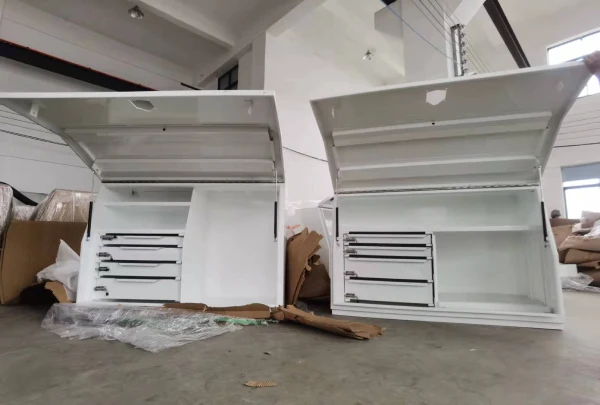
The core of prototype sheet metal fabrication for such products lies in validating the synergy between structural integrity, long-term environmental sealing, and electromagnetic compatibility.
Structural frames typically employ cost-effective S355MC high-strength steel to verify mechanical properties under extreme loads and welding processes. Electromagnetic shielding enclosures constitute a verification priority. Galvanised steel sheets (e.g., S350GD+Z with zinc coating ≥ Z275) are the preferred prototype sheet metal fabrication materials. This selection provides fundamental cathodic protection while also validating the adhesion between the zinc layer and subsequent conductive coatings.
During prototyping, Supro conducts actual shielding effectiveness (SE) testing on fabricated enclosures per IEEE 299 or MIL-STD-285 standards, observing SE value degradation after humid-heat cycling. This is critical for assessing whether prototype sheet metal fabrication materials meet certification requirements like FCC Part 15.
For enclosures requiring lightweight construction or operating in extreme corrosive environments, we employ aluminium alloy 5052-H32 for prototype sheet metal fabrication. This focuses on verifying dimensional stability in large sheet metal components, localised corrosion behaviour following welding or riveting, and whether the insulation properties of the hard anodised coating impact the EMI performance of the design grounding.
Prototype Sheet Metal Fabrication for Outdoor Lighting Fixtures
The prototype sheet metal fabrication of street lamps represents an integrated solution for thermal management, durable aesthetics, and vibration fatigue validation. As the primary load-bearing structure, prototype sheet metal fabrication for lamp posts predominantly employs Q235B carbon steel with hot-dip galvanisation (HDG, compliant with ASTM A123). The verification focuses not on the material’s inherent strength, but rather on the quality of repair processes at welded joints, coating thickness uniformity, and resistance to transportation and installation impacts.
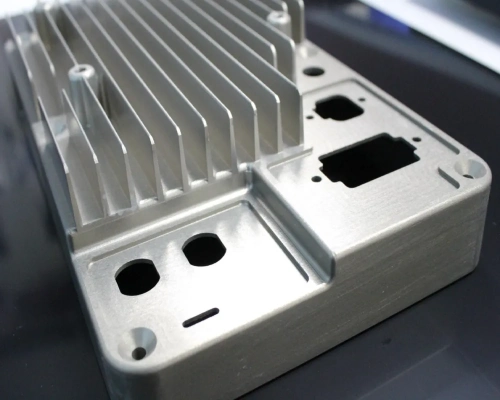
The prototype sheet metal fabrication materials for the luminaire body and heat sink directly determine luminous efficacy and lifespan. Prototypes commonly employ die-cast aluminium alloy (ADC12) or extruded aluminium profiles (6063-T5). The key test metric here is thermal resistance (℃/W). Under simulated operational conditions, measured chip junction temperatures must remain within safe limits. Concurrently, the surface treatment of prototype sheet metal fabrication must withstand accelerated ageing testing per ASTM G154 (QUV) to quantify light retention and colour difference (ΔE) changes.
Prototype Sheet Metal Fabrication for Outdoor Public and Transport Infrastructure
Prototype sheet metal fabrication for such products prioritises vandal resistance, minimal maintenance requirements, and long-term public safety. For high-strength structural components (e.g., large trusses), weathering steel is frequently selected as the prototype sheet metal fabrication material. Verification prioritises observing whether a stable, dense, and firmly adherent rust protective layer forms on the surface during alternating wet and dry outdoor conditions.
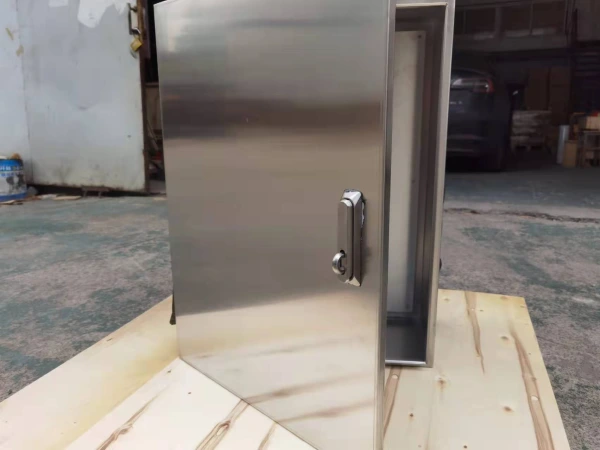
For prototype sheet metal fabrication of decorative cladding panels, brushed, mirror-finished, or coloured PVD-treated 304 or 316 stainless steel are common solutions. Prototype testing must prioritise evaluating the stain resistance and cleaning difficulty of different surface textures under real urban pollution conditions.
Additionally, for large signage, aluminium composite panels (ACP) may be employed for prototype sheet metal fabrication. Validation focuses on the fire rating of the core material (e.g., Class A2) and the panel’s resistance to creep and deformation under negative wind pressure, ensuring long-term flatness and safety.
Prototype Sheet Metal Fabrication for Agricultural and Engineering Machinery Covers
Validation objectives for this category of prototype sheet metal fabrication are exceptionally rigorous, focusing on resistance to combined damage from impact, abrasion, and chemical corrosion.
Primary cover components typically utilise high-strength galvanised steel or pre-coated colour steel (PCM) as fabrication materials. Prototype testing must simulate real-world conditions, including stone chip impact tests to evaluate coating resistance to flaking, and chemical resistance tests involving spraying solutions containing fertilisers, pesticides, or diesel to check for coating blistering, softening, or discolouration.
For areas subject to extreme abrasion, prototype sheet metal fabrication materials are frequently not single-sheet solutions. Instead, high-strength wear-resistant steel plates such as Hardox 400 or JFE EH360 grade are welded or bolted onto the base substrate. Prototype validation assesses the fatigue resistance of these dissimilar material composite structures, the reliability of the joining methods under prolonged vibration, and the prevention of secondary damage or safety incidents caused by the detachment of wear-resistant components.
Process Coordination in the Prototype Sheet Metal Fabrication Stage
During the prototype sheet metal fabrication stage for outdoor products, material selection must never be conducted in isolation. It requires deep coordination with subsequent critical manufacturing processes. This coordination is central to ensuring effective prototype validation and a smooth transition to mass production, directly impacting the project's overall cost and final quality.
Compatibility of Forming Processes in Prototype Sheet Metal Fabrication
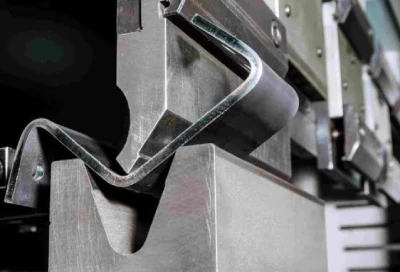
The forming characteristics of prototype sheet metal fabrication materials are the primary engineering parameters to be validated. Different alloy conditions and microstructures directly determine their behaviour during shearing, punching, bending, and deep drawing processes. For instance, when validating an outdoor enclosure design featuring complex surfaces and sharp folds, directly selecting high-strength aluminium alloy 6061-T6 for prototype sheet metal fabrication risks crack initiation along bend edges due to its low elongation.
Such failure could mislead design assessments. Neglecting the formability compatibility of prototype sheet metal fabrication materials can lead to dimensional deviations in mass-produced parts, assembly difficulties, and substantial scrap costs.
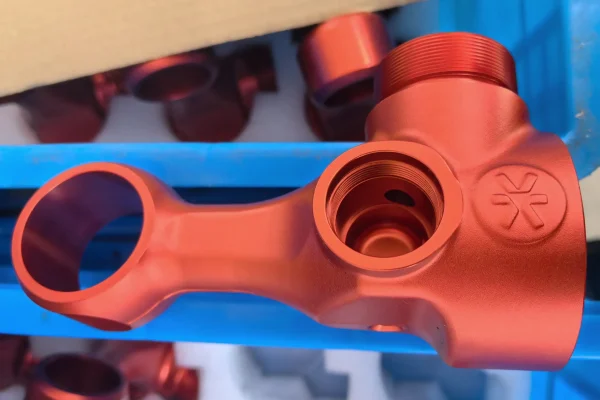
Prototype Sheet Metal Fabrication Joining Processes
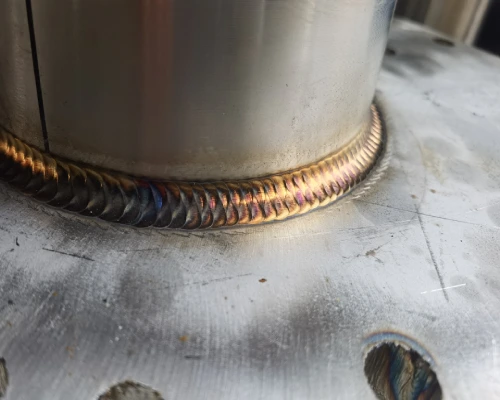
Joints often represent the weakest link in outdoor sheet metal structures and must undergo rigorous validation during the prototype fabrication stage. Taking welding—the most common joining method—as an example, its thermal cycles significantly alter local material properties. When welding thin 304 stainless steel sheets, improper heat input control can cause ‘sensitisation’ in the heat-affected zone (HAZ) near the weld due to carbide precipitation at grain boundaries, compromising prototype testing accuracy. Consequently, welding process parameters themselves form part of prototype validation.
Surface Treatment Processes for Prototype Sheet Metal Fabrication
Surface treatment constitutes the final barrier protecting materials from environmental exposure. During the prototype sheet metal fabrication stage, it must be tested in tandem with the base material, where process synergy is paramount. For instance, when planning to utilise high-quality anodised aluminium prototypes, base materials should prioritise 6-series (e.g., 6061) or 5-series (e.g., 5052) aluminium alloys, avoiding 2-series aluminium with high copper content, as the latter struggles to achieve a superior oxide film.
Thus, genuine prototype sheet metal fabrication constitutes a systematic engineering endeavour: concurrent with material selection, we must identify and validate the entire process chain encompassing cutting, forming, joining, and surface treatment.
Conclusion
In summary, successful outdoor prototype sheet metal fabrication is not merely a straightforward material sampling exercise, but rather a rigorous, systematic engineering endeavour centred on risk prevention. The ultimate value of prototype sheet metal fabrication lies in establishing a decision-making framework integrating environment, function and process. This approach proactively identifies and resolves potential failure risks within the product lifecycle by concentrating them at the prototype stage.
Should you require prototype sheet metal fabrication services, contact us immediately! The Supro team stands ready to assist. Established in 2004, we are a sheet metal prototype fabrication manufacturer. Leveraging extensive manufacturing expertise, a robust technical team, and comprehensive production resources, we have delivered one-stop prototype sheet metal fabrication services to over 3,000 enterprises worldwide.
At Supro, our dedicated quality control team, seasoned QC personnel, and scientific quality assurance processes ensure products undergo rigorous inspection to meet specified technical standards. We maintain full traceability of defective items, encompassing: raw material inspection, tooling verification, equipment checks, process sampling, packaging review, and final product assessment.
Our QA (Quality Assurance) procedures guarantee products comply with essential tolerances and quality benchmarks. We guarantee timely delivery for all product types, from design and rapid prototype fabrication through to mass production. Our services encompass professional technical support, exceptional quality, and highly cost-competitive supply.
Contact us immediately to commence an efficient collaboration!