

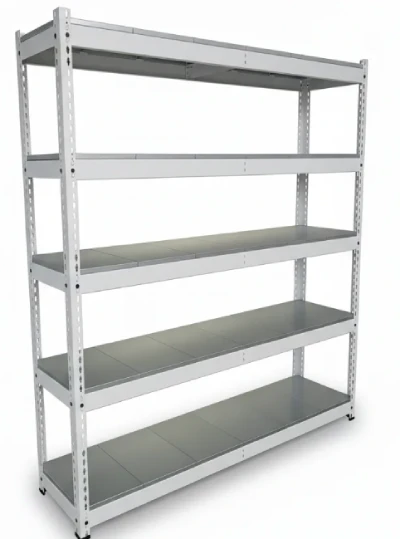
In the realm of industrial automation, enclosures are no longer mere protective covers but serve as critical system platforms housing precision control systems and ensuring long-term stable operation of equipment. Modern production lines impose multidimensional demands on sheet metal fabrication enclosures: they must withstand continuous vibration and impact, provide reliable IP protection and EMC shielding, and effectively manage thermal challenges arising from high power density.
The core value of a successful sheet metal enclosure fabrication solution lies in delivering systematic responses to these complex operating conditions, rather than merely providing dimensionally accurate enclosures. This demands that sheet metal enclosure fabrication manufacturers treat the enclosure as an integrated engineering component from the project’s inception.
Through a scientific sheet metal enclosure fabrication process, every step—from design simulation to welding and assembly—must precisely anchor to final performance metrics: structural integrity, environmental resilience, and maintainability throughout the entire lifecycle. This establishes a robust physical foundation for the reliable operation of automated equipment.
This article systematically explores the technical frameworks, engineering challenges, and integrated solutions involved in custom enclosure manufacturing for industrial automation from a professional sheet metal fabrication perspective.
It focuses on analyzing how engineering methodologies ensure enclosures meet automation equipment’s stringent requirements across structural integrity, environmental protection, thermal management, and electromagnetic compatibility throughout the entire process—from conceptual design to mass production.
Evolution of Core Requirements for Sheet Metal Fabrication Enclosures in Industrial Automation Equipment
In the early stages of industrial automation, sheet metal fabrication enclosures primarily served basic protective and shielding functions, with relatively simple design considerations. However, as equipment complexity and integration levels increased, sheet metal fabrication enclosures evolved from passive coverings into active, multifunctional critical system platforms.
This platform must integrate structural support, thermal management ducting, electromagnetic shielding continuity, cable management systems, and dynamic response mechanisms to external impacts and vibrations. Consequently, the entire sheet metal enclosure fabrication process must be planned with a systems engineering mindset. This ensures the enclosure, as the core carrier, reliably supports and protects internal electrical and control systems. Its structural integrity directly impacts the equipment's overall availability and lifecycle.
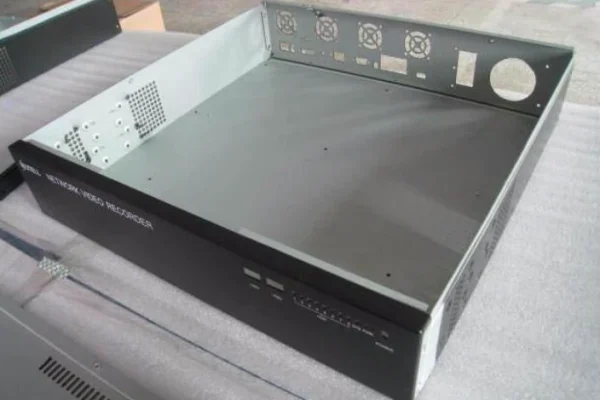
Multi-dimensional Performance Metrics for Sheet Metal Fabrication Enclosures in Modern Automation Lines
Today’s high-speed, precision automation lines demand multi-dimensional performance beyond traditional static standards for sheet metal enclosure fabrication. First, dynamic reliability is paramount—enclosures must exhibit exceptional dynamic resilience to withstand prolonged vibration and impact loads, preventing functional failures caused by structural fatigue. Second is full lifecycle maintainability, requiring optimization of internal layout, door opening angles, and quick-release modules during the design phase to minimize Mean Time to Repair (MTTR).
Finally, to integrate with the Industrial Internet of Things (IIoT), sheet metal fabrication enclosures must incorporate pre-installed intelligent interfaces—such as sensor mounting points and reserved data cable channels—enabling them to function as physical nodes within smart factory data flows.
Value Proposition of Custom Sheet Metal Enclosure Fabrication: Delivering System Solutions for Specific Applications
The value of custom sheet metal enclosure fabrication extends far beyond simple fabrication to specifications. Its core purpose is to provide deeply tailored, systematic solutions for unique application scenarios. This begins with a thorough analysis of the end-use environment—including vibration spectra, thermal loads, corrosive media, and operational maintenance processes.
A professional sheet metal enclosure fabrication process translates these operational parameters into concrete design inputs: material selection, wall thickness, reinforcement layout, sealing strategies, and surface treatment specifications. This fundamentally reduces the comprehensive operational risks and total cost of ownership (TCO) for end-use equipment.
Only 4 steps
online custom metal fabrication parts
Contact our experts team and experience the efficiency and economic benefits of digital metal fabrication services.
Upload Design Files
STL , STEP (.stp), IGES (.igs), (.ZIP), or PDF.
Also be a sample or an idea
Quote & Design Analysis
Instant factory quotes and DfM reports, the most reasonable solution.
Manufacturing Begins
Digital processes can initiate order tasks within 24 hours.
On-Time Delivery
Keeping delivery promises, approved by 3000+ Global Company buyers.
Key Engineering Challenges in Sheet Metal Enclosure Fabrication for Industrial Automation Environments
Within the demanding application scenarios of industrial automation, sheet metal enclosure fabrication confronts a series of interrelated engineering challenges that directly impact equipment reliability and total cost of ownership.
Challenges Faced by Sheet Metal Fabrication Enclosures in Dynamic Mechanical Stress Environments
In typical industrial automation environments, sheet metal enclosures endure continuous vibration and impact from motors, conveyor belts, and robotic arms. Without targeted analysis during the fabrication design phase, prolonged alternating stresses readily induce structural fatigue, leading to micro-cracks at welds, bends, or fasteners—ultimately causing catastrophic failure.
This necessitates applying finite element analysis (FEA) during the sheet metal enclosure fabrication process. Based on standards like IEC 60068-2-6, predictions should optimize rib layout and avoid resonance frequencies.
Protective Requirements for Sheet Metal Fabrication Enclosures in Complex Environments
Industrial environments are often multifaceted, simultaneously exposing equipment to dust, moisture, chemical agents, and physical impacts. The IP protection rating (e.g., IP54/65) of sheet metal fabrication enclosures must remain effective after the equipment undergoes temperature cycling and mechanical vibration.
This involves not only selecting sealing materials (e.g., EPDM resistant to compression set) but also ensuring overall enclosure rigidity and connection point design to prevent seal failure from micro-deformation. Additionally, the surface coating system must withstand oil contamination and chemical spray corrosion, validated through tests like ASTM B117 salt spray testing.
Thermal Management and EMC Balance in Sheet Metal Fabrication Enclosures
Increasing power density within automated equipment creates a core trade-off between efficient heat dissipation and dust/water ingress protection. Numerous openings in sheet metal enclosure fabrication facilitate ventilation but compromise electromagnetic shielding integrity and IP ratings.
As a specialized sheet metal enclosure fabrication manufacturer, Supro employs computational fluid dynamics (CFD) simulations to precisely design airflow paths. We strategically utilize dust screens, labyrinth structures, or heat exchangers to minimize openings.
Concurrently, during sheet metal enclosure fabrication, all seams require continuous conductive connections—typically achieved with finger springs or conductive gaskets—to ensure EMC shielding effectiveness. Ventilation or cable openings must employ metal mesh or waveguide plates (with aperture sizes calculated based on the highest frequency requiring shielding) to meet radiation emission and immunity requirements per the EN/IEC 61000 series standards.
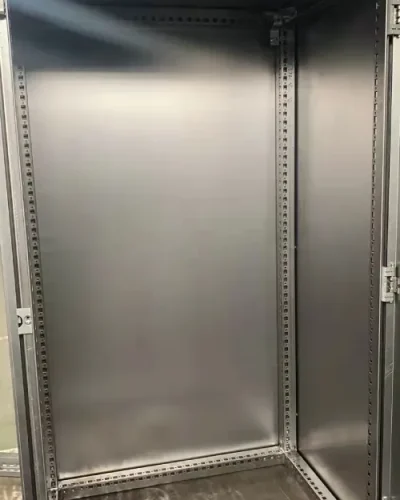
Ergonomic Considerations in Sheet Metal Enclosure Fabrication and Operations
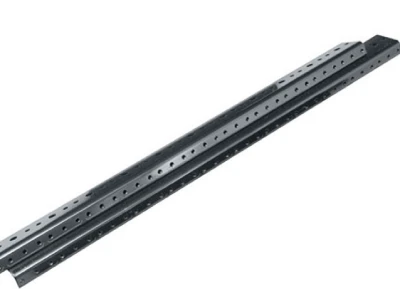
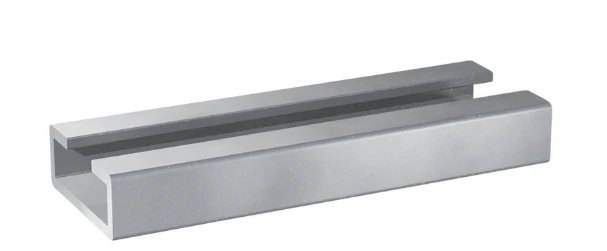
Custom sheet metal enclosure fabrication must fully consider the end-user’s installation and maintenance experience. Poor accessibility design significantly increases mean time to repair (MTTR), thereby driving up operational costs. This necessitates integrating ergonomic considerations into the sheet metal enclosure fabrication process, such as employing hinges that open to wide angles and automatically lock into position, arranging logically organized internal mounting rails (compliant with DIN standards), and reserving ample cable management space.
Are you looking for reliable & cost-effective
China Sheet Metal Fabricators
More than 150,000 OEM metal fabrication products delivered to 5,000+ global buyers.
And benefit from it!
Systematic Solutions for Sheet Metal Enclosure Fabrication
Faced with the complex demands of industrial automation, fragmented processing cannot guarantee the performance and reliability of the final enclosure. A systematic sheet metal enclosure fabrication solution encompassing design, validation, and execution must be adopted.
Front-End Collaborative Design Phase for Sheet Metal Enclosure Fabrication
A successful sheet metal enclosure fabrication process begins with front-end collaborative design. During this phase, the manufacturer’s technical team must act as an extension of the customer’s design process, conducting professional Design for Manufacturability (DFM) and Design for Assembly (DFA) reviews of preliminary concepts.
This includes evaluating the compatibility of bend radii and material thicknesses within the sheet metal enclosure fabrication process, analyzing the accessibility of complex weld joints, and optimizing part segmentation to minimize cumulative tolerances. More critically, performance requirements for sheet metal fabrication enclosures must be translated into quantifiable, trackable key performance indicators (KPIs).
For instance, dynamic reliability and ingress protection ratings should be converted into measurable metrics like Mean Time Between Failures (MTBF) and Mean Time to Repair (MTTR), establishing clear benchmarks for subsequent design and validation.
Simulation-Driven Design Validation for Sheet Metal Enclosure Fabrication
Prior to physical sheet metal enclosure fabrication, computer simulation-based design validation is a critical step for mitigating risks and optimizing performance. First, structural finite element analysis (FEA) simulates the enclosure’s mechanical response under specified vibration spectra (e.g., per IEC 60068-2-64) and impact loads. This identifies stress concentration zones, optimizes rib layout, ensures structural rigidity, and avoids resonance frequencies.
Second, computational fluid dynamics (CFD) simulations model internal thermal flow fields to accurately predict temperature rise in high-power components. This optimizes fan selection, airflow path design, and aperture layout, balancing thermal efficiency with protection ratings in sheet metal fabrication enclosures.
Concurrently, electromagnetic field simulations evaluate the impact of different aperture configurations and seam treatments on shielding effectiveness (SE), ensuring sheet metal enclosure fabrication meets standards like EN 55032 early in the design phase.
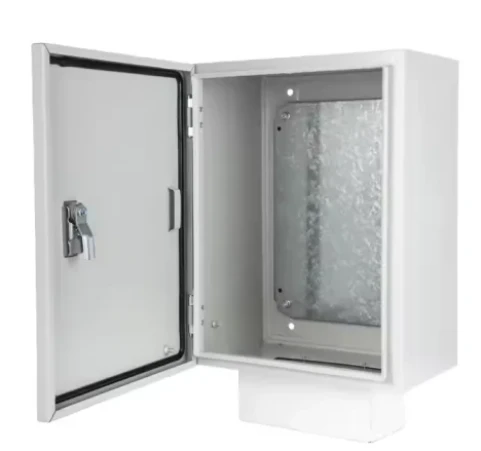
Material and Process System Selection for Sheet Metal Enclosure Fabrication
The performance and reliability of the final solution heavily depend on the scientific selection of materials and sheet metal enclosure fabrication processes. This requires establishing a decision matrix based on engineering data.
Base material selection for sheet metal enclosure fabrication must comprehensively consider strength, weight, corrosion resistance, and cost: – Cold-rolled steel plate (SPCC) is suitable for general indoor environments; – Pre-galvanized sheet (SECC) provides sacrificial anode protection; – Aluminum alloy facilitates weight reduction and heat dissipation; – Stainless steel is used in highly corrosive or cleanroom environments.
Coating system design follows standards like ISO 12944, scientifically matching pretreatment and powder coating types for C1-C5M corrosion categories (e.g., epoxy primers provide adhesion and corrosion resistance, while polyurethane topcoats ensure weather resistance and aesthetics).
Connection technology selection in sheet metal enclosure fabrication is equally critical: laser welding achieves high-precision, low-distortion joining; robotic arc welding is used for high-strength structural components; clinching provides distortion-free connections; and specialized industrial adhesives are employed for damping, vibration isolation, or auxiliary sealing.
The success of the entire sheet metal enclosure fabrication process relies on systematic engineering selection and control of these variables.
Why choose Supro MFG's Custom metal enclosure Services
Provide the most cost-effective cost solution for manufacturing and assembling products, expanding product competitiveness.
a technical team specializing in custom shell manufacturing for more than 30 years.
Advanced Manufacturing Equipment: Industry-leading custom metal enclosure manufacturer with in-house sheet metal, die casting, precision machining workshops, and surface coating workshops.
ISO 9001-2015, PPAP III level, RoHS, NEMA, CE and other certified production standards.
24H*7 online English technical support: The professional English team responds quickly to users’ technical questions online at any time.
help users from product design, prototype, batch manufacturing, surface treatment, assembly and packaging, transportation and a series of value-added services.
With in-house mechanics and chemistry laboratories, it can quickly monitor manufacturing process quality control to ensure the delivery of high-quality products.
Accept to sign NDA documents to ensure that customers’ product information is protected.
Door-to-door delivery in customizable secure packaging after complying with the delivery details agreed with the customer.
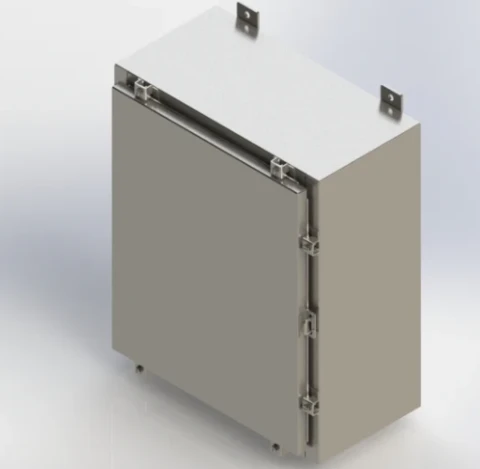
Quality Anchors in the Sheet Metal Enclosure Fabrication Process
The quality and reliability of the final product in a robust sheet metal enclosure fabrication process depend on the strict control and engineered anchoring of several core process nodes. These anchors serve as critical conversion points, translating preliminary design and simulation into physical performance.
Forming Process in Sheet Metal Enclosure Fabrication
The forming process serves as the cornerstone of sheet metal enclosure fabrication. Its precision directly determines the feasibility of subsequent assembly and the final product quality.
Laser cutting precision must be consistently maintained within ±0.1mm. Simultaneously, cut quality—including perpendicularity, slag (burrs), and heat-affected zones—requires stringent management. During sheet metal enclosure fabrication, poor cut quality compromises bending positioning accuracy and weakens weld strength, while material hardening zones caused by excessive heat input may induce micro-cracks during subsequent bending.
During CNC bending, precision compensation algorithms based on material grade, thickness, and bending direction must be applied, with springback proactively controlled through specialized die design.
For large or multi-bend complex sheet metal fabrication enclosures, cumulative tolerances across the entire dimensional chain must be verified through process simulation and trial bending. This ensures positional accuracy of mounting and mating surfaces—a prerequisite for achieving IP protection ratings and high-quality aesthetics.
Sheet Metal Enclosure Fabrication Welding Process
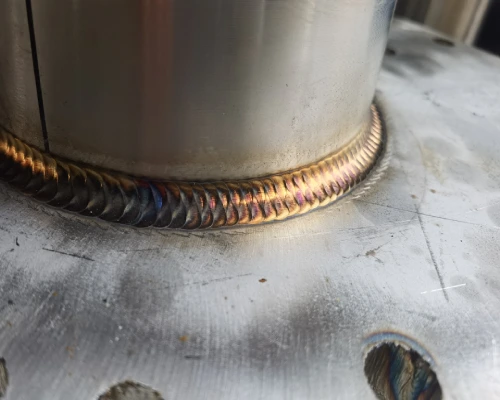
Welding is the critical sheet metal enclosure fabrication process that transforms multiple sheet metal components into a rigid structure.
Its quality hinges on systematic control of deformation and residual stresses, primarily achieved through optimized fixture strategies and welding sequences. Dedicated welding fixtures restrain the workpiece while often integrating copper heat sinks or water-cooling systems to rapidly dissipate localized heat, minimizing thermal distortion. Welding sequences adhere to the principle of symmetrical welding from the center outward to balance internal stresses.
Upon completion of the sheet metal enclosure fabrication welding process, welds undergo standardized inspections:
– Sealing integrity is typically verified via pneumatic pressure or fluorescent penetrant testing.
– Strength is confirmed through visual inspection (per ISO 5817 grading), ultrasonic testing, or destructive sectioning.
– Surface appearance must ensure compliance with coating adhesion and safety requirements.
Surface Treatment and Protection for Sheet Metal Enclosures
Surface treatment serves as a critical barrier ensuring long-term enclosure performance in harsh industrial environments. Multi-layer coating systems must be designed for different corrosion classes (e.g., ISO 12944 C3-C5M). For example: In C4 environments, a zinc-based phosphating + epoxy primer + polyurethane topcoat combination may be used, with a total dry film thickness typically required to be ≥80μm.
Sheet metal fabrication enclosures must pass cross-hatch adhesion testing (ASTM D3359) and withstand at least 500 hours of neutral salt spray testing (ASTM B117). Additionally, the durability and compliance of markings such as screen printing and inkjet coding must not be overlooked. Markings require specialized inks resistant to chemical solvents and UV radiation to clearly and permanently display critical information including UL recognition marks, electrical grounding symbols, and product model numbers, meeting relevant market access requirements for sheet metal fabrication enclosures.
Assembly and Debugging
In the sheet metal enclosure fabrication process, final assembly and debugging integrate all components into a fully functional end product. Quality assurance focuses on incoming inspection of purchased parts (e.g., gaskets, hinges), standardized assembly procedure documentation, and comprehensive factory testing protocols. This includes IP waterproof/dustproof testing using standard spray guns, ground continuity testing, and final verification of critical dimensions.
Looking for a reliable custom sheet metal fabrication companies?
Talk To Supro MFG Expert Team
Contact us for competitive ex-factory prices,
and a full range of technical support services.
Conclusion
In summary, the demands for sheet metal enclosure fabrication in industrial automation have evolved into a complex systems engineering endeavor. Successful custom fabrication relies on cross-disciplinary knowledge integration and end-to-end quality anchoring.
Supro is a professional sheet metal enclosure fabrication manufacturer. Leveraging advanced equipment, extensive manufacturing experience, and a specialized engineering team, we provide perfect sheet metal enclosure fabrication services to over 3,000 companies worldwide, offering genuine manufacturer quotes.
As an industry-leading sheet metal enclosure fabrication manufacturer, we deliver diverse products efficiently and on schedule. From product design and rapid sheet metal prototype fabrication to mass production, we provide expert technical support and exceptional quality. We offer one-stop manufacturing solutions and highly cost-competitive product supply!