
Filter posts by category

metal box

Precision carbon steel deep drawn enclosures junction box

Solving Punching Defects in Junction Boxes: Die Maintenance and Micro-Interlock Strategies

For electrical junction boxes, the quality of the concentric knockout holes directly determines the product’s usability and safety during on-site installation. An ideal junction box knockout should remain securely attached during transportation while allowing for clean removal with minimal force at the construction site, without the need for additional tools or secondary trimming. However, in actual production, two conflicting failure modes are frequently encountered: the knockout is too loose and falls out prematurely during transportation; or it is too tight, forcing installers to use hammers and chisels to knock it out, resulting in deformation or even cracking of the box walls. These two defects not only increase on-site rework costs but may also pose electrical safety hazards due to compromised structural integrity of the custom junction box. To systematically address punching defects in electrical junction boxes, it is essential to address three dimensions simultaneously—die maintenance protocols, optimization of micro-fit parameters, and clearance matching—to establish a process control system covering the […]
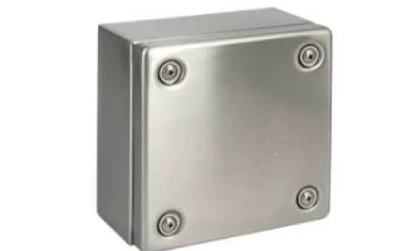
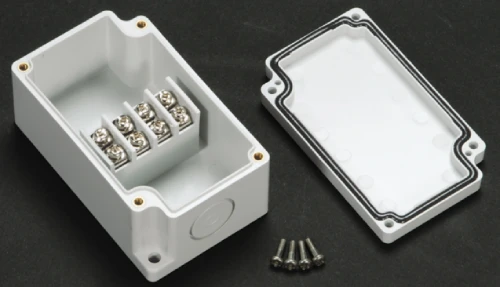
Solving Punching Defects in Junction Boxes: Die Maintenance and Micro-Interlock Strategies Read More »

electrical terminal box

Terminal Box Manufacturing: Strategies to Avoid Surface Defects

For terminal boxes designed to meet specific protection ratings (NEMA/IEC), surface integrity is by no means merely a matter of visual aesthetics. Deep indentations and through-penetrating scratches essentially act as stress concentration points; in vibrating or humid environments, they can significantly accelerate coating failure and induce crevice corrosion, directly threatening the long-term reliability of internal electrical components. The root causes of these defects can typically be traced to adhesive wear between the die and the sheet metal during bending, as well as impacts resulting from a lack of protective isolation during handling. As a professional custom terminal box manufacturer, we have analyzed the aforementioned failure mechanisms and are sharing production-validated preventive process approaches—ranging from elastic medium isolation for bending dies to full-process coverage with pre-protective materials—to fundamentally eliminate such surface quality risks and ensure the full-lifecycle performance of custom terminal boxes under harsh operating conditions. Identifying the Primary Sources of Surface Damage to Terminal Boxes In the manufacturing process of

Terminal Box Manufacturing: Strategies to Avoid Surface Defects Read More »

electrical terminal box

Terminal Box Grounding Stud Thread Damage: Causes and Solutions

For industrial-grade terminal boxes, the integrity of grounding stud threads is by no means a minor detail; rather, it is a core manufacturing characteristic directly related to equipment safety and system reliability. Once the threads are damaged, not only does it become impossible to securely fasten grounding cables on-site, but it also directly increases the impedance of the grounding loop, causing the electrical terminal box to lose its protective function—a particularly critical issue in high-vibration or high-humidity industrial environments. From a sheet metal manufacturing perspective, the root causes of such failures often lie deep within the early processing and assembly stages—deviations in tapping parameters, uncontrolled assembly torque, and installation defects in self-clinching fasteners (such as PEM nuts). This article will provide an in-depth analysis of the common root causes of thread damage in grounding studs for custom terminal boxes and explore how to achieve reliable thread quality through manufacturing process optimization, ensuring that every part meets the most stringent on-site

Terminal Box Grounding Stud Thread Damage: Causes and Solutions Read More »

terminal box

Terminal Box NEMA Rating Failure: Causes and Solutions

As a critical protective unit for terminal blocks and internal electrical connections in electrical systems, the reliability of a terminal box’s IP (IEC 60529) and NEMA (NEMA 250) protection ratings directly impacts the safe operation of equipment and its total lifecycle cost. Industry data shows that approximately 28% of electrical enclosure failures can be traced back to defects during the fabrication stage, with weld porosity and microscopic gaps being the most common failure paths. Moisture ingress caused by such defects not only leads to failure in protection rating tests but also results in insulation degradation, short-circuit failures, and costly shutdowns, increasing project lifecycle costs by 10–15%. In actual engineering procurement, IP rating failures in custom terminal boxes often stem not from inadequate design specifications, but from weld quality that fails to meet the structural integrity required by standards. From a sheet metal fabrication perspective, the repeatability of welding processes and defect control are the core bottlenecks determining whether an electrical

Terminal Box NEMA Rating Failure: Causes and Solutions Read More »

Scroll to Top