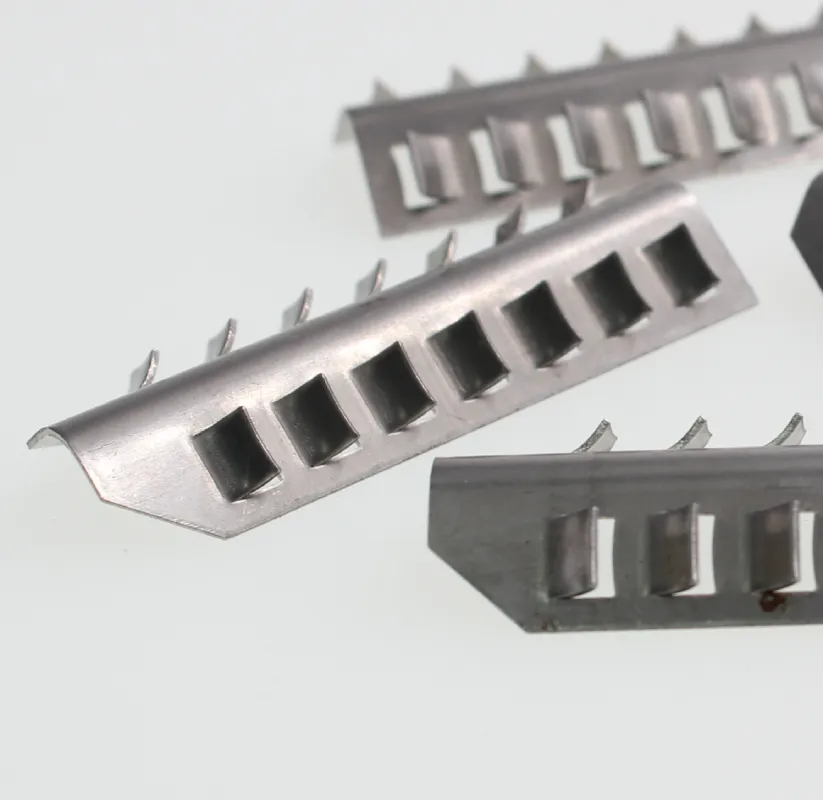
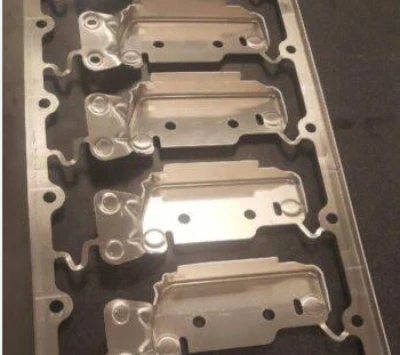

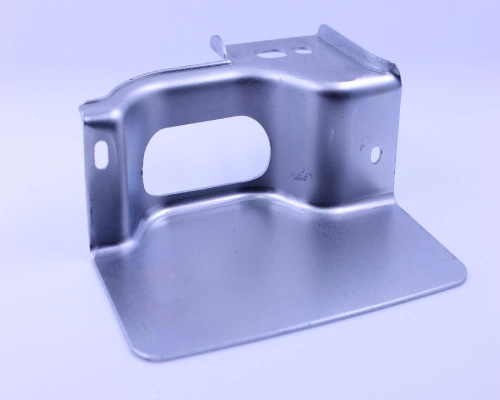
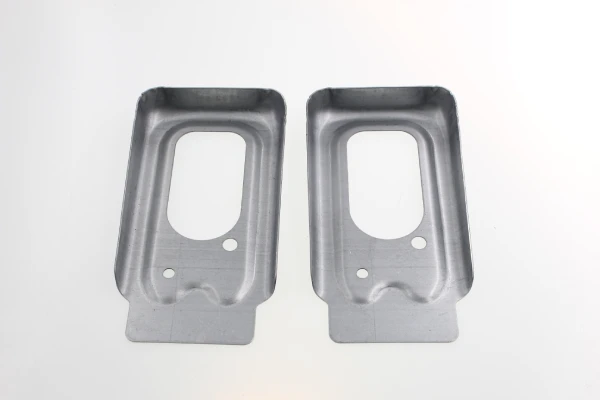
Aerospace sheet metal fabrication is not ordinary metalworking; it represents the convergence of engineering, materials science and precision manufacturing. Its core lies in transforming high-performance alloys into reliable structural components capable of withstanding extreme operating conditions through controlled plastic deformation.
The fundamental distinctions between aerospace sheet metal fabrication and commercial-grade processing manifest in three key aspects: processes must be tailored to unlock the specific potential of materials such as T6-tempered aluminium alloys or Ti-6Al-4V; aerospace tolerances are typically stricter than ±0.13mm, necessitating statistical process control and full traceability throughout production. Grasping the unique characteristics of aerospace sheet metal fabrication constitutes the foundational step for establishing qualified supplier assessments and technical negotiations.
This article aims to deconstruct the core elements of the aerospace sheet metal fabrication process chain. It covers material selection, precision forming, joining techniques, and quality control systems compliant with AS9100 and Nadcap standards. Key focus areas include the machining characteristics of aerospace materials such as aluminium alloys, titanium alloys, and high-temperature alloys, alongside critical control factors in forming, heat treatment, mechanical joining, and welding. This provides a technical evaluation framework for professional decision-making.
Definition, Scope and Distinctive Characteristics of Aerospace Sheet Metal Fabrication
Aerospace sheet metal fabrication is dedicated to transforming high-performance metal alloys into lightweight, structurally integrated components that must withstand the rigours of extreme operational environments. Unlike conventional sheet metal manufacturing, aerospace sheet metal fabrication is governed by stringent airworthiness regulations, encompassing primary and secondary structural components—from fuselage skins, wing spars and frames to engine nacelles and fairings. The core distinctiveness of aerospace sheet metal fabrication lies in its non-negotiable triple requirements: weight optimisation, structural reliability, and full process traceability.
Every process stage is driven by material physical and metallurgical properties: for instance, the forming limits of aluminium-lithium alloys are determined by their specific ageing response and crystal orientation. Tolerances strictly adhere to aerospace-grade standards, typically maintained within ±0.13 millimetres to ensure precise aerodynamic contours and assembly fit.
Furthermore, aerospace sheet metal fabrication processes must inherently incorporate compliance with AS9100 certification and NADCAP special process approvals (such as the AMS 2750 heat treatment specification). These controlled, performance-driven aerospace sheet metal fabrication processes constitute the fundamental distinction from conventional manufacturing.
Core Materials for Aerospace Sheet Metal Fabrication
Material selection within aerospace sheet metal fabrication processes fundamentally hinges upon the specific strength-to-weight ratio and environmental endurance requirements demanded by a component's service life. For project decision-makers, understanding aerospace sheet metal fabrication suppliers' mastery of these materials is paramount.
Core alloys—high-strength aluminium alloys (e.g., 7075-T6), titanium alloys (Ti-6Al-4V), and nickel-based superalloys (e.g., Inconel 718)—each present distinct challenges within aerospace sheet metal fabrication processes. These challenges directly impact cost, lead times, and process validation.
Aluminium Alloy Series
Within aerospace sheet metal fabrication, aluminium alloys represent the most widely employed structural materials, where selection and processing directly determine component performance and cost. For instance, the extensively used 2024-T3 aluminium alloy exhibits outstanding fatigue crack resistance in its T3 condition, making it highly suitable for airframe skins. However, its formability is constrained, with complex bends often requiring processing in the softer “O” condition, followed by a full re-heat treatment. This process introduces significant deformation control challenges within aerospace sheet metal fabrication processes.
Another key alloy, 7075-T6, offers higher strength but exhibits notch sensitivity and severe strength loss in the heat-affected zone post-welding. Consequently, its connections rely almost entirely on mechanical fasteners. Aerospace sheet metal fabrication suppliers should provide material certification based on AMS specifications (e.g., AMS-QQ-A-250/4) and demonstrate their capability to optimise forming parameters and compensate for heat treatment distortion across different temper conditions.
Titanium Alloy Series
Titanium alloys, particularly Ti-6Al-4V (Grade 5), hold a significant position in critical aerospace sheet metal fabrication components due to their exceptional strength-to-weight ratio and corrosion resistance. From the perspective of aerospace sheet metal fabrication suppliers, the primary challenges stem from two aspects: high cost and stringent process control requirements. Titanium alloys exhibit limited plasticity at room temperature and exhibit pronounced springback behaviour, necessitating the use of hot forming processes conducted within the temperature range of 760°C to 927°C.
For joining, beyond conventional riveting, gas tungsten arc welding (GTAW/TIG) is a common aerospace sheet metal fabrication process. However, meticulous control of the backing gas is essential to maintain an inert atmosphere behind the weld, preventing contamination.
Superalloys and Stainless Steels
These materials (e.g., precipitation-hardened stainless steel 15-5PH, nickel-based superalloy Inconel 718) are employed for aerospace sheet metal fabrication components subjected to extreme stresses, high temperatures, or highly corrosive environments. Their machining characteristics are characterised by high strength, high work-hardening rates, and sensitivity to heat treatment.
Taking 15-5PH material in aerospace sheet metal fabrication as an example, it is relatively amenable to machining and forming in the solution annealed condition. However, all forming operations must be completed prior to the final age-hardening heat treatment (e.g., H900 condition), as post-ageing strength and hardness increase dramatically, rendering plastic forming virtually impossible.
For aerospace sheet metal fabrication using Inconel 718 material, its exceptionally high strength at elevated temperatures necessitates greater forming forces. It is also highly sensitive to work hardening, often requiring intermediate annealing between multiple forming steps to restore plasticity.
Welding these materials presents a greater challenge, being prone to hot cracking and accompanied by significant changes in metallurgical properties.
Only 4 steps
online custom metal fabrication parts
Contact our experts team and experience the efficiency and economic benefits of digital metal fabrication services.
Upload Design Files
STL , STEP (.stp), IGES (.igs), (.ZIP), or PDF.
Also be a sample or an idea
Quote & Design Analysis
Instant factory quotes and DfM reports, the most reasonable solution.
Manufacturing Begins
Digital processes can initiate order tasks within 24 hours.
On-Time Delivery
Keeping delivery promises, approved by 3000+ Global Company buyers.
Aerospace sheet metal fabrication processes: From flat sheet to precision components
Aerospace sheet metal fabrication processes, from flat sheet to flight-ready components, constitute a meticulously orchestrated chain of operations where precision and predictability are paramount.
It commences with precision blanking (laser cutting or CNC milling), establishing the edge quality and dimensional accuracy required for subsequent forming operations; the core lies in the forming processes, transforming two-dimensional planes into three-dimensional structures; concluding with heat treatment to stabilise the mechanical properties of the final aerospace sheet metal fabrication structural components.
Blanking
Within the aerospace sheet metal fabrication process, blanking serves as the foundational stage determining the initial quality of the blank and the precision of subsequent operations. High-power fibre laser cutting represents the current mainstream aerospace sheet metal fabrication process, yet the resulting heat-affected zone (HAZ) demands stringent control.
Particularly for age-hardened aluminium alloys (such as 6061-T6), excessive ageing within the HAZ creates soft edges, becoming a potential origin for subsequent fatigue cracks. Consequently, aerospace sheet metal fabrication process parameters (power, speed, auxiliary gas) must be optimised for each material thickness and condition, with settings documented. For more sensitive materials, alternatives like high-pressure waterjet cutting may be employed, though attention must be paid to potential edge wetting and surface roughness issues.
Forming Processes in Aerospace Sheet Metal Fabrication
Within aerospace sheet metal fabrication, forming processes constitute the core stage for translating design intent into physical structural functionality. This process involves not merely shape alteration, but the precise control and guidance of a material's plastic flow behaviour under specific thermal conditions.
Bending and Stretch Bending
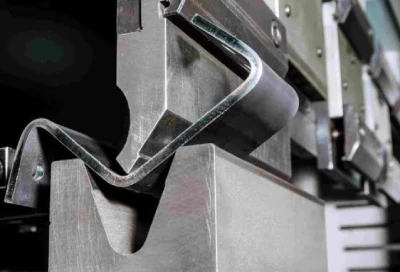
Bending constitutes the most fundamental yet critical forming process within aerospace sheet metal fabrication. Its primary challenge lies in accurately predicting and compensating for springback. For high-strength materials such as titanium alloys or 7075 aluminium, springback can exceed ten degrees. Professional aerospace sheet metal fabrication suppliers should rely not only on empirical formulas but also employ simulation software based on actual material mechanical properties for prediction, incorporating compensation into tooling design.
Stretch bending serves as an effective aerospace sheet metal fabrication process for managing materials with high springback. By applying axial tension concurrently with bending, it achieves a more uniform stress distribution across the cross-section. This significantly reduces springback and cross-sectional distortion, proving indispensable for forming extruded profiles such as aircraft spars.
Stretch Forming
Stretch forming is employed to manufacture large, complex curved skins for aircraft, such as wing and fuselage panels. The principle involves clamping sheet metal and applying tension to induce plastic elongation while conforming it to a mould surface.
The key to the success of this aerospace sheet metal fabrication process lies in controlling the stretch amount (typically 1-3% permanent strain). Insufficient stretching leads to excessive springback and shape instability upon unloading; excessive stretching causes localised thinning or even rupture. Professional aerospace sheet metal fabrication workshops employ forming limit diagrams (FLDs) to guide stretching path planning for different materials and thicknesses.
Hydraulic Forming with Rubber Bladders
Hydraulic forming with rubber bladders (or simply rubber forming) is a flexible forming technique employing high-pressure fluid and universal rubber pads as soft dies to press sheet metal into rigid cavities below. This aerospace sheet metal fabrication process is particularly suited to low-volume, high-variety production of complex double-curvature components, significantly reducing dedicated tooling costs.
The key aspects of this aerospace sheet metal fabrication process lie in pressure curve control and the design of the holding ring. Pressure must be applied in precise stages to ensure orderly material flow and prevent wrinkling. For difficult-to-form materials such as stainless steel or titanium alloys, extremely high unit pressures (exceeding 100 MPa) may be required.
Superplastic Forming
Superplastic forming (SPF) is an aerospace sheet metal fabrication process that exploits the exceptionally high elongation (up to 500% or more) exhibited by materials at specific temperatures and low speeds to produce highly intricate shapes. It is commonly employed for titanium alloys (such as Ti-6Al-4V) and certain aluminium alloys.
This aerospace sheet metal fabrication process is slow and must be conducted under inert gas protection to prevent high-temperature oxidation. Its core control parameters are temperature uniformity (fluctuations must be maintained within ±5°C) and back pressure control. Back pressure is employed to suppress void formation, which is critical for ensuring the mechanical properties of the component. Due to the involvement of high temperatures and specialised tooling, this aerospace sheet metal fabrication process typically requires NADCAP hot working certification.
Creep Forming
Creep forming exploits the property of materials undergoing gradual plastic deformation over time under sustained stress (below yield strength) at elevated temperatures. This aerospace sheet metal fabrication process is primarily employed for large integral panels demanding exceptional residual stress control and dimensional accuracy.
Due to the extremely low deformation rate, forming cycles may extend to several dozen hours. However, post-forming springback is virtually non-existent, yielding outstanding dimensional stability. Success in this aerospace sheet metal fabrication process hinges upon sustained, precise control of both the temperature and stress fields. Tooling typically requires integrated heating and cooling capabilities.
Heat Treatment and Straightening
Heat treatment and straightening form a closely coupled, indispensable pair of processes in aerospace sheet metal fabrication. For heat-treatable strengthening materials (such as aluminium alloys, precipitation-hardening stainless steels, and martensitic age-hardening steels), post-forming heat treatment (solution treatment, quenching, ageing) is the sole means of achieving the ultimate design strength, though it inevitably introduces quenching distortion.
Professional aerospace sheet metal fabrication suppliers must not only strictly adhere to heat treatment protocols such as AMS 2750 (requiring NADCAP accreditation) but also employ finite element simulation to predict deformation trends, incorporating pre-deformation compensation into tooling design.
Form correction serves as the final means to rectify deformation, encompassing manual precision hammering, cold moulding, or stress-relief correction. A critical principle is that form correction must be conducted at low temperatures either before or after final ageing to avoid compromising the established microstructure.
Looking for a reliable custom sheet metal fabrication companies?
Talk To Supro MFG Expert Team
Contact us for competitive ex-factory prices,
and a full range of technical support services.
Aerospace Sheet Metal Fabrication Joining and Assembly Techniques
Within aerospace sheet metal fabrication, the reliability of joining and assembly techniques directly determines the structural integrity, service life, and performance limits of the overall structure. This is not mere mechanical joining, but a series of rigorously certified, controlled processes designed to transform individual precision components into complete load-bearing systems. Core methods include mechanical fastening, welding, and adhesive bonding, with each aerospace sheet metal fabrication process tailored to specific application scenarios.
Mechanical Fastening
Within aerospace sheet metal fabrication processes, mechanical fastening—particularly riveting—constitutes the primary assembly method for primary load-bearing structures such as airframes. The core technique is interference fit riveting, which precisely controls the interference between the rivet diameter and the hole (typically 1.5-3% of the sheet thickness).
This generates uniform radial compressive stress around the hole, significantly delaying fatigue crack initiation and theoretically extending service life severalfold. The critical factor in this aerospace sheet metal fabrication process lies in hole preparation quality: strict adherence to standards such as NASM 1312 is essential to ensure hole diameter tolerances (often H8 grade), perpendicularity (typically ≤0.5°), and hole wall roughness (Ra≤3.2 μm).
Welding
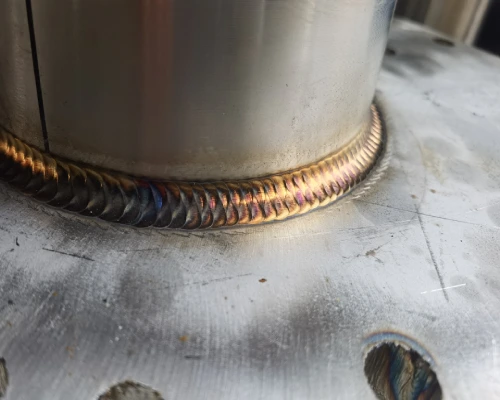
As a permanent joining process, welding is employed in aerospace sheet metal fabrication to produce non-disassemblable sealed compartments, engine components, and piping systems.
The core challenge of this aerospace sheet metal fabrication process lies in controlling heat input and the resulting microstructural evolution. Titanium alloys and nickel-based superalloys primarily employ gas tungsten arc welding (GTAW/TIG) or electron beam welding (EBW), requiring stringent argon shielding on the weld back to prevent oxidation and embrittlement. Aluminium alloys may utilise variable polarity plasma arc welding (VPPAW) to achieve deeper penetration and reduced distortion.
Bonding
Bonding technology is employed in aerospace sheet metal fabrication to join metals with composite materials or to manufacture lightweight sandwich structures. It provides continuous stress transfer, avoiding the stress concentration effects at holes inherent in mechanical fasteners. The success of this aerospace sheet metal fabrication process is largely dependent upon the quality of surface preparation and the control of the curing cycle.
Quality Control, Inspection and Industry Standards in Aerospace Sheet Metal Fabrication
Within the aerospace sheet metal fabrication sector, quality control and inspection constitute not merely end-stage screening but a data- and standards-driven preventive assurance system integrated throughout the entire manufacturing chain. Its core principle is to ensure every product not only meets drawing dimensions but also fulfils the performance requirements specified in the design intent.
This system rests upon three pillars: Firstly, adherence to the AS9100 series quality management system and NADCAP accreditation for specialised processes provides an institutionalised framework for the entire aerospace sheet metal fabrication process, meeting global aerospace supply chain requirements.
Secondly, it employs tiered inspection techniques: from comprehensive 3D scanning comparisons during first article inspection, to Statistical Process Control (SPC) monitoring of critical characteristics throughout aerospace sheet metal fabrication, culminating in non-destructive testing (NDT) methods such as Fluorescent Penetrant Inspection (FPI), Ultrasonic Testing (UT), and Radiographic Testing (RT) to verify internal integrity.
Crucially, all aerospace sheet metal fabrication processes—particularly heat treatment and welding—must undergo rigorous process qualification and continuous monitoring against authoritative standards such as AMS2750 and AWS D17.1.
Conclusion
In summary, aerospace sheet metal fabrication constitutes not merely a collection of isolated processes, but a comprehensive manufacturing ecosystem deeply integrated with materials science, precision engineering, and stringent compliance systems. Its core value lies in precisely translating the potential of high-performance alloys into lightweight, highly reliable structures capable of withstanding extreme operating conditions through controlled plastic deformation and joining techniques.
Supro is a specialist sheet metal fabrication manufacturer. Leveraging advanced equipment, extensive manufacturing expertise, and a professional engineering team, we deliver flawless sheet metal fabrication services to over 3,000 companies worldwide, providing genuine manufacturer quotations.
As an industry-leading sheet metal fabrication manufacturer, we deliver diverse products efficiently and on schedule. From product design and rapid sheet metal prototype fabrication to volume production, we provide expert technical support and exceptional quality. Furthermore, we offer one-stop manufacturing solutions and highly cost-competitive product supply!