Filter posts by category

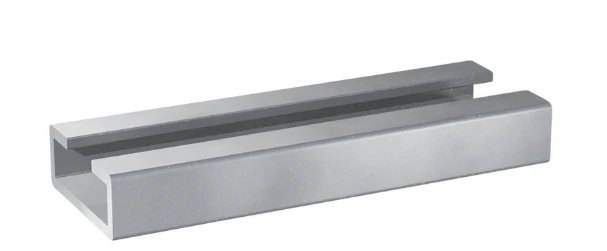
Metal rail

precision server rack rail

Resolving U-Space Alignment Deviations in Server Rack Rails

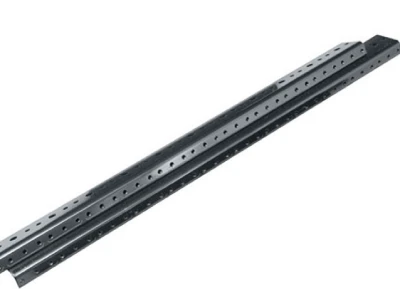
In high-density data center infrastructure, dimensional accuracy of server rack rails is absolutely non-negotiable. If it is discovered during on-site deployment that 1U or 2U servers cannot align with the mounting holes, this would be a costly mistake. This specific U-Space alignment deviation—which directly violates the EIA-310-E standard—typically stems from microscopic manufacturing deviations that create a chain reaction along the vertical length of the profile. When relying on precision server rack rails to support critical IT equipment, even minor cumulative pitch errors during continuous stamping can render the rack unusable, leading to stripped threads and uneven load distribution. To address this issue, basic sheet metal fabrication must be elevated to the level of precision micro-tolerance engineering. This article provides an in-depth analysis of the root causes of U-Space positioning deviations, particularly material stretching deformation and die pitch errors. Furthermore, it details how advanced CNC servo feeding technology and optical First Article Inspection (FAI) protocols ensure that every custom server rack […]

Resolving U-Space Alignment Deviations in Server Rack Rails Read More »

custom server rack rails

Preventing Server Rack Rail Sagging: Overcoming Insufficient Yield Strength

As enterprise data centers rapidly transition to high-density computing, the mechanical demands placed on infrastructure hardware have increased dramatically. Today, standard server rack rails are no longer merely simple mounting brackets, but critical load-bearing structural components. When deploying 4U enterprise-class servers or heavy-duty UPS battery backup equipment, if the design yield strength of metal server rack rails is insufficient, deflection will inevitably occur under continuous static and dynamic stress. This sagging is rarely a design flaw—rather, it is a direct manufacturing defect. For procurement professionals, purchasing substandard hardware can lead to jammed sliding mechanisms, extended maintenance downtime, and serious risks to expensive IT assets. Typically, these load-bearing failures occur when uncertified manufacturers reduce the specifications of custom server rack rails by substituting substandard 1.5-millimeter steel for the required 2.0-millimeter high-strength steel. As experts in custom sheet metal fabrication, our engineering team regularly analyzes and corrects these specific material compromises. This article provides an in-depth analysis of the mechanical principles of

Preventing Server Rack Rail Sagging: Overcoming Insufficient Yield Strength Read More »

custom server rack rails

Avoiding Hardware Interference in Server Rack Rail

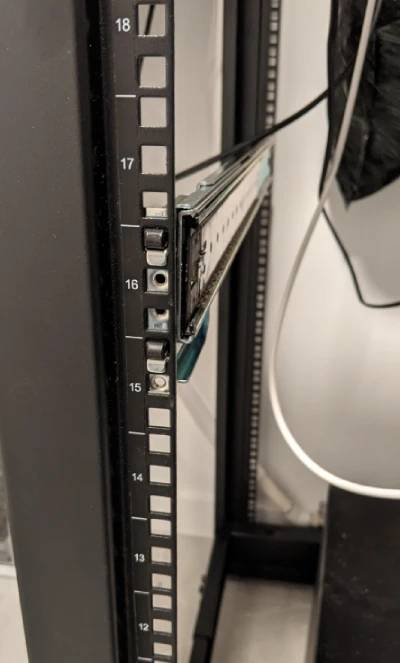
During the deployment of large data centers, few issues cause more unpredictable assembly delays than hardware interference within server rack rails. Standard EIA-310 square mounting holes require strict dimensional tolerances to ensure seamless compatibility with cage nuts and sliding mechanisms. However, uncontrolled powder coating buildup can significantly reduce the effective hole clearance, directly leading to fastener jamming, incorrect torque installation, or even the complete failure to complete rack integration. At Supro MFG, our engineering failure analysis indicates that a seemingly insignificant 0.15-millimeter excess coating thickness on precision server rack rails is sufficient to bring time-sensitive installation schedules to a standstill. This specific dimensional deviation typically stems from uncontrolled electrostatic deposition and the Faraday cage effect during the surface treatment stage, rather than structural inaccuracies in the initial CNC stamping process. This article explores in detail the fundamental physical causes of powder buildup in custom server rack rails and elaborates on the precise manufacturing process control measures required to ensure zero-defect

Avoiding Hardware Interference in Server Rack Rail Read More »

Scroll to Top