

In the field of aluminum sheet metal fabrication, bending 5052 aluminum alloy presents unique process challenges that require a fundamental understanding of the alloy’s metallurgical behavior. As a non-heat-treatable aluminum-magnesium alloy, its mechanical properties and formability are directly dependent on the strain-hardened condition (e.g., H32, H34).
The core challenge in the aluminium sheet metal fabrication bending process lies in controlling springback—a phenomenon significantly more pronounced in aluminium than steel due to its lower elastic modulus (approximately 69 GPa). This necessitates precise compensation strategies based on material-specific data rather than generic rules of thumb.
Furthermore, to prevent cracking or orange peel defects during the bending process, strict control of grain structure is essential, along with adherence to minimum bending radius requirements based on sheet thickness and condition. Successful bending necessitates a systematic approach integrating finite element analysis (FEA) for simulation, statistical process control (SPC) for monitoring, and adherence to geometric dimensioning and tolerancing (GD&T) principles.
This paper systematically elucidates the core process logic, key technical parameters, and quality control essentials in the 5052 aluminum sheet metal fabrication bending process. It delves into how the material properties of 5052 determine its process window, exploring comprehensive technical solutions from die selection and process planning to springback compensation. The aim is to provide engineering practice with a precise manufacturing methodology.
Material Properties—The Cornerstone of Aluminum Sheet Metal Fabrication
Successful bending processes begin with a deep understanding of materials science. As a non-heat-treatable Al-Mg alloy, the material properties of 5052 aluminum directly form the technical foundation for the entire aluminum sheet metal fabrication bending process.
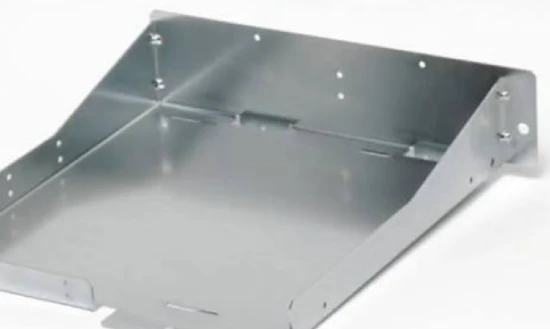
Metallurgical Classification of 5052 Aluminum Alloy
The 5052 alloy belongs to the non-heat-treatable Al-Mg series aluminum alloys. Its core metallurgical characteristic lies in achieving the required mechanical properties through magnesium solution strengthening followed by subsequent work hardening (e.g., in H32 or H34 conditions). This means its strength and hardness depend on plastic deformation processes such as cold rolling.
This characteristic fundamentally impacts the aluminium sheet metal fabrication bending process: the material’s formability is predetermined by its condition at the time of manufacture. Subsequent bending operations cannot alter its matrix properties through heat treatment. Consequently, the aluminium sheet metal fabrication bending process must be executed around its given microstructure. The process window must be precisely calibrated for the specific material condition, with particular emphasis on stability and anisotropic behavior during plastic deformation.
Interpretation of Key Mechanical Properties
Successful aluminum sheet metal fabrication bending relies on precise understanding of several critical mechanical parameters. Taking the common 5052-H32 condition as an example, its typical yield strength is approximately 215 MPa, tensile strength around 255 MPa, and elongation about 10%.
In the bending process, yield strength directly determines the required bending tonnage and springback amount. While lower yield strengths (e.g., O-temper) facilitate forming, they complicate springback control. Elongation defines the material’s ultimate formability and serves as the core basis for calculating the minimum safe bending radius.
Aluminum sheet metal fabrication manufacturers should verify performance data—particularly the yield strength variation range—against material certificates compliant with ASTM B209 or equivalent standards. Batch-to-batch variations significantly impact process stability and dimensional consistency in aluminum sheet metal fabrication.
Core Characteristics of the Aluminium Sheet Metal Fabrication Bending Process
Beyond fundamental mechanical properties, several characteristics of 5052 alloy warrant priority consideration for the aluminium sheet metal fabrication bending process. First is anisotropy: due to rolling texture, bending performance parallel to the grain direction typically outperforms perpendicular directions, directly influencing bend line planning and minimum bend radius determination.
Second is grain size: coarse grains cause orange peel on the bend’s outer surface, necessitating grain size control according to ASTM E112 standards.
Finally, its exceptional corrosion resistance demands avoiding surface scratches and microcracks during the bending process to prevent damage to the natural oxide protective layer, which could become a stress corrosion initiation point.
Therefore, precisely defining material conditions and understanding their corresponding properties at the project’s outset is fundamental to planning the aluminum sheet metal fabrication bending process, selecting dies, and setting process parameters. This ensures consistent quality from the first part through mass production.
Three Core Challenges and Mechanism Analysis in the Aluminium Sheet Metal Fabrication Bending Process
In the aluminium sheet metal fabrication bending process, operations involving 5052 aluminum alloy face three systemic challenges, all rooted in the interaction between material physical properties and forming mechanics.
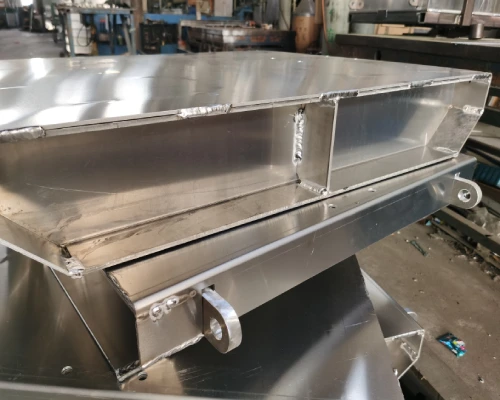
Springback Prediction and Control in Aluminium Sheet Metal Fabrication Bending Process
Springback represents the primary and quantifiable technical challenge in aluminium sheet metal fabrication bending. Its physical essence lies in the release of elastic strain energy upon unloading. With an elastic modulus only one-third that of steel, aluminium stores a proportionally higher amount of elastic strain to achieve equivalent plastic deformation, resulting in significantly greater geometric springback.
Accurate springback prediction cannot rely on empirical coefficients but must be based on the actual stress-strain curves of specific material batches. This requires applying bending theory to calculate neutral layer displacement and elastic recovery angle.
In practical aluminum sheet metal fabrication bending process control, a closed-loop strategy is essential: real-time feedback compensation via angle sensors on CNC bending machines, or employing over-bend compensation algorithms based on finite element analysis (FEA). A robust bending process incorporates validated springback compensation values into the process database to ensure angular consistency across different material batches.
Prevention of Cracking and Orange Peeling in Bending Processes
Cracking and orange peeling represent two distinct defect mechanisms, both directly linked to material limits. Outer fiber cracking occurs when bending tensile strain exceeds the material’s ultimate elongation in that direction, typically caused by excessively small bending radii (low R/t ratio) or overly hard material conditions. Preventing cracking during the bending process requires strict adherence to minimum bending radius specifications based on material condition.
Orange peel, however, is a surface metallurgical defect stemming from coarse grain structure. During significant plastic deformation, coarse grains exhibit uneven slip at the surface, creating an orange-like appearance. This issue cannot be corrected during the bending process and must be controlled during incoming material inspection by managing grain size according to ASTM E112 standards.
Ensuring Dimensional and Geometric Tolerances
Maintaining cumulative dimensional and geometric tolerances for complex, multi-pass bent components is a critical benchmark for aluminum sheet metal fabrication proficiency. The challenge arises from the accumulation of multiple error sources: springback variations per operation, fixture positioning repeatability, and residual stresses from prior bends interfering with subsequent processes.
An unoptimized bending sequence may cause final flatness deviations due to the accumulation and release of residual stresses. This necessitates systematic error management through FEA simulation and optimized bending sequence planning during the fabrication process.
Only 4 steps
online custom metal fabrication parts
Contact our experts team and experience the efficiency and economic benefits of digital metal fabrication services.
Upload Design Files
STL , STEP (.stp), IGES (.igs), (.ZIP), or PDF.
Also be a sample or an idea
Quote & Design Analysis
Instant factory quotes and DfM reports, the most reasonable solution.
Manufacturing Begins
Digital processes can initiate order tasks within 24 hours.
On-Time Delivery
Keeping delivery promises, approved by 3000+ Global Company buyers.
Preparatory Work for the Aluminium Sheet Metal Fabrication Bending Process: Dies, Equipment, and Parameter Settings
The preparatory phase is a systematic planning stage ensuring repeatability and precision in the aluminium sheet metal fabrication bending process. This stage translates design intent into executable manufacturing instructions, with its core focus on the precise alignment of dies, equipment, and parameters.
Scientific Selection of the Die System
Die selection forms the physical foundation of the bending process, directly impacting forming quality and geometric accuracy. Its core principle is establishing the precise relationship between the lower die V-groove opening width (V) and material thickness (t). Industry standards recommend the formula V = 6t to 8t, providing sufficient space for material flow while ensuring bending force concentrates along the intended bend line.
The selection of the upper die tip radius (R_punch) must match the target inner radius (R_i) and material ductility. For 5052-H32 aluminum sheet metal fabrication bending processes, R_punch is typically required to be no greater than the target R_i.
Capability Requirements for Aluminum Sheet Metal Fabrication Bending Equipment
Equipment capability determines the limits of the aluminum sheet metal fabrication bending process. A CNC press brake equipped with a high-rigidity frame, precise pressure control, Y1/Y2 axis compensation, and real-time angle measurement systems is essential for managing aluminum springback and achieving closed-loop control. Its repeatability must remain stable within ±0.0004 inches to meet stringent tolerance requirements.
Establishing the Parameter Library for Aluminium Sheet Metal Fabrication Bending Processes
The parameter library for aluminium sheet metal fabrication bending processes serves as the data hub that translates material properties, die geometry, and equipment capabilities into consistent outputs. This includes calculating precise bending forces based on yield strength from material certificates, establishing validated minimum bend radius tables according to material condition and thickness, and defining optimal combinations of pressure, speed, and hold time.
Aluminum sheet metal fabrication manufacturers maintain such parameter databases for common material specifications, significantly reducing trial-and-error costs while ensuring consistent quality from the first part to mass production.
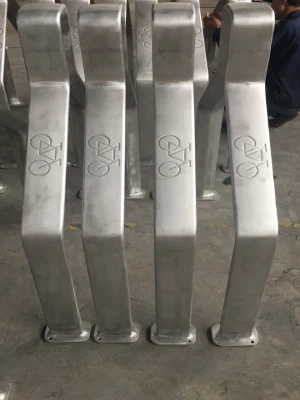
Execution and Control of the Aluminium Sheet Metal Fabrication Bending Process
The process execution phase is the critical transformation stage where preliminary planning is converted into physical reality. In the aluminium sheet metal fabrication bending process, this involves precise management of the bending sequence, dynamic compensation, and special requirements.
Principles for Optimizing the Bending Sequence in 5052 Aluminium Sheet Metal Fabrication
Establishing the bending sequence for 5052 aluminum sheet metal fabrication is not merely a sequential listing of drawing dimensions but a critical process design activity. It aims to systematically control cumulative errors and workpiece rigidity. The fundamental principles are “outside-in” and “avoid interference.” Their purpose is to minimize the adverse accumulation of residual stresses between operations and ensure stable, reliable positioning references for subsequent bends.
For complex multi-sided enclosures, finite element analysis software can simulate the interactive effects of stress distribution and springback under different sequences. This is a prerequisite for achieving high dimensional consistency in custom aluminum sheet metal fabrication.
Springback Compensation Methods in the 5052 Aluminum Sheet Metal Fabrication Bending Process
Springback compensation is a core control element in the aluminum sheet metal fabrication bending process, requiring a multi-tiered strategy. The primary method involves presetting an overbend angle based on historical data or FEA simulations.
Advanced custom aluminum sheet metal fabrication relies on two approaches: first, real-time closed-loop compensation based on sensor feedback, dynamically adjusting during bending; second, employing “coining” technology, which applies extremely high localized pressure at the end of the upper die stroke to induce slight thickness reduction in the bend zone. This permanently alters stress distribution to suppress springback. The specific method selection depends on tolerance requirements and production volume.
Special Processes for High Surface Quality Requirements
When processing 5052 sheet with pre-anodizing, pre-coating, or high mirror finish requirements, the standard aluminium sheet metal fabrication bending process must undergo specialized adjustments. The core objective is to prevent any visible scratches, indentations, or coating micro-cracks.
This necessitates the use of specialized tooling during custom aluminum sheet metal fabrication, such as upper dies made of polyurethane or hard alloy with high-gloss polishing, and lower dies with deburred and clean V-groove entrances.
Regarding process parameters, the bending radius should be appropriately increased to reduce surface tensile strain, and bending speed may need to be lowered to minimize sliding friction. For pre-coated sheets, applying protective film prior to custom fabrication is advisable. All these special measures must be explicitly defined in process documentation and subjected to rigorous visual and adhesion testing (e.g., ASTM D3359 crosshatch adhesion test) during first article inspection.
Looking for a reliable custom sheet metal fabrication companies?
Talk To Supro MFG Expert Team
Contact us for competitive ex-factory prices,
and a full range of technical support services.
Quality Inspection, Defect Analysis, and Corrective Actions for Aluminum Sheet Metal Fabrication
The quality inspection system serves as the final verification of the effectiveness of the aluminum sheet metal fabrication bending process. A comprehensive inspection plan must cover the entire process from first article verification to process monitoring.
First article inspection must be conducted against complete geometric dimensioning and tolerancing (GD&T) drawings. Comprehensive measurements of critical features using digital angle gauges, height gauges, and 3D scanning equipment ensure compliance with GD&T requirements. For batch production of custom aluminum sheet metal fabrication, establish a statistical process control (SPC) system.
Perform sampling measurements of key dimensions such as bend angles and flange heights, plot X-R control charts, and continuously monitor the process capability index (Cpk) to ensure it remains consistently above 1.33.
Common Defects in Aluminum Sheet Metal Fabrication
Defects in the aluminum sheet metal fabrication bending process fall into two main categories: appearance and dimensional. Appearance defects primarily include macro cracks in the outer bend radius area (caused by an excessively small R/t ratio or insufficient material ductility), orange peel texture (directly resulting from coarse-grained raw material), and tool marks.
Dimensional defects exhibit greater systematic patterns: angular deviation (due to miscalculated springback compensation or equipment compensation failure), flatness distortion (caused by uneven residual stress release from improper multi-pass bending sequences), and post-bending displacement of hole positions or edge relative locations.
The root causes of these defects can typically be traced to four core areas: material condition not conforming to specifications, incorrect parameter settings in the aluminium sheet metal fabrication bending process, tool wear or improper tool selection, and equipment accuracy drift.
Accurate defect classification is the first step in initiating effective corrective actions: For springback issues, update the bending process parameter library and revise work instructions; for scratches, implement standard operating procedures for die cleaning and consider upgrading die surface coatings. All changes must undergo validation, forming a closed-loop system for continuous improvement in the bending process.
Conclusion
The stability requirements for the 5052 aluminum sheet metal fabrication bending process demand precise mastery of material mechanical properties, springback compensation based on physical models, optimized die and equipment parameters, and a closed-loop quality control system. Relying solely on operator experience can no longer meet modern manufacturing demands for precision tolerances and batch consistency.
If you require aluminum sheet metal fabrication services, contact us immediately! The Supro team is here to assist you. Established in 2004, we are an aluminum sheet metal fabrication manufacturer. With extensive manufacturing experience, a robust technical team, and comprehensive manufacturing resources, we have provided one-stop aluminum sheet metal fabrication services to over 3,000 enterprises worldwide.
At Supro, our dedicated quality control team, seasoned QC personnel, and scientific quality assurance processes ensure products undergo rigorous inspection to meet specified technical standards. We maintain full traceability for defective items through: raw material inspection, mold inspection, equipment inspection, process sampling, packaging inspection, and final inspection. Our QA (Quality Assurance) ensures products comply with essential tolerances and quality benchmarks. We guarantee on-time delivery for all products. From design and rapid prototype fabrication to mass production, we deliver expert technical support and exceptional quality with highly cost-competitive supply.
Contact us today to start an efficient partnership!