
An ISO 9001:2015-certified manufacturer providing large-scale manufacturing services to OEM customers worldwide
Custom Deep Drawing Stamping Services
As an ISO 9001:2015-certified custom metal parts manufacturer in China, Supro MFG produces precision deep-drawn stamping components for global OEMs. We help reduce sourcing and production risk through material review, project-specific PPAP/FAI quality controls, and clear engineering communication. Tooling, inspection scope and delivery requirements are agreed during quotation to support stable repeat production.
Rapid stamping die Turnaround
Committed to exceeding expectations for quality and rapid turnaround, and meeting high-quality sheet metal parts.
Consistency & high quality
Whether it is rapid prototyping & large-volume manufacturing, we will implement it according to customer needs and standards.
Low Cost Effective
Integrate product design, bending, stamping, cutting, surface treatment, etc. to provide a series of manufacturing solutions.
Deep Drawing Stamping for Custom Metal Parts
Deep drawing converts flat sheet or coil into seamless hollow, cup-shaped, cylindrical or box-shaped parts through controlled material flow in a forming die. It is most suitable when part geometry, material formability, annual demand and tooling economics justify a dedicated forming route.
Supro MFG is a China-based custom metal parts manufacturer supporting global OEM projects from DFM review and tooling development through sample approval and repeat production. Depending on the drawing, we may compare custom metal stamping, metal spinning and CNC machining before recommending deep drawing.
Material grade, thickness, draw ratio, corner radius, tolerance, surface finish, inspection documents and production volume are reviewed during quotation. Tooling, tryout, secondary operations and quality documentation are then defined around the approved project requirements.
Send your drawing and production requirements for an engineering review.

Deep Drawn Metal Parts and Material Examples
Material selection affects drawability, thinning, springback, surface quality and tool life. We review the part geometry and production requirements before recommending aluminum alloys, stainless steel, carbon steel or copper alloys. The examples below illustrate material and forming possibilities; final feasibility is confirmed from the drawing, grade, thickness, tolerances and annual volume.
Engineering Review from Tooling Design to Repeat Production
From DFM Review to Repeat Production
Every precision component undergoes a rigorous five-stage metal fabrication flow. We translate your STEP/IGS files into optimized tooling layout, followed by progressive deep drawing, trimming, and automated surface treatment. By integrating strict in-process QC and DFM evaluation at each step, our engineered stamping process planning is used to manage wrinkling, tearing, thinning and dimensional variation. Inspection scope, reports and customer-specific quality requirements are confirmed during quotation and quality planning.
Technical DFM & Tooling Simulation
Our project engineers review STEP, IGS or other available drawings before tooling design. For complex deep-drawn parts, DFM review and forming simulation can assess material flow, wall thinning, springback, draw ratio, corner radii and likely forming limits. We then refine the die layout, blank shape and process sequence, and agree which risks need sample trials or inspection before tool release.
This engineering review helps reduce avoidable tooling revisions and production delays. The analysis method depends on part geometry, material grade, tolerance and expected volume; any specific simulation software or deliverable is confirmed during quotation.

Premium Raw Material Validation
Material validation starts with the grade, thickness, temper and surface condition specified for the project. Incoming coil or sheet is checked against the purchase specification before forming. Where the application requires it, we can agree on mill test reports (MTRs), chemical composition verification, batch identification and applicable RoHS or REACH documentation as part of the quality plan.
Inspection methods and traceability records are confirmed during quotation and applied to the agreed material and production batches. This gives buyers a clear basis for reviewing material suitability and the documents available with their order.
Multi-Stage Deep Drawing and Production Tooling
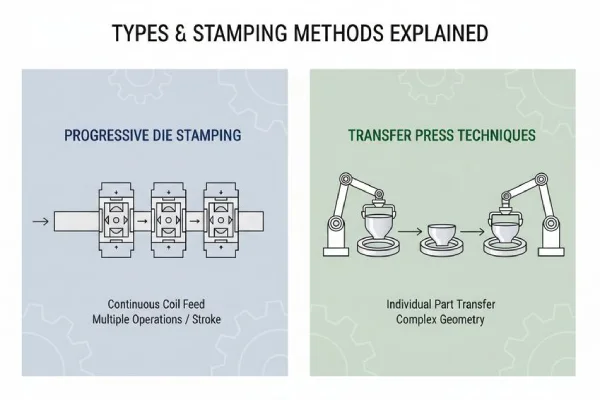
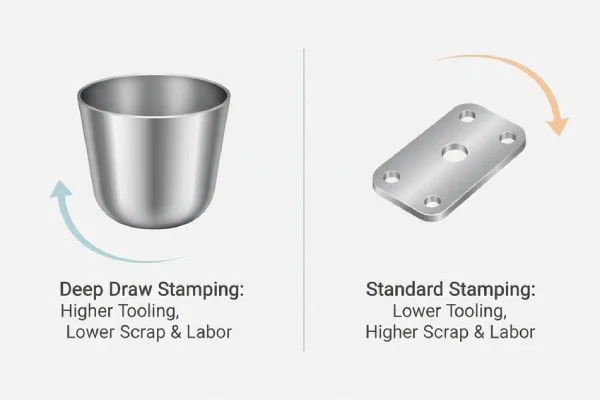
After reviewing the drawing and material, we choose the forming route according to part geometry, draw depth, wall-thickness limits and expected production volume. A part may need one drawing operation, several redraw stages, or progressive tooling for repeat production. Hydraulic or mechanical press selection, blank-holder force, die radii and material flow are evaluated for the agreed route. Tool trials and inspection help identify and control tearing, wrinkling and thinning before repeat production; the final process and acceptance criteria are confirmed for each project.
Precision Trimming & Piercing
After forming, parts may require trimming and piercing to establish the final edge profile and mounting features. We review hole position, edge condition, burr limits and access for inspection against the drawing, then select suitable secondary tooling or operations. Sample and in-process checks verify the agreed dimensions and surface requirements before assembly or shipment. The achievable tolerances and inspection method depend on material, geometry and production volume and are confirmed during quotation.
Process Selection by Geometry, Material and Volume
Compare Deep Drawing With Other Forming Routes
Deep drawing is best suited to seamless hollow parts when the required geometry, material formability and repeat volume justify dedicated tooling. For shallower shapes, lower quantities or designs that may change, we compare sheet metal stamping, metal spinning and CNC machining before recommending a route. Our engineers review the drawing, grade, thickness, draw ratio, critical tolerances, surface finish and annual volume, then explain tooling, sample and inspection requirements during quotation.
Precision deep drawing stamping
Progressive drawing stamping
Precision metal spinning
Material certificates, composition checks and RoHS/REACH documentation can be supplied when specified for the project.
Deep Drawing Materials and Forming Considerations
Material availability and forming feasibility depend on the specified grade, temper, thickness and order volume. Our engineers review the drawing against material drawability, wall thinning, springback, surface finish and tooling requirements before recommending a deep drawing route. Material certificates, composition checks and applicable RoHS/REACH documentation can be included in the quality plan when agreed during quotation.
aluminum alloy
1100 / 1050 - O3003 - O/H14
5754 / 5182 - O
5052 - O/H32
Aluminum Alloys for Deep Drawing
In deep drawing, aluminum alloy selection depends on elongation, work-hardening behavior, sheet anisotropy and the required surface finish. Choosing an unsuitable grade or temper can increase earing, severe thinning, tearing and orange-peel risk. Our aluminum alloy fabrication review considers 1xxx, 3xxx and 5xxx series grades against the drawing, finish and production volume. Tool radius, blank-holder force, lubrication and intermediate annealing may also need review before a production die is released. For a wider comparison of manufacturing routes, see our metal fabrication process guide.
stainless steel
SS 305SS 304
SS 316 / SS 316L
SS 430
Stainless Steel in Deep Drawing Stamping Services
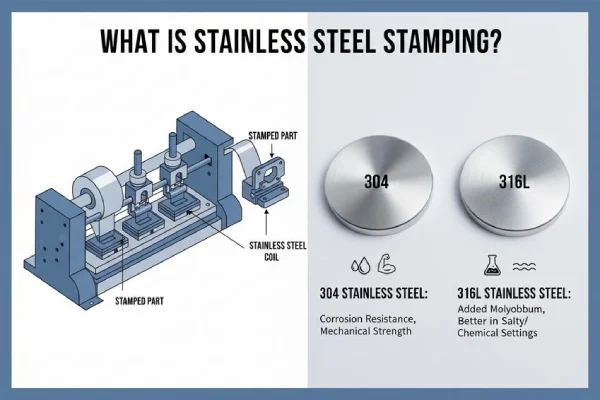
Stainless steel is widely used for deep-drawn components, but its strength, work-hardening behavior and springback require closer control of grade, temper and tooling than many aluminum or low-carbon steel grades. If the material grade, temper, lubrication, die radius or blank-holder force is unsuitable, cracking, excessive thinning, scratches or dimensional variation can result.
Austenitic 300-series grades are common candidates for deep drawing; some ferritic 400-series grades can suit specific geometries and cost targets. Final grade and tooling selection should be checked against the actual drawing and forming trials.
Carbon Steel
ASTM A1008 / A1008M (DS / DDS / EDDS)EN 10130 (DC03 / DC04 / DC06)
DX53D+Z
DX54D+Z / DX56D+Z
DC04+ZE
HX260LAD / HX300LAD
Carbon Steel for Deep Drawing
Carbon and coated steel grades for deep drawing: Low-carbon and interstitial-free (IF) steels can offer useful formability when the grade, temper, sheet thickness and tooling suit the part. The material’s plastic strain ratio (r-value), elongation and surface condition help us assess drawability and risks such as wrinkling, tearing or coating damage. For projects requiring documented traceability, the applicable mill test report (MTR), batch identification and inspection records should be specified in the quotation and quality plan. Final grade and forming feasibility are confirmed from the drawing and agreed production requirements.
Copper & brass & Bronze
C11000C10200
C10100
C26000
C26800
C27200
C5191
C52100
C75200
C75400
Copper, Brass and Bronze for Deep Drawing
In the deep drawing stamping process, copper and copper alloys are indispensable in the electronics, semiconductor, automotive connector, high-end heat sink, and light industrial hardware sectors due to their excellent ductility, superior electrical and thermal conductivity, as well as their unique corrosion resistance and aesthetic appeal.
Compared to stainless steel and carbon steel, copper alloys exhibit good isotropy during drawing, high draw ratios, and resistance to tearing. However, due to their relatively soft nature, they are highly susceptible to surface scratches, galling, and dimensional variations caused by improper springback control during processing.
Titanium Alloys
Grade 1Grade 2
Grade 11
Grade 17
Titanium Alloys for Deep Drawing
In the deep drawing stamping process, titanium alloys are considered the ultimate challenge in the field of material forming. With their remarkable strength-to-weight ratio, top-tier corrosion resistance, and exceptional biocompatibility, they serve as core materials in aerospace, medical implants, high-end consumer electronics (such as smartwatch and smartphone casings), and hydrogen fuel cell plates.
However, titanium alloys exhibit an extremely high yield-to-tensile ratio at room temperature, suffer from severe springback, and are highly prone to galling and tensile cracking. Consequently, the selection of titanium alloy grades suitable for deep drawing is very limited, relying primarily on commercial pure titanium (CP Titanium) and a few specially treated low-alloy grades.
Securing Your Designs with Enterprise-Grade Confidentiality at Every Stage of Manufacturing
Drawing Confidentiality and NDA Support

Customer drawings, CAD files and product specifications are treated as confidential project information. A non-disclosure agreement can be signed before drawing review when requested, and access is limited to the people involved in quotation, engineering, manufacturing and inspection.
The permitted use, retention period, return or destruction of project files can be agreed during onboarding. This gives startups, engineering teams and established OEMs a clear confidentiality framework without making unsupported claims about a specific IT-security system.
WHY CHOOSE
When Deep Drawing Is the Right Process
Deep drawing is a strong choice for seamless hollow, cup-shaped, box-shaped or axisymmetric parts that require repeatable geometry across ongoing production. It can reduce welded seams and multi-piece assembly, but it also requires suitable material behavior, draw radii, tooling investment and stable annual demand.
For shallow profiles, lower volumes or changing designs, custom metal spinning, sheet metal stamping or CNC machining may be more economical. The correct route depends on geometry, tolerance, material, finish, volume and the acceptable tooling strategy.
Our DFM review focuses on draw ratio, thinning, corner radii, grain direction, blank development, lubrication, springback and inspection requirements before tool release.
No design files? Let Supro MFG do it for you.
Some buyers approach us with a product concept, sample or sketch but no production drawing. This does not have to stop the project.
Discuss your concept with our engineering team.
Supro MFG’s engineering team can review the information available and agree on the design, DFM and drawing work needed before tooling. Depending on the project, common exchange formats include STEP/STP/SLDPRT/DXF/PDF/PRT/DWG/AI.
The scope of design support and deliverables is agreed during quotation, helping OEM teams and product developers move from an initial idea toward manufacturable deep-drawn parts.
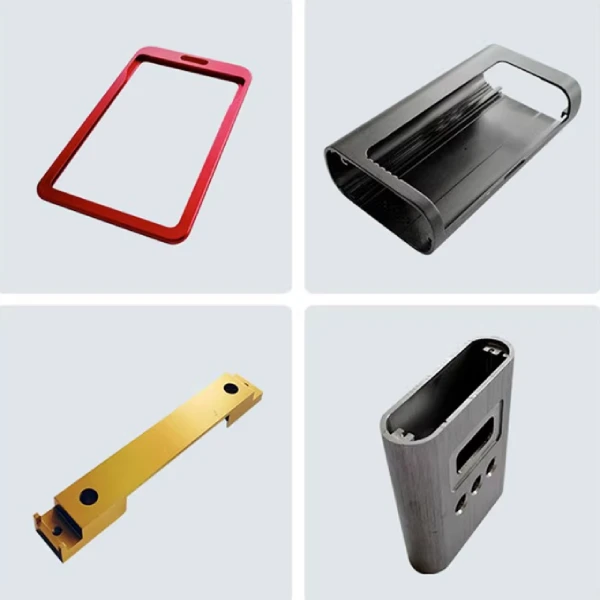
Surface Finishing for Deep-Drawn Parts
Reasonable surface treatment of metal parts can improve the durability, corrosion resistance, heat resistance, electrical conductivity and appearance decoration of the material.
- Mirror polishing
- Wire drawing
- Galvanizing
- Anodizing
- Black oxide coating
- Chrome plating
- Electroplating
- Powder coating
- Sandblasting
- Laser engraving
- Printing
Engineering, Quality and Production Support
Our engineers review draw ratio, corner radius, wall thinning, flange stability, tool clearance and material behavior before tooling release. During sampling and repeat production, the quality plan can include incoming material verification, first-article inspection (FAI), in-process dimensional checks and final inspection against the approved drawing. PPAP documentation, material certificates and other reports are defined by the customer requirements and agreed during quotation.
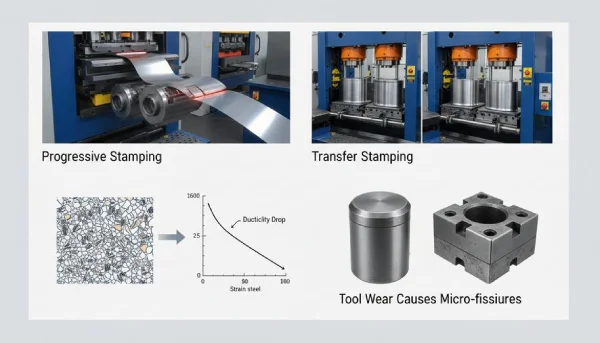
Engineering-Driven DFM Support:
Our engineers are more than just metal stamping manufacturers; we are your design partners. Before tooling development begins, we provide detailed DFM reports that identify potential risks of cracking, springback, or material waste, helping reduce avoidable tooling revisions, material waste and production risk before release.
Quality Consistency & Global Standards:
In response to the stringent requirements many customers have for high-precision metal stamping, we strictly adhere to the ISO 9001:2015 quality management system. Dimensional reports, material certificates or MTRs, FAI records and other quality documents can be supplied when specified during quotation and included in the project quality plan.
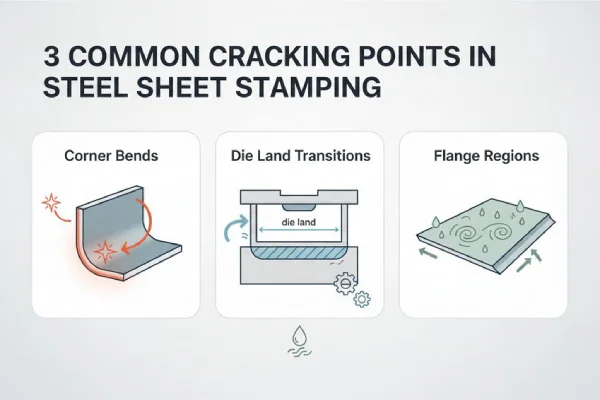
Seamless Communication & Transparency:
Cross-border projects require clear technical communication. Supro MFG provides English-language engineering feedback and production updates at the communication frequency agreed for the project, helping global buyers review decisions, schedules and open issues without relying on unsupported response-time promises.
Deep Drawing Engineering Resources and Project Evidence
Typical Deep-Drawn Parts and Applications
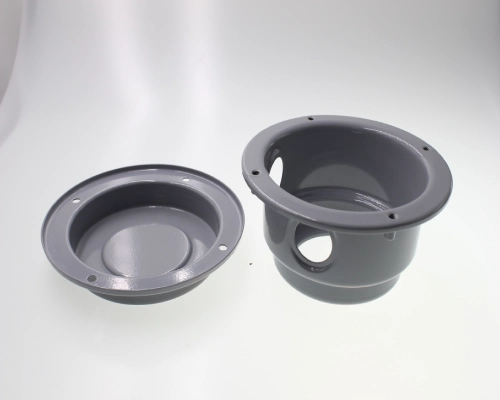
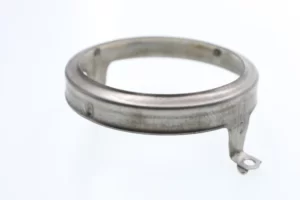
We produce round, square, rectangular and other deep-drawn parts, including cups, housings, covers and application-specific components. Feasible dimensions, wall thickness and tolerances depend on the material grade, geometry, draw depth and tooling route. Our engineers confirm the applicable range against each drawing and agree the inspection method before quotation and production.

Typical deep-drawn components include:
- Cups, cans and cylindrical housings
- Battery, sensor and motor cases
- Filter bodies and actuator shells
- Protective covers, lids and flanged containers
- Square or rectangular enclosures with controlled corner radii
- Custom hollow parts requiring reduced seams or assembly
Each application is assessed by material grade, draw ratio, thickness, tolerance, finish, inspection requirements and annual volume rather than by shape alone.
F.A.Q
Supro MFG is a China-based custom metal parts manufacturer, not a trading company. We specialize in custom sheet metal parts, prototypes and related metal fabrication processes under an ISO 9001:2015-certified quality system. Surface treatment, heat treatment and standard purchased components may be coordinated with qualified supporting suppliers when required by the project. Learn more about our factory.
Yes. We operate our own sheet metal fabrication, welding, laser-cutting and precision CNC machining workshops, covering more than 3,000 square meters. The original operating team includes 12 technical engineers, 36 skilled workers, six quality engineers and an English-speaking project-support team.
Yes. NDA requirements can be confirmed before detailed technical review. Customer drawings, specifications and patented technology are treated as confidential, and access is limited to authorized personnel involved in engineering, production, quality and project communication. Contact our project team before sending sensitive files if you require an NDA first.
Yes. Our engineering team can help develop manufacturable design files from your concept, reference sample or functional requirements. Supported formats may include STL, STEP, IGES, PDF and CAD. DFM feedback can be provided to improve manufacturability, control cost and prepare the design for prototyping. You can send your concept or requirements for an initial review.
Quality control begins with drawing and material review and continues through receiving inspection, First Article Inspection (FAI), In-Process Quality Control (IPQC), dimensional verification, surface-finish inspection, packaging inspection and final release. Inspection reports, photographs and third-party inspection support can be provided according to the agreed project scope.
Common payment methods include T/T, PayPal, Western Union and L/C. The applicable payment schedule and channel are confirmed during quotation and order review.
Yes. PPAP Level 3 documentation can be provided when it is included in the agreed quotation and quality-documentation scope. Tell us your PPAP requirements during RFQ review so the document package can be quoted correctly.
Our quotation is based on the specified material, manufacturing route, labor, tooling, surface finish, inspection scope and required documentation. We prioritize traceable materials, controlled production and verified quality rather than reducing price through unapproved substitutions or omitted inspection. The objective is a competitive total manufacturing cost with lower quality and delivery risk.
We do not set a general minimum order quantity. Suitable custom sheet metal projects may begin with a small number of prototypes or validation parts and later transition to low-volume or repeat production. Feasibility and pricing still depend on tooling, material, setup and process requirements.
Before production, we review material availability, tooling, process sequence, inspection scope and required finishing, then establish a project-specific production plan. Progress is monitored against key milestones, and capacity or scheduling risks are escalated when identified. Delivery commitments remain subject to approved requirements and force-majeure events.
Forming, tooling and defect-control resources
Deep Drawing Engineering Guides
Use these guides to compare deep drawing methods, review wrinkle prevention in deep-drawn parts, and assess tooling cost and defect control before requesting a quote.
Request a Deep Drawing Manufacturing Review
Only 4 steps
To request a manufacturing review, share the drawing or available concept, material grade and thickness, critical dimensions and tolerances, expected annual volume, surface finish and target delivery date. Our team can then review the forming route, tooling, sample and inspection requirements with you.
Upload Design Files
STL , STEP (.stp), IGES (.igs), (.ZIP), or PDF.
Also be a sample or an idea
Quote & Design Analysis
Instant factory quotes and DfM reports, the most reasonable solution.
Manufacturing Begins
Digital order workflows support timely project initiation after technical and commercial requirements are confirmed.
On-Time Delivery
Keeping delivery promises, approved by 3000+ Global Company buyers.
China-Based Deep Drawing Manufacturer for Global OEM Programs
Submit the drawing, material and thickness, expected annual volume, critical tolerances, surface finish and target delivery date.
Our engineering review will identify the recommended forming route, tooling and tryout plan, secondary operations, inspection documents and lead-time assumptions for quotation.