Filter posts by category

Blogs

flux-cored welding wire

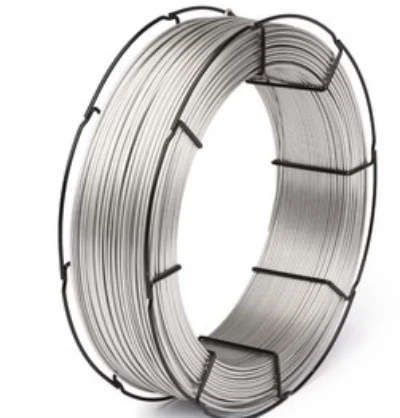
Analysis of the AWS Welding Wire Classification System

The American Welding Society (AWS) filler metal classification system provides the technical foundation for specifying and selecting welding consumables across the entire metalworking industry. Understanding the AWS welding wire classification framework is critical to ensuring weld integrity, compliance with process specifications, and consistent mechanical properties across different production batches. The AWS classification standards standardize filler metals and clearly define the welding results that specific welding wires will produce, enabling manufacturers to maintain consistency in weld quality, chemical composition, and mechanical properties regardless of the welding wire brand or source. This article examines the AWS welding wire classification system from a professional sheet metal fabrication perspective, exploring the naming structure, key specifications, and practical selection criteria for driving quality outcomes in custom manufacturing environments. AWS A5 Series: The Basis for Welding Wire Classification The AWS A5 series of standards provides the basis for welding wire classification, defining the chemical composition limits and mechanical property thresholds that determine the selection of filler […]

Analysis of the AWS Welding Wire Classification System Read More »
flux-cored welding wire

Flux-Cored Welding Wires: Gas-Shielded and Self-Shielded

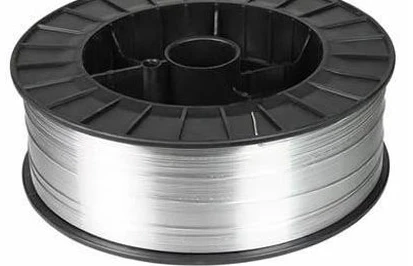
Selecting the right flux-cored welding wire is more than just a decision about consumables—it directly determines weld quality, post-weld cleanup time, and the total cost of the project. There are currently two main types of flux-cored wire: gas-shielded flux-cored wire (FCAW-G) and self-shielded flux-cored wire (FCAW-S). Although both types of wire have higher deposition rates than solid electrodes, their protective mechanisms perform very differently in workshop production. FCAW-G is typically used with a 75%–85% argon/carbon dioxide gas mixture, enabling controlled penetration depth and minimizing spatter on 1.5–8 mm thick plates, making it ideal for manufacturing enclosures with tight tolerances. In contrast, FCAW-S relies on gases generated by the flux core during welding. While portable, it tends to produce more slag and is susceptible to hydrogen-induced cracking. This article provides a detailed analysis of penetration depth curves, cost per meter of weld, and safety compliance data to help engineers select the appropriate flux-cored welding wire for various applications in sheet metal

Flux-Cored Welding Wires: Gas-Shielded and Self-Shielded Read More »

welding wire

Welding Wire Types and Applications

Welding wire is the most commonly used consumable in Gas Metal Arc Welding (GMAW) and Gas Tungsten Arc Welding (GTAW) operations, yet its impact on the final weld quality is often underestimated. It directly affects joint quality, production efficiency, and the cost per weld. Different types of welding wire—from solid welding wire for GMAW (Gas Metal Arc Welding) in cleanroom environments, to flux-cored welding wire for field installation, to submerged arc welding (SAW) wire for high-deposition-rate thick-plate welding—each requires matching based on alloy characteristics and adherence to corresponding shielding gas specifications. Incorrect application can lead to porosity, cracks, or rework, all of which can be avoided through systematic selection. At Supro MFG, we specify welding wire based on AWS classifications and the heat input of specific applications, ensuring defect-free welds from thin-walled enclosures to heavy-duty structural components. This guide delves into welding wire types, selection criteria for different materials, and application considerations. Main Categories of Welding Wire The selection of

Welding Wire Types and Applications Read More »

Stainless Steel Sheet Metal Fabrication Welding Process

Stainless Steel Sheet Metal Fabrication Welding Process Guide

Stainless steel sheet metal fabrication welding is not merely a joining process, but a critical operation that transforms design intent into functional, durable and aesthetically pleasing products. Whilst stainless steel possesses good weldability, its inherent metallurgical and physical properties present unique challenges within the specific domain of thin sheet metal (0.5mm to 6.0mm). Our experience indicates that the primary difficulties in stainless steel sheet metal fabrication welding include: sensitisation effects; carbide precipitation within the heat-affected zone (HAZ) leading to diminished corrosion resistance, which is critical to component longevity; heightened thermal stresses and distortion, primarily stemming from the material’s high thermal expansion coefficient and low thermal conductivity, posing a significant threat to the dimensional stability of thin-walled structures; and susceptibility to weld metal solidification defects and hot cracking. This paper presents a systematic framework for stainless steel sheet metal fabrication welding to address these challenges. Grounded in metallurgical principles, practical process optimisation, and rigorous quality control, it meets the stringent reliability

Stainless Steel Sheet Metal Fabrication Welding Process Guide Read More »

custom aluminum 7075-T651 housing parts

CNC Cutting: Definition, Processes, and Uses

CNC cutting technology precisely controls machine tool movements through computer programs to cut materials into predefined complex geometric shapes. In modern manufacturing and creative design, It efficiently handles repetitive tasks in production processes, with manufacturing speeds far surpassing levels from years past, making it crucial for achieving high-precision, high-quality, and high-efficiency machining. This article will provide a detailed analysis of CNC cutting, beginning with its fundamental definition, followed by an examination of its production process and suitable materials, and concluding with common applications. This will help you understand and appropriately utilize CNC cutting technology. Definition of CNC Cutting CNC cutting is an automated process where cutting equipment executes programs via digital instructions, comprising a numerical control system and mechanical framework. It offers exceptional production efficiency and cutting precision, supporting multi-axis coordination and complex pattern machining. Based on material differences, it can be categorized into CNC laser cutting (high-precision thin materials), CNC plasma cutting (medium-thick materials), and flame cutting (thick carbon

CNC Cutting: Definition, Processes, and Uses Read More »

aluminum sheet metal bending metal corner bracket parts

Custom Metal Corner Brackets: Definition, Advantages, and Applications

Custom metal corner brackets play a crucial role in ensuring structural stability and safety across various applications, including home furnishings, industrial equipment, medical devices, and construction projects. But do you truly understand this common hardware structural element? What exactly is it, and what are its advantages and disadvantages? This article will analyze metal corner brackets, covering their fundamental definition, pros and cons, application scenarios, and common issues to help you recognize and appropriately utilize them. What is a custom Metal Corner Bracket? A metal corner bracket is a structural connector made of metal, typically shaped like a right-angled L. Its core function is to reinforce, support, or connect two components that are perpendicular or at an angle to each other, ensuring structural stability, strength, and load-bearing capacity. Characteristics of Metal Corner Brackets Shape: Most commonly 90 degrees, though other angles (e.g., 45 degrees, 135 degrees) or adjustable designs exist. Metal corner brackets typically feature one or more triangular reinforcing ribs,

Custom Metal Corner Brackets: Definition, Advantages, and Applications Read More »

aluminum sheet metal bending metal corner bracket parts

About Aluminum Fabrication: 4 Things Need to Know!

Since its discovery in 1827, aluminum has become an important raw material in many fields such as aerospace, automotive manufacturing, medical devices, and industrial equipment. It has many advantages, such as light weight, durability, recyclability, good electrical conductivity, etc. But do you know some trivia about aluminum? Understanding the performance characteristics of aluminum can help you make full use of aluminium fab to meet your various needs, next, the article will introduce you 4 aluminum related knowledge in detail to help you fully recognize and understand aluminum alloy and aluminium fab. 4 Things about aluminum 5052 aluminum: the optimal choice for metal prototyping and batch sheet metal processing Not all aluminum has the same performance characteristics. 5052 aluminum belongs to the aluminum-magnesium non-heat treatment alloy, which retains the lightweight characteristics of aluminum and increases its tensile strength to 230MPa, and at the same time, has excellent ductility, bending, forming, and weldability. In the processes of stamping, cutting and bending in

About Aluminum Fabrication: 4 Things Need to Know! Read More »

supro mfg's material warehouse 5052 aluminum alloy

A Comprehensive Guide to Aluminum 5052 Alloy

Aluminum is an indispensable material for various industries because of its light weight, high strength and corrosion resistance. With its excellent corrosion resistance, outstanding fatigue strength and excellent machinability, aluminum 5052 is widely used in the fields of shipbuilding, automobile manufacturing, electronic equipment and construction engineering. The article will systematically analyze the core definition, performance advantages, processing and manufacturing technology of aluminum 5052 and list its common applications, and at the same time will compare aluminum 5052 with aluminum 6061, which will help you make scientific decisions in material selection and aluminum fabrication technology. What is Aluminum 5052? Aluminum 5052 is an Al-Mg alloy, with magnesium as the main alloying element (content of 2.2%-2.8%), silicon, copper and other elements are less than 0.4% of the density of the material is 2.72g/cm³, medium strength, corrosion resistance, weldability and cold working properties. Its thermoforming temperature range of 420-475 ° C, cold stamping performance changes with the state, the annealed state is the

A Comprehensive Guide to Aluminum 5052 Alloy Read More »

aluminum sheet metal bending metal corner bracket parts

How to custom aluminum sheet fabrication

Aluminum sheet fabrication services has become the ideal choice for many sheet metal fabrication projects due to its lightweight, corrosion-resistant, and easy-to-process characteristics. However, standard aluminum sheet is often difficult to meet the needs of unique projects, and custom aluminum sheet fabrication has become a key solution at this time. Custom aluminum sheet fabrication is a key solution. It allows the material to accurately match the size and functional requirements of the project, which not only optimizes the structural stability of the product and enhances the product’s use, but also reduces subsequent processing losses and lowers costs. In modern engineering construction, industrial manufacturing and various product development projects, material suitability directly affects the quality, efficiency and final results of the project. In this article, we will analyze how to custom aluminum sheet fabrication in detail, from the design process, aluminum material selection, machining process to surface treatment, our engineers will share with you their rich experience in aluminum sheet metal

How to custom aluminum sheet fabrication Read More »

Choose the Best aluminium enclosure for Your Application

In the field of electronic equipment, industrial control, instrumentation, etc., aluminium enclosure is a key component to protect the precision components inside the equipment and ensure the stable operation of the equipment, and it is very important to choose the appropriate aluminum electrical enclosure to enhance the safety of the equipment and prolong its service life. This article will take you to a comprehensive understanding of aluminum enclosure, from its basic definition, and gradually analyze its advantages and disadvantages, applicable scenarios and selection of the details that need to be noted, and its multi-dimensional comparison with stainless steel enclosure, to make clear the main differences between the two, to help in your selection of custom aluminum enclosure when you and make a scientific and wise solution when you select the custom aluminum enclosure. What is an aluminum enclosure? aluminium enclosure is a kind of protective enclosure made of aluminum or aluminum alloy, which is widely used to protect all kinds

Choose the Best aluminium enclosure for Your Application Read More »

A Guide to EMI/RFI Shielding in custom metal fabrication

A Guide to EMI/RFI Shielding in custom metal fabrication

With the development of electronic equipment to high-precision, highly integrated, EMI and RFI shielding for many electronic equipment and electronic components to provide an important electromagnetic and radio frequency interference protection. Especially important in communication, medical, aerospace and other fields, without proper shielding, electronic devices may malfunction, degrade performance, or even fail completely. The article will detail how to achieve excellent EMI/RFI shielding in custom metal fabrication. First, it will clarify the definition of EMI shielding and RFI shielding, and then it will discuss the right choice of metal materials and the key factors to consider, which will help you choose the right metal shielding materials. Finally, a detailed look at the custom metal fabrication process and why you can trust Supro for your custom metal fabrication needs. What is EMI/RFI Shielding? EMI/RFI shielding is a technical means of preventing or weakening EMI (Electromagnetic Interference) and RFI (Radio Frequency Interference) by means of a physical barrier or material technology. Its

A Guide to EMI/RFI Shielding in custom metal fabrication Read More »

High quality sheet metal bending parts

Modular enclosures vs custom metal enclosures : How to Choose?

In the field of electronic equipment, industrial instruments, communication terminals, etc., metal enclosure is not only the core barrier of physical protection of the equipment, but also directly related to the adaptability of the equipment, production efficiency and cost control, and whether its selection is reasonable or not is crucial to the optimization of the project program. In the current market, custom metal enclosure and modular metal enclosure is very popular, but the two in the design logic, applicable scenarios and cost-effective differences are obvious, many project decision makers in the “on-demand customization” and “standardized module combinations” face difficulties in selecting the type between the In this article. The article will deeply analyze the core definition of custom metal enclosure and modular metal enclosure, and analyze the main differences between them through multi-dimensional comparison, aiming to provide you with a systematic decision-making guide to provide clear guidance for the selection of metal enclosure under different demand scenarios, and to help

Modular enclosures vs custom metal enclosures : How to Choose? Read More »

custom aluminum 7075-T651 housing parts

Main differences : stainless steel enclosure and aluminum enclosure

Main differences In the field of electronic equipment, industrial equipment and outdoor facilities, the choice of enclosure material directly affects the performance, service life and cost of the equipment. aluminum enclosure and Stainless steel enclosure are two common types of enclosures, which often become the focus of decision-making due to the differences in characteristics. The article will discuss in-depth aluminum enclosure and Stainless steel enclosure in the strength and weight, impact resistance, corrosion resistance and thermal performance of the core differences, and objective comparative analysis, aims to provide you with a comprehensive enclosure selection guide, to help you according to specific application scenarios, to make the most economic and scientific choice. The purpose is to provide you with a comprehensive enclosure selection guide to help you make the most economical and scientific choice according to specific application scenarios. Strength versus weight In terms of the trade-off between strength and weight, aluminum enclosures and Stainless steel enclosures show a sharp difference,

Main differences : stainless steel enclosure and aluminum enclosure Read More »

custom metal fabrication process

How to Prevent  corrosion of  fabricated metal products

Fabricated metal products are the cornerstone of modern industry and people’s daily life, from structural steel fabrication in public buildings to sophisticated daily tools, they are everywhere. However, custom fabricated metal products are susceptible to corrosion due to environmental factors, which often leads to performance deterioration, shortened service life, and even safety hazards and economic losses, so corrosion prevention has become a key aspect of protecting custom metal works. The article will systematically discuss the causes of corrosion of fabricated metal products, identify common types of corrosion, and introduce seven practical and efficient anti-corrosion methods in detail, aiming to provide you with a comprehensive guide to the protection of sheet metal products to help you maximize the service life of the products and protect their value and safety. What causes fabricated metal products to corrode? The nature of corrosion of fabricated metal products is the process of electrochemical corrosion reaction between the metal and the environment, which is a redox

How to Prevent  corrosion of  fabricated metal products Read More »

China precision aluminum Extrusion services manufacturer

Extruded Enclosures vs Die-Cast Aluminum Enclosures: Main Differences and the Right Choice

aluminum Extruded  enclosure are highly favored for their lightweight properties, excellent corrosion resistance, machinability, and heat dissipation capabilities. They are widely used in industrial manufacturing sectors such as electronic equipment, automotive electronics, and communication devices. However, significant differences exist between extruded aluminum enclosures and die-cast aluminum enclosures in terms of performance and suitability for specific applications, leaving many buyers uncertain about which to choose. This article systematically outlines the core characteristics of extruded aluminum enclosures and die-cast aluminum enclosures, analyzes their respective advantages and disadvantages, highlights key differences through multi-dimensional comparisons, and finally provides a scientific selection strategy. About Extruded Aluminum Enclosure extruded aluminum enclosure refers to aluminum enclosure manufactured by extrusion molding process, the core process is to put the billet of aluminum ingot heated to plastic state into the die cavity of the extruder, with the help of high-pressure thrust of the extruder, the softened aluminum alloy is forced to pass through the die cavity, forming continuous semi-finished

Extruded Enclosures vs Die-Cast Aluminum Enclosures: Main Differences and the Right Choice Read More »

7075 aluminum CNC machining parts

anodic oxidation of metal parts

Anodic oxidation, the electrochemical oxidation of metals or alloys. In the real process, for aluminum alloy anodic oxidation, more, usually used in daily life, military industry, aerospace, communications equipment, and precision instrumentation manufacturing industry. Because of the characteristics of this process, the surface of the aluminum parts to produce a hard protective layer, so that the corrosion resistance of metal materials, wear resistance, decorative, insulation, as well as heat dissipation have been significantly improved. This article will discuss how anodizing works, its uses, material compatibility, and the advantages and disadvantages it has. What is anodic oxidation? Anodic oxidation, the electrochemical oxidation of metals or alloys. Anodic oxidation is an electrochemical process in which a dense oxide film is formed on the surface of aluminum and its alloys by means of an electric current to improve corrosion resistance, abrasion resistance and decorative properties. Depending on the electrolyte and temperature, it can be divided into acidic, alkaline, normal temperature and high temperature

anodic oxidation of metal parts Read More »

Scroll to Top