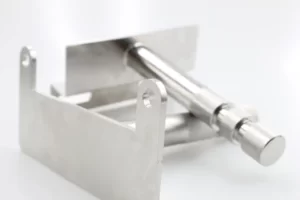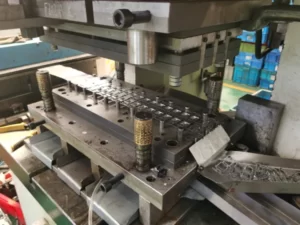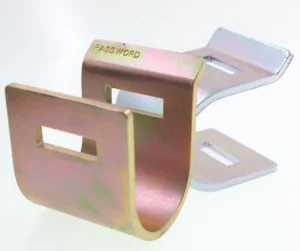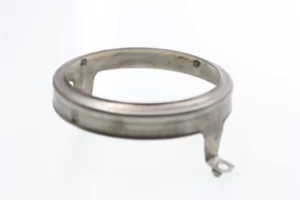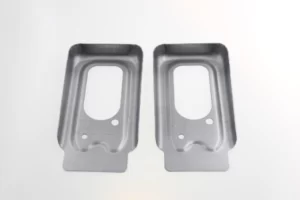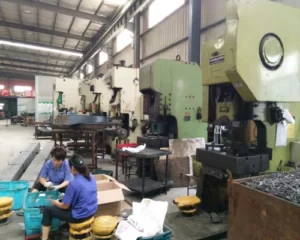

From prototypes and low-volume builds to repeat production, Supro MFG supports aluminum sheet metal fabrication, CNC machining, stamping, extrusion, welding, deep drawing, spinning and die casting with DFM review, material selection, finishing and inspection support.
All information is safe and confidential
Supro MFG manufactures aluminum enclosures, brackets, panels, heat-dissipation parts, machined housings, stamped components, deep-drawn parts and assemblies to customer drawings.
The manufacturing route is selected from part geometry, alloy and temper, tolerance, surface finish, assembly interfaces, annual volume and inspection requirements. Depending on the project, production may combine aluminum sheet metal fabrication, aluminum CNC machining, stamping, extrusion, welding, deep drawing or die casting.
Alloy selection should match the required strength-to-weight ratio, corrosion exposure, thermal performance, formability and finishing method. Review our aluminum alloy and temper selection guide when comparing grades for formed parts.
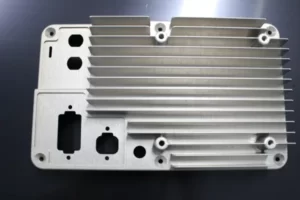
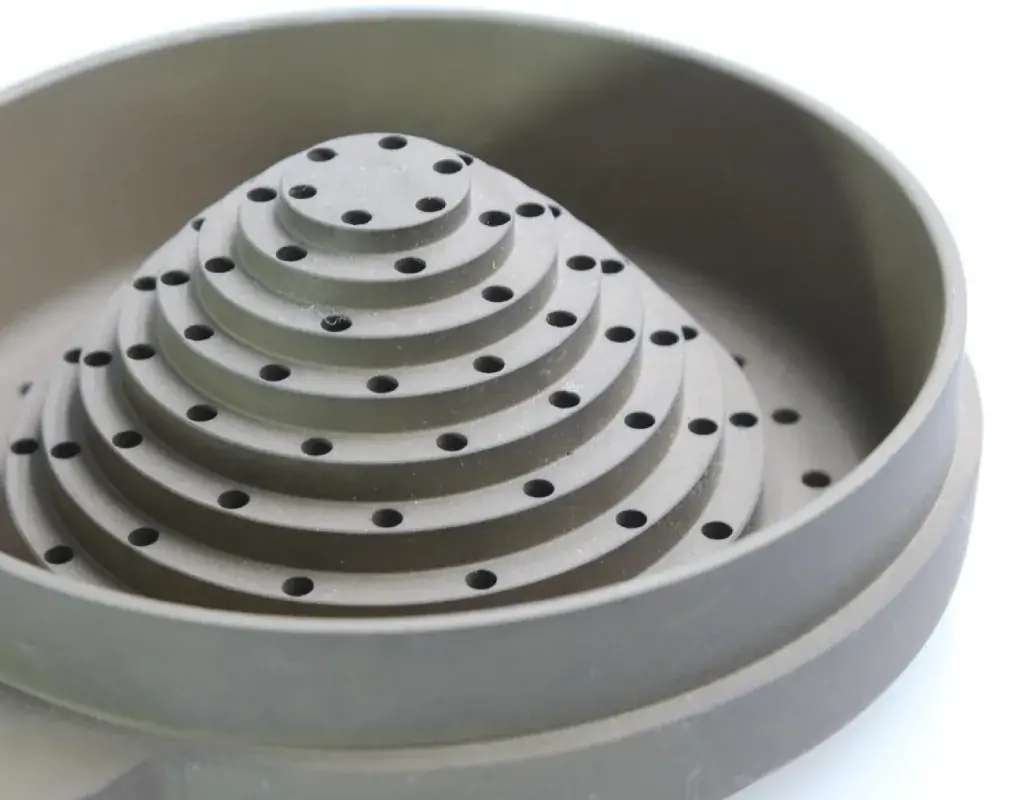
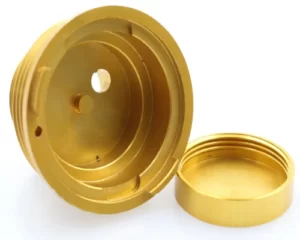
The 7075 housing shown here demonstrates a machined aluminum application where critical interfaces, wall thickness, finish and inspection requirements must be reviewed together. See the 7075 aluminum housing machining case, or send your drawing for an engineering review.

Supro MFG possesses extensive manufacturing experience and specialized technical expertise in custom aluminum fabrication, enabling the rapid implementation of various precision manufacturing processes or combinations thereof to achieve batch production and rapid prototyping of customized aluminum products.
Material choice affects bendability, weldability, anodizing appearance, dimensional stability and part cost. Our engineering review matches the alloy and temper to the actual manufacturing route and service environment.
1xxx: 1050, 1050A, 1060, 1100
2xxx: 2014 2017 2024
3xxx: 3003, 3004, 3005, 3105
5xxx: 5005, 5052, 5754, 5083
6xxx: 6061, 6082, 6063
7xxx: 7075
Formability and surface treatment are good, and its corrosion resistance is the best among aluminum alloys. The higher the purity, the lower the strength. Daily necessities, aluminum plates, lighting appliances, reflectors, decorations, chemical industry containers, heat sinks, melted wires, conductive materials.
Contains a large amount of Cu, poor corrosion resistance, but high strength, can be used as a structural material, forged products can also be used, aircraft, gears, oil, pressure components, wheel and axle.
Formability, weldability, and corrosion resistance are all good. General utensils, heat sinks, makeup boards, photocopier drums, and ship materials have excellent formability and good corrosion resistance. Aluminum cans, light bulbs, roof panels, colored aluminum panels
Good heat resistance and friction resistance, and low thermal expansion coefficient. Piston, cylinder head
Sulfuric acid anodizing treatment gives a natural gray color. Fusion wiring, building panels
5052 is the most representative alloy with medium strength. It has good corrosion resistance, weldability and formability, especially high fatigue strength and good seawater resistance. General sheet metal, ships, vehicles, construction, bottle caps, honeycomb panels, low-temperature vessels, pressure vessels.
6061 heat-treated corrosion-resistant alloy. T6 treatment can have a very high endurance value, but the strength of the welding interface is low, so it is used in screws, anchors, ships, vehicles, and land structures. 6N01 is a medium-strength extrusion alloy with a strength between 6061 and 6063. , Extrudability, stamping and hardenability are all good, can be used as large-scale thin-meat-shaped materials with complex shapes, good corrosion resistance and weldability. Vehicles, land structures, ships
6063 representative extrusion alloy, with lower strength than 6061, good extrudability, can be used as a profile with complex cross-section shape, good corrosion resistance and surface treatment, construction, highway guardrail, high fence, vehicle, Furniture, home appliances, decorations
7075 aluminum alloy has one of the highest strength alloys, but the corrosion resistance is not good, and the covering skin of 7072 can improve its corrosion resistance, but the cost is increased. Aircraft, ski poles 7050 7050 alloy with improved hardenability of 7075, good stress corrosion crack resistance, suitable for thick plates, forged aircraft, high-speed rotating bodies, 7N01 alloy for welding structure, high strength and the strength of the welding part can be placed at room temperature. After returning to the strength close to the base metal. The corrosion resistance is also very good. Vehicles, other land structures, aircraft
Choosing the right material is critical for product performance and service life. For R&D engineers comparing materials during the design phase, aluminum fabrication offers a strong balance of weight, strength, corrosion resistance, thermal performance and manufacturing cost.
An experienced supplier should match the alloy, temper, process route and inspection plan to the drawing and application. See our aluminum fabrication guide for additional design considerations.
Discuss your aluminum alloy and manufacturing requirements with our engineering team.

Supro MFG supports custom aluminum fabrication from drawing review and alloy selection through prototyping, first-article approval and repeat production. Manufacturing routes can combine sheet metal fabrication, CNC machining, stamping, extrusion, welding, forming, assembly and surface finishing according to the part geometry and production volume.
Before quotation, our engineers review the drawing, GD&T, alloy and temper, wall thickness, critical interfaces, cosmetic surfaces, joining method and inspection requirements. When required by the project, documentation can include material certificates, dimensional inspection records, FAI or PPAP-related files agreed during quotation.
Production planning follows six practical stages: requirement review, process and material selection, prototype or first article, in-process control, finish verification, and final inspection for repeat production. See our aluminum sheet metal fabrication and aluminum CNC machining capabilities for process-specific details.
Provide the most cost-effective cost solution for manufacturing and assembling products, expanding product competitiveness.
a technical team specializing in custom shell manufacturing for more than 30 years.
Advanced Manufacturing Equipment: Industry-leading custom metal enclosure manufacturer with in-house sheet metal, die casting, precision machining workshops, and surface coating workshops.
ISO 9001-2015, PPAP III level, RoHS, NEMA, CE and other certified production standards.
24H*7 online English technical support: The professional English team responds quickly to users’ technical questions online at any time.
help users from product design, prototype, batch manufacturing, surface treatment, assembly and packaging, transportation and a series of value-added services.
With in-house mechanics and chemistry laboratories, it can quickly monitor manufacturing process quality control to ensure the delivery of high-quality products.
Accept to sign NDA documents to ensure that customers‘ product information is protected.
Door-to-door delivery in customizable secure packaging after complying with the delivery details agreed with the customer.
Select finishes around corrosion protection, wear, appearance and assembly
Material, alloy temper, finish and manufacturing route should be selected around the part geometry, operating environment and production volume. At the start of a custom aluminum project, we review these requirements with the customer before production. For appearance, wear and corrosion requirements, see our guide to custom aluminum anodizing requirements.

Powder coating for aluminum parts provides a durable colored finish and can improve resistance to outdoor exposure, handling and abrasion when the pretreatment and coating specification are matched to the application.

Forms an oxide film on the surface of aluminum alloy to improve hardness, aesthetics, and corrosion resistance.

It presents a glossy metallic texture with an even grain that enhances the aesthetics of the product.

Cleaning the metal surface, presenting a uniform roughness and improving the adhesion of the paint.

The metal surface is polished and honed to give a mirror-like finish, increasing the aesthetic effect of the part.

A metal protective film, improve wear resistance, conductivity, reflectivity, corrosion resistance and enhance the role of aesthetic.

Commonly used for engraving on the surface of parts, logos, product descriptions, or complex patterns.

Printing paint onto the surface of a product creates content of any shape and color that is hard-wearing and beautiful.
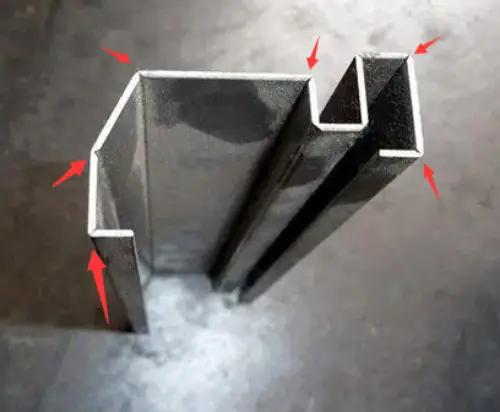
The primary causes of micro-cracks forming on the outer surface of aluminium sheets during bending are as follows:
Engineering control: During DFM review, bend radius, alloy temper, sheet thickness and rolling direction are checked together. Where needed, bend trials, larger inside radii, tooling changes or an alternative temper are recommended before production. Inspection focuses on the outer bend surface, angle and critical dimensions. Review our guidance on aluminum sheet bending without cracking.

Thin-walled aluminum enclosures lack inherent structural rigidity. During machining, cutting forces easily trigger severe tool vibration (chatter), while aluminum’s high thermal expansion traps heat. This combination releases residual internal stresses, leading to immediate part warping and dimensional drift.
Engineering control: Thin-wall aluminum parts may require high-speed, low-force cutting, staged roughing and finishing, purpose-built soft jaws or vacuum support, and temperature-aware inspection. The final strategy is selected from the drawing, wall thickness, geometry and tolerance requirements. See our custom CNC machining services for process capability details.
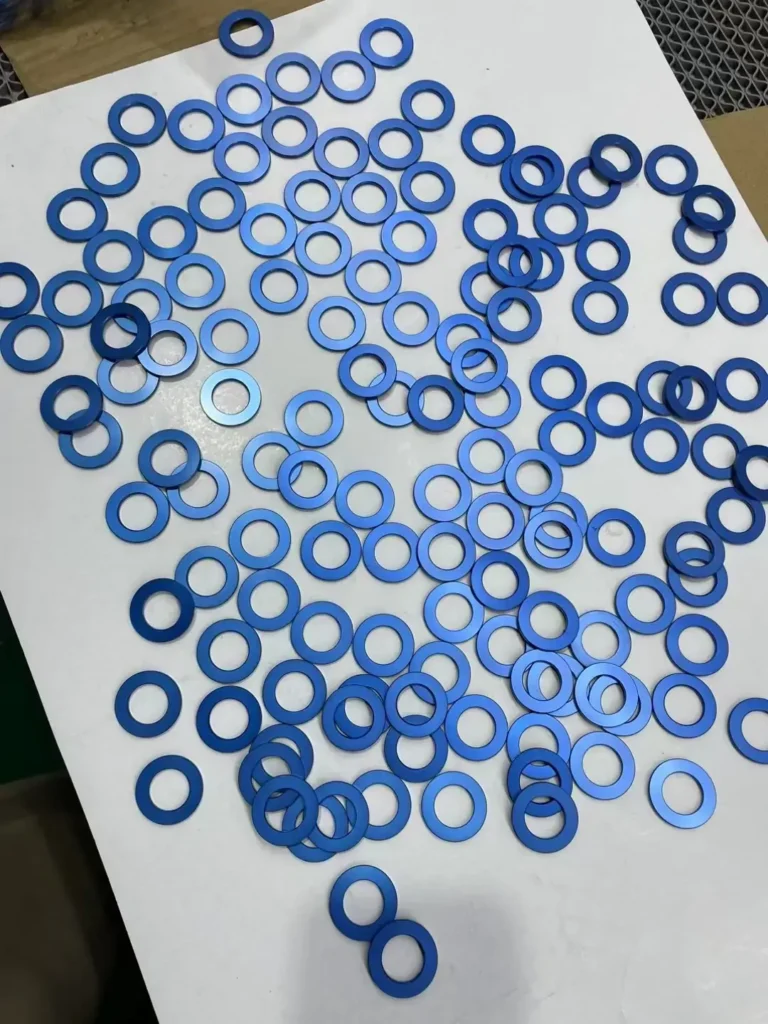
Inconsistent coloration and white spots ruin both the aesthetic and corrosion resistance of anodized parts. These frustrating defects typically result from mixed material compositions (using scrap aluminum), inadequate pre-treatment leaving oil residues that prevent film formation, or fluctuating bath temperatures and current densities.
Engineering control: Alloy batch, temper, pretreatment, racking contact, bath condition and sealing all affect anodized appearance. Cosmetic requirements, acceptable color range and inspection method should be defined before production; reference samples can be used when visual consistency is critical. Learn more about anodic oxidation for aluminum parts.
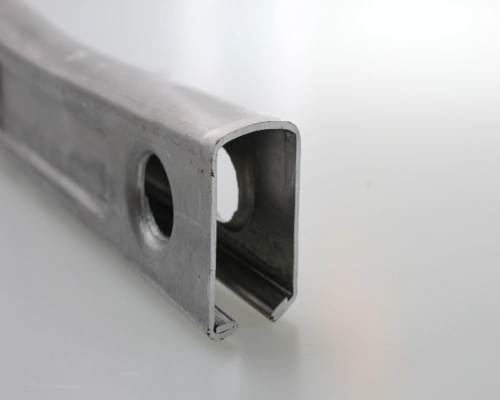
Wrinkling and tearing are the most common points of failure when forming deep-walled aluminum parts. These defects stem from severe stress imbalances: inadequate blank-holding force causes the material flange to buckle and wrinkle, while excessive force, tight die radii, or aggressive single-pass draw ratios create immense friction that tears the metal outright.
Engineering control: Blank-holder force, draw ratio, die-entry radius, lubrication, material direction and intermediate forming stages are reviewed together. Trials and section checks may be used to monitor wall thinning, wrinkles, tears and dimensional stability before repeat production. See our deep drawing stamping process capabilities.
From lightweight structural frames to energy-efficient heat-dissipating enclosures, our aluminium fabrication services are at the forefront of cutting-edge industries worldwide. Through bespoke manufacturing, we overcome complex geometric challenges, helping to minimise product weight whilst ensuring full compliance with the rigorous requirements of international industry standards.

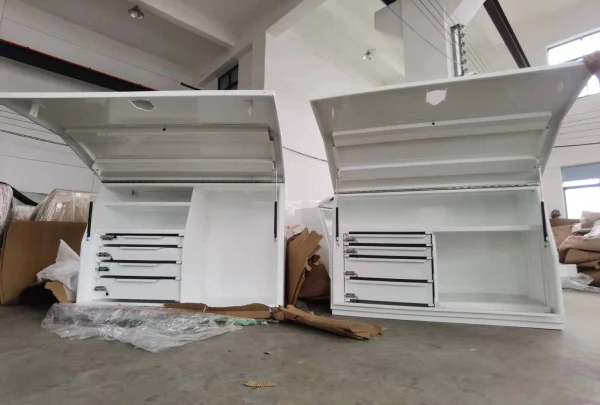

Not every project starts with a production-ready drawing. We can begin with a concept sketch, physical sample, existing component, partial CAD model or functional requirement and help define the information needed for manufacturability review.
Our engineering team can work with STEP, STP, SLDPRT, DXF, PDF, PRT, DWG and AI files. The review may cover material and temper, thickness, bend radius, tolerances, joints, surface finish, assembly interfaces and expected production volume.
Contact our engineering team to discuss what information is available. Design support scope, ownership and deliverables are confirmed before engineering work begins.
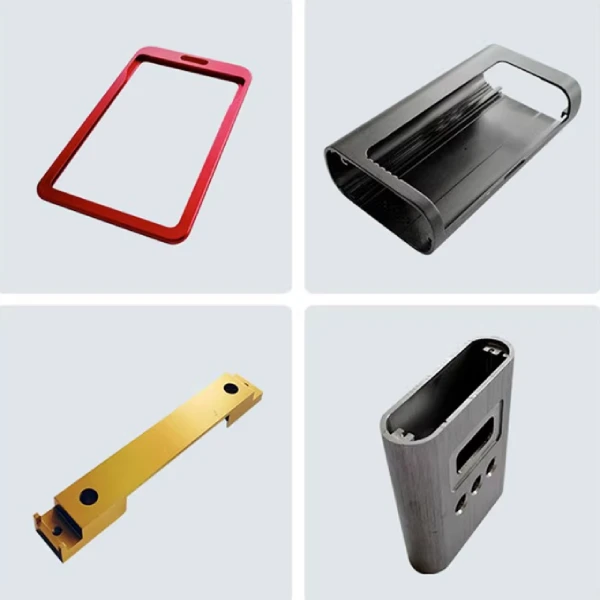
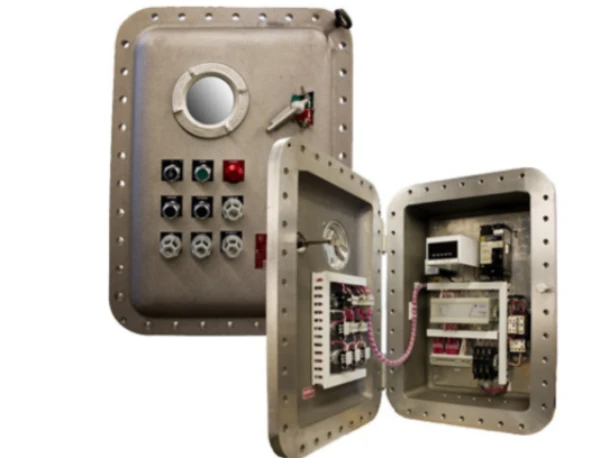
Customer drawings, CAD models, samples and quotation records are handled as controlled project information. An NDA can be signed before technical review when required, and access can be limited to the personnel involved in engineering, quotation, production and inspection.
File-transfer method, retention requirements and any customer-specific confidentiality procedures should be agreed at the quotation stage. This gives OEM and engineering teams a clear, reviewable framework without relying on unverified absolute security claims.
Customized aluminum alloy parts have the characteristics of low density, good mechanical properties, good processing properties, non-toxic, easy to recycle, electrical conductivity, heat transfer and corrosion resistance. They are used in the marine industry, chemical industry, aerospace, metal packaging, and transportation. Widely used in transportation and other fields.
The density of aluminum alloy is 2.702g/cm³, which is 1/3 of that of steel.
Suitable for aerospace parts manufacturing, automotive manufacturing, shipbuilding, engineering construction, heavy machinery, industrial parts, household appliances, medical supplies and sealed containers, etc.
Alloying elements such as copper, zinc, magnesium, manganese and silicon create different strength, corrosion, forming and machining characteristics. The correct grade and temper should be selected for the process and service conditions; see our aluminum sheet material selection guide.
Used in engineering construction, aerospace parts, hardware parts, key parts of enterprises and automobiles, fasteners, etc.
Aluminum alloys support extrusion, stretching, rolling and sheet forming, but formability varies by grade and temper. Bend radius, grain direction and tooling should be reviewed together; see our guide to bending aluminum sheet without cracking.
Hollow structural parts, sealed containers, structural frames, and other precision parts with complex structures.
Aluminum parts can be brushed, polished, bead-blasted, anodized, powder-coated or plated according to appearance, wear, conductivity and corrosion requirements. Our guide to anodizing aluminum parts explains the key process and specification considerations.
Household items, decorative shells, signs, doors and windows, auto parts, aircraft shells, interior decoration materials, instrument shells, etc.
Aluminum alloy is a very good thermal and conductive material, second only to copper alloy and 3-4 times that of steel.
Wires, connectors, household appliances, electronic components, radiators, tableware, etc.
Aluminum reflects light and radiant heat effectively. Polishing can further improve reflectivity, while the final surface specification should also consider cosmetic consistency, corrosion exposure and handling requirements.
Reflectors, lighting accessories, refrigerator enclosures, electric heater accessories, etc.
Aluminum is non-magnetic and electrically conductive, making selected alloys suitable for electronic housings, shielding components, heat-management parts and other applications where magnetic response must be controlled.
Instrument accessories, antennas, compasses used on ships, radar accessories, and other anti-interference custom parts.
Aluminum alloy is a metal material that is very suitable for operation in a low temperature environment. Low temperature will increase the strength of the aluminum alloy without increasing the brittleness of the material.
Spare parts required for operation in low temperature environment.
Supro MFG is a China-based custom metal parts manufacturer, not a trading company. We specialize in custom sheet metal parts, prototypes and related metal fabrication processes under an ISO 9001:2015-certified quality system. Surface treatment, heat treatment and standard purchased components may be coordinated with qualified supporting suppliers when required by the project. Learn more about our factory.
Yes. We operate our own sheet metal fabrication, welding, laser-cutting and precision CNC machining workshops, covering more than 3,000 square meters. The original operating team includes 12 technical engineers, 36 skilled workers, six quality engineers and an English-speaking project-support team.
Yes. NDA requirements can be confirmed before detailed technical review. Customer drawings, specifications and patented technology are treated as confidential, and access is limited to authorized personnel involved in engineering, production, quality and project communication. Contact our project team before sending sensitive files if you require an NDA first.
Yes. Our engineering team can help develop manufacturable design files from your concept, reference sample or functional requirements. Supported formats may include STL, STEP, IGES, PDF and CAD. DFM feedback can be provided to improve manufacturability, control cost and prepare the design for prototyping. You can send your concept or requirements for an initial review.
Quality control begins with drawing and material review and continues through receiving inspection, First Article Inspection (FAI), In-Process Quality Control (IPQC), dimensional verification, surface-finish inspection, packaging inspection and final release. Inspection reports, photographs and third-party inspection support can be provided according to the agreed project scope.
Common payment methods include T/T, PayPal, Western Union and L/C. The applicable payment schedule and channel are confirmed during quotation and order review.
Yes. PPAP Level 3 documentation can be provided when it is included in the agreed quotation and quality-documentation scope. Tell us your PPAP requirements during RFQ review so the document package can be quoted correctly.
Our quotation is based on the specified material, manufacturing route, labor, tooling, surface finish, inspection scope and required documentation. We prioritize traceable materials, controlled production and verified quality rather than reducing price through unapproved substitutions or omitted inspection. The objective is a competitive total manufacturing cost with lower quality and delivery risk.
We do not set a general minimum order quantity. Suitable custom sheet metal projects may begin with a small number of prototypes or validation parts and later transition to low-volume or repeat production. Feasibility and pricing still depend on tooling, material, setup and process requirements.
Before production, we review material availability, tooling, process sequence, inspection scope and required finishing, then establish a project-specific production plan. Progress is monitored against key milestones, and capacity or scheduling risks are escalated when identified. Delivery commitments remain subject to approved requirements and force-majeure events.
Share the part function, alloy or performance target, quantity, tolerance, finish and required delivery date. Our team will review the manufacturing route and quotation requirements.
Upload Design Files
STL , STEP (.stp), IGES (.igs), (.ZIP), or PDF.
Also be a sample or an idea
Quote & Design Analysis
Instant factory quotes and DfM reports, the most reasonable solution.
Manufacturing Begins
Digital processes can initiate order tasks within 24 hours.
On-Time Delivery
Keeping delivery promises, approved by 3000+ Global Company buyers.
Send your drawing, sample or project requirements to begin a manufacturability review and factory quotation.
Copyright © SUPRO Manufacturing Co., LTD 2022 All rights reserved