Filter posts by category

metal housing

Battery Housing

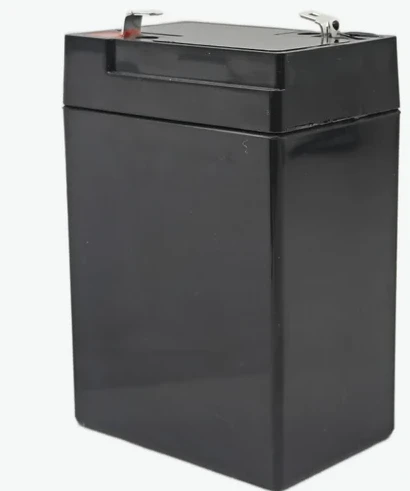
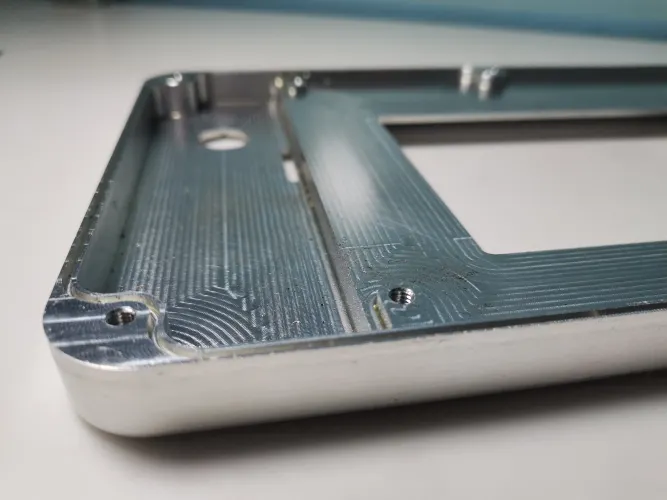
Battery Housing Edge Finishing: Reducing the Risk of Short Circuits

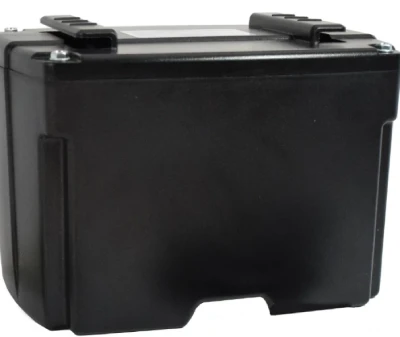
The electrification of the automotive industry has presented unprecedented challenges for battery housing manufacturing. Among the many quality considerations in production—including dimensional accuracy, weld integrity, and thermal management—there is one failure mode that is most easily overlooked yet can lead to catastrophic failures: sharp edges and residual burrs. In high-voltage battery systems, the insulating barrier between conductive components and the battery housing serves as a critical line of defense against electrical failures. When an EV battery housing has sharp edges or residual burrs resulting from processes such as stamping, laser cutting, or machining, vehicle vibrations and thermal cycling can cause these protrusions to penetrate the insulating film, separator material, or wiring harness sheath. The result is partial discharge, arcing, or catastrophic short circuits. Eliminating burr-related risks is not merely a cosmetic issue—it is a fundamental safety requirement that demands systematic engineering controls, clear specifications, and validated process capabilities. Battery Housing Burr Issues: Risk Assessment During the stamping, laser cutting, or […]

Battery Housing Edge Finishing: Reducing the Risk of Short Circuits Read More »

Battery Housing

Solving EMI/RFI Shielding Leakage Issues in Battery Housings

For high-voltage battery housings, the effectiveness of electromagnetic interference (EMI) and radio frequency interference (RFI) shielding is directly related to the system’s functional safety and reliability. Even the slightest shielding leakage can cause sensitive control circuits to malfunction or generate unacceptable interference with external communication devices. From a sheet metal manufacturing perspective, the core challenge in achieving a complete Faraday cage effect for custom battery housings lies not in material selection, but in eliminating potential structural conductive discontinuities through precise process control. Improper coating treatment of flange surfaces, ill-conceived fastener layouts, or insufficiently compressed conductive gaskets can all introduce gaps in what would otherwise be a continuous conductive path, creating sources of high-frequency leakage. This article will delve into these shielding failure modes caused by manufacturing processes, focusing on the entire workflow from prototype validation to mass production, and provide a set of practical engineering solutions to ensure that every battery housing meets its stringent electromagnetic compatibility (EMC) performance specifications.

Solving EMI/RFI Shielding Leakage Issues in Battery Housings Read More »

custom EV charging station housing

Achieving IK10-Rated Impact Resistance for EV Charging Station Housings

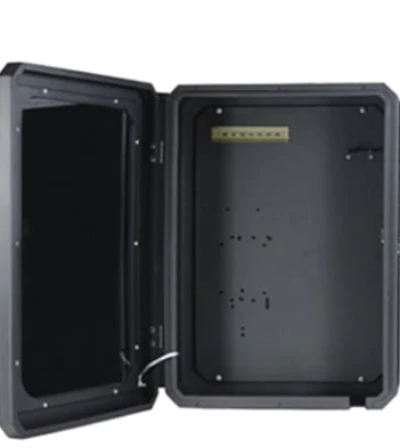
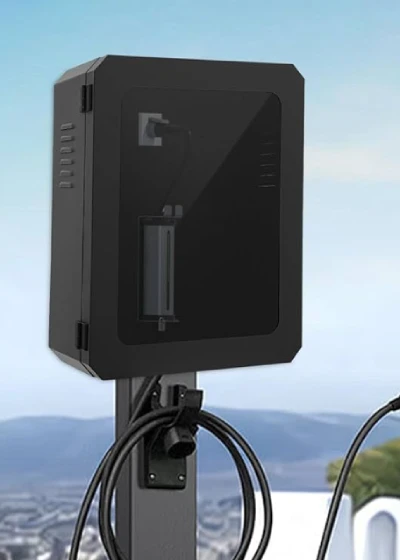
The accelerated deployment of public charging infrastructure has exposed EV charging station housings to unprecedented physical risks—acts of vandalism such as minor vehicle collisions, blows from blunt objects, and forced entry via lock tampering directly result in equipment downtime and high repair costs. The IK10 protection rating defined by the IEC 62262 standard requires the housing to withstand an impact energy of 20 joules—equivalent to the impact force generated by a 5-kg object dropped from a height of 400 mm—while ensuring that the IP protection rating remains unaffected after testing and that the door operation and locking points remain undamaged. However, achieving IK10 compliance is not simply a matter of increasing material thickness. From the perspective of EV charging station housing manufacturing, the failure modes of 2.5 mm aluminum alloy and 1.5 mm stainless steel under impact are fundamentally different—aluminum absorbs energy through plastic deformation, while stainless steel faces the risk of cracking due to stress concentration. At the structural

Achieving IK10-Rated Impact Resistance for EV Charging Station Housings Read More »

EV charging station housing

Addressing Premature Corrosion of EV Charging Station Housings

As the global penetration rate of electric vehicles continues to rise, the deployment of outdoor charging infrastructure is proceeding at an unprecedented pace. EV charging station housings, serving as the first line of defense for protecting internal electrical components, are continuously exposed to corrosive environments such as rain, condensation, temperature cycling, and road salt spray. The bottom of the housing and the lower edge of the door panel are prime targets for corrosion—these areas are constantly exposed to capillary water absorption from concrete bases or accumulate salt-laden liquid splashed from the road. Once rust forms, it spreads rapidly, leading to coating peeling, reduced structural strength, and even compromising the safety of the internal electrical components. While the NEMA 250 and UL 50E standards provide a graded framework for environmental protection of outdoor electrical enclosures, issues such as insufficient corrosion resistance of the base material (e.g., standard SPCC), a lack of drainage design at the bottom, and inadequate pretreatment before coating

Addressing Premature Corrosion of EV Charging Station Housings Read More »

Scroll to Top