
Filter posts by category

progressive die stamping

Progressive die stamping services

Guide to Progressive Stamping Processes

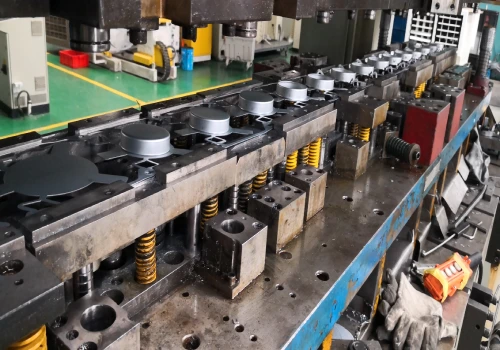
In manufacturing sectors such as automotive, high-end electronics, and new energy, progressive stamping has evolved into a critical system engineering solution. It addresses the challenges posed by increasingly complex part geometries, rising material strengths, and persistent cost pressures. This technology not only enables efficient production but also achieves a precise balance among design intent, material potential, and manufacturing costs. As a technology integrating multiple operations—such as blanking, bending, and drawing—within a single progressive stamping die, the core of this process lies in transforming metal coil directly into thousands of highly consistent precision parts through precise strip feeding and coordinated station design. For professional procurement personnel, a deep understanding of the progressive stamping process enables more accurate assessment of suppliers’ engineering depth and production reliability, thereby building more resilient, cost-effective supply chains. This article analyzes from a practitioner’s perspective how progressive die stamping transforms a coil of metal strip into thousands of consistent, high-quality parts through integrated die design and process […]

Guide to Progressive Stamping Processes Read More »

custom galvanized steel automotive stamping parts manufacturer

Comparison of Progressive Metal Stamping and Transfer Die Stamping

In high-volume custom sheet metal stamping, the die selection made during the design phase directly determines the final unit cost, production cycle, and structural integrity. Choosing between progressive stamping and transfer die stamping requires a rigorous technical evaluation of geometric dimensions and tolerances (GD&T) requirements, total production volume, and material utilization targets. While progressive die stamping excels at high-speed, continuous production of small parts with tight tolerances, the transfer die stamping process offers unmatched geometric flexibility required for deep-drawn housings and large panels. If the product design does not align with the manufacturing process, it often results in high die amortization costs or unacceptable metal scrap rates. In this article, we will provide a detailed analysis of the mechanical feasibility, cost implications, and design constraints of both progressive die and transfer die stamping, offering you precise technical data to help you make optimized and risk-free procurement decisions. Understanding Progressive Die Stamping The progressive die stamping process processes continuous metal coils

Comparison of Progressive Metal Stamping and Transfer Die Stamping Read More »

progressive die stamping

Compound Die vs. Transfer Die vs. Progressive Die Stamping: What Are the Differences?

When evaluating mass production strategies for precision metal components, selecting progressive die stamping, compound die stamping, or transfer die stamping directly determines part cost, quality, and delivery cycle. As a specialized metal stamping manufacturer, Supro understands that the core distinction among these methods lies in how parts move between die stations. Compound die stamping completes multiple operations (such as blanking and punching) in a single press stroke at one station, making it particularly suitable for flat parts requiring strict concentricity. In contrast, progressive die stamping feeds coil material through consecutive stations, with the strip carrying the part as it advances. This process excels at producing complex geometries at speeds exceeding 150 strokes per minute while maintaining precision tolerances of ±0.0005 inches. Transfer die stamping addresses another set of challenges: after blanking from coil at the first station, parts are mechanically transferred to independent forming stations. This method is suitable for deep drawing or large components that cannot be supported by

Compound Die vs. Transfer Die vs. Progressive Die Stamping: What Are the Differences? Read More »

Scroll to Top