
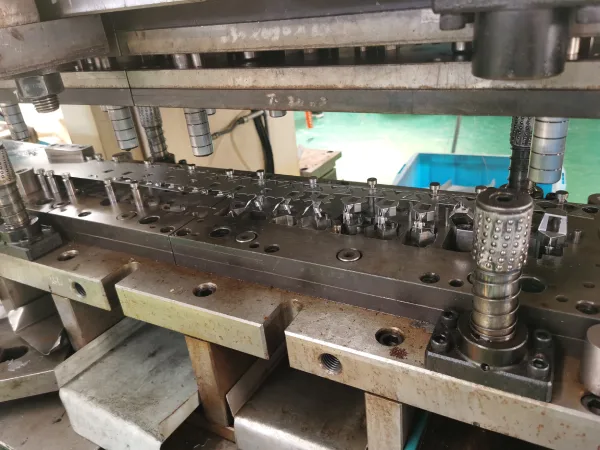
In the field of precision sheet metal fabrication, tolerance management directly impacts manufacturing yield, assembly throughput, and total procurement costs. For Western procurement managers responsible for sourcing custom parts and hardware engineers involved in new product introduction (NPI), determining the optimal dimensional tolerance range in custom sheet metal fabrication requires striking a balance between design functionality and the physical properties of the material.
A mismatch between engineering drawings and actual shop floor capabilities often leads to two major issues: over-tolerancing, which exponentially inflates production costs through specialized tooling and low yield rates, and under-tolerancing, which risks catastrophic line shutdowns during final integration.
Unlike rigid CNC-machined blocks, sheet metal exhibits nonlinear behavior due to factors such as grain orientation, elastic recovery, and thermal exposure. Achieving strict consistency in sheet metal fabrication tolerances throughout the entire process—from laser cutting and press brake bending to welding and assembly—requires an empirical understanding of the material’s deformation limits.
By applying Design for Manufacturability (DFM) principles and establishing standardized benchmarks early in the Request for Quote (RFQ) process, engineers can ensure seamless assembly, avoid costly design iterations, and maximize structural performance in complex sheet metal fabrication projects.
Intrinsic Material Behavior and Its Impact on Sheet Metal Fabrication Tolerances
Precision in sheet metal fabrication begins with controlling the variability of raw materials. Factors such as metallurgical composition, elastic recovery, and rolling tolerances directly affect dimensional repeatability and therefore require empirical adjustments prior to processing.
Mill Thickness Tolerances and Gauge Variations
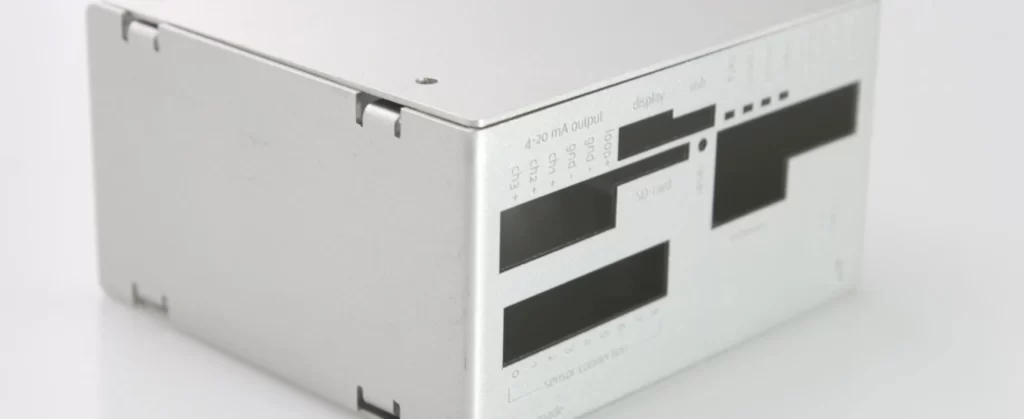
Commercial metal coils and sheets are manufactured according to standard rolling tolerances (such as ASTM A480 or EN 10131), which means that the actual delivered thickness often deviates from the nominal specification. In precision sheet metal fabrication, even a minor thickness deviation of just ±0.05 mm can directly alter the position of the neutral axis during the bending process on a press brake, shifting the bend deduction and resulting in angular deviations or flange length errors.
When procuring raw materials for assemblies with strict sheet metal fabrication tolerances, engineers must account for the range of rolling tolerances rather than relying solely on nominal values. The use of certified, high-precision gauge plates prevents dimensional drift on the production line, thereby ensuring predictable fit accuracy between multi-component enclosures.
Managing Springback Across Different Metal Alloys
Each metal alloy exhibits unique elastoplastic deformation behavior, with springback being a major engineering challenge in the sheet metal fabrication process.
Materials with a high yield-to-tensile strength ratio—such as 304 stainless steel or high-strength aluminum alloys like 6061-T6—retain significant elastic energy after being removed from the forming die, resulting in increased bend angles. To counter angular relaxation, operators must apply calculated over-bending or utilize specialized bottoming and coining techniques based on the specific grain orientation and rolling history of the batch.
Failing to account for alloy-specific springback leads to poor part interchangeability and requires costly secondary manual straightening operations.
Thermal Expansion and Residual Stress During Blanking
Thermal cutting processes, particularly high-power fiber laser cutting, create a localized heat-affected zone (HAZ), which alters local material properties and releases inherent residual rolling stresses. During high-speed contour cutting, as thermal gradients propagate across the sheet, asymmetric heat distribution may cause micro-warping or edge bending, thereby complicating subsequent bending operations in sheet metal fabrication.
Professional sheet metal fabrication manufacturers optimize laser cutting parameters—such as assist gas pressure, cutting speed, and entry strategies—to minimize heat input. Proper nesting layouts and stress-relief pretreatment are equally critical to ensuring the flatness and dimensional stability of the blank prior to forming.
Tolerances and Capability Limits Unique to the Sheet Metal Fabrication Process
Process capability defines the physical limits of custom sheet metal fabrication. To achieve strict dimensional tolerances, design specifications must be aligned with the inherent precision of cutting, press brake bending, and post-welding deformation dynamics.
Fabrication Process | Feature Type | Standard Tolerance | Precision Tolerance | Critical Influencing Factors |
Fiber Laser Cutting | Hole-to-Hole / Contour | ±0.10 mm (±0.004") | ±0.05 mm (±0.002") | Beam spot size, thermal expansion, gas pressure |
CNC Turret Punching | Hole Diameter / Location | ±0.10 mm (±0.004") | ±0.05 mm (±0.002") | Tool wear, sheet clamping rigidity, punch clearance |
Press Brake Bending | Flange Length / Linear | ±0.30 mm (±0.012") | ±0.15 mm (±0.006") | Sheet gauge variation, K-factor, bend orientation |
Press Brake Bending | Angular Deviation | ±1.0° | ±0.5° | Material yield strength, springback, crowning compensation |
Welded Assembly | Overall Frame / Diagonal | ±1.00 mm (±0.040") | ±0.50 mm (±0.020") | Thermal distortion, weld shrinkage, fixture constraint |

Laser Cutting vs. CNC Punching: Precision Limits
In blanking operations, laser cutting and CNC turret punch presses each have their own unique precision limits, which determine the overall quality of parts in precision sheet metal fabrication.
High-power fiber laser cutting achieves tight positioning tolerances (±0.05 mm) and extremely high edge perpendicularity, making it ideal for machining complex contour geometries and high-density hole patterns. However, laser cutting produces a minimal heat-affected zone (HAZ), which may alter the grain structure of the edges. In contrast, CNC turret punch presses provide mechanical precision (± 0.10 mm) without heat input, preserving the metallurgical integrity of the metal while enabling in-line countersinking and louver forming.
To prevent dimensional drift during subsequent assembly processes in sheet metal fabrication, procurement engineers must evaluate thermal versus mechanical blanking limits based on hole pitch, edge finish requirements, and material thickness.
Press Brake Bending: Controlling Angular Deviations and Linear Dimensions
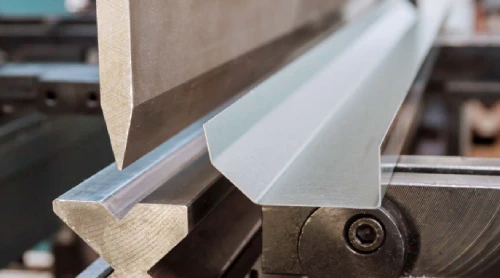
Forming accuracy in custom sheet metal fabrication depends largely on press brake technology, die wear, and the operator’s skill. Linear dimensions measured at multiple bends can result in cumulative errors, while angular deviations depend on the consistency of the press tonnage and the performance of the CNC leveling system.
Air bending typically achieves angular tolerances of ±0.5° to ±1.0°, while bottoming or coining, though capable of achieving tighter repeatability, comes at the cost of higher tonnage requirements and accelerated die wear. Modern multi-axis CNC press brakes utilize dynamic laser angle measurement systems to correct angle springback in real time.
For complex, multi-bend enclosures in sheet metal fabrication, it is essential to specify realistic bend deduction allowances and define primary reference positions based on critical functional hole layouts to prevent the accumulation of out-of-tolerance conditions.
Welded Enclosures: Thermal Distortion and Post-Fabrication Stack-Up
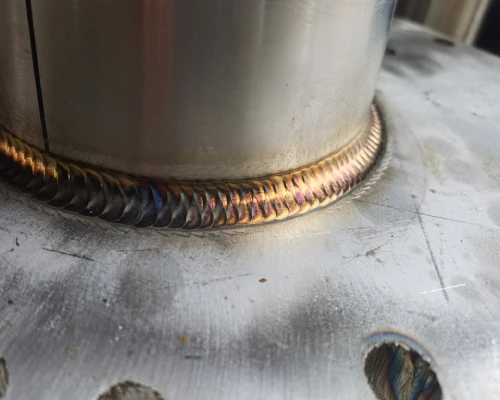
Joining sheet metal components via TIG, MIG, or laser welding generates uneven thermal stresses, leading to longitudinal shrinkage, angular distortion, and cabinet warping. In precision sheet metal fabrication, post-welding distortion often causes severe tolerance accumulation at mounting points and door sealing surfaces. To mitigate these thermal effects, a robust fixture design, an optimized welding sequence, and tactical spot/tack welding are required to lock in alignment before executing full passes.
Compared to traditional arc welding, high-energy-density fiber laser welding significantly reduces total heat input and minimizes the heat-affected zone. When procuring heavy-duty welded enclosures through custom sheet metal fabrication, engineers should incorporate internal reinforcements, floating hardware, and localized stress-relief measures to ensure the final assembly meets specifications, thereby avoiding the need for labor-intensive manual post-weld straightening.
Are you looking for reliable & cost-effective
China metal fabrication manufacturer
More than 150,000 OEM metal fabrication products delivered to 5,000+ global buyers.
And benefit from it!
Engineering Standards and DFM Frameworks for Precision Control in Sheet Metal Fabrication
Applying standardized engineering frameworks (such as ISO 2768, GD&T, and DFM principles) allows for the integration of design intent with the practical limitations of the sheet metal fabrication process. This structured approach minimizes tolerance accumulation and prevents costly losses resulting from non-conforming assemblies after production.
Applying ISO 2768 and GD&T to Sheet Metal Fabrication Drawings
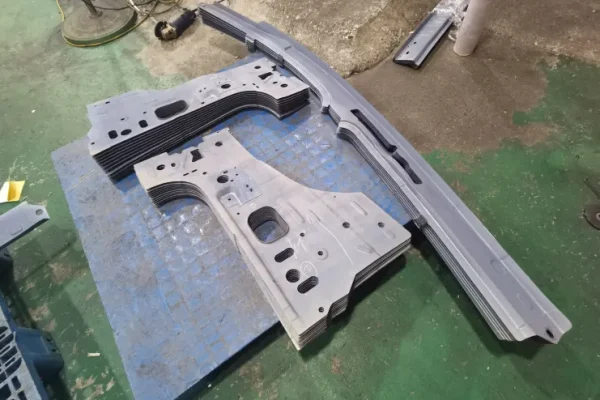
Applying rigid, machining-level tolerances across an entire sheet metal drawing is a primary driver of artificial cost inflation in custom sheet metal fabrication. Instead, engineers should adopt standardized general tolerances, such as ISO 2768-m (fine/medium class), while strategically applying Geometric Dimensioning and Tolerancing (GD&T) to critical functional features.
Specifying True Position for mounting hole arrays or Flatness for mating flanges prevents tolerance ambiguity during final inspection. Modern precision sheet metal fabrication relies on proper datum selection—establishing primary datums on flat, unformed surfaces rather than virtual bend lines. Over-constraining drawings without considering sheet metal flexibility complicates CMM inspection and raises component rejections.
By harmonizing GD&T callouts with practical factory-floor capabilities in sheet metal fabrication, procurement managers protect assembly alignment while avoiding unnecessary secondary operations and inflated piece-part costs.
Mitigating Tolerance Stack-Up in Multi-Component Assemblies
When integrating multiple folded brackets, panels, and welded chassis, linear and angular deviations accumulate rapidly across mating surfaces—a critical failure point in high-precision sheet metal fabrication. Managing this tolerance stack-up requires worst-case and Root Sum Square (RSS) statistical analysis during the preliminary CAD modeling phase. Designers can prevent fit-up binding and hole misalignment by implementing self-locating features like tab-and-slot alignments, oversized slots, or floating self-clinching hardware (such as PEM nuts).
In complex sheet metal fabrication projects, relying solely on tight part-level tolerances to force assembly fitment increases scrap rates. Incorporating floating fasteners and flexible joints absorbs dimensional variation, ensuring seamless field integration, faster assembly line throughput, and reduced reliance on manual shimming or force-fitting during final installation.
Integrating FMEA and DFM in the Early Design Stages of Sheet Metal Fabrication
Implementing Design for Manufacturability (DFM) and Process Failure Mode and Effects Analysis (PFMEA) early in the New Product Introduction (NPI) cycle can yield the highest return on investment in the field of custom sheet metal fabrication.
By having design engineers and manufacturing partners conduct DFM reviews together, high-risk features—such as holes positioned too close to bend radii, narrow web sections, or tight internal return flanges—can be identified before die cutting begins. The PFMEA methodology evaluates the root causes of dimensional instability and prioritizes potential failure modes based on factors such as raw material variability, press brake settings, and post-welding distortion.
Collaborating with manufacturing partners early in the design phase of precision sheet metal fabrication allows for optimizing bend radii to standard die sizes, setting realistic clearances, and aligning drawing specifications with actual sheet metal fabrication process capabilities—thereby avoiding costly Engineering Change Orders (ECOs) later in production.
Conclusion: Bridging the Gap Between Design Integrity and Cost-Effective Sheet Metal Fabrication Production
Striking a balance between strict tolerance requirements and cost-effective production is a hallmark of successful custom sheet metal fabrication. To bridge the gap between design intent and manufacturing feasibility, material selection, process constraints, and DFM standards must be coordinated early in the project lifecycle.
Summary of Best Practices for Engineering Specifications
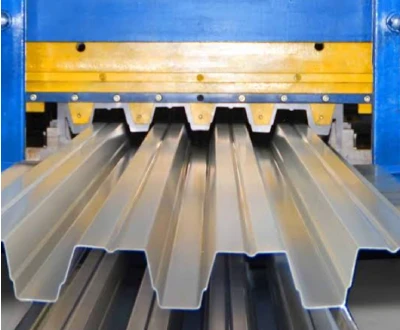
Achieving the optimal balance between functional precision and unit cost requires a rigorous, standardized approach to specifying parameters in the sheet metal fabrication process. Design engineers must move away from applying blanket, machining-level drawing notes (± 0.05 mm) and instead adopt functional tolerancing frameworks such as ISO 2768-m combined with targeted GD&T for critical mounting interfaces.
Taking into account the inherent physical properties of materials—such as rolled thickness variations, alloy-specific springback, and thermal expansion during fiber laser punching—ensures that part geometries in custom sheet metal fabrication always remain within actual process capabilities. Establishing primary reference surfaces on flat, unformed surfaces and employing self-aligning tongue-and-groove structures or floating fasteners can effectively eliminate the risk of tolerance accumulation in multi-component assemblies.
Adhering to these proven design practices in precision sheet metal fabrication helps ensure product performance, reduce scrap rates, prevent assembly line downtime, and minimize unnecessary manufacturing costs during high-volume production.
The Value of Early Supplier Engagement in Optimizing Sheet Metal Fabrication Tolerances
Collaborating with an experienced sheet metal fabrication manufacturer early in the New Product Introduction (NPI) cycle is the best way to achieve cost savings, efficiency gains, and quality assurance. Engaging with suppliers early allows for comprehensive Design for Manufacturability (DFM) and Process Failure Mode and Effects Analysis (PFMEA) reviews before the design is finalized and the tooling is officially released.
By sharing complete CAD models and functional requirements, the procurement team enables manufacturing engineers to optimize bend radii for standard, off-the-shelf dies; calculate bend allowances based on actual raw material batches; and design robust welding fixtures to counteract thermal deformation.
Establishing a partnership with a professional custom sheet metal fabrication manufacturer early on not only avoids costly Engineering Change Orders (ECOs) but also shortens the lead time from prototyping to mass production and ensures a seamless transition from Western engineering drawings to shop-floor execution.
Ultimately, transparent technical communication with suppliers will transform complex tolerance challenges into predictable, repeatable, and scalable sheet metal fabrication success stories.
Supro is a professional sheet metal fabrication manufacturer. Leveraging advanced equipment, extensive manufacturing experience, and a professional engineering team, we provide perfect custom sheet metal fabrication solutions to over 3,000 companies worldwide, along with genuine manufacturer quotes.
We deliver a wide range of products efficiently and on time. From product design and rapid sheet metal prototype fabrication to mass production, we provide professional technical support and exceptional quality. We also offer one-stop manufacturing solutions and highly cost-competitive products! For technical specifications or inquiries regarding OEM partnerships, please contact our engineering team.