

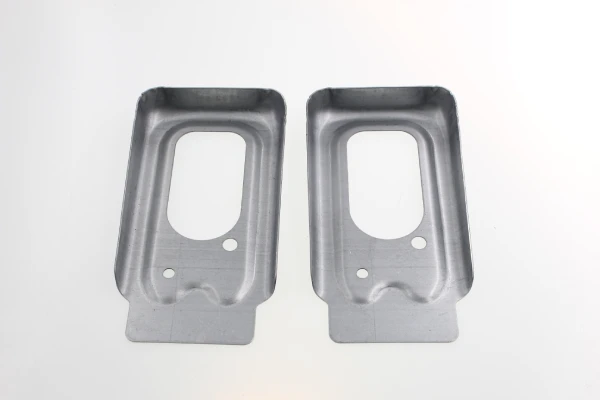
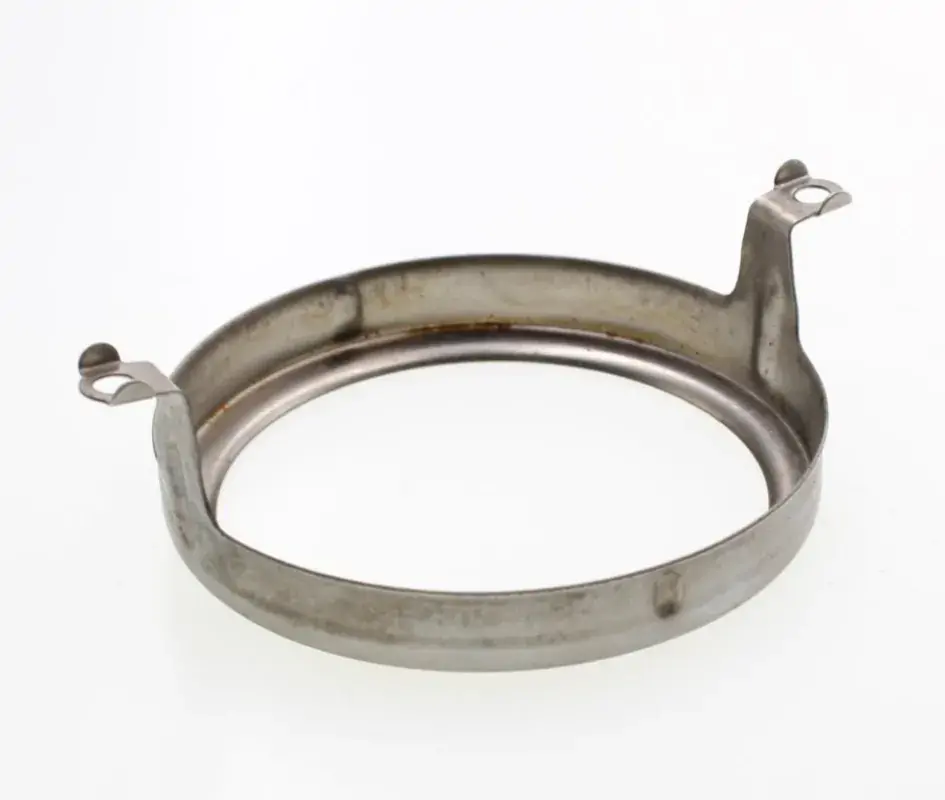
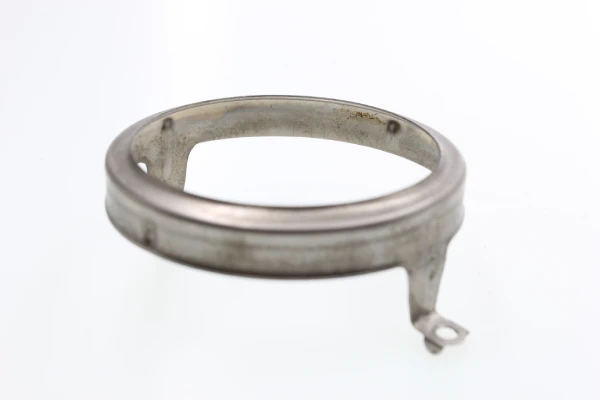
In modern manufacturing, sheet metal fabrication processes form the core foundation for countless products, from automotive bodies and aerospace components to everyday household appliances. Each sheet metal fabrication process directly influences the final product’s geometric precision, structural integrity, and functional reliability.
Project success does not rely on a single sheet metal fabrication process, but rather requires the strategic integration of multiple key technologies. This article delves into five core technologies of contemporary sheet metal fabrication: laser cutting, CNC bending, stamping and die forming, welding and joining, and surface treatment. We examine each technology’s process logic, its role within the complete manufacturing sequence, and the critical quality control points essential for achieving engineering objectives.
Precision Foundation of Sheet Metal Fabrication Processes: Laser Cutting
As the inaugural stage of the entire sheet metal fabrication process, the technical proficiency of laser cutting fundamentally establishes the quality benchmark for all subsequent operations. Its core value lies in the lossless, high-fidelity translation of digital design intent into physical form, providing a reliable geometric foundation for the entire manufacturing workflow.
The Essence and Process Positioning of Laser Cutting in Sheet Metal Fabrication
The laser cutting sheet metal fabrication process employs a high-energy-density laser beam to melt or vaporise material, supplemented by high-pressure gas to remove molten material, achieving high-precision separation. Compared to traditional punching or plasma cutting, laser cutting requires no physical dies, offering exceptional flexibility and precision (typically ±0.1mm or better). It enables instantaneous response to design changes and efficiently processes complex contours and irregular apertures.
Moreover, the laser cutting sheet metal fabrication process determines the input quality for all subsequent operations—bending, welding, assembly—where any dimensional deviation or thermal damage introduced here will be amplified downstream, directly impacting the final product’s functionality and reliability. A controlled laser cutting sheet metal fabrication process is therefore a prerequisite for ensuring overall manufacturing quality consistency and predictability.
Key Challenges in Laser Cutting Sheet Metal Fabrication
For project decision-making, evaluating laser cutting sheet metal fabrication processes hinges on understanding how suppliers systematically manage three core challenges: heat-affected zone (HAZ) control, process optimisation for material utilisation, and geometric precision with interface management for subsequent operations.
Heat-Affected Zone (HAZ) Management
The heat-affected zone represents an inherent technical challenge in laser cutting sheet metal fabrication, directly impacting part structural integrity and subsequent performance. Laser cutting is fundamentally a thermal process, creating zones along the cut edge where microstructural changes occur due to heating.
The depth and properties of the HAZ are closely tied to cutting parameters. Optimising process parameters (such as peak power and pulse frequency) and auxiliary gases (e.g., using high-purity nitrogen for stainless steel) minimises and standardises the HAZ, ensuring structural integrity for subsequent welding or high-stress edges. For instance, increasing laser cutting speed effectively reduces HAZ depth. Consequently, professional HAZ management focuses not merely on reduction, but on control and prediction.
Process Optimisation for Material Utilisation
Optimised material utilisation translates directly into substantial cost savings. While the nesting capabilities of laser cutting sheet metal fabrication software form the foundation, true optimisation lies in systematic sheet metal manufacturing process management. This necessitates dynamic integration between cutting programming, production order management, and raw material inventory. Advanced systems can automatically consolidate parts of identical material and thickness across different orders, achieving optimal layout across entire sheets. This sometimes elevates material utilisation rates to 85% or higher.
Additionally, other sheet metal fabrication process requirements must be considered, such as reserving sufficient overlap for subsequent welding, or allocating clamping positions for components with high aesthetic standards to prevent surface damage. This level of process optimisation transcends individual operations, demanding that suppliers possess end-to-end digital collaboration capabilities spanning order intake, sheet metal fabrication process planning, and production execution. This ensures delivery agility while maximising raw material economy.
Geometric Precision and Interface with Subsequent Processes
The geometric accuracy of laser-cut sheet metal fabrication must facilitate seamless integration throughout the entire sheet metal manufacturing workflow. This involves multiple precision control points: Firstly, the configuration of micro-joints—reserving minute uncut sections during contour cutting—ensures components remain attached to the sheet skeleton post-cutting. This prevents detachment or misalignment during handling to the bending stage, allowing manual or automated separation prior to sheet metal bending operations.
Secondly, intelligent planning of cutting sequences is essential. Optimised paths prevent overall sheet deformation caused by localised heat accumulation, thereby safeguarding part flatness. Concurrently, the programming stage of the laser cutting process must anticipate subsequent bending locating edges, welding grooves, or assembly fillet joints. Precision compensation techniques—such as pre-correction for anticipated bending springback—ensure accurate positioning references for downstream operations.
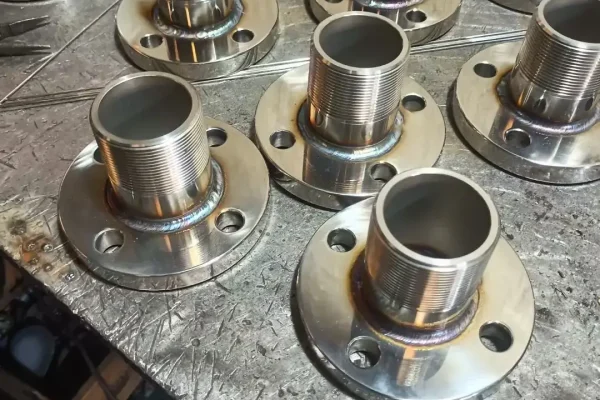
The sheet metal fabrication process of converting flat surfaces into three-dimensional forms: CNC bending
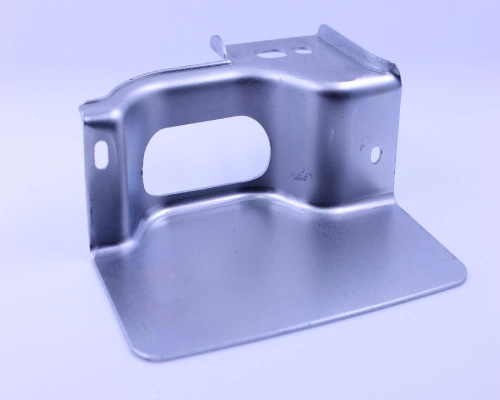
Within the comprehensive sheet metal fabrication process, CNC bending constitutes the pivotal forming stage that transforms two-dimensional sheet metal, precisely cut by laser, into three-dimensional components possessing structural rigidity and functional geometry. This process is not mere bending, but rather a systematic engineering endeavour integrating material mechanics, plastic deformation theory, and precision mechanical control.
The Essence and Process Positioning of CNC Bending in Sheet Metal Fabrication
CNC bending constitutes the pivotal forming stage that endows two-dimensional sheet metal blanks with three-dimensional structural rigidity, functional geometry, and assembly interfaces. Its fundamental process relies on computer numerical control systems to apply precisely controlled forces to the sheet material, inducing plastic deformation around predetermined axes.
This process takes the high-precision two-dimensional contours produced by laser cutting and transforms them into three-dimensional components suitable for welding, assembly, or direct use. Consequently, the quality of CNC bending directly determines the dimensional consistency, structural integrity, and overall assembly efficiency of the final product.
Its core value lies in precisely materialising three-dimensional geometric data from design models through digital programming and highly repeatable automated execution, ensuring predictability throughout the entire sheet metal fabrication process from blueprint to physical form.
Key Challenges in CNC Bending Sheet Metal Fabrication
Springback represents an inherent physical phenomenon in CNC bending sheet metal fabrication, arising from the recovery of elastic strain upon material unloading. This constitutes the primary technical challenge affecting bending precision; without systematic control, it directly leads to angular deviations and assembly complications.
Supro integrates finite element analysis simulation with iterative algorithms during CNC bending operations. This enables prediction of springback during programming for specific material combinations (considering yield strength σys and elastic modulus E), thickness, bend radius, and angle. Springback compensation is then pre-set within tooling design or CNC programming.
For complex sheet metal components with multiple bend edges, the bending sequence represents another critical challenge determining process feasibility, efficiency, and final precision. Incorrect sequencing may prevent accurate positioning during CNC bending or amplify cumulative errors.
Supro employs computer-aided process design systems during planning, transforming bending sequence challenges into computable models. Algorithms perform reverse reasoning and interference checks to identify solutions offering minimal cycle times and operational reliability. Concurrently, the system integrates extensive CNC bending knowledge bases and case-based reasoning methodologies, leveraging historical successes to enhance planning efficiency and dependability.
Meeting dimensional accuracy requirements while ensuring workpiece surfaces remain free of scratches and indentations constitutes a fundamental requirement for high-end manufacturing. Key measures include employing high-quality, high-hardness specialised dies, with their working surfaces treated using enhanced PVD coatings.
This not only protects the dies but also prevents surface scratches on soft materials like stainless steel or aluminium sheets during the CNC bending sheet metal fabrication process. Furthermore, for components demanding high surface finish, specialised CNC bending sheet metal fabrication processes may be required, such as cantilever bending.
Only 4 steps
online custom metal fabrication parts
Contact our experts team and experience the efficiency and economic benefits of digital metal fabrication services.
Upload Design Files
STL , STEP (.stp), IGES (.igs), (.ZIP), or PDF.
Also be a sample or an idea
Quote & Design Analysis
Instant factory quotes and DfM reports, the most reasonable solution.
Manufacturing Begins
Digital processes can initiate order tasks within 24 hours.
On-Time Delivery
Keeping delivery promises, approved by 3000+ Global Company buyers.
Sheet Metal Fabrication Processes Suitable for High-Volume Production and Complex Features: Stamping and Die Forming
Within sheet metal fabrication processes, stamping and die forming represent highly efficient solutions for high-volume production of parts featuring complex geometries. Unlike processes reliant on heat sources or progressive bending, these techniques directly define the final part geometry through the physical constraints of dies, ensuring exceptional repeatability and production efficiency.
The Essence and Process Positioning of Stamping and Die Forming in Sheet Metal Fabrication
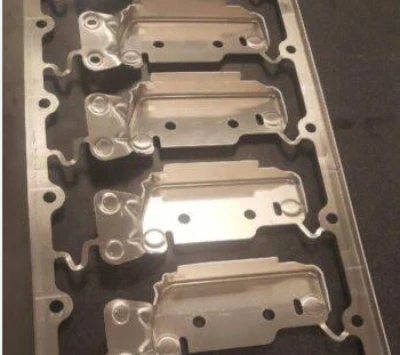
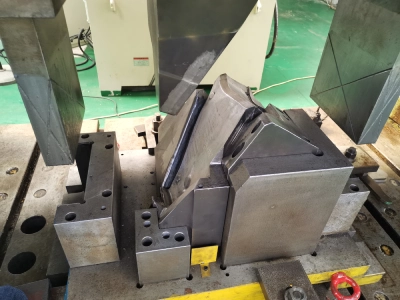
The essence of stamping and die forming lies in applying concentrated mechanical forces exceeding the yield strength of sheet metal through highly rigid dies. Under precise cavity constraints, the material undergoes composite deformation—stretching, compression, bending, and shearing—to instantaneously achieve predetermined complex three-dimensional shapes and features. A typical progressive die can sequentially complete multiple operations—such as punching, forming, flanging, and even cutting—within a single stroke.
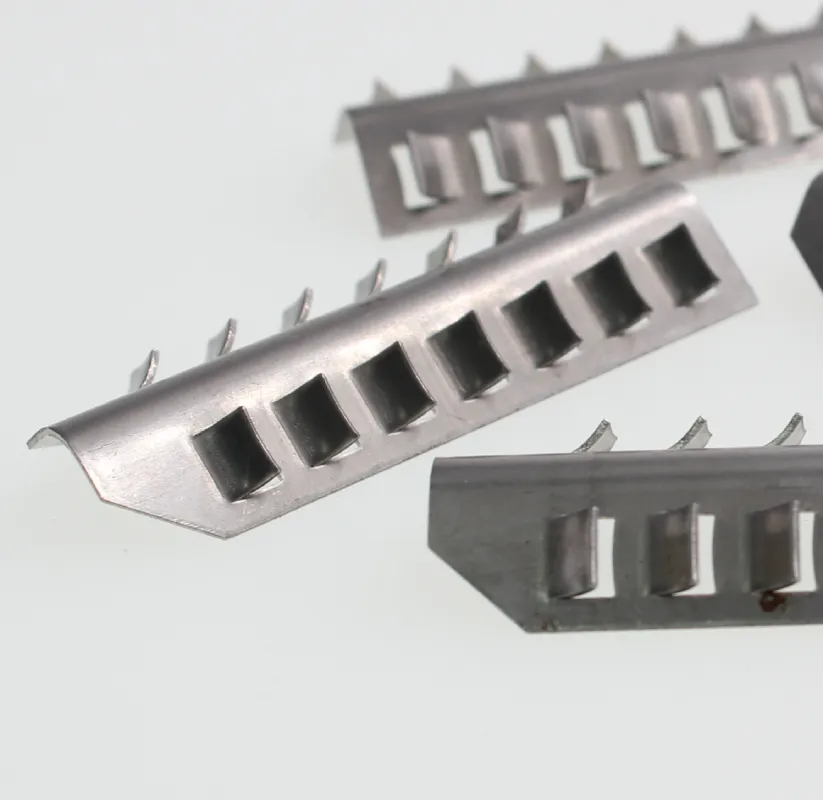
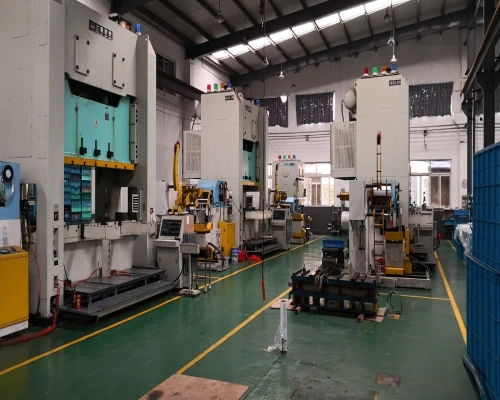
When part production volumes reach tens of thousands or even millions, and features are intricate (e.g., precision cooling fins, latches, embossed textures), this sheet metal fabrication process offers unmatched unit cost advantages and repeatability (achieving tolerances as tight as ±0.02mm) that flexible machining methods cannot surpass. The sheet metal fabrication process commences directly from coil or sheet stock, producing parts via highly automated press lines that drastically compress the manufacturing chain. This constitutes the core element for achieving ultimate efficiency and stability.
Key Challenges in Sheet Metal Fabrication Stamping and Die Forming
The die constitutes the heart of the sheet metal fabrication stamping process, with its design and lifespan management directly impacting a project’s total cost of ownership and quality stability. Professional die design necessitates precise calculation of the cutting clearance (typically 5%-10% of material thickness), which directly determines cross-section quality and burr height. Concurrently, finite element analysis must be employed to optimise die structural rigidity and cooling channels, countering fatigue failure under prolonged alternating loads.
Strip layout design in sheet metal fabrication stamping serves as the process blueprint linking raw material to final components, determining material utilisation, production cadence, and forming feasibility. Through precise nesting, strip layout design can elevate material utilisation beyond 80%. It also optimises sequence planning (e.g., punching alignment holes before subsequent precision forming) to ensure strip stability and dimensional accuracy during continuous conveyance.
Material flow control in sheet metal fabrication stamping processes is equally critical. During drawing or deep-forming operations, uneven metal flow can cause wrinkling, tearing, or excessive thickness reduction. Supro employs dynamic explicit finite element analysis software for full-process simulation, predicting stress-strain distribution, thickness variation, and potential defects at each process step. This enables optimisation prior to tooling manufacture.
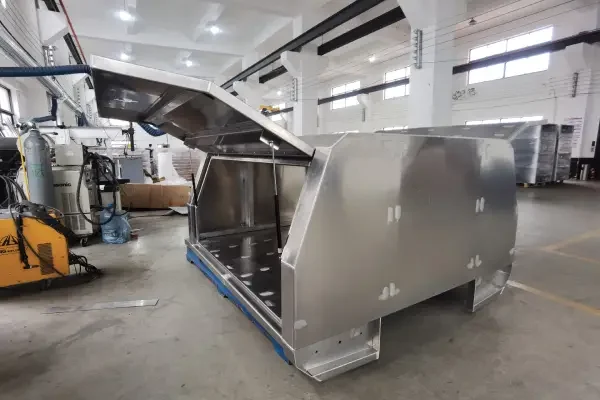
Achieving Structural Integrity in Sheet Metal Fabrication Processes: Welding and Joining
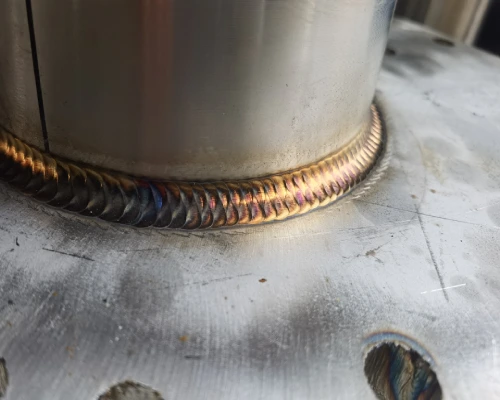
The sheet metal fabrication welding process constitutes the critical metallurgical stage transforming multiple discrete components into an integrated structure. Its essence extends far beyond simple metal bonding, representing a sophisticated thermal manufacturing process involving localised metallurgical reactions, thermal cycling, and stress distribution.
The Nature and Process Positioning of Welding and Joining in Sheet Metal Fabrication
Within the systematic sheet metal fabrication process, welding and joining represent the transformative juncture where discrete components evolve into functionally complete structural entities. By establishing metallurgical bonds (e.g., fusion welding), mechanical interlocking (e.g., riveting), or chemical adhesion (e.g., bonding) between parts, it transforms cut and formed components into assemblies capable of bearing loads, sealing, or enabling motion.
The welding and joining operations within sheet metal fabrication processes directly determine the final product’s structural integrity, fatigue life, and long-term reliability under dynamic loads or corrosive environments. The quality of welded joints often represents the weakest link in the entire product; their performance must be treated as a new material distinct from the base metal, requiring dedicated design and control.
Consequently, the core objective of a robust sheet metal fabrication welding process is to ensure joints achieve strength, toughness, and corrosion resistance at or near the level of the base material, thereby enabling the lossless transfer of design strength to the actual strength of the finished product.
Key Challenges in Welding and Joining Sheet Metal Fabrication Processes
The concentrated heat input during sheet metal fabrication welding processes induces non-uniform thermal expansion and contraction, which is the fundamental cause of workpiece distortion and residual stresses. Such distortion directly compromises the geometric accuracy accumulated in preceding operations, complicates assembly, and may even cause product failure.
Management hinges on meticulous planning and control of heat input. In selecting welding methods, prioritise low-heat-input, high-energy-density techniques such as laser welding or CMT (Cold Metal Transfer) arc welding to minimise the heat-affected zone (HAZ). During sheet metal fabrication welding process execution, reliance is placed on scientifically determined welding sequences (such as symmetrical welding from the centre outward) and rigid fixture systems to balance and constrain deformation forces.
Secondly, weld accessibility and quality inspectability are paramount. This necessitates ensuring, during the design and sheet metal fabrication welding process planning stages, that the welding torch can reach the joint location, whilst reserving physical space and programme interfaces for subsequent non-destructive testing.
Finally, material compatibility and corrosion protection during the sheet metal fabrication welding process are paramount. Particularly when joining dissimilar materials (e.g., carbon steel and stainless steel), welding consumables with matched potentials must be selected. Post-weld treatment (such as re-passivation) of the heat-affected zone is essential to restore corrosion resistance and prevent electrochemical corrosion.
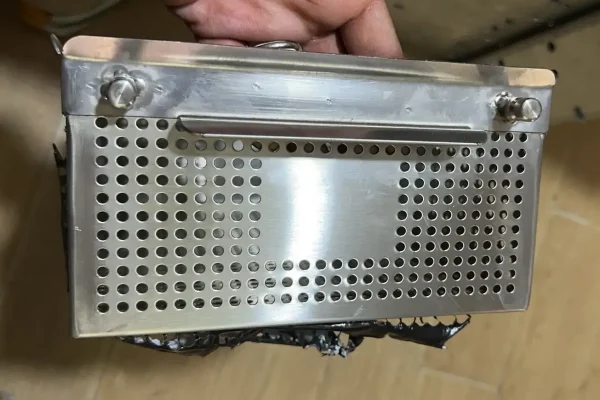
Sheet Metal Fabrication Process Meeting Functional and Aesthetic Requirements: Surface Treatment
Within the comprehensive sheet metal fabrication process, surface treatment serves as the final stage providing components with long-term protection, specific functional properties, and ultimate aesthetic value. Its essence lies in establishing a performance-modified surface layer upon the metallic substrate through physical or chemical methods.
The Nature and Process Positioning of Surface Treatment in Sheet Metal Fabrication
Surface treatment within sheet metal fabrication employs a series of controlled chemical or physical methods to create a modified surface layer with novel properties on the metal substrate. This is not mere painting, but a systematic engineering process designed to achieve three core functions: long-term protection (against corrosion, wear, and UV radiation), specific functionalities (such as conductivity, insulation, and abrasion resistance), and aesthetics/identification (colour, texture, branding).
The quality of surface treatment in sheet metal fabrication directly determines whether all preceding manufacturing value can be preserved within demanding end-use environments.
A qualified surface treatment process can extend the protective lifespan of metal substrates by several to dozens of times, whilst meeting standards such as UL, FDA, or specific industry appearance requirements (e.g., NEMA enclosure ratings).
Key Challenges in Surface Treatment for Sheet Metal Fabrication
Firstly, the thoroughness and consistency of surface preparation form the foundation for all coating adhesion. Standardised processes (e.g., degreasing, nano-ceramic conversion coating treatment) coupled with strict monitoring of bath parameters ensure the formation of a uniform, highly reactive substrate.
Secondly, the coating system must be matched to the intended operating environment. For instance, outdoor cabinets require highly weather-resistant fluorocarbon coating systems, whereas indoor electrical appliances may utilise single-layer epoxy powder coatings.
Finally, comprehensive contamination control throughout the process is essential. Establishing cleanliness-controlled zones prevents residual contaminants (such as oils or iron particles) from preceding stages or cross-contamination, thereby safeguarding the performance of the applied coatings.
Looking for a reliable custom sheet metal fabrication companies?
Talk To Supro MFG Expert Team
Contact us for competitive ex-factory prices,
and a full range of technical support services.
Conclusion
In summary, the core value of an exceptional sheet metal fabrication process does not stem from the cutting-edge nature of any single technology, but rather from the highly synergistic operation of five core processes: laser cutting, CNC bending, stamping, welding, and surface treatment.
Supro is a specialist sheet metal fabrication manufacturer. Leveraging advanced equipment, extensive manufacturing expertise and a professional engineering team, we deliver flawless custom sheet metal fabrication services to over 3,000 companies worldwide, alongside genuine manufacturer quotations.
As an industry-leading sheet metal fabrication manufacturer, we deliver diverse products efficiently and on schedule. From product design and rapid sheet metal prototype fabrication to volume production, we provide expert technical support and exceptional quality. Furthermore, we offer comprehensive manufacturing solutions and highly cost-competitive product supply!