Author name: Supro MFG

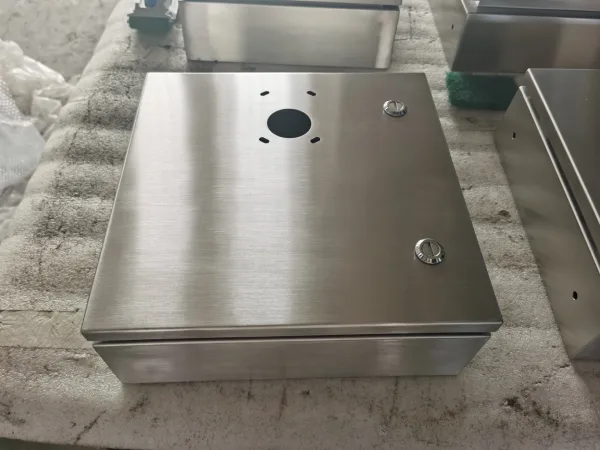
custom EV charging station housing

Achieving IK10-Rated Impact Resistance for EV Charging Station Housings

The accelerated deployment of public charging infrastructure has exposed EV charging station housings to unprecedented physical risks—acts of vandalism such as minor vehicle collisions, blows from blunt objects, and forced entry via lock tampering directly result in equipment downtime and high repair costs. The IK10 protection rating defined by the IEC 62262 standard requires the housing to withstand an impact energy of 20 joules—equivalent to the impact force generated by a 5-kg object dropped from a height of 400 mm—while ensuring that the IP protection rating remains unaffected after testing and that the door operation and locking points remain undamaged. However, achieving IK10 compliance is not simply a matter of increasing material thickness. From the perspective of EV charging station housing manufacturing, the failure modes of 2.5 mm aluminum alloy and 1.5 mm stainless steel under impact are fundamentally different—aluminum absorbs energy through plastic deformation, while stainless steel faces the risk of cracking due to stress concentration. At the structural […]

Achieving IK10-Rated Impact Resistance for EV Charging Station Housings Read More »

metal gasoline tank

Corrosion of Metal Gasoline Tanks Caused by Ethanol Phase Separation

The widespread use of ethanol-blended fuels (particularly E10 and E15) has presented numerous compatibility challenges for metal gasoline tank systems. The most critical of these is corrosion in metal gasoline tank systems caused by ethanol’s hygroscopicity and the resulting phase separation. The consequences are predictable: ordinary cold-rolled carbon steel, even when coated with a secondary inner lining, may develop perforations within a matter of months once exposed to this stratified ethanol-water environment. For custom metal gasoline tanks, the fundamental issue is not whether phase separation will occur—it is merely a matter of time—but whether the selected material can withstand this environment. Aluminized steel and NI-TERNE-coated steel possess inherent corrosion resistance and offer a durable solution without the need for a secondary coating. This paper explores the metallurgical basis of ethanol-induced corrosion, analyzes the mechanisms of phase separation, and proposes alternative material solutions that enable a long service life without the need for additional internal coatings. Phase Separation of Ethanol-Blended Fuel

Corrosion of Metal Gasoline Tanks Caused by Ethanol Phase Separation Read More »

EV charging station housing

Addressing Premature Corrosion of EV Charging Station Housings

As the global penetration rate of electric vehicles continues to rise, the deployment of outdoor charging infrastructure is proceeding at an unprecedented pace. EV charging station housings, serving as the first line of defense for protecting internal electrical components, are continuously exposed to corrosive environments such as rain, condensation, temperature cycling, and road salt spray. The bottom of the housing and the lower edge of the door panel are prime targets for corrosion—these areas are constantly exposed to capillary water absorption from concrete bases or accumulate salt-laden liquid splashed from the road. Once rust forms, it spreads rapidly, leading to coating peeling, reduced structural strength, and even compromising the safety of the internal electrical components. While the NEMA 250 and UL 50E standards provide a graded framework for environmental protection of outdoor electrical enclosures, issues such as insufficient corrosion resistance of the base material (e.g., standard SPCC), a lack of drainage design at the bottom, and inadequate pretreatment before coating

Addressing Premature Corrosion of EV Charging Station Housings Read More »

metal oil tank

How to Prevent Fatigue Cracking in the Welds of Metal Oil Tank Baffles

For metal oil tanks used in mobile or vehicle-mounted applications, the operating environment generates a unique set of cyclic load conditions that are rarely encountered in stationary storage tanks. Liquid sloshing—that is, the inertial movement of fuel or engine oil during acceleration, braking, and vibrations caused by terrain—exerts repeated impact forces on the internal baffles. These dynamic pressures are directly transmitted to the fillet welds that secure the baffles to the metal oil tank shell, and they are the primary cause of premature fatigue failure. In welded structures, fatigue cracks almost invariably originate at the weld root—that is, the sharp geometric transition between the weld metal and the base metal—where the stress concentration factor is highest. Although continuous fillet welds provide high structural rigidity, they hold the baffles in place and are unable to absorb energy; under cyclic shaking loads, the weld root acts as a fixed notch, thereby accelerating the initiation and propagation of cracks along the fusion line.

How to Prevent Fatigue Cracking in the Welds of Metal Oil Tank Baffles Read More »

precision stamping automotive parts

Metal Stamping Design Guide: Tolerances, Fillets, and Material Selection

Moving metal stamping parts from the CAD screen to full-scale production requires not only a functional design intent but also strict adherence to Design for Manufacturability (DFM) principles. Ignoring the basic rules of metal stamping will directly result in costly die modifications, extended lead times, and higher unit costs. Defects on the shop floor—such as microcracks, severe springback, or excessive die wear—rarely stem from operator error. Instead, these defects are typically “designed” into the part during the drafting phase due to misjudgments regarding material yield strength, tonnage limits, and die clearances. This article bridges the gap between theoretical engineering and shop-floor reality. By mastering key precision metal stamping tolerances, calculating precise bending radii, and making strategic material selections, most production bottlenecks can be eliminated before any die steel is cut. At Supro MFG, we regularly review technical drawings, and it has been proven that optimized custom metal stamping designs ensure lower die investment and enable stable, high-yield production. Critical Metal

Metal Stamping Design Guide: Tolerances, Fillets, and Material Selection Read More »

custom stainless steel fabrication sheet metal tank services

Welding of Metal Oil Tanks: Achieving 0 Micro-Leaks

In the welding of metal oil tanks, weld integrity is not merely a quality metric—it is a prerequisite for ensuring the tank’s airtightness. Micro-leaks are often undetectable through hydrostatic testing alone, and their root cause typically lies in incomplete fusion at the root of the groove weld. Although such volumetric discontinuities may pass initial pressure tests, they can evolve into wall-penetrating cracks under cyclic operational loads. A documented case of a crude oil storage tank rupture was directly caused by lack of fusion in a single-sided groove weld, fully corroborating this progression: the defect remained latent until brittle fracture occurred under combined stresses and low-temperature conditions. Therefore, to eliminate micro-leaks, final inspection alone is insufficient—it requires comprehensive process control from weld preparation to welding parameters, in accordance with recognized manufacturing standards such as AWS D1.1. Supro is a professional metal oil tank manufacturer. We integrate quality control into every weld rather than relying on post-weld inspection, ensuring the delivery of

Welding of Metal Oil Tanks: Achieving 0 Micro-Leaks Read More »

flux-cored welding wire

Analysis of the AWS Welding Wire Classification System

The American Welding Society (AWS) filler metal classification system provides the technical foundation for specifying and selecting welding consumables across the entire metalworking industry. Understanding the AWS welding wire classification framework is critical to ensuring weld integrity, compliance with process specifications, and consistent mechanical properties across different production batches. The AWS classification standards standardize filler metals and clearly define the welding results that specific welding wires will produce, enabling manufacturers to maintain consistency in weld quality, chemical composition, and mechanical properties regardless of the welding wire brand or source. This article examines the AWS welding wire classification system from a professional sheet metal fabrication perspective, exploring the naming structure, key specifications, and practical selection criteria for driving quality outcomes in custom manufacturing environments. AWS A5 Series: The Basis for Welding Wire Classification The AWS A5 series of standards provides the basis for welding wire classification, defining the chemical composition limits and mechanical property thresholds that determine the selection of filler

Analysis of the AWS Welding Wire Classification System Read More »

metal welding services

Weld Defects in GTAW Welding Aluminum and Their Solutions

In high-end manufacturing, GTAW welding aluminum serves as the joining process for achieving high-strength, high-integrity aluminum alloy structures. It directly impacts the reliability, service life, and safety margin of the final product. The high thermal conductivity, surface oxide layer, and extreme hydrogen sensitivity of aluminum alloys make GTAW aluminum welds highly susceptible to defects such as porosity, hot cracks, and lack of fusion. This necessitates that GTAW aluminum welding manufacturers systematically build a defense system: from rigorous pre-weld cleaning and material science selection, to precise coordinated control of heat input and power source AC waveforms, ultimately validated through stringent non-destructive testing. This paper analyzes the root causes of defects in GTAW aluminum welds based on engineering practice and presents a predictable, repeatable solution to ensure the structural integrity of your welded components. Material Properties and Their Interaction with the GTAW Aluminum Welding Process In custom sheet metal fabrication, welding is the preferred process for joining aluminum alloy structures. However, a

Weld Defects in GTAW Welding Aluminum and Their Solutions Read More »

extruded aluminum fabrication

3 Common Problems and Solutions in Aluminum Extrusion

Due to aluminum’s excellent strength-to-weight ratio and design flexibility, aluminum extrusion remains one of the most widely used forming processes in the automotive, aerospace, construction, and thermal management sectors. However, despite decades of development and refinement, extrusion shops continue to encounter recurring quality issues that directly impact dimensional conformity, surface integrity, and downstream machinability. Industry data shows that nearly 30% of extruded parts fail to meet the strict tolerance requirements demanded by high-performance applications; when process control is inadequate, defect-related scrap rates can account for more than 15% of total output. In the production of aluminum extrusion profiles, the three most commonly observed defect categories are: surface cracking and tearing, caused by localized excessive tensile stress and temperature fluctuations exceeding the alloy’s initial melting point; dimensional inconsistencies, including twisting and bending, which are attributed to uneven cooling distribution across the profile cross-section; and insufficient weld bond in hollow profiles produced via die or bridge dies, resulting from inadequate pressure in

3 Common Problems and Solutions in Aluminum Extrusion Read More »

custom server rack rails

Avoiding Hardware Interference in Server Rack Rail

During the deployment of large data centers, few issues cause more unpredictable assembly delays than hardware interference within server rack rails. Standard EIA-310 square mounting holes require strict dimensional tolerances to ensure seamless compatibility with cage nuts and sliding mechanisms. However, uncontrolled powder coating buildup can significantly reduce the effective hole clearance, directly leading to fastener jamming, incorrect torque installation, or even the complete failure to complete rack integration. At Supro MFG, our engineering failure analysis indicates that a seemingly insignificant 0.15-millimeter excess coating thickness on precision server rack rails is sufficient to bring time-sensitive installation schedules to a standstill. This specific dimensional deviation typically stems from uncontrolled electrostatic deposition and the Faraday cage effect during the surface treatment stage, rather than structural inaccuracies in the initial CNC stamping process. This article explores in detail the fundamental physical causes of powder buildup in custom server rack rails and elaborates on the precise manufacturing process control measures required to ensure zero-defect

Avoiding Hardware Interference in Server Rack Rail Read More »

NEMA 3 enclosures

Solution for Microcracks at the Bending Radius of NEMA Enclosures

NEMA enclosures serve as the primary protective barrier for electrical and electronic equipment in industrial, outdoor, and hazardous environments. The integrity of these enclosures—particularly at molded corners and bends—directly determines their ability to maintain their NEMA rating for protection against dust, moisture, corrosion, and physical impact. Microcracks at bend radii are among the most insidious quality defects in NEMA enclosure manufacturing. These cracks are typically invisible to the naked eye during initial inspection but can propagate during service due to thermal cycling, vibration, and mechanical loads. Once formed, microcracks compromise the structural integrity of the enclosure, leading to the ingress of environmental factors and ultimately causing the NEMA protection rating to fail. This article delves into the metallurgical and process-related causes of microcracks at bending radii in NEMA enclosure manufacturing and proposes a series of engineering control measures—ranging from material selection and die optimization to quality verification—to completely eliminate such defects in production. Understanding the Mechanism of Microcrack Formation in

Solution for Microcracks at the Bending Radius of NEMA Enclosures Read More »

metal fuel tank

Avoiding EVAP Micro-Leak Failures in Metal Fuel Tanks

Evaporative emissions (EVAP) compliance for metal fuel tanks is no longer merely a matter of quality assurance—it is a matter of market access. Starting with the 2000 model year, both the U.S. Environmental Protection Agency (EPA) and the California Air Resources Board (CARB) have mandated that OBD II systems must be capable of detecting system leaks equivalent to a hole larger than 0.5 millimeters (0.020 inches) in diameter. This regulatory threshold imposes stringent requirements on the manufacturing process of custom metal fuel tanks: any welding porosity—that is, gas voids trapped within the weld pool during solidification—can form microscopic vapor pathways, triggering P0456 or P0442 fault codes when the vehicle is started. Traditional hydrostatic testing relies on water as the pressurizing medium, but its resolution is insufficient to reveal these sub-millimeter defects; surface tension effects often mask minute leaks that would otherwise allow vapor to escape under the influence of fuel vapor pressure. For a metal fuel tank to pass certification,

Avoiding EVAP Micro-Leak Failures in Metal Fuel Tanks Read More »

NEMA 2 enclosure

Solving Door Sagging and Hinge Jamming Issues in NEMA Enclosures

For any UL-certified NEMA enclosure, door sagging and hinge jamming are not merely operational nuisances—they directly compromise the integrity of the gasket compression, leading to a failure of the protection rating. From a sheet metal fabrication perspective, the vast majority of cases are not due to insufficient material strength, but rather the combined effect of misaligned hinge axes and residual stresses in the door panel. Even a 2° diagonal twist can create contact stress concentrations within the hinge barrel, accelerating wear and causing jamming. This article focuses on three controllable variables—design tolerances, welding sequences, and hinge selection—for NEMA enclosures, providing procurement and engineering teams with quantifiable pathways for improvement. Supro Mfg analyzes these root causes one by one based on production data compliant with ASTM and UL standards. Understanding Door Sagging and Hinge Jamming in NEMA Enclosures Door sagging and hinge jamming in NEMA enclosures stem from a mismatch between the geometric offset of the hinge axis and the stiffness

Solving Door Sagging and Hinge Jamming Issues in NEMA Enclosures Read More »

flux-cored welding wire

Flux-Cored Welding Wires: Gas-Shielded and Self-Shielded

Selecting the right flux-cored welding wire is more than just a decision about consumables—it directly determines weld quality, post-weld cleanup time, and the total cost of the project. There are currently two main types of flux-cored wire: gas-shielded flux-cored wire (FCAW-G) and self-shielded flux-cored wire (FCAW-S). Although both types of wire have higher deposition rates than solid electrodes, their protective mechanisms perform very differently in workshop production. FCAW-G is typically used with a 75%–85% argon/carbon dioxide gas mixture, enabling controlled penetration depth and minimizing spatter on 1.5–8 mm thick plates, making it ideal for manufacturing enclosures with tight tolerances. In contrast, FCAW-S relies on gases generated by the flux core during welding. While portable, it tends to produce more slag and is susceptible to hydrogen-induced cracking. This article provides a detailed analysis of penetration depth curves, cost per meter of weld, and safety compliance data to help engineers select the appropriate flux-cored welding wire for various applications in sheet metal

Flux-Cored Welding Wires: Gas-Shielded and Self-Shielded Read More »

welding wire

Welding Wire Types and Applications

Welding wire is the most commonly used consumable in Gas Metal Arc Welding (GMAW) and Gas Tungsten Arc Welding (GTAW) operations, yet its impact on the final weld quality is often underestimated. It directly affects joint quality, production efficiency, and the cost per weld. Different types of welding wire—from solid welding wire for GMAW (Gas Metal Arc Welding) in cleanroom environments, to flux-cored welding wire for field installation, to submerged arc welding (SAW) wire for high-deposition-rate thick-plate welding—each requires matching based on alloy characteristics and adherence to corresponding shielding gas specifications. Incorrect application can lead to porosity, cracks, or rework, all of which can be avoided through systematic selection. At Supro MFG, we specify welding wire based on AWS classifications and the heat input of specific applications, ensuring defect-free welds from thin-walled enclosures to heavy-duty structural components. This guide delves into welding wire types, selection criteria for different materials, and application considerations. Main Categories of Welding Wire The selection of

Welding Wire Types and Applications Read More »

A Guide to EMI/RFI Shielding in custom metal fabrication

EMI/RFI Shielding Cans: Causes of Discoloration During SMT Reflow Soldering

After lead-free reflow soldering, visible yellowing or oxidation marks appear on the surface of EMI/RFI shielding cans, which has become an increasingly common concern in the electronics manufacturing industry. Although such cosmetic defects do not necessarily affect electromagnetic shielding performance, they have a significant impact on product aesthetics and long-term corrosion resistance. Lead-free soldering process profiles typically expose components to peak temperatures approaching 260°C, which accelerates oxidation reactions on exposed metal surfaces. The root causes of this phenomenon in custom EMI/RFI shielding cans involve multiple factors—thermal degradation of non-volatile stamping oil residues during the SMT reflow process, the substrate’s susceptibility to high-temperature oxidation (particularly nickel-silver alloys), improper storage conditions leading to pre-oxidation, and the surface degradation exacerbated by flux outgassing. Understanding these mechanisms is crucial during the manufacturing of EMI/RFI shielding cans—this is not only a matter of quality control but also essential for establishing process specifications to ensure the integrity of component surfaces during the reflow soldering cycle and

EMI/RFI Shielding Cans: Causes of Discoloration During SMT Reflow Soldering Read More »

custom EV charging station housing

Preventing Water Leaks in EV Charging Station Housings

Electric vehicle charging infrastructure operates outdoors, requires minimal routine maintenance, and must withstand exposure to rain, wind-blown water spray, melting snow, and high-pressure washing. Enclosures rated to NEMA 3R/4X or IP65 are specified to withstand these environmental conditions—NEMA 4X requires resistance to water jets and corrosive environments, while IP65 requires resistance to a water jet with a flow rate of 12.5 L/min from a 6.3-millimeter nozzle at a height of 2.5 to 3 meters. However, in actual operation, a large number of EV charging station housings develop leaks shortly after being put into service, leading to ground fault trips, corrosion of electronic components, and even system shutdowns. The problem rarely stems from inadequate specifications but rather from the manufacturing process of EV charging station housings: intermittent spot welding at corners, porosity and incomplete penetration in welds, and incorrect calculations of gasket compression ratios—all of which create pathways for moisture intrusion, leading to ground faults, corrosion, and system shutdowns. To provide

Preventing Water Leaks in EV Charging Station Housings Read More »

high-speed steel (HSS)

High-Speed Steel: Composition, Grades, and Uses

For any precision sheet metal fabrication shop, the choice of die material directly determines part quality, production efficiency, and die service life. Among the various types of die steel, high-speed steel (HSS) remains the benchmark for high-temperature and continuous wear-resistant applications. Unlike traditional cold-work steels, high-speed steel retains its hardness at temperatures as high as 600°C—a property known as “red hardness”—making it indispensable for stamping, blanking, and forming operations. When manufacturing high-speed steel sheet metal parts, the choice of steel grade determines the cutting edge’s retention capability and the stability of machining cycles. For example, M42 high-speed steel offers exceptional thermal hardness (HRC 67–70), making it suitable for machining stainless steel and high-strength alloys; whereas M2 high-speed steel combines toughness and wear resistance, making it ideal for general-purpose stamping dies. Supro’s production experience shows that selecting the correct high-speed steel grade matched to the workpiece material can reduce downtime by 30–50% compared to standard tool steels. The following sections provide

High-Speed Steel: Composition, Grades, and Uses Read More »

custom splash guards

Resolving Alignment Deviations in Splash Guard Mounting Holes: Avoiding On-Site Assembly Delays

When a splash guard enters final assembly, even the slightest deviation between its mounting holes and the threaded inserts in the equipment frame can cause production line downtime, leading to rework, expedited shipping costs, and delivery delays—which in turn puts pressure on customer relationships. From a splash guard manufacturing engineering perspective, this misalignment is rarely caused by a single machining error. Rather, it is the result of the accumulation of systemic variables inherent in a multi-stage bending process: tolerance accumulation propagates through successive forming operations, and springback behavior deviates from theoretical predictions when process models fail to adequately account for material properties (yield strength, grain orientation, and thickness variations). To address these root causes, adjustments at the shop floor level alone are far from sufficient; they require rigorous K-factor calibration through 3D CAD-based development of flat patterns, combined with design-for-manufacturability strategies—such as strategically placing slots to absorb rather than offset assembly tolerances. When these engineering methods are systematically applied, alignment

Resolving Alignment Deviations in Splash Guard Mounting Holes: Avoiding On-Site Assembly Delays Read More »

splash guard

Splash Guard Bending and Warping: Causes and Solutions

Splash guards are functional sheet metal components typically integrated into machine tool assemblies, industrial equipment housings, and fluid sealing systems. Their primary functional requirement is to maintain precise geometric alignment with mating surfaces (typically machine tool beds, frames, or base plates). When a splash guard fails to fit snugly against the intended mounting surface, the resulting gaps not only compromise the component’s aesthetic appeal but also impair its functional performance—particularly in applications involving coolant sealing, chip management, or environmental sealing. A long-standing challenge in splash guard manufacturing is dimensional instability, which manifests as bending and warping. These defects typically become apparent during the final assembly stage: although the parts meet the dimensional requirements specified in the drawings during inspection, they cannot be aligned with the mating surfaces during actual assembly. Understanding the metallurgical and mechanical causes of these deformations is crucial for implementing effective countermeasures. This paper explores the primary mechanisms leading to warping in custom splash guards—internal stress distribution,

Splash Guard Bending and Warping: Causes and Solutions Read More »

metal fuel tank

Strategies for Preventing Electrochemical Corrosion at Metal Fuel Tank Mounting Straps

The interface between the metal fuel tank and its mounting straps is one of the most commonly overlooked corrosion pathways in automotive chassis assemblies. When different types of metal—typically galvanized steel straps and carbon steel fuel tanks—come into direct contact under the influence of road salt and moisture, an electrochemical cell is formed. The more active metal (the fuel tank) acts as the anode and undergoes accelerated corrosion, while the mounting strap acts as the cathode. This is by no means a theoretical concern: when Ford recalled 1.1 million F-150 pickup trucks in 2011, it attributed mounting strap fractures to corrosion caused by de-icing chemicals in 21 “salt belt” states; such failures caused the fuel tank to come into contact with the ground, posing a risk of fuel leakage. Vibration exacerbates this problem by wearing away the protective coating, exposing bare metal and thereby creating a complete electrochemical circuit. The engineering solution lies not in thickening the coating, but in

Strategies for Preventing Electrochemical Corrosion at Metal Fuel Tank Mounting Straps Read More »

metal fuel tank

Metal Fuel Tank Manufacturing: 0 Tolerance for Weld Spatter and FOD

In the manufacturing of metal fuel tanks, internal cleanliness is no longer merely a nice-to-have process metric, but rather a core parameter that determines system reliability. Modern diesel engine common-rail systems typically operate at pressures exceeding 2,000 bar (200 MPa), with the clearance between precision components inside the injectors ranging from just 1 to 5 micrometers. At this scale, any single particle of metal debris—whether from welding spatter or grinding operations on the metal fuel tank—that enters the common-rail lines with the fuel will cause irreversible abrasive wear to the precision mating surfaces. Global fuel regulations and leading OEMs recommend that fuel cleanliness meet ISO 4406 18/16/13 standards. However, if welding slag and foreign objects (FOD) remaining from the manufacturing process of custom metal fuel tanks are not thoroughly removed before shipment, the vehicle’s onboard filtration system cannot effectively intercept contaminants already present inside the metal fuel tank. This means that the manufacturing quality of custom metal fuel tanks directly

Metal Fuel Tank Manufacturing: 0 Tolerance for Weld Spatter and FOD Read More »

A Guide to EMI/RFI Shielding in custom metal fabrication

Ensuring Reliable Adhesion of Plating on EMI/RFI Shielding Cans: Process Control and Design

For custom EMI/RFI shielding cans, the plating layer is by no means merely a cosmetic feature—it directly determines the device’s shielding performance and long-term reliability. When the plating peels off at bent edges or on flat surfaces due to insufficient adhesion, the exposed base material not only triggers galvanic corrosion and accelerates localized oxidation; but fragments of the peeling plating may also contaminate the cleanroom PCBA environment, causing critical functional defects. The root causes of plating peeling or flaking on EMI/RFI shielding cans typically stem from two factors: First, inadequate degreasing and activation cleaning of the substrate prior to plating, where residual contaminants form a physical barrier between the plating and the substrate; Second, the bending radius is too small, exceeding the ductility limit of the plated metal—when the tensile strain at the bend exceeds the critical value the plating can withstand, microcracks form at the apex of the bend and propagate along the interface under subsequent thermal cycling or

Ensuring Reliable Adhesion of Plating on EMI/RFI Shielding Cans: Process Control and Design Read More »

aluminum alloy machined housing parts

Addressing Thermal Deformation Issues in EV Charging Station Housing

The global electric vehicle charging infrastructure is undergoing unprecedented expansion—the EV charging station housing market is projected to grow from $3.05 billion in 2025 to $8.49 billion in 2032, at a compound annual growth rate (CAGR) of 15.7%. However, this growth presents a widely underestimated engineering challenge: the structural stability of EV charging station housings under dual thermal loads—exposure to direct sunlight outdoors and full-load operation of internal power modules. Large enclosure door panels—typically over 1.5 meters in height—are highly susceptible to metal buckling under thermal stress, leading to warping and uneven gaps. This compromises the IP rating’s seal integrity, exposing sensitive electrical components to the risk of moisture and particulate ingress. When carbon steel (with a linear expansion coefficient of approximately 11.7×10⁻⁶/°C) undergoes linear expansion exceeding 1 millimeter along the 1.8-meter height of the door panel due to a 50°C temperature rise, a custom EV charging station housing design lacking proper rib reinforcement will directly result in permanent deformation.

Addressing Thermal Deformation Issues in EV Charging Station Housing Read More »

custom aluminum stamping parts

Solving Vibration Fatigue Fracture Issues in Splash Guards

Splash guards installed on production equipment fail within a few months—not due to impact or corrosion, but because of cracks caused by vibration fatigue around the mounting bolts. This failure mode has been extensively documented in sheet metal applications: bolted joints create geometric discontinuities that lead to cyclic stress concentrations. When the equipment’s excitation frequency matches the splash guard’s natural frequency, resonance amplifies the deflection amplitude, thereby accelerating crack initiation and propagation. The problem is further exacerbated when thin sheets lack sufficient section modulus (a geometric property that determines bending stiffness). From a splash guard fabrication perspective, the solution is not simply to increase material thickness, but rather to strategically modify the sheet metal geometry to raise its natural frequency and redistribute stress away from the connection areas. This article explores the root causes of fatigue failure in custom splash guards and proposes practical forming strategies—rib reinforcement, edge rolling, and vibration isolation—that can extend service life without significantly increasing weight

Solving Vibration Fatigue Fracture Issues in Splash Guards Read More »

Custom galvanized steel water tanks

Material Selection Strategies for Addressing Internal Corrosion in Metal Fuel Tanks

Today, ethanol-gasoline blends (such as E10 and E85) and biodiesel have become standard fuels in the North American and European markets. While these blends reduce emissions and improve octane ratings, they also present a series of material compatibility challenges that directly affect the integrity of metal fuel tank systems. Ethanol is hygroscopic; it readily absorbs moisture from the atmosphere and contains corrosive ions such as chloride ions. Similarly, biodiesel has high oxygen and moisture content, and the fatty acids and their degradation products further enhance corrosion of carbon steel. Steel fuel tanks exposed to fuel-grade ethanol are susceptible to stress corrosion cracking, and Q235 carbon steel also exhibits measurable corrosion when immersed in ethanol-gasoline blends. The consequences extend beyond surface rust—they include the generation of particulate contaminants that can clog pumps and injectors; in severe cases, perforation may occur, leading to leaks and safety hazards. For metal fuel tank manufacturers and procurement engineers, specifying metal fuel tank materials that eliminate

Material Selection Strategies for Addressing Internal Corrosion in Metal Fuel Tanks Read More »

custom metal bracket fabrication services

Custom Heavy Duty Metal Brackets: Provide Sturdy Support

In demanding industrial environments, standard heavy duty metal brackets often become the weak link in system reliability. When components fail due to metal fatigue under dynamic loads, stress corrosion cracking in harsh conditions, or simple geometric mismatches, the consequences far exceed the cost of part replacement. This leads to unplanned downtime, safety violations, and costly production losses. As a specialized heavy duty metal bracket manufacturer, Supro understands that true engineering support stems from deep analysis of application load spectra, environmental corrosion factors, and long-term performance degradation curves. Therefore, custom heavy duty metal brackets tailored to specific operating conditions are an engineering necessity for ensuring structural integrity and smooth project operation. This article systematically explains how, through a collaborative engineering design process—from finite element analysis to materials science—custom heavy duty metal brackets transform structural risks into enduring operational advantages. Why Standard Heavy Duty Metal Brackets Are a Potential Weak Link in the Project Chain In engineering projects, standard heavy duty metal brackets are often

Custom Heavy Duty Metal Brackets: Provide Sturdy Support Read More »

precision custom metal enclosure projects

Custom Sheet Metal Enclosure Fabrication for Industrial Automation

In the realm of industrial automation, enclosures are no longer mere protective covers but serve as critical system platforms housing precision control systems and ensuring long-term stable operation of equipment. Modern production lines impose multidimensional demands on sheet metal fabrication enclosures: they must withstand continuous vibration and impact, provide reliable IP protection and EMC shielding, and effectively manage thermal challenges arising from high power density. The core value of a successful sheet metal enclosure fabrication solution lies in delivering systematic responses to these complex operating conditions, rather than merely providing dimensionally accurate enclosures. This demands that sheet metal enclosure fabrication manufacturers treat the enclosure as an integrated engineering component from the project’s inception. Through a scientific sheet metal enclosure fabrication process, every step—from design simulation to welding and assembly—must precisely anchor to final performance metrics: structural integrity, environmental resilience, and maintainability throughout the entire lifecycle. This establishes a robust physical foundation for the reliable operation of automated equipment. This article

Custom Sheet Metal Enclosure Fabrication for Industrial Automation Read More »

sheet metal bending services

5 Solutions for Springback in Sheet Metal Bending

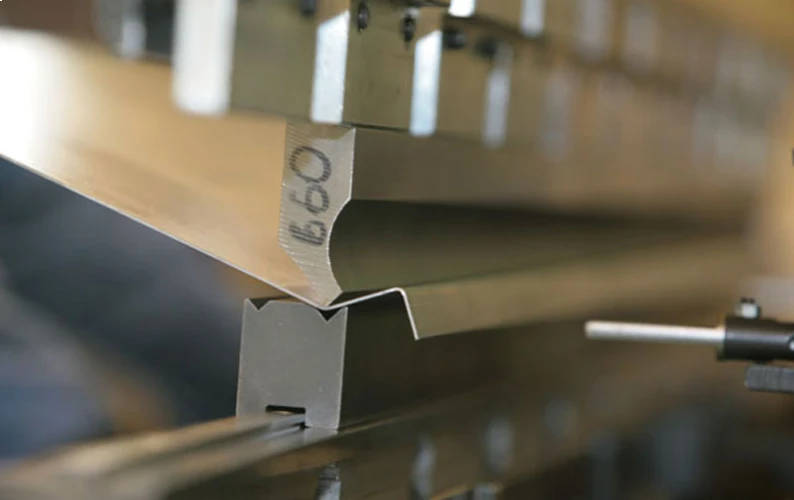
Springback is not merely a nuisance factor but an essential physical phenomenon in sheet metal bending processes that cannot be ignored. This post-forming elastic recovery, determined by material yield strength and elastic modulus, directly impacts final angle accuracy and flange dimensional stability. Uncontrolled springback in sheet metal bending processes leads to assembly failures, fit issues, and high scrap/rework costs. In lightweight applications involving advanced high-strength steels (AHSS) and aluminum alloys, sheet metal bend springback poses even greater challenges. Relying solely on historical compensation data tables is insufficient to address the variability inherent in modern material batches. This article details five sheet metal bend springback control strategies, spanning from tooling engineering to adaptive machine control, facilitating the transition from passive compensation to active springback management. Understanding the Mechanism of Sheet Metal Bend Springback In sheet metal plastic forming, bend springback represents the inevitable elastic recovery after unloading. Its physical essence lies in the fact that any bending deformation encompasses both elastic

5 Solutions for Springback in Sheet Metal Bending Read More »

custom metal bracket

Custom 90-Degree Metal Bracket: Material Selection

In structural engineering, the reliability of 90-degree metal brackets extends far beyond their simple geometric form. They shoulder complex mechanical transmission tasks: from static support to dynamic load distribution, from environmental corrosion resistance to thermal stress management. As a professional custom 90-degree metal bracket manufacturer, Supro deeply understands that premature bracket failure rarely stems from sudden overload but often results from fundamental mismatches between materials and operating environments. Failures caused by such mismatches—such as stress corrosion cracking or fatigue fractures—are typically gradual and insidious, ultimately driving up project costs and causing downtime losses. Therefore, selecting the correct 90-degree metal bracket material is not merely a matter of specification screening but a critical project protection strategy. The choice of material directly determines the structure’s lifecycle cost and safety margin. This article systematically explains, based on materials science and failure analysis, how precisely selecting 90-degree metal bracket materials transforms performance requirements, environmental challenges, and manufacturing processes into durable and reliable structural connections.

Custom 90-Degree Metal Bracket: Material Selection Read More »

Scroll to Top