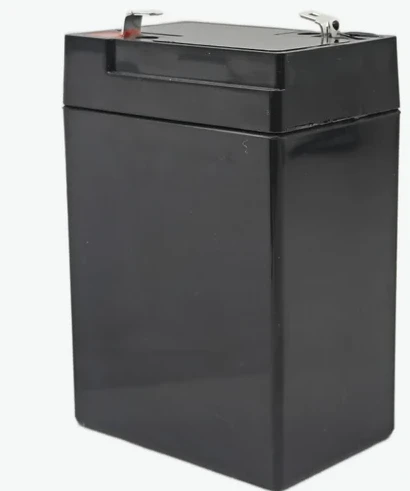
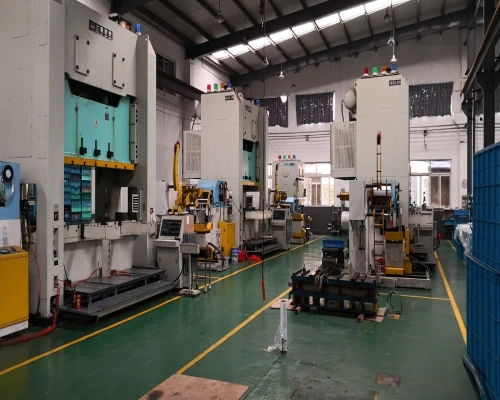
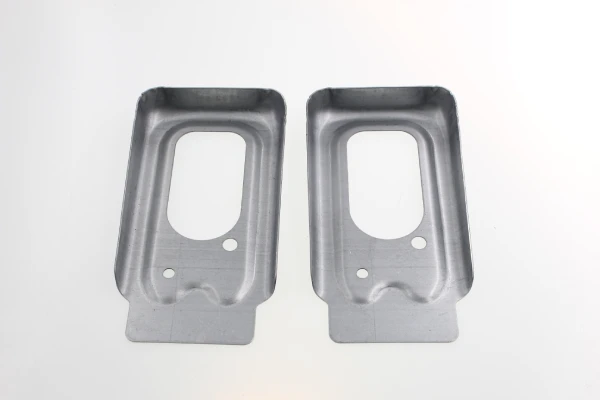
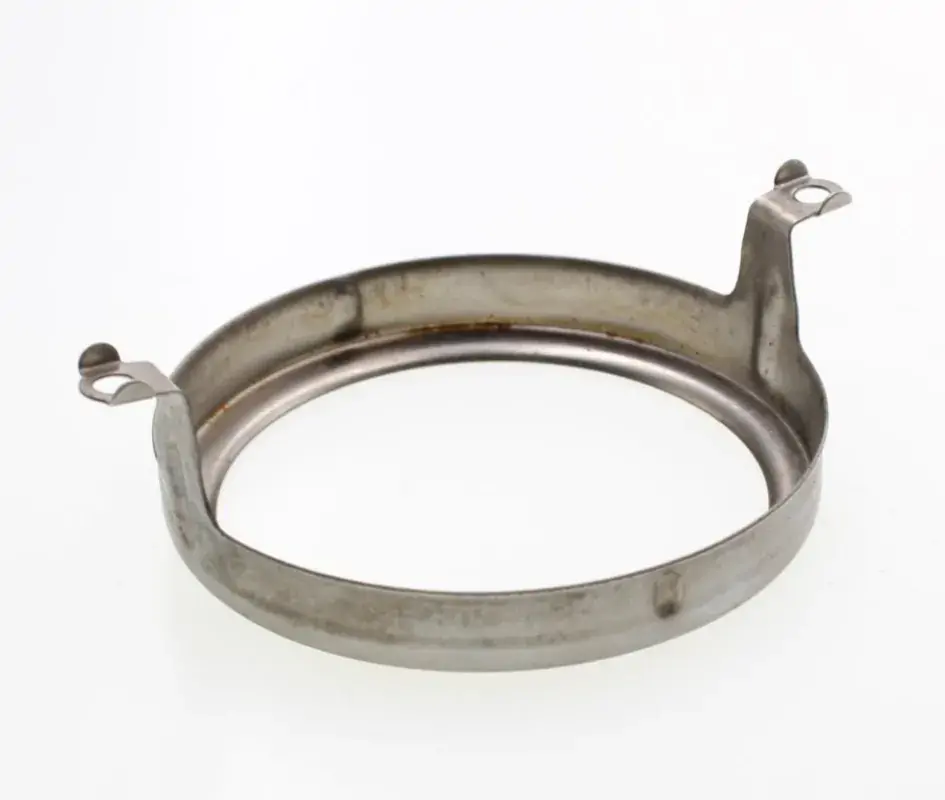

The electrification of the automotive industry has presented unprecedented challenges for battery housing manufacturing. Among the many quality considerations in production—including dimensional accuracy, weld integrity, and thermal management—there is one failure mode that is most easily overlooked yet can lead to catastrophic failures: sharp edges and residual burrs.
In high-voltage battery systems, the insulating barrier between conductive components and the battery housing serves as a critical line of defense against electrical failures. When an EV battery housing has sharp edges or residual burrs resulting from processes such as stamping, laser cutting, or machining, vehicle vibrations and thermal cycling can cause these protrusions to penetrate the insulating film, separator material, or wiring harness sheath. The result is partial discharge, arcing, or catastrophic short circuits.
Eliminating burr-related risks is not merely a cosmetic issue—it is a fundamental safety requirement that demands systematic engineering controls, clear specifications, and validated process capabilities.
Battery Housing Burr Issues: Risk Assessment
During the stamping, laser cutting, or machining of EV battery housing components, material displacement at the sheared surface can form raised edges—known as burrs—whose appearance ranges from microscopic protrusions to sharp structures visible to the naked eye. When these burrs are located near internal insulation materials, battery cell separators, or high-voltage cables, they become points of mechanical stress concentration.
Under normal operating conditions, custom battery housings are subjected to continuous vibrations generated by vehicle motion, thermal expansion and contraction caused by charge-discharge cycles, and occasional mechanical impacts from the road surface. Each vibration cycle pushes the burrs toward the adjacent insulating material. Over time, periodic frictional wear gradually degrades the insulation layer. Once a conductive burr comes into contact with a conductor, the insulation resistance drops below the acceptable threshold, triggering partial discharge that can rapidly escalate into a full short circuit.
In addition to the geometric risks of physical puncture, burrs can also trigger secondary failure mechanisms by generating particles. Loose burrs, lodged swarf, or fractured edge material may detach during assembly or over the course of the product’s service life. Once released inside the EV battery housing, these metal particles become mobile contaminants that can bridge insulation gaps or accumulate between terminals.
The automotive industry has established strict cleanliness standards—ISO 16232 and VDA 19.1/VDA 19.2—precisely to address this type of contamination risk.
Root Causes of Burr Formation in Battery Housing Production
The root causes of burrs in battery housings are primarily attributed to punch-die clearance deviation, unstable laser cutting gas pressure, and insufficient deburring during post-processing. All three factors are influenced by the precision of process parameters and the frequency of die maintenance.
Laser Cutting: Unstable Gas Pressure
During laser cutting, the primary function of the assist gas is to blow molten metal out of the cut. When the pressure of nitrogen or oxygen fluctuates, the molten metal cannot be completely expelled; upon cooling, it forms slag or burrs along the lower edge of the cut.
For aluminum battery housings, nitrogen purity must be no less than 99.995%, with pressure typically controlled within the range of 1.0–2.5 MPa; stainless steel cutting requires 8–14 bar. However, higher pressure is not necessarily better—excessively high pressure can cause turbulent gas flow, which actually reduces slag removal efficiency.
Insufficient pressure stabilization in the gas supply system, inconsistent nozzle heights, or drift in the focal position can all introduce parameter fluctuations. Even if a single parameter remains within tolerance, the combined effect of multiple parameters may cause the cut edge quality to deviate from the acceptable range specified by ISO 9013.
For safety-critical components such as EV battery housings, the laser cutting process must be equipped with a gas flow monitoring and closed-loop control system to ensure that the gas supply pressure remains stable throughout the entire cutting path.
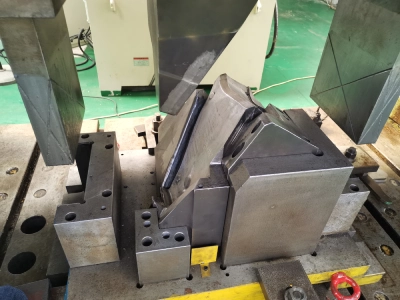
Stamping: Die Clearance and Die Wear
During the blanking process, the clearance between the punch and die directly determines the quality of the shear cut. When the clearance on either side deviates from the optimal percentage of the material thickness—for example, 3%–6% for aluminum and 6%–9% for high-strength steel—the material will undergo tensile fracture rather than clean shearing, resulting in burrs at the fracture surface.
If the clearance is too large, the battery housing material is torn rather than sheared, resulting in significantly larger burrs; if the clearance is too small, die wear is accelerated. As the number of punches accumulates, abrasive wear occurs on the cutting edges of the punch and die, causing the effective clearance to gradually widen and the burr height to increase progressively.
In the automotive stamping industry, die inspection cycles are typically set at every 10,000–50,000 punches. For battery housings, burr heights exceeding 0.1 mm on safety surfaces are considered unacceptable; industry standards generally set the upper limit for burr height at 10% of the material thickness. Therefore, the stamping process must establish a die life prediction model based on burr height to schedule regrinding before burrs exceed specifications.
Post-processing of Battery Housings: Incomplete Deburring
Even when both the laser cutting and stamping processes are under control, microscopic burrs may still remain on the edges. If the post-processing steps lack clear specifications or are not thoroughly executed, these burrs will remain in the finished battery housing.
Manual deburring relies on the operator’s technical judgment and attention to detail, making it difficult to ensure consistency in high-volume production; invisible areas such as internal cavities and the inner sides of flanges are particularly prone to being overlooked.
Therefore, the deburring process must be upgraded from “manual processing” to “engineered control”—establishing clear processing parameters, processing times, and acceptance criteria, and adopting specialized processes (such as fluid polishing) for inaccessible internal areas to ensure that the condition of all edges on custom battery housings is measurable and traceable.
Only 4 steps
online custom metal fabrication parts
Contact our experts team and experience the efficiency and economic benefits of digital metal fabrication services.
Upload Design Files
STL , STEP (.stp), IGES (.igs), (.ZIP), or PDF.
Also be a sample or an idea
Quote & Design Analysis
Instant factory quotes and DfM reports, the most reasonable solution.
Manufacturing Begins
Digital processes can initiate order tasks within 24 hours.
On-Time Delivery
Keeping delivery promises, approved by 3000+ Global Company buyers.
Engineering Solutions for Deburring Battery Housings
The deburring process for custom battery housings requires the integration of design specifications, automated grinding, and fluid polishing to ensure uniform, smooth edges that meet the controlled conditions specified in ISO 13715 and VDA 19.2.
Specification-Based Design
The starting point for deburring engineering is not equipment selection, but rather the clear definition of drawing specifications. If battery housing drawings merely specify “deburring” without quantitative metrics, there will be no unified acceptance criteria between suppliers and buyers, and the final product quality will depend entirely on their respective subjective interpretations of “burr-free.”
ISO 13715 provides systematic annotation rules and a terminology framework for edges of undefined shapes, clearly distinguishing the permissible burr heights for outer and inner edges—outer edges may have burrs of 0.1–0.3 mm, while inner edges may be allowed up to 0.8 mm. However, stricter requirements apply to surfaces inside custom battery housings that may come into contact with insulating materials.
Engineering drawings must specify differentiated edge requirements for different areas: non-contact surfaces may follow the general tolerances of ISO 13715, while areas adjacent to high-voltage wiring harnesses, insulating separators, and cell terminals must be separately annotated with maximum burr heights (typically not exceeding 0.05 mm) and required edge fillet radii (e.g., R0.5).
Automated Deburring Technology
Manual deburring relies on the operator’s visual judgment and tactile experience. In high-volume battery housing production, consistency is difficult to guarantee—there are often significant variations in deburring quality between different parts within the same batch and between different areas of the same part.
The core advantages of automated deburring lie in parameter repeatability and process traceability. Industrial robots equipped with force-controlled end-effectors can maintain a constant contact force along the workpiece edges during grinding or brushing, eliminating over-cutting or missed areas caused by uneven force application during manual operations.
For the outer edges of stamp-formed battery housings, robots equipped with steel wire brushes or nylon grinding brushes—operating at a constant feed rate and contact force—can stably control edge burr height to below 0.05 mm. For slag deposits on laser-cut edges, finer-grit grinding tools must be selected to avoid damaging the base material.
The process parameters of the automated system—including tool speed, feed rate, contact force, and path overlap rate—are locked and fixed in the machining program once validated, ensuring that the deburring quality of every custom battery housing matches that of the validated sample. Additionally, the automated system integrates online force monitoring and tool wear compensation functions; it automatically triggers an alarm or adjusts parameters when the grinding force exceeds a preset threshold, ensuring long-term stability in battery housing production.
Fluid Polishing of the Internal Geometry of Battery Housings
Battery housings are far more complex than traditional sheet metal parts—their interiors incorporate cooling channels, reinforcing ribs, mounting tabs, and wire harness through-holes, among other structures. The edges of these areas are often located in blind spots that cannot be reached by cutting tools or grinding wheels.
Fluid polishing (also known as abrasive flow machining) is the solution specifically designed for such inaccessible internal geometries. This process involves repeatedly forcing a high-viscosity polymer medium containing abrasive particles through the internal channels of the workpiece under hydraulic pressure. As the abrasive particles flow, they perform a micro-cutting action on the edges, uniformly removing burrs and creating consistent rounded transitions.
For the internal flow channels of EV battery housing cooling plates, fluid polishing not only removes burrs left behind by stamping or machining but also simultaneously polishes the inner walls of the channels, reducing coolant flow resistance and improving heat dissipation efficiency.
The advantage of fluid polishing lies in its “full-access” capability—the pressure-driven medium can reach any internal area connected to the flow channels, achieving uniform edge finishing that traditional methods cannot match.
Its process parameters (medium viscosity, abrasive particle size, pressure, and number of cycles) must be validated based on the specific flow channel cross-section and material properties of the battery housing to ensure that all internal edges meet the R0.2–R0.5 fillet requirements specified in the drawings without excessive material removal.
Quality System and Process Validation for Battery Housing
The finish quality of custom battery housings must be verified based on cleanliness standards and process inspections, using the ISO 16232 and VDA 19 frameworks as the basis for validation to ensure that edge conditions are quantifiable and traceable.
Compliance with Cleanliness Standards
Compliance with cleanliness standards for battery housings must be validated using ISO 16232 and VDA 19.1/VDA 19.2 as the validation framework. As an international standard, ISO 16232 specifies methods for determining particulate contamination on function-critical components and documentation requirements; VDA 19.1 further details the testing procedures for technical cleanliness, while VDA 19.2 focuses on environmental, logistics, personnel, and equipment controls during the assembly process.
To meet these standards, systematic control measures must be implemented throughout the production environment, including particulate monitoring in production areas, logistics and packaging controls to prevent recontamination, and employee training on cleaning procedures.
Inspection and Validation During Battery Housing Production
Validation of deburring effectiveness must be conducted throughout the production process rather than relying solely on final inspection. For externally accessible edges of custom battery housings, Automated Optical Inspection (AOI) systems equipped with high-resolution cameras and edge-detection algorithms can perform quantitative measurements of burr height and edge roundness within the production cycle.
For inaccessible areas such as internal cavities and cooling channels, endoscopic imaging combined with AI-based defect recognition technology enables full-surface illumination and inspection of dark cavities; optical imaging measurement systems achieve non-contact scanning with micrometer-level resolution using high-magnification lenses and structured light gratings.
Destructive testing—involving the sectioning of randomly selected samples and observation of the cross-sections under a metallographic microscope—is not suitable for 100% in-line inspection but serves as the benchmark method for verifying process capability and batch consistency. Inspection results must be recorded and archived in accordance with the particle extraction and analysis methods specified in VDA 19.1 to form a traceable quality data chain. When inspection data deviates from control limits, process parameter adjustments and tool changes are triggered immediately, forming a closed-loop quality control system.
Comparative Analysis: Finishing Methods for Battery Housings
The selection of finishing methods for custom battery housings must be based on a systematic evaluation of geometric complexity, production batch size, and burr morphology. Manual deburring is suitable for small-batch prototyping or simple outer edge processing, but it relies on operator skill and cannot address inaccessible internal areas.
Automated grinding using robots equipped with steel wire brushes or nylon grinding brushes is suitable for high-volume processing of stamped outer edges; it can stably control burr height to below 0.05 mm, but is ineffective for internal flow channels and complex cavities.
Vibratory finishing is suitable for batch chamfering and surface homogenization of small battery housing components, with processing cycles typically ranging from several hours to tens of hours.
For custom battery housings with complex internal structures—such as integrated cooling channels and reinforcing ribs—fluid polishing (abrasive flow machining) is the only process capable of simultaneously treating all internal edges.
CNC edge chamfering is suitable for precision-machined features but is limited by tool accessibility.
For safety-critical battery housings, a combined process route of “automated external edge grinding + internal fluid polishing” is typically adopted to ensure consistent and verifiable edge conditions across all surfaces.
Method | Application | Edge Radius Achievable | Suitability for Internal Geometry |
Manual Deburring | Low-volume, simple geometries | Inconsistent | Limited |
Robotic Wire Brushing | Stamped edges, external surfaces | R0.2–R0.5 mm | Limited |
Abrasive Flow Polishing | Internal passages, complex cavities | R0.2–R0.5 mm | Excellent |
Vibratory Finishing | Batch processing, small components | R0.5–R1.5 mm | Moderate |
CNC Edge Rounding | Precision-machined features | R0.5–R2.0 mm | Limited |
Looking for a reliable custom sheet metal fabrication companies?
Talk To Supro MFG Expert Team
Contact us for competitive ex-factory prices,
and a full range of technical support services.
Conclusion
In battery housing production, the risk of insulation layer puncture caused by sharp edges and burrs is a failure mode that can be entirely prevented through rigorous engineering design and process control. To eliminate this risk, a systematic approach is required: clearly specifying edge condition requirements in engineering drawings; selecting primary processes that minimize burr formation; implementing validated deburring methods tailored to the component’s geometry; and verifying compliance through inspections based on established acceptance criteria.
Supro MFG offers comprehensive deburring and edge finishing capabilities for custom battery housing applications, including robotic wire brush polishing, abrasive flow polishing, and CNC edge chamfering. All processes are validated in accordance with the IATF 16949 quality standard and customer-specific edge finish requirements. For inquiries regarding battery housing edge finishing specifications or production capabilities, please contact our engineering team.