
When sourcing high-precision sheet metal parts, maintaining absolute concentricity and strict flatness during high-volume production has long been a persistent engineering challenge. However, this is precisely where compound die stamping technology demonstrates its industrial value. Unlike progressive die processes—which require transferring parts between multiple stations and inherently carry the risk of cumulative tolerance deviations—the compound die stamping process completes both punching and blanking simultaneously within a single stamping stroke.
For procurement managers and design engineers evaluating die investments, specifying precision compound die stamping is critical for optimizing unit costs and eliminating the need for secondary operations. By concentrating all cutting forces into a single, highly calibrated station, this stamping process ensures exceptional dimensional repeatability, with tolerance control typically accurate to within ±0.001 inches. This precise structural integrity is strictly required for demanding flat-profile geometries, such as motor laminations, precision washers, and battery casing panels.
This article provides a detailed analysis of the core die architecture and step-by-step mechanical workflow of custom compound die stamping, as well as the specific manufacturing scenarios in which this method outperforms other technologies, thereby helping you make data-driven procurement decisions.
Definition: What is compound die stamping?
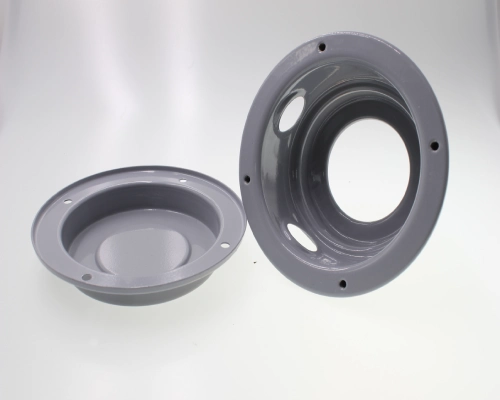
In precision metal manufacturing, compound die metal stamping is a single-station machining process that simultaneously performs punching and blanking within a single stamping stroke. This synchronized cutting mechanism eliminates errors during workpiece transfer, ensuring zero-offset concentricity for flat parts produced in high-volume, high-precision manufacturing.
The Fundamental Mechanics of a Compound Die
The core engineering principle of compound die stamping lies in its inverted die structure. Unlike continuous stamping processes, the punch and die base are integrated into a single station, allowing both piercing and blanking to be completed simultaneously during a single downward stroke. This synchronized shearing action ensures that the inner hole and outer periphery are cut away at exactly the same moment. This results in absolute concentricity and near-zero fluctuations in dimensional tolerances between parts.
Since the workpiece remains fully clamped at all times and does not move between stations, compound die stamping technology inherently eliminates the cumulative tolerance drifts common in multi-step forming. This mechanical synchronization is highly effective for manufacturing flat-contour geometries—such as embedded mounting brackets and electrical cabinet panels—enabling strict tolerance requirements to be met without the need for secondary machining.
Key Components of the Die System
Achieving strict dimensional repeatability in the compound die stamping process relies on a well-designed, structurally rigid die system. Its primary components consist of the main punch, die base, ejection mechanism, and a precisely calibrated stripping plate.
In a standard compound die stamping configuration, the stripping plate applies substantial and uniform pressure directly to the metal sheet before shearing begins. This clamping force is critical for maintaining absolute flatness and preventing material deformation—a common defect when stamping thin-gauge structural sheets. Upon completion of the stroke, ejector pins mechanically eject the finished part from the upper die cavity, while the stripping plate removes the scrap grid.
By selecting highly wear-resistant D2 tool steel or tungsten carbide for these core components, manufacturers can ensure extended die life and strictly adhere to First Article Inspection (FAI) tolerance requirements during high-volume precision compound die stamping production.
How Does Compound Die Stamping Work? (Step-by-Step Process)
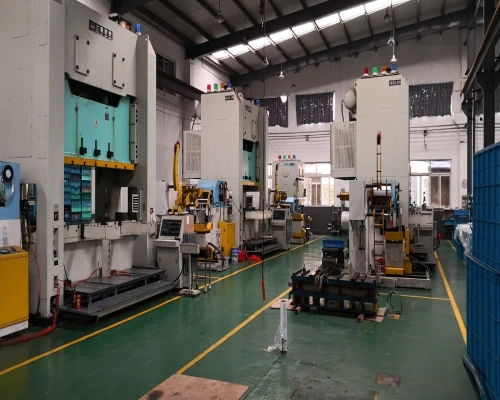
The mechanical process of compound die metal stamping relies on a strictly synchronized stamping cycle. During a single punch drive cycle, the die simultaneously cuts both the inner and outer geometries. This precise sequence ensures that the finished sheet metal part maintains absolute concentricity before it is ejected.
Step 1: Material Feeding and Precise Positioning
The custom compound die stamping process begins with high-precision material feeding. A coil feeder driven by a servo motor feeds cold-rolled steel strip or aluminum strip into the stamping gap. Unlike continuous stamping processes, the compound die stamping process requires perfect initial positioning to be completed before the stroke begins, as the entire geometry will be stamped in a single operation. Guide pins engage with pre-punched alignment holes on the scrap strip, ensuring the strip is precisely aligned with the die base.
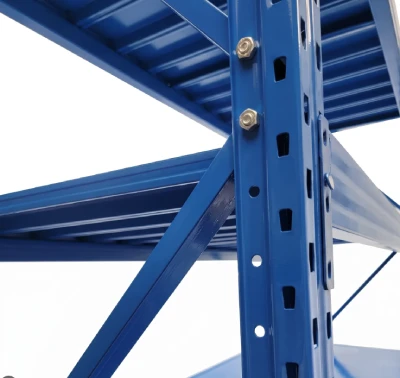
This absolute fixation is critical for manufacturing structural components such as mounting brackets or server rack rails, as even the slightest alignment error can lead to subsequent assembly failures. By establishing a rigid reference position, the precision compound die stamping setup ensures that subsequent shearing forces act perpendicularly on the material, thereby preventing micro-cracks and warping caused by improper coil feeding.
Step 2: Single-Stroke Processing
The defining mechanical characteristic of compound die metal stamping lies in the single, synchronized downward stroke of the press slide. As the die closes, a heavy-duty clamping plate firmly secures the metal strip to prevent material displacement. Instantly, the inverted punch and die base simultaneously shear the inner hole and outer periphery. By confining all shearing forces to a single station, the process eliminates the physical transfer of the workpiece—a primary source of tolerance drift.
This synchronized shearing action in custom compound die stamping ensures perfect concentricity between the inner diameter and the outer edge. For demanding applications such as precision metal brackets or electrical cabinet flanges, this single-stroke processing determines edge quality, significantly reduces burr formation, and produces a clean shear line across the entire material thickness.
Step 3: Workpiece Ejection and Scrap Removal
Since the inner and outer geometries are cut simultaneously, removing the finished workpiece requires a specialized mechanism unique to compound die stamping. During the upward return stroke, the finished blank is temporarily held within the upper die cavity. A mechanically or pneumatically driven ejector pin forces the workpiece out of the upper die cavity, causing it to drop into the conveyor system. At the same time, the lower ejector plate pushes the remaining scrap strip away from the lower punch. This synchronized clearance is critical.
In continuous compound die metal stamping operations, failure to completely eject scrap can result in catastrophic die damage during the next stroke. The use of compressed air jets and precisely calibrated spring-loaded ejectors ensures that no material jams occur during high-volume production, thereby maintaining optimal cycle times and die integrity.
Are you looking for reliable & cost-effective
China metal fabrication manufacturer
More than 150,000 OEM metal fabrication products delivered to 5,000+ global buyers.
And benefit from it!
Key Advantages of Compound Die Stamping in Manufacturing
For high-volume production, the core engineering value of the compound die stamping process lies in its ability to achieve absolute concentricity and exceptional flatness within a single stamping stroke. By eliminating multi-station part transfers, it effectively prevents tolerance accumulation, ensures strict compliance with Design for Manufacturability (DFM) requirements, and maximizes production yield.
Compound Die Stamping Achieves Exceptional Dimensional Accuracy and Concentricity
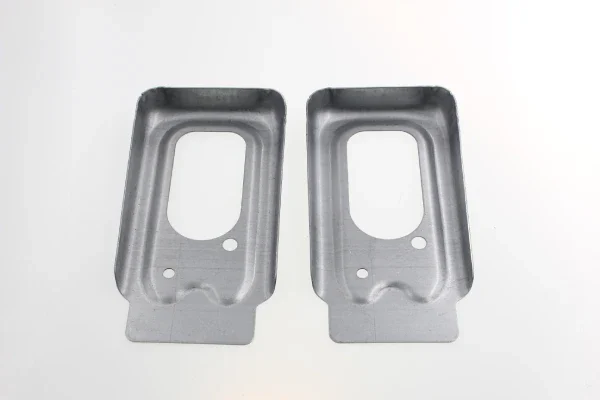
For quality engineers, eliminating dimensional variations between production batches is the most critical metric. Since precision compound die stamping performs punching and blanking simultaneously, the workpiece does not need to be moved between stations during the cutting process. This eliminates the indexing errors and tolerance accumulation inherent in multi-step forming processes. Consequently, compound die stamping technology ensures flawless concentricity between the inner diameter and the outer circumference, typically maintaining an extremely tight tolerance of ±0.001 inches.
For precision metal brackets and motor laminations, this single-stroke precision ensures a smooth and unimpeded subsequent assembly process without interference issues. When supplying custom sheet metal parts, for components that require absolute symmetry and must strictly comply with geometric dimensions and tolerances (GD&T) specifications, machining the entire geometry in a single operation is a reliable method for passing rigorous first-article inspection (FAI).
Excellent Flatness Achievable with Compound Die Stamping in Thin-Gauge Sheet Metal Processing
Maintaining strict surface flatness on thin-gauge metal has traditionally been very difficult, as shearing forces typically induce severe internal stresses and warpage. Precision compound die stamping eliminates this issue through its specialized die design.
Just before the punch penetrates the material, a heavy-duty stripper plate applies immense and uniform clamping pressure across the entire sheet. This sustained compressive force keeps the metal perfectly rigid throughout the entire shearing cycle. Consequently, compound die metal stamping delivers exceptional flatness for thin structural panels and battery enclosure components, completely eliminating the need for secondary flattening operations.
For procurement managers sourcing precision washers or electrical cabinet panels, specifying compound die stamping technology ensures that thin components lie perfectly flush during final assembly, effectively resolving the issue of slight warping commonly found in traditional manufacturing processes.
Cost-Effectiveness of Compound Die Stamping in Specific High-Volume Production
Although the initial die design requires a significant capital investment, compound die stamping delivers an unparalleled return on investment (ROI) in the high-volume production of flat profiles. Its true cost-effectiveness stems from the elimination of secondary machining and correction processes.
Since precision compound die stamping achieves burr-free edges, absolute concentricity, and zero warpage in a single stamping operation, parts can essentially be sent directly for plating or assembly immediately after being removed from the press. This significantly reduces labor costs per unit and accelerates time-to-market.
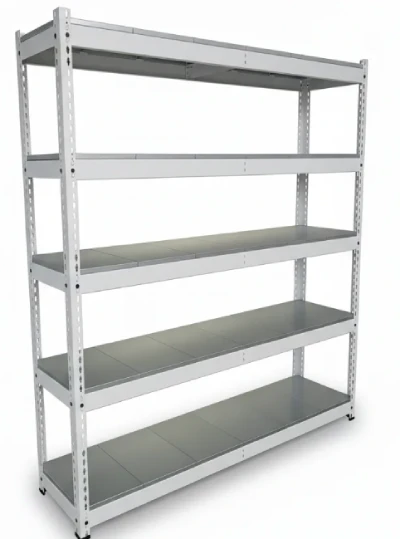
When quoting for large-volume orders of embedded brackets or precision shelving hardware, engineering teams typically prioritize compound die stamping technology to reduce the unit price. By maximizing production yield and minimizing scrap rates, this efficient method enables manufacturers to offer highly competitive pricing for complex flat metal geometries without sacrificing dimensional accuracy.
Only 4 steps
online custom metal fabrication parts
Contact our experts team and experience the efficiency and economic benefits of digital metal fabrication services.
Upload Design Files
STL , STEP (.stp), IGES (.igs), (.ZIP), or PDF.
Also be a sample or an idea
Quote & Design Analysis
Instant factory quotes and DfM reports, the most reasonable solution.
Manufacturing Begins
Digital processes can initiate order tasks within 24 hours.
On-Time Delivery
Keeping delivery promises, approved by 3000+ Global Company buyers.
Limitations and Engineering Constraints of Compound Die Stamping
Although the compound die stamping process offers extremely high precision, its application is strictly limited to two-dimensional flat contours. Its synchronous shearing mechanism cannot meet the requirements of deep drawing or complex forming, and compared to progressive dies, the design of the scrap ejection mechanism limits the maximum stroke speed.
Limitations of Compound Die Stamping on Part Complexity and Forming Depth
Although precision compound die stamping excels at producing flat contours, its single-station architecture imposes strict geometric limitations. Because all shearing forces act simultaneously in the same plane, this process cannot achieve complex 3D features such as progressive bending, deep drawing, or multi-axis forming.
Attempting deep forming in a compound die metal stamping setup can result in severe die interference and uncontrolled wall thinning, as there are no subsequent stations to redistribute tensile stresses. Furthermore, features requiring variable material gaps or tight bending radii must be manufactured using progressive die stamping or transfer die stamping.
From a Design for Manufacturability (DFM) perspective, compound die metal stamping should be strictly limited to completely planar geometries—such as washers, spacers, and flat mounting brackets—to prevent catastrophic die failure and premature wear.
Compound Die Stamping Has Slower Production Speeds Compared to Alternative Processes
Another key trade-off when selecting compound die metal stamping is the press stroke speed. Unlike progressive dies, which can continuously feed metal strip at high strokes per minute (SPM), the compound die stamping process must completely eject the finished part and scrap from the die cavity after each stroke. Since the blank is cut within the upper die, mechanical ejectors and pneumatic blow-out devices require precise timing to clear the part before the punch descends again.
This complex ejection cycle limits stamping speed—typically between 40 and 120 SPM—whereas progressive die stamping typically exceeds 300 SPM. This throughput limitation means that when handling very large production runs, precision compound die stamping may result in longer per-part processing times; therefore, a balance must be struck between die cost and the required production speed.
Comparison of Compound Die Stamping and Progressive Die Stamping
The choice between progressive dies and the compound die stamping process involves both unit cost and dimensional accuracy. While progressive dies dominate the field of high-speed three-dimensional forming, compound dies excel at achieving zero-offset concentricity for flat profiles, forcing engineers to strike a balance between speed and tolerance requirements.
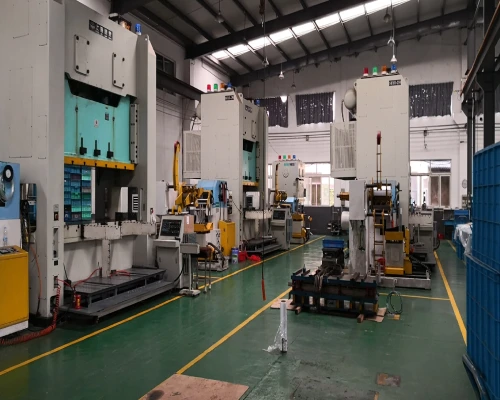
Overview of Operational Differences
The fundamental difference between progressive die stamping and compound die stamping lies in how the workpiece is handled during the stamping cycle. In the progressive die process, metal coil material passes sequentially through multiple independent stations, gradually undergoing bending, punching, and final trimming. Although this method achieves an extremely high SPM (strokes per minute) rate, the transfer of the workpiece introduces errors due to gaps in the guide pins, which inevitably leads to cumulative tolerances.
In contrast, compound die metal stamping fully secures the strip and performs punching and blanking simultaneously within a single die block. This unique operating mechanism completely eliminates indexing drift. Therefore, while progressive die systems dominate the production of complex 3D brackets, compound die stamping technology still offers superior mechanical performance for high-volume production of flat profile parts that require absolute concentricity and strict compliance with geometric dimensions and tolerances (GD&T).
Engineering Metric | Compound Die Stamping | Progressive Die Stamping |
Operational Mechanism | Single-station; piercing and blanking simultaneously. | Multi-station; sequential forming along a continuous strip. |
Production Speed | Slower (typically 40 – 120 SPM) due to part/scrap ejection limits. | Extremely High (150 – 800+ SPM) optimized for mass scale. |
Part Complexity | Strictly limited to 2D flat profiles (washers, flat brackets). | Accommodates complex 3D features (bends, draws, coining). |
Dimensional Accuracy | Extreme concentricity; zero cumulative tolerance drift. | Subject to slight tolerance stacking during station transfers. |
Tooling Investment | Moderate capital cost; faster tooling design and build time. | High capital cost; requires complex pilot and die design. |
Choosing the Right Approach for Your Project
Selecting the optimal die strategy requires a rigorous Design for Manufacturability (DFM) evaluation. If your custom sheet metal project involves multi-axis bending, deep drawing, or continuous embossing, a progressive die is an essential engineering choice. However, if your CAD drawings strictly specify two-dimensional planar geometries—such as motor laminations, precision washers, or flush-mounted mounting plates—the compound die stamping process is the optimal solution.
Although precision compound die stamping typically requires a lower initial investment and shortens die lead times, its slower cycle rate must be factored into the final unit cost. By consulting with our engineers to align your geometric dimensions and tolerances (GD&T) with your target production volume, you can ensure that adopting custom compound die stamping maximizes yield and reduces long-term manufacturing costs.
Why choose Supro MFG's Custom Metalworking Services
Provide the most cost-effective cost solution for manufacturing and assembling products, expanding product competitiveness.
a technical team specializing in custom shell manufacturing for more than 30 years.
Advanced Manufacturing Equipment: Industry-leading custom metal enclosure manufacturer with in-house sheet metal, die casting, precision machining workshops, and surface coating workshops.
ISO 9001-2015, PPAP III level, RoHS, NEMA, CE and other certified production standards.
24H*7 online English technical support: The professional English team responds quickly to users’ technical questions online at any time.
help users from product design, prototype, batch manufacturing, surface treatment, assembly and packaging, transportation and a series of value-added services.
With in-house mechanics and chemistry laboratories, it can quickly monitor manufacturing process quality control to ensure the delivery of high-quality products.
Accept to sign NDA documents to ensure that customers’ product information is protected.
Door-to-door delivery in customizable secure packaging after complying with the delivery details agreed with the customer.
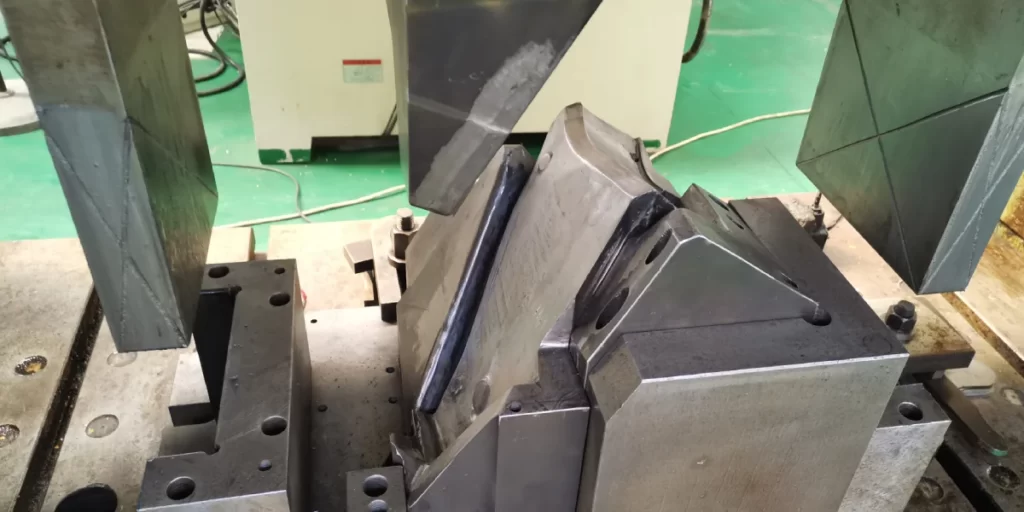
Ideal Materials for Compound Die Stamping
In the compound die stamping process, material selection directly determines die life and the quality of the sheared edges. Since the single-stroke mechanism applies immense and concentrated shearing forces, engineers must strictly match the alloy’s tensile strength and thickness to the press’s maximum tonnage capacity.
Material Category | Common Industrial Grades | Stamping & Shearing Behavior | Typical Flat Component Applications |
Cold Rolled Steel (CRS) | SPCC, 1018, 1020 | Excellent shearability; requires precisely calibrated die clearance to minimize burr formation. | Structural mounting brackets, motor laminations. |
Stainless Steel | 304, 316, 430 | High tensile strength accelerates tool wear; strictly requires D2 or carbide tooling. | Medical shims, highly corrosive-environment washers. |
Aluminum Alloys | 5052, 6061-O | Low shear resistance; highly susceptible to surface galling without uniform stripper pressure. | Electronic enclosure panels, lightweight spacers. |
Copper & Brass | C11000, C260 | Exceptional ductility; yields extremely clean shear bands with minimal edge micro-fractures. | Electrical contacts, conductive terminal plates. |
Suitability of Ferrous and Non-Ferrous Metals
When designing engineering parts for compound die metal stamping, the metallurgical properties of the metal directly determine the required die clearance and the extent of long-term die wear. Ferrous metals, particularly cold-rolled carbon steel (CRS) and 300-series stainless steel, require robust D2 or cemented carbide dies due to their high shear strength. Because machining these hard alloys requires enormous cutting forces, the single-stroke synchronous process used in custom compound die stamping is highly effective in preventing edge curling and microcracks.
Conversely, non-ferrous metals such as 5052 aluminum alloy and C11000 copper possess excellent ductility, which can significantly extend die life. However, due to their lower tensile strength, smaller die clearances are required to prevent burr formation.
For procurement teams sourcing electrical contacts or structural brackets, matching the precise alloy grade with a rigid die structure ensures optimal edge quality and minimizes secondary deburring costs.
Material Thickness Guidelines
Material thickness fundamentally determines the physical feasibility of any compound die stamping project. For this single-station process, the optimal thickness range is typically between 0.010 and 0.125 inches (0.25 mm to 3.17 mm). When processing extremely thin foil, significant and uniform stripper plate pressure must be applied to prevent the material from wrinkling or suffering catastrophic tearing during the shearing cycle.
Conversely, feeding heavy sheet metal exceeding 0.125 inches in thickness into a compound die will cause the required stamping tonnage to increase exponentially. This overload accelerates punch wear and may lead to the fracture of internal die components.
Strict adherence to these thickness guidelines is critical. Keeping CAD designs within this optimal range ensures that the compound die stamping process achieves optimal dimensional repeatability without the need for frequent die maintenance or unexpected production downtime.
Looking for a reliable custom sheet metal fabrication companies?
Talk To Supro MFG Expert Team
Contact us for competitive ex-factory prices,
and a full range of technical support services.
Common Industrial Applications of Compound Die Stamping
Because compound die stamping technology offers the unique capability to perform both punching and blanking simultaneously in a single synchronized stamping stroke, this process is strictly reserved for the manufacture of flat, high-precision components that require extremely high zero-offset concentricity.
For procurement managers sourcing heavy-duty hardware brackets or server rack rails, this method is the undisputed industry standard for ensuring absolute dimensional tolerance control in high-volume production. By confining all shearing forces to a single, robust tooling station, custom compound die stamping fundamentally eliminates the micro-cracks and material warping commonly associated with multi-station progressive stamping processes.
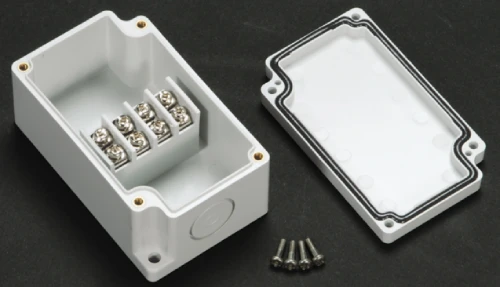
This exceptional surface flatness is particularly critical for structural metal panels and internal mounting plates used in NEMA-rated electrical enclosures or battery housings, as even slight material deformation can compromise the IP protection rating’s seal integrity. Beyond enclosure manufacturing, this specialized process also dominates the production of motor laminations, precision washers, and aerospace gaskets.
Ultimately, when procurement teams require perfectly concentric holes and burr-free peripheries without incurring the additional capital costs of secondary processing, specifying the compound die stamping process ensures that stringent geometric dimensions and tolerances (GD&T) are met with the highest consistency.
Partnering with Supro MFG
Procuring high-precision sheet metal components requires a manufacturing partner capable of exercising absolute control over die design and quality verification. For procurement teams, Supro MFG bridges the gap between cost-effective production and rigorous ISO-compliant engineering standards. Our in-house tooling shop specializes in custom compound die stamping, designing each die base and stripper plate specifically to ensure optimal die clearance for your chosen material grade.
By keeping tooling development strictly in-house, we eliminate the risks associated with third-party outsourcing and guarantee that our compound die stamping process consistently maintains tight tolerances of ±0.001 inch during continuous high-volume production. From mandatory First Article Inspection (FAI) to comprehensive PPAP documentation, we ensure your products are free from dimensional drift and hidden defects.
When your flat-geometry parts require absolute concentricity without the need for costly secondary machining, our compound die stamping technology ensures full compliance with DFM requirements. Contact Supro today to submit your CAD drawings for an immediate technical evaluation.