
As a critical link in aerospace manufacturing, the aerospace metal stamping process directly determines the performance ceiling and reliability boundaries of numerous structural components such as airframes, cabin systems, and engine parts. The core value of precision aerospace metal stamping lies in achieving significant weight reduction through extreme material deformation while meeting exceptionally stringent standards for strength, precision, and durability.
However, this value realization process is fraught with fundamental contradictions: the inherent nonlinear mechanical behavior of aerospace-grade materials (such as high-strength titanium alloys and advanced aluminum alloys) coupled with the inevitable friction, heat conduction, and elastic recovery effects during custom aerospace metal stamping creates an exceptionally narrow process window. This physical complexity directly translates into a series of technical challenges that aerospace metal stamping processes must systematically overcome—from predictable springback control to ensuring microstructural integrity.
This paper systematically analyzes the most prevalent challenges in aerospace metal stamping processes, including geometric control of aerospace metal stampings, material consistency, and production compliance. We will focus on proven countermeasures encompassing forward process design, micro-quality-oriented process control, and end-to-end traceability management compliant with AS9100 standards.
Geometric Accuracy and Dimensional Stability Challenges in Aerospace Metal Stamping Parts
In the aerospace sector, the geometric accuracy and dimensional stability of aerospace metal stamping parts form the foundation for assembly compatibility, structural integrity, and ultimate aircraft performance. The aerospace metal stamping process faces two core physical challenges: predictable springback and latent aging deformation. For any rigorous metal stamping manufacturer, overcoming these two issues is the cornerstone of technical capability.
Predicting and Compensating for Springback in Aerospace Metal Stamping Processes
Springback is the elastic recovery that occurs after sheet metal forming is unloaded, representing the primary physical obstacle affecting dimensional accuracy in the metal stamping process. When stamping high-strength aluminum alloys (e.g., 7075) or titanium alloys, their high yield strength coupled with relatively low elastic modulus exacerbates this phenomenon. This causes critical curvature radii and flange angles to deviate from design targets after part ejection. For aerospace metal stampings with complex contours, springback behavior is multidimensional and nonlinear, defying simple estimation via empirical formulas.
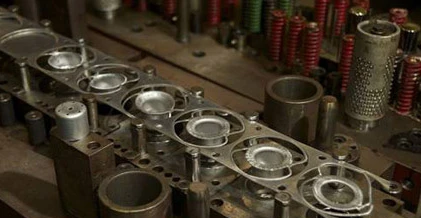
As a specialized metal stamping manufacturer, Supro has shifted its strategy from “trial-and-error correction” to “predictive compensation.” The core technology involves high-fidelity simulation using finite element analysis based on advanced material constitutive models (e.g., Y-U hybrid hardening model) prior to die machining, precisely quantifying springback. This is followed by iterative surface compensation in die design.
More advanced aerospace metal stamping processes integrate real-time sensing with closed-loop control systems. These dynamically fine-tune blank holder force (BHF) during press strokes or utilize multi-point hydraulic pads for localized pressure adjustments, proactively suppressing springback. This demands that metal stamping manufacturers not only possess simulation software but also deep material science expertise and process databases to calibrate models, ensuring reliable prediction from virtual to physical reality.
Time-Dependent Deformation and Stress Relaxation in Aerospace Metal Stamping Parts
A frequently overlooked yet high-risk challenge is “time-dependent deformation” occurring after part delivery. Metal stamping processes—including stamping, trimming, and even subsequent joining—introduce uneven residual stresses within parts. During storage, transportation, or use, these stresses rebalance or relax over time, causing slow, unpredictable dimensional drift in aerospace metal stampings that severely compromises long-term stability.
Reliable quality control must treat aerospace metal stamping parts as dynamic mechanical systems rather than static geometries, with countermeasures centered on “stress engineering.” First, during the aerospace metal stamping process design phase, simulation must optimize material flow paths and die contact conditions to minimize harmful residual stresses at the source.
Second, stress stabilization processes must be integrated into custom aerospace metal stamping production, such as controlled vibration aging or low-temperature thermal aging tailored to specific materials, to promote stress homogenization. Professional aerospace metal stamping manufacturers employ inspection methods like X-ray diffraction to conduct residual stress mapping on critical components, verifying process effectiveness.
Challenges in Material Integrity and Performance Consistency for Aerospace Metal Stamping
In the aerospace sector, the reliability of aerospace metal stampings is rooted in the microstructure and mechanical properties of their materials post-forming. The intense plastic deformation inherent in aerospace metal stamping processes irreversibly alters the material's microstructure. The extremely narrow process window for aerospace-grade materials makes controlling these changes exceptionally challenging. This demands metal stamping manufacturers possess deep material expertise and establish comprehensive control systems spanning from micro to macro scales.
Forming Limits and Fracture Risks in Aerospace Metal Stamping Parts
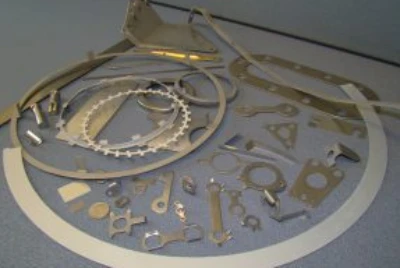
Aerospace-grade materials like titanium alloys and high-strength aluminum alloys often exhibit high strength coupled with low plastic strain capacity. During metal stamping processes, nonlinear strain paths caused by complex geometries can easily push localized material regions beyond their forming limits, leading to thinning or even microcracks. Such defects may be difficult to detect in macroscopic inspections yet become critical structural weaknesses.
Traditional forming limit diagrams (FLDs) prove inadequate as predictive tools, as they typically rely on simplistic linear strain path assumptions. An advanced countermeasure is stress-based forming limit analysis (FLSA), which integrates finite element simulations using material constitutive models.
This approach more accurately simulates the complex strain histories of metal stamping parts. Process-wise, risks of fracture in aerospace metal stampings can be systematically mitigated by optimizing blank geometry, employing gradient blank holder force (BHF) control, or applying localized lubrication and heating in critical zones. 这些措施引导材料流动更加均匀,安全地将应变分布在成形极限曲线以下。.
Surface and Subsurface Damage in Aerospace Metal Stamping Parts
Die contact, material flow, and friction during stamping introduce surface damage to aerospace metal stampings. This includes visible scratches and dents, as well as more concealed “orange peel” effects and grain-scale plastic deformation layers. These defects not only serve as stress concentration points accelerating fatigue crack initiation but may also compromise coating adhesion and part corrosion resistance. Therefore, metal stamping processes must manage surface integrity as a critical quality characteristic.
Solutions begin with tooling engineering: employing highly polished surfaces, ultra-hard wear-resistant coatings (such as diamond-like carbon coatings), and maintaining strict tool cleaning and maintenance protocols. In precision metal stamping production, 100% automated high-resolution machine vision inspection must be implemented.
For critical load-bearing components, this should be supplemented with non-destructive evaluation methods like eddy current or ultrasonic testing to quantify subsurface strain hardening. This ensures every delivered aerospace metal stamping exhibits a predictable, superior surface condition.
Impact of Batch Variations in Material Properties
Even when conforming to the same material specification (e.g., AMS standards), metal sheet materials from different furnace batches or rolling batches exhibit inherent statistical fluctuations in key parameters such as yield strength and anisotropy coefficient. For aerospace metal stamping processes with extremely tight tolerances, such variations can cause fluctuations in springback and forming forces, ultimately compromising the dimensional consistency and residual stress state of aerospace metal stamping parts.
The countermeasure involves a two-pronged system: First, establish rigorous incoming material performance data archives within the metal stamping process. Require suppliers to provide more detailed test reports and employ statistical methods to monitor batch trends. Second, develop a “robust” process parameter window through thorough experimental design. This ensures that defined parameters—such as pressure, speed, and die clearance—consistently produce fully compliant aerospace metal stamping parts within the expected range of material performance variations.
Only 4 steps
online custom metal fabrication parts
Contact our experts team and experience the efficiency and economic benefits of digital metal fabrication services.
Upload Design Files
STL , STEP (.stp), IGES (.igs), (.ZIP), or PDF.
Also be a sample or an idea
Quote & Design Analysis
Instant factory quotes and DfM reports, the most reasonable solution.
Manufacturing Begins
Digital processes can initiate order tasks within 24 hours.
On-Time Delivery
Keeping delivery promises, approved by 3000+ Global Company buyers.
Production Feasibility, Efficiency, and Compliance Challenges in Aerospace Metal Stamping
After meeting geometric precision and material performance requirements, reliably and economically translating designs into qualified mass-produced parts presents another formidable challenge in the aerospace metal stamping process. This stage directly impacts a project's overall cost, delivery cycle, and risk level.
High Costs and Extended Development Cycles for Aerospace Metal Stamping Dies
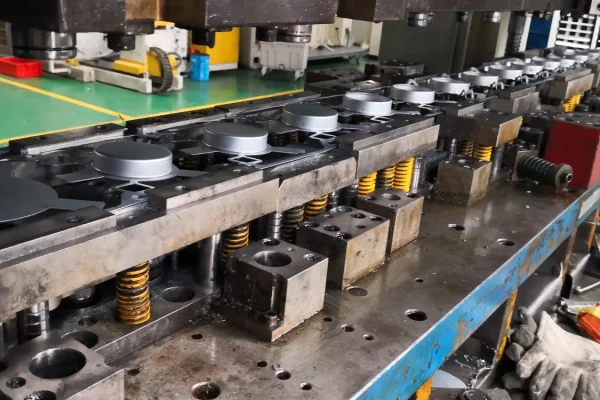
The high precision and complex geometries of aerospace metal stamping parts typically require dies made from high-performance tool steel, followed by precision machining, heat treatment, and surface finishing. This results in substantial per-die costs and development cycles lasting several months. Such factors pose significant financial and time barriers for the industry’s production model characterized by multiple varieties and small batches. To address this challenge, metal stamping manufacturers are actively adopting mold designs based on modularity and flexibility principles.
In custom aerospace metal stamping mold design, combining universal bases with interchangeable cores or inserts enables rapid adaptation for similar products within the same part series. This significantly reduces tooling investment and setup time for new projects. Furthermore, for prototypes or ultra-low-volume production, employing metal additive manufacturing to directly form complex mold cooling channels or mold surfaces, or utilizing moldless/soft-mold techniques like single-point incremental forming, has become an effective strategy for validating design feasibility and shortening early development cycles.
Stringent Certification and Traceability Requirements
The aerospace industry mandates compliance with AS9100 series quality management system standards and requires full traceability from raw materials to final products. This necessitates that every aerospace metal stamping be accompanied by a complete data package documenting material origin, critical parameters of all aerospace metal stamping processes, inspection results, and operator details.
The solution lies in deploying integrated manufacturing execution systems (MES) and IoT platforms. By assigning unique identifiers to each sheet and automatically capturing equipment parameters, process data, and inspection results throughout production, the system generates tamper-proof electronic quality records. This not only meets audit requirements but also enables rapid, precise traceability of quality issues in aerospace metal stamping parts, significantly enhancing quality management efficiency and reliability.
Complexity of Aerospace Metal Stamping Process Validation and Change Management
Any modification involving materials, dies, or process parameters must undergo rigorous validation, testing, documentation updates, and customer approval to ensure no adverse impact on aerospace metal stamping performance. This typically time-consuming process constrains necessary process optimization or problem resolution.
To enhance efficiency, advanced metal stamping engineering practices rely on “model-based validation.” By establishing and continuously calibrating high-fidelity digital models linking process to performance, potential impacts of process changes on springback, stress, microstructure, and other factors can be rapidly evaluated in a virtual environment.
This data-driven simulation analysis provides preliminary evidence and support for physical validation, significantly reducing trial iterations and accelerating the validation and engineering change processes for aerospace metal stamping. This enables greater agility and responsiveness within the manufacturing system.
Conclusion
In summary, the challenges faced in aerospace metal stamping processes—including geometric control, material integrity, and production compliance—stem from the inherent conflict between extremely high performance requirements and the physical limits of manufacturing. Addressing these challenges cannot rely on a single technology or isolated process improvements. Instead, it demands systematic technological integration and closed-loop management spanning design, engineering, and production.
Supro is a specialized aerospace metal stamping manufacturer. Leveraging exceptional precision stamping technology and manufacturing capabilities, we produce standard/custom metal stampings and high-precision components.
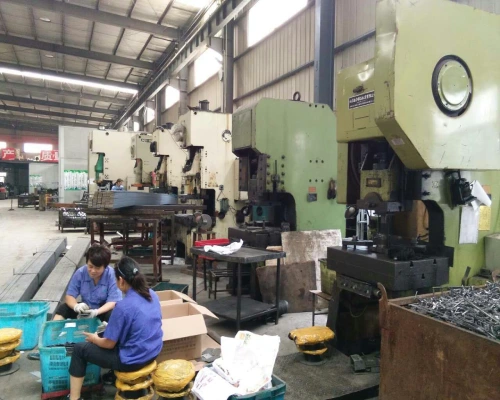
Our 2,500-square-meter precision stamping facility houses 80 presses ranging from 6 to 1,000 tons, processing materials from 0.005 inches to 5 inches thick and manufacturing stampings up to 24 inches wide. Supro ships over 5 million metal stampings annually to global buyers, maintaining a 1,000-ton annual production capacity. If you require aerospace metal stamping services, contact us immediately!