




Cracking during stainless steel sheet metal bending is not merely a fabrication error. It directly impacts product structural integrity, long-term corrosion resistance, and the total cost of ownership for end projects. Understanding the technical origins of stainless steel sheet metal bending cracks is critical for managing supply chain quality risks and evaluating supplier technical capabilities.
Stainless steel sheet metal bending cracks fundamentally represent material failure under bending strain. Core causes originate at the material science level: Austenitic stainless steels (e.g., 304) and ferritic stainless steels (e.g., 430) exhibit fundamental differences in work hardening rates and ductility. If the material’s rolling direction aligns parallel to the bend line, it exploits the direction of weakest ductility, significantly increasing the risk of bending cracks. Second, improper control of the stainless steel sheet metal bending process—such as using a minimum bend radius below the material’s limit—directly causes fiber tearing on the outer surface.
A robust stainless steel sheet metal bending process must systematically integrate material selection, design for manufacturing, and data-driven process control to transform cracking from a probabilistic failure into a predictable and preventable step.
Analysis of Causes for Stainless Steel Sheet Metal Bending Cracks
From an engineering perspective, the occurrence of stainless steel sheet metal bending cracks is not accidental but a direct result of mismatches between material properties, process parameters, and design specifications.
Material Contributing Factors in Stainless Steel Sheet Metal Bending
The success of stainless steel sheet metal bending primarily depends on the material’s inherent formability. A critical misconception is assuming all stainless steels exhibit identical bending properties. In reality, austenitic stainless steels (e.g., 304/316) and ferritic stainless steels (e.g., 430/439) possess fundamentally different microstructural grain configurations, directly influencing their work hardening rates and ductility.
Austenitic steels typically exhibit good initial ductility but harden rapidly during forming. If secondary bending is performed immediately after cold working (e.g., in the H condition), the material’s plastic reserve is depleted, making cracks almost inevitable.
Furthermore, internal material quality represents a hidden risk source for cracks in stainless steel sheet metal bending. Per ASTM A480 standards, qualified sheets must also meet specifications for nonmetallic inclusion content and grain size. Coarse grains or banded segregation significantly reduce transverse ductility, causing cracks to propagate along grain boundaries or defects under bending stress.
As a professional stainless steel sheet metal bending manufacturer, Supro implements rigorous incoming material inspections, particularly focusing on material condition and grain size control.
Key Errors in Stainless Steel Sheet Metal Bending Process Parameters and Execution
Even with qualified materials, improper control of the stainless steel sheet metal bending process can directly induce cracking. Bending radius, tooling and equipment issues, and parameter settings are the three most common process errors.
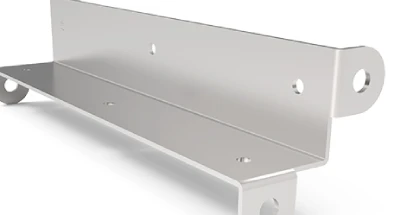
Excessively Small Bending Radius (Inner R-Corner)
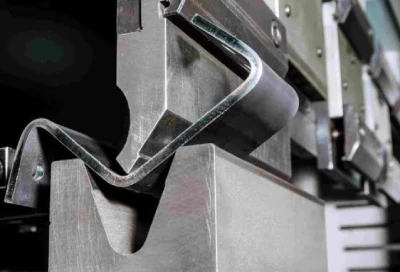
This is the most direct cause of external fiber tearing. During stainless steel sheet metal bending, the outer surface of the sheet experiences tensile stress while the inner surface undergoes compression. When the bending radius is too small, the tensile strain on the outer surface exceeds the material’s ultimate elongation at that state.
For example, the recommended minimum safe bending radius for 304 stainless steel is typically 1 times the sheet thickness (1T), while 430 stainless steel—which has poorer ductility—requires 1.5T or greater. Violating this fundamental principle inevitably results in tearing as a mechanical consequence, not as an incidental quality fluctuation.
Die and Equipment Issues
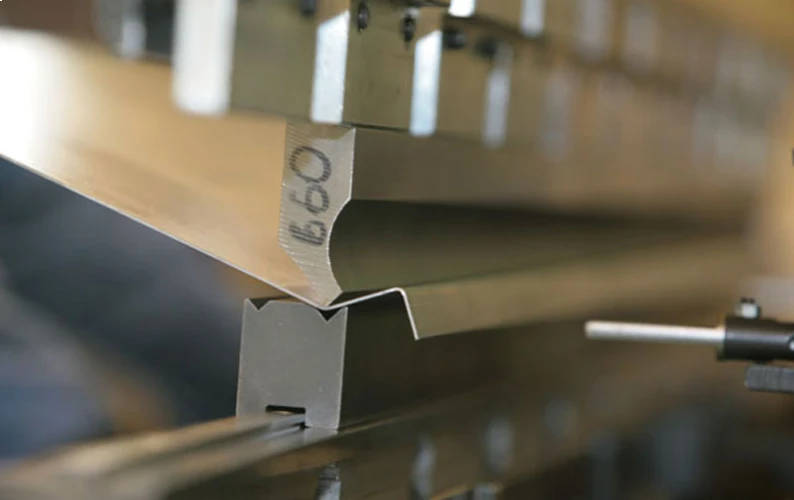
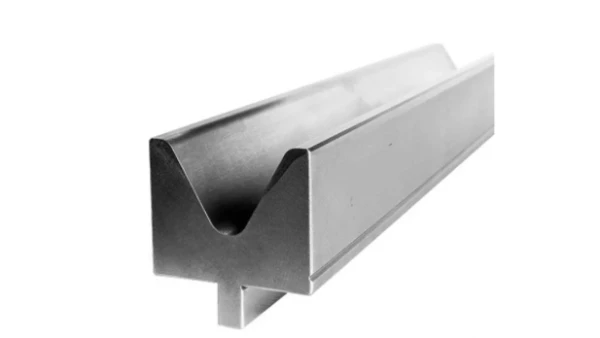
Die compatibility and equipment condition are critical in the stainless steel sheet metal bending process. Insufficient V-groove opening width (typically requiring 8 times the sheet thickness), worn lower die R corners, or pitting can cause localized scratches and stress concentration points on the material surface, serving as crack initiation sites.
Additionally, parallelism errors in the ram of aged or poorly maintained bending machines can cause uneven distribution of bending force along the fold line. This subjects localized areas to abnormally high stresses, resulting in irregular stainless steel sheet metal bending cracks.
Incorrect Parameter Settings in the Stainless Steel Sheet Metal Bending Process
Parameters such as bending speed, pressure, and holding time are not empirical estimates but require precise calculation. Excessively high bending speeds prevent uniform plastic flow, inducing brittle fracture tendencies at high strain rates. Insufficient pressure leads to inadequate bending angles requiring excessive correction, while excessive pressure directly causes overstretching.
A stable, repeatable stainless steel sheet metal bending process must determine these parameters through calculation or database reference based on material thickness and yield strength.
Potential Risks in Stainless Steel Sheet Metal Bending Product Design
Design precedes manufacturing; flawed designs impose risks on all subsequent stainless steel sheet metal bending operations. The most common design error is disregarding minimum bend radius guidelines, resulting in excessively aggressive inner R-radius design.
Secondly, bolt holes, notches, or slots positioned too close to the bend line (typically recommended to maintain a distance of at least 3 times the sheet thickness plus the inner R-radius) severely disrupt stress flow within the material. This creates extreme stress concentrations at sharp corners, making these areas vulnerable to cracking.
Furthermore, for complex multi-bend parts, failure to coordinate with manufacturing to establish a rational bending sequence can lead to cumulative failure. Preceding bends induce work hardening and residual stresses that severely impact subsequent bends. An excellent design must adhere to Design for Manufacturability (DFM) principles—the most cost-effective approach to prevent stainless steel sheet metal bending cracks at the source.
Solutions for Stainless Steel Sheet Metal Bending Cracks
Addressing stainless steel sheet metal bending cracks requires moving beyond isolated fixes to implement a systematic engineering solution encompassing materials, processes, and design
Material Selection and Pre-Treatment for Stainless Steel Sheet Metal Bending
Preventing stainless steel sheet metal bending cracks begins with precise material control. For components involving complex or multi-pass bending, prioritize low-carbon or high-formability grades. For instance, substitute 304 with 304L, whose lower carbon content effectively suppresses carbide precipitation and enhances grain boundary toughness.
All sheet metal procured by Supro carries complete material certification compliant with ASTM A480 or EN 10088 standards. Incoming inspections include critical performance sampling tests: metallographic examination for grain size assessment, and annealing treatment for hardened materials prior to bending to eliminate work hardening, restore ductility, and prevent stainless steel sheet metal bending cracks.
Optimization and Process Control of Stainless Steel Sheet Metal Bending
A robust and repeatable stainless steel sheet metal bending process is fundamental to consistent quality. This necessitates establishing an internal process parameter database that identifies validated values for pressure, speed, holding time, and precise springback compensation based on material grade, thickness, yield strength, and bending angle.
Prior to batch stainless steel sheet metal bending, forming simulations using AutoForm or similar FEA software must be conducted to virtually test different approaches, scientifically predict and mitigate the risk of stainless steel sheet metal bending cracks.
At the equipment level, utilize modern CNC press brakes equipped with adaptive angle control and high-precision pressure feedback. Concurrently, implement refined die management by dedicating high-finish dies specifically for stainless steel sheet metal bending. Strictly enforce regular maintenance and wear inspection protocols to prevent stress concentration points caused by suboptimal die conditions, thereby systematically enhancing the stability and yield rate of the stainless steel sheet metal bending process.
Stainless Steel Sheet Metal Bending Product Design Optimization
The most effective solution for preventing cracks in stainless steel sheet metal bending is to eliminate risks during the design phase. Internal Sheet Metal Design Specifications must be established and enforced, clearly defining minimum bend radii based on material science and requiring sufficient clearance between features such as holes, slots, and notches and the bend line to avoid stress concentration.
During new product design, implementing cross-functional Design for Manufacturability (DFM) reviews is a critical process. This ensures early involvement of process engineers who can propose corrections for unreasonable feature layouts or bending sequences. This “Design for Manufacturing” principle represents the most cost-effective approach to prevent stainless steel sheet metal bending cracks at the design drawing stage, significantly reducing subsequent trial-and-error and rework costs.
Only 4 steps
online custom metal fabrication parts
Contact our experts team and experience the efficiency and economic benefits of digital metal fabrication services.
Upload Design Files
STL , STEP (.stp), IGES (.igs), (.ZIP), or PDF.
Also be a sample or an idea
Quote & Design Analysis
Instant factory quotes and DfM reports, the most reasonable solution.
Manufacturing Begins
Digital processes can initiate order tasks within 24 hours.
On-Time Delivery
Keeping delivery promises, approved by 3000+ Global Company buyers.
Establishing a Quality Assurance System for Stainless Steel Sheet Metal Bending Products
To systematically prevent stainless steel sheet metal bending cracks, establishing a closed-loop, traceable quality assurance system is fundamental to meeting stringent market demands. The core of this system lies in shifting quality control from final inspection to integration throughout every stage of the stainless steel sheet metal bending process, providing professional procurement personnel with transparent, data-driven confidence in supply chain quality.
Implementing Full-Process Quality Traceability
An auditable quality traceability system for the stainless steel sheet metal bending process is the foundation of high-quality manufacturing. This entails establishing a unique data identifier for each production order or critical component, linking it to three core pieces of information: raw material certificates (detailing chemical composition and mechanical properties), precise process parameters (such as bending pressure, programming angles, and the V-groove and R-radius specifications of the lower die used), and equipment/personnel details (bending machine serial number, operator certification ID).
When stainless steel sheet metal bending cracks occur, this system enables root cause tracing within minutes. This significantly enhances the effectiveness of corrective actions while providing buyers with transparent supply chain visibility and quality assurance.
Integrating Non-Destructive Testing with Process Monitoring
Preventing bending cracks in stainless steel sheet metal requires combining offline verification with online prevention. For structural or cosmetic components with stringent integrity requirements, offline non-destructive testing after critical bending operations is essential. For instance, dye penetrant inspection compliant with ASTM E165/E1417 standards effectively reveals microscopic surface cracks invisible to the naked eye. For deeper internal defects, ultrasonic testing provides a reliable assessment method.
A more proactive strategy involves implementing online process monitoring: equipping modern CNC bending machines with sensors to collect and analyze real-time “pressure-displacement” curves for each bend. By comparing these curves against preset stainless steel sheet metal bending process standards, any abnormal fluctuations are immediately detected—serving as early indicators of material property variations, minor die misalignment, or uneven lubrication. This real-time digital monitoring of the stainless steel sheet metal bending process facilitates a shift from “defect inspection” to “defect prevention.”
Standardization and Certification of Personnel Skills
An advanced stainless steel sheet metal bending process system also relies on consistent human execution. Therefore, integrating the skill management of operators and process programmers into the core of the quality assurance system is essential.
This requires establishing a training and certification system based on standardized operating procedures. It ensures that every key personnel not only operates the equipment but also understands the fundamental principles of the stainless steel sheet metal bending process. These include material springback characteristics, the basis for calculating minimum bend radii, and the impact of die selection on surface quality.
Conclusion
Stainless steel sheet metal bending cracks are not uncontrollable process challenges but critical indicators exposing weaknesses in the manufacturing system. As demonstrated by this systematic analysis, their root causes intertwine across materials science, process engineering, and product design. Effectively preventing stainless steel sheet metal bending cracks thus requires not isolated adjustments but implementing a comprehensive, data-driven, engineering-based management system covering the entire process flow.
If you require stainless steel sheet metal bending services, contact us immediately! Supro is a professional stainless steel sheet metal bending manufacturer. Leveraging advanced equipment, extensive manufacturing experience, and a specialized engineering team, we provide perfect stainless steel sheet metal bending services to over 3,000 companies worldwide, offering genuine manufacturer pricing.
We possess extensive expertise, technology, and advanced equipment, understanding the demands and standards for sheet metal bending structural components across industries including agriculture, healthcare, automotive manufacturing, and aerospace. Supro operates 12 distinct sheet metal bending machines, delivering one-stop sheet metal bending services to diverse sectors while ensuring high-quality products, professional customer service, and on-time delivery.
If you have any questions or concerns about our sheet metal bending services, please contact us immediately. We will proactively meet all your project requirements!