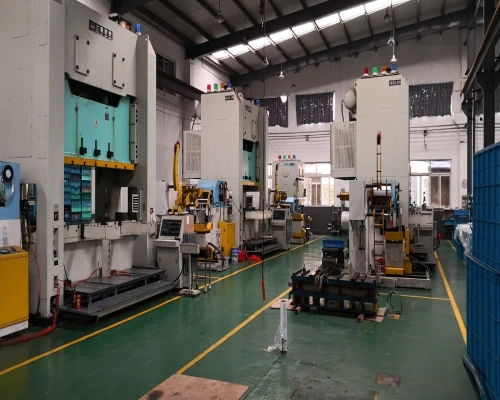
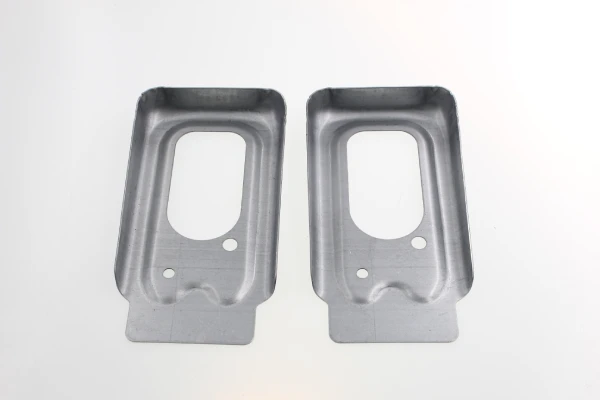
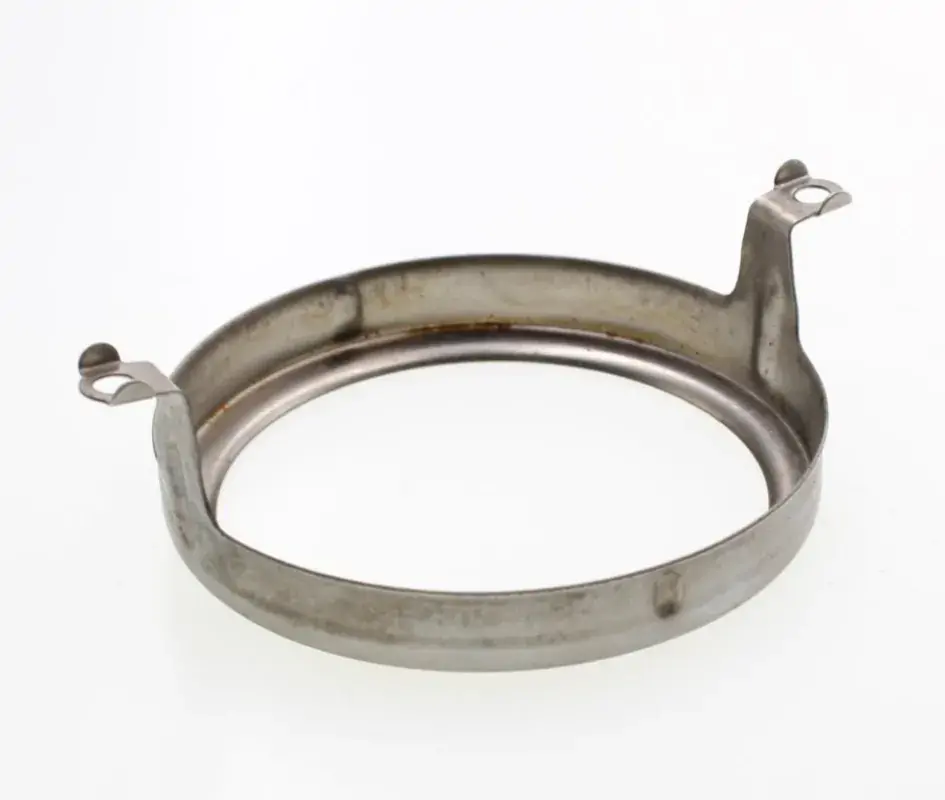
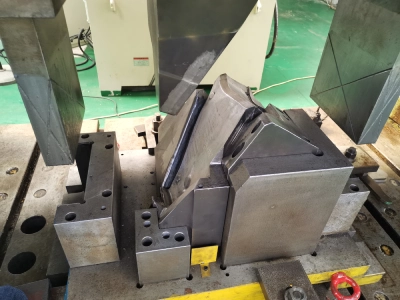

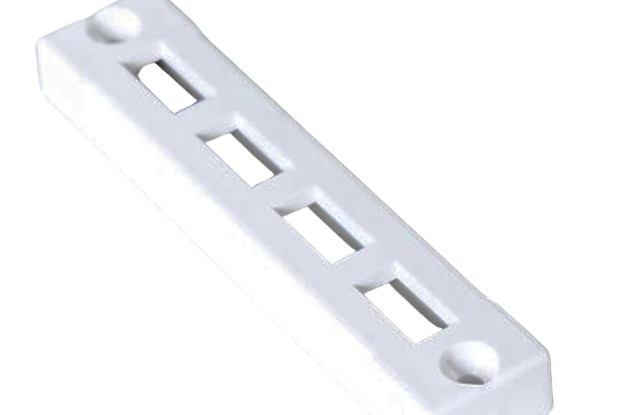
In modern high-volume sheet metal fabrication, achieving tight tolerances for deep-drawn housings or complex components requires the use of specific manufacturing methods. When dealing with complex secondary processing operations, standard continuous stamping methods are often inadequate. For this reason, transfer die stamping has emerged as the ultimate engineering solution.
Essentially, transfer die stamping is an advanced metal forming process in which individual sheet metal blanks are moved through multiple independent stamping stations. This movement is performed by an automated three-axis system that utilizes specialized mechanical fingers and guide rails. Unlike traditional coil-fed processes, the transfer die stamping process physically separates the blanks from the metal strip at the very first blanking station.
The complete separation of the workpiece enables manufacturing engineers to perform extreme deep drawing, side-cam punching, and complex flanging operations without being constrained by the physical limitations of continuous carrier strips. For procurement professionals sourcing automotive brackets or commercial electrical enclosures, specifying custom transfer die stamping directly improves material utilization. By eliminating carrier strips, this method significantly reduces scrap rates for high-strength alloys, thereby optimizing the return on investment (ROI) for dies and the overall unit production cost.
Core Mechanism: How Does Transfer Die Stamping Work?
The core mechanism of precision transfer die stamping lies in mechanically feeding unsecured metal blanks to multiple independent stamping stations. This precise automated process completely eliminates the need for carrier strips, enabling manufacturers to perform complex deep drawing and punching operations with extremely high dimensional repeatability.

Blanking and Feeding
The production cycle for custom transfer die stamping begins with feeding coil stock into a dedicated blanking press or the first station. Unlike progressive stamping, where parts remain attached to a continuous strip, this stage completely separates the flat blanks. By immediately separating the workpieces, manufacturers can optimize material layout and significantly reduce scrap rates. From an engineering perspective, this separation is critical for processing thick sheet metal and for deep drawing without causing edge deformation.
After shearing, the blank is placed on a precision centering device. For procurement professionals evaluating costs, this initial stage of the transfer die stamping process maximizes material utilization, meaning you do not have to pay for wasted carrier strip.
Ultimately, the cutting precision in transfer metal stamping ensures that the material volume received by subsequent stations fully meets requirements and is free of stress caused by residual carrier strip.
Automated Transfer System: Transfer Fingers and Guide Rails
A distinctive feature of the transfer die stamping process is its highly synchronized three-axis automated system. Since there is no carrier strip to pull the material forward, specially designed mechanical transfer fingers and guide rails physically grasp, lift, and push individual blanks, transferring them from one stamping station to the next. These servo-motor-driven transfer guide rails operate along precise X-Y-Z motion paths, ensuring workpiece positioning accuracy down to the micrometer level.
This automated approach in custom transfer die stamping allows workpieces to be rotated or flipped between stations—a capability not available in standard coil-fed setups. For engineers and procurement professionals, this means that complex geometries requiring side-cam operations or reverse flanging can be completed in a single stamping operation.
Thanks to its robust transfer mechanism, transfer die stamping technology is the most reliable choice for processing heavy, bulky, or complex-contoured sheet metal parts.
Deep Drawing, Punching, and Secondary Forming
Once positioning is complete, core forming begins. A major advantage of transfer metal stamping lies in its unmatched capability for deep drawing and complex secondary forming. Since there are no restrictive metal partitions, the material flows evenly into the die cavity, thereby preventing localized thinning and microcracks during high-tonnage deep drawing. During these intermediate stations, operations such as cam punching, embossing, and flanging can be performed in multiple axes.
Because the workpieces are completely independent, the transfer die stamping process allows the die to apply force to the workpiece from any optimal angle. This flexibility is crucial for procurement teams sourcing thick-walled housings or automotive structural brackets. It integrates multiple secondary processing steps into a single automated cycle. As a result, precision transfer die stamping produces parts with superior structural integrity, tighter geometric dimensions and tolerances (GD&T), and lower labor costs per unit.
Final Trimming and Part Ejection
In the final stage of custom transfer die stamping, the fully formed parts undergo precision trimming and final ejection. Since deep drawing processes often leave uneven flanges or excess metal flow, specialized trimming dies are used to shear the edges to meet strict dimensional tolerance requirements. An automatic scrap removal system simultaneously clears away scrap, thereby preventing die damage and maintaining continuous press operation. Finally, transfer guides release the finished parts onto the discharge conveyor belt.
From a quality assurance perspective, this clean and precise ejection process in transfer die stamping eliminates the burrs and edge deformation commonly associated with snapping parts off continuous stamping carrier strips. For buyers who must strictly comply with PPAP requirements, the final stage of transfer metal stamping ensures burr-free, smooth edges, delivering products ready for direct assembly and significantly reducing the need for costly secondary deburring operations.
Only 4 steps
online custom metal fabrication parts
Contact our experts team and experience the efficiency and economic benefits of digital metal fabrication services.
Upload Design Files
STL , STEP (.stp), IGES (.igs), (.ZIP), or PDF.
Also be a sample or an idea
Quote & Design Analysis
Instant factory quotes and DfM reports, the most reasonable solution.
Manufacturing Begins
Digital processes can initiate order tasks within 24 hours.
On-Time Delivery
Keeping delivery promises, approved by 3000+ Global Company buyers.
Key Engineering Advantages of Transfer Metal Stamping
Transfer die stamping technology offers key engineering advantages for complex sheet metal fabrication. By eliminating restrictive carrier strips, this advanced process maximizes material utilization, enables extremely deep drawing, and significantly reduces unit costs for buyers seeking high-volume precision manufacturing solutions.
Transfer Die Stamping Achieves Exceptional Material Utilization
In modern sheet metal manufacturing, raw material costs often determine a project’s feasibility. The primary economic advantage of custom transfer die stamping lies in its exceptional material utilization. Since the initial blanking station completely separates the metal from the coil, there is absolutely no need for continuous carrier strips. This eliminates the excess edge scrap inherent in continuous stamping processes.
For procurement managers sourcing parts made from expensive high-strength steel, copper, or aluminum alloys, transfer die stamping technology delivers immediate cost savings. By densely arranging blanks and minimizing scrap, manufacturers can maximize the yield per coil, thereby significantly reducing the long-term unit cost in high-volume production.
Transfer Die Stamping Offers Capabilities for Deep Drawing and Complex Geometries
When designing thick-walled housings or structurally complex automotive body panels, continuous dies often struggle to prevent workpiece deformation. In such cases, the transfer die stamping process offers unparalleled advantages in deep drawing and the production of complex geometries.
Since there is no restrictive metal strip confining the workpiece, the material can flow evenly and naturally into the die cavity. This freedom prevents localized thinning, tearing, and severe microcracks that can occur during high-tonnage deep drawing. Additionally, precision transfer die stamping allows mechanical transfer fingers to flip or rotate individual workpieces between stations. This enables engineers to easily implement advanced secondary forming operations such as reverse flanging, side-cam punching, and bottom embossing.
For buyers sourcing structurally complex brackets, choosing custom transfer die stamping ensures strict dimensional tolerances (GD&T) and perfect structural integrity, thereby eliminating the physical design limitations typically associated with continuous coil feeding processes.
Die Flexibility and Integration
The die architecture determines not only the initial investment but also affects long-term production availability. A key technical advantage of transfer metal stamping lies in its exceptional die flexibility and integration. Rather than using a single, large, monolithic continuous stamping module, this process utilizes multiple independent stamping stations within a single large press. If a punch or cam mechanism requires maintenance, die engineers can easily isolate and repair that individual station without having to disassemble the entire assembly.
Furthermore, the transfer die stamping process integrates multiple independent stamping operations—such as secondary tapping, punching, and flanging—into a single continuous automated cycle. Its robust die structure ensures higher equipment uptime, faster die maintenance, and more reliable production schedules for critical OEM components.
Are you looking for reliable & cost-effective
China metal fabrication manufacturer
More than 150,000 OEM metal fabrication products delivered to 5,000+ global buyers.
And benefit from it!
Comparison of Transfer Die Stamping and Progressive Die Stamping
The choice between progressive die and transfer die stamping technology directly determines the return on investment (ROI) for the die and the manufacturability of the parts. While progressive dies excel at producing high-speed flat parts from continuous strip stock, transfer die systems offer greater advantages when designing deep-drawn parts with complex geometries that are not constrained by material limitations.
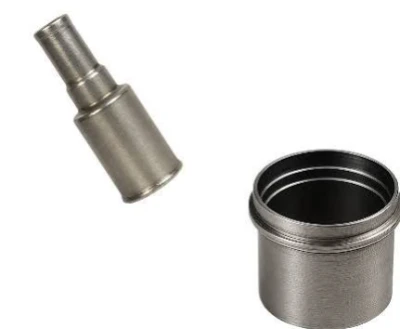
Differences in Workpiece Handling and Coil Feeding
The fundamental difference between these two processes lies in how the material is handled. Progressive stamping relies on a continuous carrier strip to pull the coil through the press, which inevitably restricts the flow of material. In contrast, precision transfer die stamping completely separates the metal blanks at the initial cutting station. Once separated, automated three-axis mechanical fingers transport individual workpieces between separate stamping stations. Since the material is no longer constrained by a rigid strip, the transfer die stamping process eliminates strip-induced stress and edge deformation.
For procurement professionals, this difference in processing directly impacts material utilization. While continuous stamping is extremely fast for processing small parts, the independent workpiece handling of transfer die stamping avoids scrap waste associated with carrier strips; therefore, transfer die stamping technology is the superior choice for high-cost alloys and high-volume manufacturing, where material efficiency is critical.
Feature Complexity and Size Limitations
When evaluating part geometry, physical dimensions and feature complexity determine which type of die is appropriate. Progressive dies excel at producing small, relatively flat parts at extremely high speeds. However, when manufacturing thick-walled shells or deep-drawn cylinders, the continuous connecting strip severely limits the forming depth. In such cases, precision transfer die stamping takes the lead.
Since the workpiece is completely independent, the material can flow naturally into deep cavities without localized tearing. Additionally, transfer metal stamping allows a mechanical turret system to rotate or flip the workpiece, enabling 360-degree die access.
This enables engineers to integrate complex side-cam punching, fine flanging, and bottom-surface embossing operations into a single stamping process. For buyers procuring large or complex-contoured structural housings, transfer die stamping technology overcomes the dimensional limitations of progressive die processes and ensures that complex geometries strictly comply with GD&T standards.
Die Investment and Return on Investment (ROI) Analysis
Purchasing personnel must strike a balance between the initial die investment and the long-term unit cost. Due to their monolithic block design, progressive dies typically require less initial capital for small, simple parts. However, as part size and complexity increase, the cost of progressive dies can become extremely high, and they are prone to downtime due to maintenance.
In contrast, transfer die stamping employs a modular, independent stamping station design. Although initial press setup and automation integration may require a higher upfront investment, the transfer die stamping process significantly accelerates return on investment through superior material utilization and the elimination of secondary processing.
By integrating complex forming operations into a single automated stamping cycle, scrap rates are significantly reduced. For high-volume OEM contracts, the long-term unit cost savings achieved through the transfer die stamping process far exceed the initial tooling costs, providing unparalleled financial predictability for complex B2B manufacturing projects.
Decision Parameter | Transfer Die Stamping | Sourcing & ROI Impact (Buyer’s Focus) | |
Material Connection | Continuous carrier web required | Independent, separated blanks | Dictates offal waste; web restricts severe material flow. |
Material Utilization Rate | ~70% – 85% (High scrap due to web) | 85% – 98% (Optimized nesting) | Cost Driver: Transfer dies significantly lower piece price on high-cost alloys (copper, AHSS). |
Production Speed (SPM) | 100 to 1,000+ Strokes/Min | 20 to 60 Strokes/Min | Progressive is for extreme-volume fasteners; Transfer is for complex, larger components. |
Deep Draw Capability | Limited (Depth < Diameter) | Extreme (Depth > Diameter) | Transfer dies prevent localized thinning and tearing on deep cylindrical or box shells. |
Tooling Architecture | Monolithic block (Single large die) | Modular (Independent die stations) | Transfer dies allow servicing of a single station, reducing catastrophic production downtime. |
Feature Complexity | 2D flat, simple bends | 3D complex, side-cam piercing | Transfer handles reverse flanging & multi-axis forming in one press, saving secondary costs. |
Why choose Supro MFG's Custom Metalworking Services
Provide the most cost-effective cost solution for manufacturing and assembling products, expanding product competitiveness.
a technical team specializing in custom shell manufacturing for more than 30 years.
Advanced Manufacturing Equipment: Industry-leading custom metal enclosure manufacturer with in-house sheet metal, die casting, precision machining workshops, and surface coating workshops.
ISO 9001-2015, PPAP III level, RoHS, NEMA, CE and other certified production standards.
24H*7 online English technical support: The professional English team responds quickly to users’ technical questions online at any time.
help users from product design, prototype, batch manufacturing, surface treatment, assembly and packaging, transportation and a series of value-added services.
With in-house mechanics and chemistry laboratories, it can quickly monitor manufacturing process quality control to ensure the delivery of high-quality products.
Accept to sign NDA documents to ensure that customers’ product information is protected.
Door-to-door delivery in customizable secure packaging after complying with the delivery details agreed with the customer.
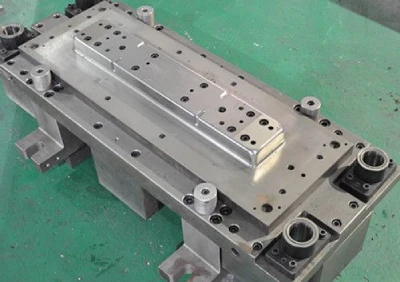
Ideal Applications and Industries for Transfer Die Stamping
By eliminating the limitations of continuous coil material, transfer die stamping technology has become the dominant method for producing large components with demanding geometric requirements. Purchasing engineers from Tier 1 automotive suppliers, the commercial appliance sector, and heavy industry all specify this process to ensure the structural integrity of deep-drawn housings and complex brackets.
Applications of Transfer Die Stamping in Automotive Parts (Structural and Housing Components)
The automotive industry relies heavily on reliable manufacturing processes to meet stringent crash safety and weight-reduction standards. When manufacturing chassis brackets, oil pans, and complex exhaust housings, custom transfer die stamping is the undisputed industry standard.
Since the blanks lack carrier tabs, manufacturers can form advanced high-strength steel (AHSS) into deep-drawn and irregular shapes without worrying about the risk of material fatigue or edge cracking. Additionally, transfer die stamping technology supports critical in-die operations such as reverse flanging and heavy-duty cam punching on non-planar surfaces.
Specifying the transfer die stamping process ensures exceptional structural integrity and strict compliance with PPAP requirements. By integrating multiple forming steps into a single stamping cycle, this method ensures that high-volume automotive components are delivered with an extremely low defect rate and highly predictable unit costs.
Applications of Transfer Die Stamping in the Manufacture of Home Appliance Housings and Deep-Drawn Enclosures
Commercial appliances and industrial systems require housings with complex contours that maintain strict environmental seals. When producing compressor housings, motor covers, or commercial weatherproof enclosures, custom transfer die stamping offers unmatched deep-drawing capabilities. Progressive die stamping struggles in this regard because continuous connecting strips restrict material flow, whereas deep cylindrical geometries require vigorous material flow.
However, transfer die stamping technology enables deep and uniform drawing of individual blanks, thereby eliminating the risk of microcracks or wall thinning. This makes it an ideal choice for producing seamless NEMA- or IP-rated enclosures that require precision-matched surfaces.
For procurement managers, manufacturing these deep-drawn enclosures using precision transfer die stamping not only achieves an exceptional surface finish and structural water resistance but also reduces the high costs typically associated with secondary welding processes.
Applications of Transfer Die Stamping in Heavy-Duty Industrial Hardware Manufacturing
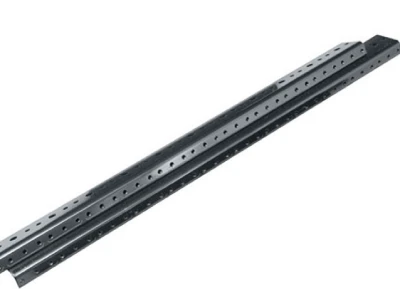
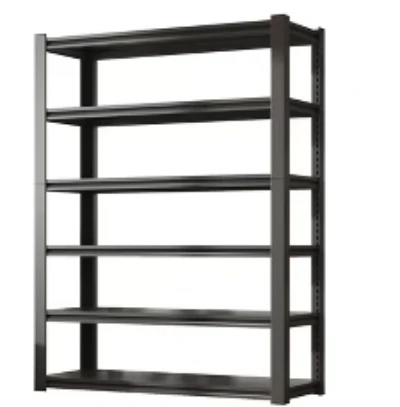
Industrial infrastructure requires robust hardware components with exceptional load-bearing capacity. When sourcing thick-walled mounting rails, heavy-duty shelving brackets, or commercial server rack components, the transfer die stamping process is the optimal manufacturing method. These thick-walled parts require high tonnage and complex multi-axis forming, which often causes standard continuous strip stock to warp.
By processing each thick blank individually, transfer die stamping enables precise heavy-duty embossing, sharp 90-degree bends, and thick-sheet punching without causing strip deformation. For procurement professionals responsible for managing industrial infrastructure supply chains, specifying precision transfer die stamping ensures that large structural brackets meet extremely stringent dimensional tolerance requirements.
This method not only guarantees the mechanical strength required for heavy-duty commercial applications but also integrates heavy-duty forming processes, ensuring uncompromised safety in the mass production of industrial hardware while achieving highly optimized material utilization.
Looking for a reliable custom sheet metal fabrication companies?
Talk To Supro MFG Expert Team
Contact us for competitive ex-factory prices,
and a full range of technical support services.
Quality Control and Tolerance Management in Transfer Die Stamping
In complex metal forming processes, achieving strict dimensional tolerances requires the establishment of a rigorous engineering design and quality control system. In the transfer die stamping process, material deformation—particularly springback, wrinkling, and microcracks—is controlled through highly calibrated, independent stamping stations. Because the blank is completely separated from the carrier strip, engineers can apply precise stamping forces and targeted lubrication at each drawing stage. This localized control in custom transfer die stamping prevents structural integrity issues in thick-walled parts caused by excessive thinning.
For procurement professionals, process validation is just as important as the actual stamping process. Therefore, production runs must be based on comprehensive First Article Inspection (FAI) and complete Production Part Approval Process (PPAP) documentation. By strictly adhering to these advanced frameworks, precision transfer die stamping ensures absolute Cpk consistency for every geometric feature, from deep-drawing radii to complex punch holes.
Ultimately, applying the transfer metal stamping process under a robust quality management system ensures the reliable, zero-defect delivery of high-volume OEM parts, thereby protecting your assembly lines from costly dimensional deviations.
Partner with a Reliable Sheet Metal Manufacturer
Whether you’re developing complex automotive body panels or heavy-duty industrial enclosures, choosing the right manufacturing process is only half the battle. The ultimate success of transfer die stamping depends entirely on the engineering capabilities of your chosen manufacturing partner. At Supro MFG, we understand that procurement professionals require more than just equipment capacity; they also demand supply chain stability and strict PPAP compliance.
By combining in-house die design with state-of-the-art servo presses, we maximize the high material utilization inherent in custom transfer die stamping. Our engineering team conducts rigorous Design for Manufacturability (DFM) analysis of your CAD models to ensure that challenging deep-drawing and complex flanging operations are executed flawlessly without local thinning.
When you partner with Supro MFG for precision transfer die stamping, you gain a strategic partner committed to reducing unit costs while strictly adhering to dimensional tolerances. If your next high-volume project requires precision metal forming and you wish to avoid the scrap waste associated with continuous stamping of interconnected parts, transfer die stamping is an excellent choice. Contact our engineering team today for a comprehensive technical evaluation and a highly competitive die quote.