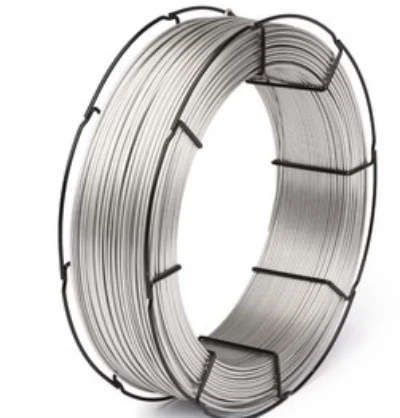

Welding wire is the most commonly used consumable in Gas Metal Arc Welding (GMAW) and Gas Tungsten Arc Welding (GTAW) operations, yet its impact on the final weld quality is often underestimated. It directly affects joint quality, production efficiency, and the cost per weld.
Different types of welding wire—from solid welding wire for GMAW (Gas Metal Arc Welding) in cleanroom environments, to flux-cored welding wire for field installation, to submerged arc welding (SAW) wire for high-deposition-rate thick-plate welding—each requires matching based on alloy characteristics and adherence to corresponding shielding gas specifications. Incorrect application can lead to porosity, cracks, or rework, all of which can be avoided through systematic selection.
At Supro MFG, we specify welding wire based on AWS classifications and the heat input of specific applications, ensuring defect-free welds from thin-walled enclosures to heavy-duty structural components.
This guide delves into welding wire types, selection criteria for different materials, and application considerations.
Main Categories of Welding Wire
The selection of welding wire is a decision specific to the process at hand, and it directly affects deposition efficiency, weld quality, and overall manufacturing costs. The four main types of welding wire each operate based on fundamentally different protection mechanisms and fusion kinetics. Understanding these differences and selecting the appropriate type for the process is the foundation for achieving high-quality welds.
Solid Welding Wire
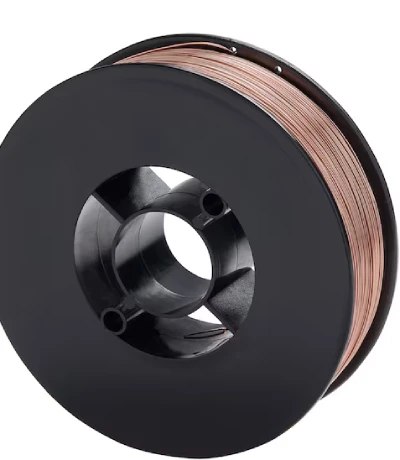
Solid welding wire is a uniform, continuous filler metal, typically with a copper cladding to enhance electrical conductivity and corrosion resistance. It produces clean weld profiles on carbon steel, stainless steel, and aluminum substrates, with minimal spatter and consistent mechanical properties.
The most commonly used solid welding wire for low-carbon steel is the ER70S series, where “ER” stands for electrode or welding rod, “70” indicates a minimum tensile strength of 70,000 psi, and “S” denotes solid welding wire. Within this series, ER70S-6 contains higher levels of manganese and silicon deoxidizers, which actively neutralize surface oxides during welding, making it suitable for base metals with light rust or scale. ER70S-3, with its lower silicon content, is suitable for cleaner surface conditions.
Compared to ER70S-3, the S-6 welding wire offers superior molten pool fluidity, a smoother weld bead profile, and less spatter—characteristics that make it the standard choice in automotive and general sheet metal fabrication, particularly where there are specific requirements for weld appearance and radiographic integrity.
In controlled indoor environments, solid welding wire produces cleaner welds than flux-cored wire, but it requires an external shielding gas (typically 75%–90% argon with the remainder being carbon dioxide) and clean, scale-free base metal to ensure consistent performance.
Flux-Cored Welding Wire (FCAW)
Flux-cored welding wire consists of a tubular metal casing filled with a core composed of flux compounds, metal powders, and deoxidizers. The resulting weld is covered by residual slag, which both protects the weld and shapes its form.
This type of welding wire is primarily divided into two subcategories:
Self-shielded flux-cored welding wire (FCAW-S) relies entirely on chemical reactions within the flux core to generate shielding gas and slag, requiring no external shielding gas. This characteristic makes FCAW-S ideal for outdoor field operations, where wind can interfere with gas shielding; however, it produces more spatter than gas-shielded welding wire.
Gas-shielded flux-cored welding wire (FCAW-G) combines a flux-cored slag system with an external shielding gas (typically 100% CO₂ or a 75%–85% argon/CO₂ mixture), providing a smoother weld bead appearance, higher deposition rates, and reduced spatter. FCAW-G (AWS A5.20 E71T-1C/M) supports all-position welding, offers higher deposition rates than solid welding wire, allows for faster travel speeds, and exhibits greater tolerance to scale and surface contaminants.
Position welding capability is indicated by a code in the AWS classification: “1” denotes all positions, including vertical-up and overhead welding; “0” is limited to flat and horizontal welding.
Submerged Arc Welding (SAW) Wire
Submerged Arc Welding (SAW) is performed under a continuous layer of granular flux, which not only prevents atmospheric contamination, arc flash, and spatter but also produces deep-penetration welds in thick plates. This submerged arc welding (SAW) wire process achieves a deposition rate of up to 45 kg/h per electrode, making it the preferred method for longitudinal pipe welds, pressure vessel longitudinal joints, and the fabrication of offshore structures compliant with ASME Section IX and API 5L standards.
For carbon steel welding, copper-clad solid welding wires such as AWS EM12K and EM13K are the standard choice, while flux-cored submerged arc welding wires can further increase deposition rates. However, since the flux coating relies on gravity for coverage, this process is limited to flat and horizontal welding positions.
Specialty and Alloy-Specific Welding Wires
For corrosion-resistant alloys and high-temperature applications, the chemical composition of specialty welding wires must match that of the base metal exactly to prevent cracking or electrochemical corrosion caused by dilution.
The austenitic stainless steel series includes: ER308/308L for 304 base metals, ER316/316L for 316 alloys (where ER316LSi improves wettability and weld pool fluidity through increased silicon content), and ER309 for joining stainless steel to carbon steel.
Aluminum welding follows the AWS A5.10 standard: ER4043 (containing 5% silicon) provides excellent crack resistance and molten pool fluidity for 6XXX series alloys, while ER5356 (magnesium-based) offers higher post-weld strength for 5XXX series marine-grade applications. Nickel-based welding wire (ERNiCrMo-3, equivalent to Inconel 625) is suitable for high-temperature and sulfur-containing environments in the upstream oil and gas and chemical processing sectors.
Only 4 steps
online custom metal fabrication parts
Contact our experts team and experience the efficiency and economic benefits of digital metal fabrication services.
Upload Design Files
STL , STEP (.stp), IGES (.igs), (.ZIP), or PDF.
Also be a sample or an idea
Quote & Design Analysis
Instant factory quotes and DfM reports, the most reasonable solution.
Manufacturing Begins
Digital processes can initiate order tasks within 24 hours.
On-Time Delivery
Keeping delivery promises, approved by 3000+ Global Company buyers.
Selection of Welding Wire for Specific Materials
The chemical composition of the base metal influences the selection of welding wire more directly than any other factor. Matching the filler metal to the base metal alloy prevents dilution-induced cracking, maintains corrosion resistance, and ensures that mechanical properties meet specification requirements. If the wrong type of welding wire is selected based on the base metal, weld failure under service loads is inevitable.
Selection of Carbon Steel Welding Wire
In the field of general carbon steel fabrication, the solid welding wire ER70S-6 is the industry standard. Its high content of manganese (1.40%–1.85%) and silicon (0.80%–1.15%) deoxidizers effectively neutralize surface oxides and light rust, thereby reducing porosity in sheet metal fabrication. When the base metal surface is flawlessly prepared, ER70S-3 welding wire produces fewer silicon deposits, making it suitable for applications with minimal post-weld cleaning requirements.
For structural steel subjected to dynamic loads or low-temperature environments, low-alloy welding wires such as ER80S-Ni1 (containing 1.0%–1.5% nickel) offer superior notch toughness. Flux-cored welding wire E71T-1C/M offers higher deposition rates and better slag adaptability on thicker carbon steel components, making it the preferred choice for the fabrication of heavy-duty equipment frames and offshore structures, where both production efficiency and weld quality are equally critical.
Selection of Stainless Steel Welding Wire
The chromium and nickel content of stainless steel welding wire must be equivalent to or higher than that of the base metal alloy to maintain corrosion resistance in corrosive environments. For 304 and 304L base metals, ER308 and ER308L are the correct choices—the “L” grade limits carbon content to 0.03% or less, preventing intergranular carbide precipitation in the weld heat-affected zone. When welding 316/316L stainless steel, ER316L welding wire contains 2.0%–3.0% molybdenum to resist pitting corrosion in chloride-rich environments.
When joining stainless steel to carbon steel (common in custom sheet metal assemblies), ER309 can be used as a transition layer. This solid welding wire accommodates different coefficients of thermal expansion and prevents carbon migration, thereby avoiding the formation of martensite at the fusion interface.
Selection of Aluminum Welding Wire
The selection of aluminum welding wire must consider compatibility between alloy groups and operating temperatures. For 6XXX series profiles and sheets, ER4043 (containing 5% silicon) lowers the melting point, reduces susceptibility to hot cracking, and improves molten pool fluidity—properties that are critical for the fabrication of thin-walled aluminum products. However, post-weld anodizing will result in a dark gray appearance of the ER4043 weld, which may be unacceptable for exposed architectural components.
For 5XXX series marine alloys (such as 5052, 5083, and 5086), ER5356 (containing 5% magnesium) provides higher post-weld strength and exhibits excellent corrosion resistance in saltwater environments. ER5356 also maintains weld color consistency after anodizing.
Both of these solid welding wire grades require the use of pure argon as a shielding gas and must be stored properly to prevent moisture absorption.
Are you looking for reliable & cost-effective
China Sheet Metal Fabricators
More than 150,000 OEM metal fabrication products delivered to 5,000+ global buyers.
And benefit from it!
Selection of Welding Wire for Specific Applications
Application conditions—such as material thickness, weld accessibility, and differences between on-site and workshop environments—determine which welding wire will achieve satisfactory production efficiency and defect rates. Selecting the appropriate welding wire types for specific applications helps avoid rework and control unit costs.
Thin Sheet Metal Fabrication
When welding thin sheets less than 3 mm thick, heat input must be precisely controlled to prevent burn-through and distortion. Solid welding wire with a diameter of 0.023–0.030 inches, combined with 75%–90% argon/carbon dioxide shielding gas, enables short-circuit transfer, thereby rapidly cooling the molten pool between arcs. ER70S-6 remains the standard welding wire type for thin carbon steel welding due to its smooth weld bead profile.
For aluminum sheets less than 2 mm thick, using ER4043 solid welding wire with pure argon shielding minimizes heat input while preventing hot cracks.
Flux-cored welding wire should generally be avoided for thin-sheet welding —its spheroidal droplet transfer generates sustained heat, which can easily cause deformation in precision parts.
Welding of Heavy Structural Components and Piping
Circular seam welding of heavy structural components and piping requires a welding wire formulation that strikes a balance between deposition rate and consistent mechanical properties. For carbon steel plates thicker than 12 mm, flux-cored welding wire E71T-1C/M offers a deposition rate 20%–30% higher than that of solid welding wire, while also performing well on surfaces with scale and minor surface contamination. All-position welding capability (AWS Class 1) supports upward welding on column joints and heavy equipment frames.
For X52 to X80 line pipes, the ER70S-G solid welding wire with optimized deoxidizers achieves root penetration without back-sucking. The EM12K submerged arc welding wire with a neutral flux is the standard material for longitudinal seam welding on pressure vessels and offshore piles, delivering deep penetration and spatter-free welds at travel speeds exceeding 30 inches per minute.
Automotive and OEM Component Manufacturing
Welding in the automotive and OEM component sectors emphasizes weld appearance, fatigue resistance, and process repeatability. The 0.035-inch-diameter solid welding wire ER70S-6, used with a 90/10 argon-CO₂ gas mixture, produces smooth, fine-grained welds on chassis and suspension components—a critical requirement for robotic MIG welding cells.
When paint or electrophoretic coating requires minimal surface residue, a low-silicon welding wire (ER70S-3) is recommended. For exhaust systems and high-temperature manifolds, ER309 or ER316L stainless steel welding wire prevents weld scaling and oxidation at temperatures up to 800°C.
Apart from heavy-duty truck frames, the application of flux-cored welding wire in the automotive sector is relatively limited; in heavy-duty truck frame welding, the high deposition rate of E71T-1C welding wire eliminates the need for post-weld slag removal. In precision sheet metal fabrication, traceability of each batch of welding wire to AWS certification is a non-negotiable requirement.
Looking for a reliable custom sheet metal fabrication companies?
Talk To Supro MFG Expert Team
Contact us for competitive ex-factory prices,
and a full range of technical support services.
Welding Wire Selection Criteria and Process Optimization
The absence of a systematic framework for selecting welding wire can lead to porosity, rework, and non-compliance with specifications. The correct welding wire types can be determined through a systematic evaluation of the base material, thickness, position, environment, and applied loads. Furthermore, process parameters must be matched to the chemical composition and diameter of the welding wire.
Five-Factor Selection Framework
Effective welding wire selection requires a systematic evaluation of the following aspects: base metal composition (determines alloy matching), material thickness (determines diameter and heat input), welding position (influences the choice between flux-cored or solid welding wire), environmental exposure (indoor GMAW vs. outdoor FCAW), and service requirements (tensile strength, impact toughness, corrosion resistance).
For example, carbon steel structural columns welded on-site require the use of flux-cored welding wire E71T-8 (self-shielded) to meet wind resistance requirements, whereas in climate-controlled workshops, the same alloy would be used with solid welding wire ER70S-6 to achieve a cleaner weld. Neglecting any one of these five factors typically results in weld defects or unnecessary consumable costs.
Matching Wire Diameter and Shielding Gas
The diameter of the welding wire must be matched to the shielding gas to achieve the desired wire transfer mode. For solid carbon steel welding wires with diameters less than 0.035 inches, an argon-rich gas mixture (75%–90% Ar / balance CO₂) can provide stable short-circuit transfer in thin-sheet welding. For welding wires with diameters of 0.045 inches or greater, pure carbon dioxide or an 85% argon/15% carbon dioxide mixture can achieve spray transfer in thick plate welding.
E71T-1C flux-cored welding wire requires carbon dioxide to activate its rutile slag system; using an argon-carbon dioxide mixture will alter the weld bead profile and penetration depth.
For submerged arc welding wire, diameter selection is relatively straightforward: use 1/16 to 3/32 inch for welding flat plates at 300–500 amps; use 1/8 inch for high-deposition-rate series arc systems.
Conclusion
Selecting the appropriate welding wire is a fundamental decision in metal fabrication quality management. Understanding its classification system, alloy compatibility with specific materials, and process-related performance characteristics not only optimizes joint integrity but also improves production efficiency and controls costs.
Whether processing ordinary carbon steel with ER70S-6 or working with corrosion-resistant stainless steel requiring ER316L, welding wire must be selected as an indispensable component of a complete welding system.
Supro MFG is a professional sheet metal fabrication manufacturer specializing in providing custom sheet metal parts and welded assemblies to global customers. For recommendations on welding wire types for specific applications or manufacturing consultations, please contact our engineering team.