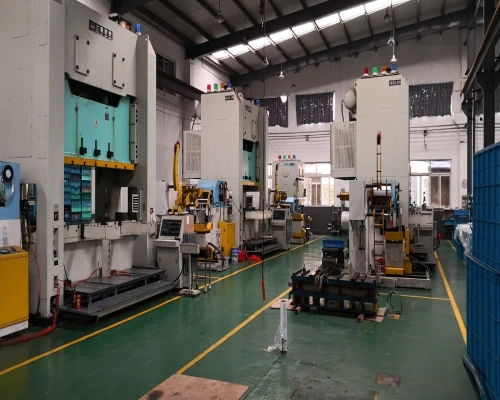
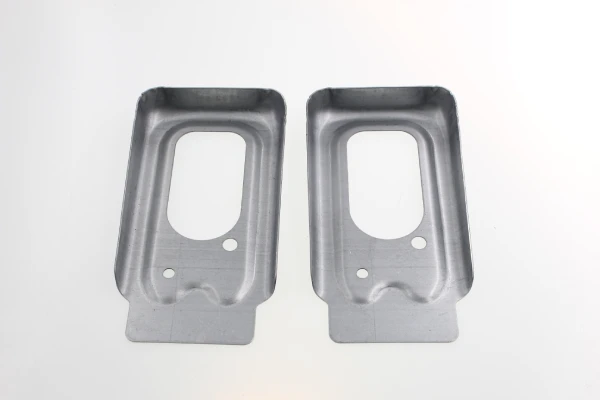
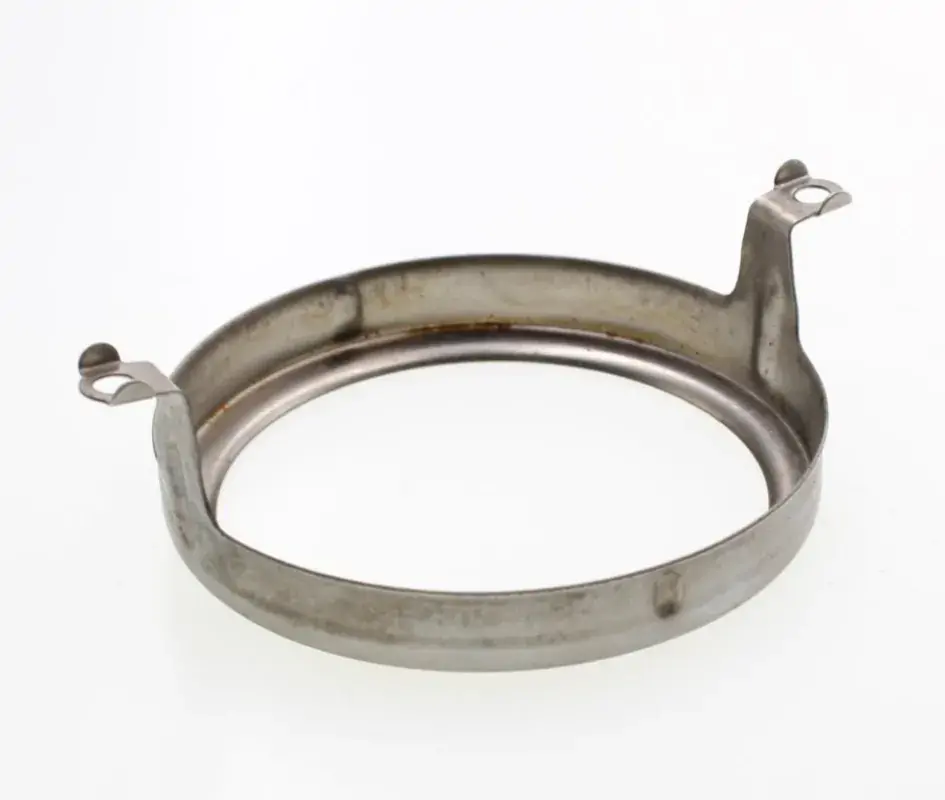
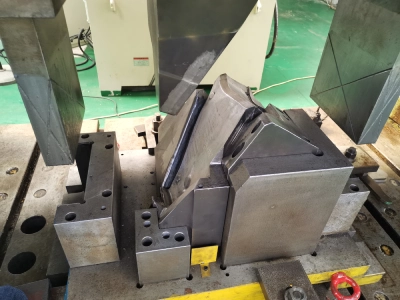

Precision transfer die stamping is becoming increasingly popular in the manufacturing of large automotive components. The automotive industry is currently undergoing a challenging transition toward vehicle lightweighting and full electrification.
This engineering transformation imposes extremely stringent requirements on large structural components, suspension frames, and electric vehicle battery housings. When processing large parts with complex geometries, traditional progressive forming processes often reach their mechanical limits due to the constraints of continuous strip feeding and insufficient material utilization.
By separating the blank at the initial shearing station, the transfer die stamping process enables unimpeded multi-axis workpiece manipulation and achieves deeper drawing depths that are mechanically unattainable with continuous strip processes.
Transfer die stamping technology achieves an optimal balance between high material utilization and strict dimensional control. For large automotive components stamped from advanced high-strength steel (AHSS) or aluminum alloys, this manufacturing method ensures absolute structural integrity while delivering high-volume production efficiency.
This article details the mechanical principles, automotive industry applications, and quantifiable engineering advantages of this specific forming process.
How Transfer Die Stamping Works
Unlike continuous strip processes, transfer metal stamping completely separates the metal blanks at the starting station. Subsequently, synchronized mechanical guides feed the individual parts into a series of forming presses, enabling the production of highly complex geometries without the limitations of a carrier strip.
Blanking and Multi-Station Transfer Systems
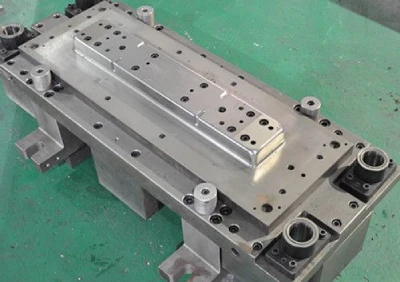
The production cycle of precision transfer die stamping begins at the blanking station, where the metal sheet is completely cut from the parent coil. Once blanking is complete, high-speed mechanical fingers or turret guides driven by servo motors grip the individual workpiece and physically transfer it to a series of subsequent stamping stations. Unlike coil-feeding methods, this autonomous movement allows the blank to be rotated, flipped, and manipulated along multiple axes throughout the production cycle.
For automotive manufacturing, this capability is critical. It enables a single stamping line to perform deep drawing, cam punching, and complex flange forming on large sheet metal parts. By designing precision multi-station transfer systems, manufacturers can perform high-intensity forming operations without the risk of material tearing, thereby ensuring optimal dimensional stability during high-volume production.
Transfer Die Stamping vs. Progressive Die Stamping
In automotive manufacturing projects, procurement teams often evaluate transfer die stamping technology in comparison to progressive die stamping. The fundamental engineering difference between the two lies in the carrier strip. Progressive die stamping requires the workpiece to remain attached to the continuous strip until final cutting, which physically limits deep-drawing depth and generates excessive scrap for large-sized workpieces.
In contrast, the transfer die stamping process, which does not use a carrier strip, enables superior material utilization—typically reducing scrap by 10% to 15% on large blanks. Because parts can move independently, engineers can design dies for extreme 360-degree forming, which would be limited in the progressive die process.
When manufacturing vehicle structural frames, heavy-duty brackets, or deep battery trays, precision transfer die stamping provides the required stamping force and geometric flexibility that traditional progressive stamping processes are mechanically incapable of meeting.
Core Applications of Transfer Die Stamping in the Automotive Industry
Automotive manufacturers demand uncompromising structural integrity and weight reduction for large vehicle platforms. Consequently, the transfer die stamping process is specifically designed to process advanced high-strength alloys, providing the deep-drawing capabilities required for heavy-duty chassis frames and complex electric vehicle battery enclosures.
Deep-Drawn Structural Components
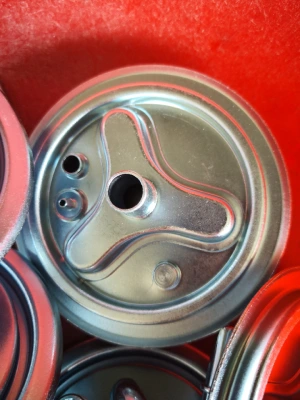
When manufacturing critical structural components such as crossbeams, A- and B-pillars, and crash reinforcements, it is necessary to achieve maximum forming depth without compromising the material’s grain structure. Transfer die stamping technology excels in this area.
Because the blank is separated from the carrier strip early in the stamping cycle, our engineers can precisely control optimal material flow during the deep-drawing process. This effectively prevents material thinning and tearing—common defects when deep-drawing using continuous coiled sheet metal. Additionally, rotating and flipping the separated workpiece between stamping stations enables complex flanging and lateral punching of large structural panels.
For procurement teams sourcing safety-critical automotive components, custom transfer die stamping ensures the mechanical property consistency and dimensional accuracy required to meet stringent crash test standards, thereby enabling zero-defect mass production.
Chassis and Suspension Frames
Chassis components and suspension control arms are subjected to immense dynamic loads and therefore must be manufactured from thick-gauge advanced high-strength steel (AHSS) or high-strength low-alloy steel (HSLA). Processing these large-sized, ductile alloys physically requires high-tonnage presses and separate forming operations. Precision transfer die stamping is specifically designed for such heavy-duty applications.
By using robust servo-transfer rails to position large blanks in stages between high-tonnage presses, we eliminate the severe springback issues typically encountered in continuous strip stamping. This segmented process allows for the setup of dedicated restriking and coining stations, thereby locking in the final geometry of thick-walled automotive frames.
As a result, procurement managers can reliably source heavy-duty suspension links that meet stringent fatigue life specifications while benefiting from the exceptional structural integrity and precise tolerance control guaranteed by the transfer metal stamping process.
Electric Vehicle Battery Enclosures and Trays
The rapid expansion of electric vehicle platforms has created an unprecedented demand for large, lightweight battery enclosures and chassis trays. These large-sized aluminum or steel components must offer absolute water resistance (IP67/IP68 ratings) and excellent impact resistance to protect the internal battery modules.
The transfer die stamping process is indispensable for manufacturing these extra-large, flat-profile parts. This process can handle oversized blanks while ensuring uniform pressure distribution across the forming die, thereby preventing warping of thin-gauge aluminum sheets. Additionally, multi-station setups allow for the seamless integration of in-die punching (for mounting holes) and extrusion forming (for cooling channels).
The use of transfer die stamping technology ensures that large battery trays maintain strict flatness tolerances, ultimately accelerating assembly line integration and reducing the vehicle’s gross vehicle weight without compromising safety.
Are you looking for reliable & cost-effective
China metal fabrication manufacturer
More than 150,000 OEM metal fabrication products delivered to 5,000+ global buyers.
And benefit from it!
Engineering Advantages of Transfer Die Stamping in the Production of Large Components
The use of custom transfer die stamping directly results in quantifiable cost reductions. By separating the blank from the die, this method not only significantly reduces scrap rates but also maximizes geometric design freedom in the manufacture of large workpieces and fully leverages high-tonnage processing capabilities.
Transfer Die Stamping Delivers Exceptional Material Utilization and Reduced Scrap
In large-scale automotive manufacturing, raw material costs directly determine a project’s profit margin. Precision transfer die stamping delivers immediate economic benefits by completely eliminating the carrier strip required for progressive dies.
Since metal blanks are fully sheared at the first station, engineers can optimize coil width and employ high-density nesting strategies, thereby significantly reducing scrap (metal scrap). Based on Supro MFG’s manufacturing experience, eliminating continuous strip material from oversized automotive sheet metal parts can save up to 15% in material per component.
This exceptional material utilization directly lowers the cost per unit. By adopting transfer die stamping technology, original equipment manufacturers (OEMs) and Tier 1 suppliers can effectively offset the initial die investment through long-term, substantial reductions in the consumption of continuous steel and aluminum.
Transfer Die Stamping Accommodates Complex Geometries and Deep Drawing
Producing oversized automotive parts with complex contours requires absolute mechanical freedom during the forming cycle. The transfer die stamping process achieves precise multi-axis operations between secondary press stations by physically isolating the blank. Since there are no restrictive feed belts to control material feeding, the metal flows uniformly into the die cavity, enabling extremely deep drawing without the risk of dangerous material thinning or localized tearing.
Furthermore, this independent workpiece movement supports rotation within the die, enabling complex side flanging, undercuts, and cam-actuated piercing on multiple planes. For engineers designing aerodynamic body panels or rigid structural nodes, precision transfer die stamping eliminates traditional geometric constraints. It ensures that highly complex geometries can be formed with strict dimensional accuracy on a single automated stamping line, thereby simplifying the entire downstream assembly process.
High-Tonnage Forming Capability for Advanced Materials
Modern automotive weight reduction requirements call for the widespread use of advanced high-strength steel (AHSS) and structural-grade aluminum alloys. Forming these high-strength alloys requires immense physical force. Heavy-duty stamping production lines dedicated to transfer die stamping provide the necessary high-tonnage capacity—typically exceeding 1,000 to 2,000 metric tons—to process large-area high-strength materials.
While progressive dies often generate uncontrollable stresses and die wear on a single continuous strip when forming high-strength steel, the transfer die stamping process isolates the load at each station. This segmented design enables precise localized pressure application, dedicated restrike operations, and superior springback control.
Consequently, procurement professionals can confidently specify transfer die stamping technology for the manufacture of thick-walled vehicle frame side members or crash safety structures, ensuring absolute material integrity and precise tolerances even when dealing with the demanding mechanical properties of modern advanced alloys.
Quality Control and Dimensional Accuracy in Transfer Die Stamping
To comply with the stringent IATF 16949 automotive industry standard, absolute dimensional stability must be ensured. Precision transfer die stamping ensures this accuracy by separating the forming operations, allowing engineers to independently calibrate each station and effectively eliminate springback during the production of high-volume, large-sized components.
Strict Tolerance Control for Large Blanks
The manufacture of extra-large automotive sheet metal parts poses significant challenges in terms of dimensional stability, particularly regarding material springback and localized warping. The transfer die stamping process effectively mitigates these risks by structurally separating the forming stages.
Unlike continuous strip processing, where tension runs through the entire strip, the independent blanks in custom transfer die stamping are not subject to any adjacent stresses. This mechanical decoupling enables Supro MFG’s die engineers to independently calibrate the pressure, stroke, and clearance for each individual stamping station. By integrating precision restrike and coining operations directly into the stamping sequence, we eliminate the material memory effect and lock in the final geometry.
For automotive components that require strict adherence to geometric dimensions and tolerances (GD&T), this advanced forming process ensures consistent compliance with stringent specifications without the need for costly secondary machining.
Design for Manufacturability (DFM) and Advanced Product Quality Planning (APQP)
Ensuring zero-defect automotive production begins long before the first sheet of metal enters the press. We rigorously integrate Design for Manufacturability (DFM) and Advanced Product Quality Planning (APQP) frameworks into every major die project.
During the initial DFM phase, our mechanical engineers utilize advanced finite element analysis (FEA) and forming simulation technologies to predict thinning, tearing, and wrinkling on complex geometries. This forward-looking analysis optimizes die design before the steel is actually cut.
Furthermore, adherence to strict APQP protocols ensures that key milestones—including First Article Inspection (FAI) and Production Part Approval Process (PPAP)—are systematically executed. By combining a rigorous, IATF-compliant quality framework with the precision inherent in transfer die stamping, procurement managers gain access to a robust manufacturing solution characterized by defect-free part approval and seamless integration into the assembly line.
Looking for a reliable custom sheet metal fabrication companies?
Talk To Supro MFG Expert Team
Contact us for competitive ex-factory prices,
and a full range of technical support services.
Selecting a Reliable Transfer Die Stamping Partner
Selecting a manufacturing partner for large automotive parts involves more than simply evaluating basic press capacity; it also requires a thorough review of the partner’s comprehensive engineering infrastructure.
For complex automotive projects, priority should be given to facilities equipped with high-tonnage stamping lines (ranging from 800 metric tons to over 2,000 metric tons) and possessing robust in-house die-making capabilities. The transfer die stamping process requires precise mechanical synchronization and rapid die intervention to avoid costly downtime losses.
At Supro MFG, we combine advanced die simulation software with a rigorous IATF 16949 quality management system to ensure zero-defect production runs. Through comprehensive control over the engineering design, die manufacturing, and machining phases, we eliminate reliance on third-party die manufacturers. This closed-loop manufacturing model provides procurement teams with robust supply chain stability, shorter lead times, and the technical assurance required to successfully execute high-volume, high-precision automotive projects.
Conclusion
As modern vehicle architectures impose increasingly stringent requirements for weight reduction and the integration of complex structures, traditional continuous strip forming methods have often reached their mechanical limits. Precision transfer die stamping offers the ultimate engineering solution for manufacturing large-sized automotive components. By completely separating the blank from the strip, this method maximizes raw material utilization, enables extremely deep drawing without localized tearing, and allows for the seamless processing of high-strength advanced alloys.
At Supro MFG, we have further strengthened this specific manufacturing capability through a quality management system that strictly complies with IATF standards, a robust in-house tooling infrastructure, and rigorous upfront DFM simulation. For procurement managers seeking to reduce unit costs while ensuring absolute dimensional stability, adopting this optimized forming process will deliver immediate business advantages.
Submit your CAD files today; our engineering team will provide a comprehensive manufacturability assessment and highly competitive production strategies tailored to your project.