
Understanding the practical application of deep draw stamping extends far beyond theoretical process comparisons. True cost-effectiveness stems from precise control over every detail in production practice. This article delves into how the deep draw stamping process directly reduces raw material costs through scientific material management while significantly lowering scrap rates via automated quality control systems.
Supro addresses technical production challenges head-on, offering specific deep draw metal stamping solutions for diverse materials—from wrinkle control in carbon steel to crack prevention in aluminum alloys, and springback management in brass. For high-volume production projects, understanding how deep draw metal stamping manufacturers ensure precision, extend die life, and eliminate edge defects like burrs through precise die selection and process parameter optimization is key to securing supply chain stability and reducing overall costs.
Below is Supro MFG’s practical production experience summary, designed to help you transform complex design drawings into zero-defect, cost-effective deep draw stamping parts.
Introduction to Deep Draw Stamping
Process Insight: Deep draw stamping forms seamless complex geometries through a single controlled draw operation, reducing welding processes, additional forming steps, and production friction.
Manufacturing Advantages: Compared to standard stamping, the deep draw stamping process supports high-volume production, tighter tolerance requirements, and achieves stable precision parts through automated quality control.
Cost Perspective: While tooling investment is higher, reduced secondary processing, lower scrap rates, and enhanced lean manufacturing efficiency lower long-term unit costs.
Quality Control: Through optimized tool design, lubrication measures, and draw ratio control, wrinkles, cracks, and springback in materials like stainless steel, aluminum alloys, and carbon steel are effectively prevented.
How Can Deep Draw Stamping Reduce Material Waste?
Deep draw metal stamping minimizes material waste through process engineering design—an advantage unmatched by conventional stamping. By optimizing blank layout for materials like galvanized steel and designing dies to minimize trimming losses, the deep draw stamping process maximizes sheet utilization. Furthermore, the integrated automated quality control systems within deep draw metal stamping production lines enable early defect detection, significantly reducing scrap rates. This directly translates into substantial cost savings.
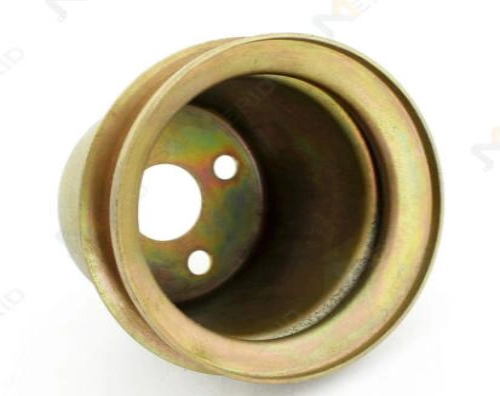
Optimized Nesting for Galvanized Steel Blanks
In deep draw metal stamping, waste often starts before the press even runs. It begins with layout.
Nesting optimization:Sheet planning for Galvanized steel.Tight Sheet metal layout alignment.Grain direction control for stable forming.
Digital simulation:Boosted Blank utilization.Measurable Material efficiency
Production scaling:High-volume Waste reduction.
When deep draw metal stamping is paired with smart nesting software, draw stamping lines squeeze more parts out of every sheet. At supro mfg, layouts are reviewed before tooling is approved, keeping deep draw projects cost-focused from day one.
Minimal Trimming Loss through Tool Design
Achieving minimal trimming loss through precision tooling design represents the core economic advantage that distinguishes deep draw metal stamping from traditional processes. Supro MFG engineers actively control material flow during deep draw metal stamping by precisely calibrating tooling radii and holding forces. This engineering intervention ensures more uniform wall thickness distribution during deep drawing, significantly reducing the trimming allowance required for stable forming. Continuous process fine-tuning makes the deep draw stamping process predictable, maintaining precision metal forming in a lean state. This ultimately delivers deep draw stamping parts with higher material utilization.
Automated Quality Control to Lower Scrap Rates
Precision dies demand equally precise monitoring. Supro MFG integrates sensor-based automated in-line inspection systems into its deep draw stamping lines, enabling real-time detection of surface cracks and wall thinning during deep draw metal stamping. This proactive process monitoring ensures dimensional stability, capturing defects before they cause scrap and triggering immediate adjustments.
Intelligent quality control transforms the deep draw stamping process from reactive inspection to proactive prevention, significantly boosting yield rates. This fundamentally reduces the risk of batch scrap, ensuring every delivered batch of deep draw stamping parts is consistently reliable.
Are you looking for reliable & cost-effective
China Sheet Metal Fabricators
More than 150,000 OEM metal fabrication products delivered to 5,000+ global buyers.
And benefit from it!
Stamping Defects? Deep Draw Stamping to the Rescue
Deep draw stamping sounds simple—press metal, get shape—but real shop life says otherwise. From draw stamping wrinkles to edge burrs, small defects can wreck a batch fast. This is where smart deep draw stamping, solid tooling, and hands-on tweaks make all the difference. Let’s break it down in plain terms.
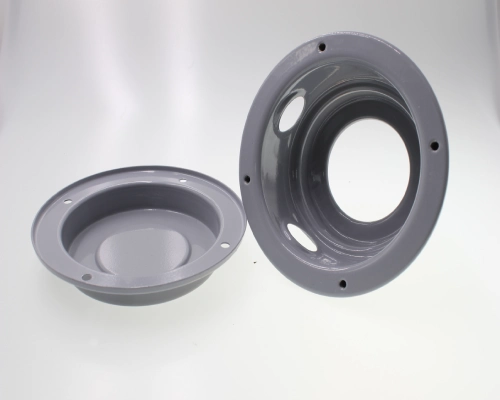
Wrinkling Prevention in Carbon Steel Draws
In carbon steel deep drawing, wrinkling shows up when material flow outruns control. Fixing it takes tight coordination between die design, lubrication, and blank holder force.
Material Flow Control:
Adjust blank holder force:Low force → flange buckles ; High force → tearing risk.
Optimize lubrication:Reduce friction at die radius 、Keep flow steady during deep draw stamping.
Tooling Setup:Refine die design radii.Check draw bead geometry.
Process Monitoring:Track press tonnage curves.Inspect flange waves early
At Supro, technicians progressively optimize deep draw stamping process parameters through fine-tuning. This manual debugging approach ensures stable operation of deep draw metal stamping production lines, particularly for thicker carbon steel cup bodies and shell processing.
Crack Mitigation Strategies for Aluminum Alloy Parts
Aluminum alloy parts crack fast if material properties and process parameters are ignored. In deep draw stamping, lighter metals need extra respect.
Key control points:
Proper draw ratio in deep drawing
Generous punch radius in tooling
Intermediate annealing for stress relief
“Global demand for lightweight formed aluminum components continues to rise, driven by EV and aerospace programs,” noted a 2025 metals outlook from the International Aluminum Institute.
In the deep draw stamping process, cracks typically initiate at tight corners. It is necessary to reduce the stamping speed and re-examine the mold polishing quality. If the stress path patterns are followed, aluminum deep drawing stamping yields excellent results.
Material Grade | Max Draw Ratio | Recommended Radius (mm) | Annealing Temp (°C) | Typical Thickness (mm) |
5052-H32 | 2.0:1 | 6–8 | 345 | 1.0 |
6061-O | 2.2:1 | 8–10 | 415 | 1.2 |
3003-H14 | 1.8:1 | 5–7 | 360 | 0.9 |
7075-O | 1.6:1 | 10–12 | 410 | 1.5 |
1100-O | 2.3:1 | 4–6 | 345 | 0.8 |
Springback Control in Brass and Copper Components
With brass and copper, springback can throw off dimensions after deep draw stamping. The metal looks fine in the die, then relaxes and shifts.
Material Behavior Review:Measure yield strength.Confirm temper condition.Consider light annealing
Tooling Adjustments:Apply die over-bend compensation.Modify punch profile.Calibrate bottoming pressure
Validation:Run pilot lots.Compare CAD vs. formed geometry.Fine-tune draw stamping offsets
While precise simulation is helpful, final conclusions can only be drawn from actual shop floor testing. Supro Mfg combines forming analysis with real-world stamping feedback to ensure predictable material behavior in deep draw metal stamping projects.
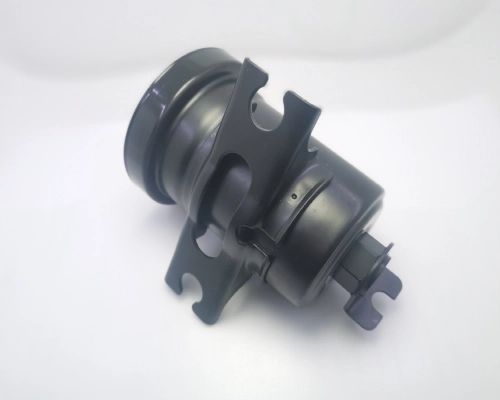
Deburring and Polishing to Eliminate Edge Imperfections
After deep draw stamping, edge imperfections can show up as sharp lips or micro-tears. Not a good look, especially for medical housings.
Common fixes include:Mechanical deburring.Vibratory finishing.Manual edge blending.
Then comes polishing for smooth surface finish. For high-spec parts, add:Secondary operations for tight radii.Careful tool maintenance to prevent repeat burrs.Surface checks before coating or plating.
High-quality deep drawn stamping parts feature a smooth feel with no sticking or rough spots. The final polishing often determines whether a part passes inspection—or gets sent back for rework.
Why choose Supro MFG
Real ex-factory price:
Provide the most cost-effective cost solution for manufacturing and assembling products, expanding product competitiveness.
Professional technical team:
a technical team specializing in custom shell manufacturing for more than 30 years.
Advanced Manufacturing Equipment: Industry-leading custom metal enclosure manufacturer with in-house sheet metal, die casting, precision machining workshops, and surface coating workshops.
ISO 9001-2015 Manufacturer:
ISO 9001-2015, PPAP III level, RoHS, NEMA, CE and other certified production standards.
24H*7 online English technical support: The professional English team responds quickly to users’ technical questions online at any time.
One-stop manufacturing solution:
help users from product design, prototype, batch manufacturing, surface treatment, assembly and packaging, transportation and a series of value-added services.
Authoritative testing capabilities:
With in-house mechanics and chemistry laboratories, it can quickly monitor manufacturing process quality control to ensure the delivery of high-quality products.
Intellectual Property Protection(NDA):
Accept to sign NDA documents to ensure that customers’ product information is protected.
Commitment to On-Time Delivery:
Door-to-door delivery in customizable secure packaging after complying with the delivery details agreed with the customer.
FAQs about Deep Draw Stamping
What makes deep draw stamping suitable for high volume production?
The deep draw stamping process excels in mass production because its multiple operations can be coordinated and performed simultaneously, rather than as independent steps:
A progressive die can combine blanking, piercing, and forming in a single press cycle.
Transfer presses move deep drawn components between stations with steady accuracy.
Automated stamping systems link quality control and lean manufacturing into one smooth flow.
The result: stainless steel, aluminum alloy, or galvanized steel enclosures formed with tight tolerances—ready for automotive components, appliance parts, or electronics housings without constant rework.
How does tooling choice impact precision and die life?
Tooling is the quiet hero behind every high precision part.
Carbide tooling withstands heavy loads in carbon steel and brass runs.
Progressive dies and transfer dies maintain alignment during complex geometries.
Disciplined die maintenance + smart tool design protect tight tolerances shift after shift.
For aerospace parts or medical devices, that stability means fewer surprises, cleaner forming, and longer production cycles without costly interruptions.
How to Control Common Forming Defects in Deep Drawn Stamping Parts?
Defects create tension on the shop floor—wrinkling, cracking, springback. Control comes from structure and timing:
Wrinkling → balanced blank holder pressure on stainless steel or copper sheets.
Cracking → controlled draw ratios in aluminum alloy and brass.
Springback → precise die compensation validated before high volume production.
Coining and trimming refine edges, while deburring and polishing prepare structural components for anodizing, passivation, or electroplating.
Can deep draw stamping reduce finishing and assembly costs?
Yes—by shaping more in one controlled sequence.
With robust engineering support and supply chain management, the deep draw stamping process transforms raw sheet metal into finished structural components, achieving less scrap, fewer operations, and greater reliability on delivery dates.
Process Stage | Impact on Cost | Typical Materials | End Use |
Deep drawing + forming | Fewer welds, fewer joints | Carbon steel, stainless steel | HVAC systems, enclosures |
Coining + trimming | Cleaner edges, less rework | Aluminum alloy, brass | Electronics housings |
Integrated finishing (powder coating, anodizing) | Reduced handling | Galvanized steel, copper | Appliance parts |
Want to learn more about the fundamental differences between this process and other stamping methods in terms of types and advantages? Read: “How does deep draw stamping compare to stamping?“
Get instant ex-factory price quotation.
If you only have an idea or an old sample,Let us know.
with photo or video and get our quotation and manufacturing solutions.
- Product design drawings or 3D model files.
- Material standards and appearance requirements.
- Product quantity demand.
- Industry standards in the application field.
- Functional requirements
Conclusion
For professional procurement officers, the production practice of deep draw stamping ultimately translates into quantifiable supply chain value. By optimizing material nesting and precision mold design to control trimming waste, the deep draw stamping process achieves material savings at the source. More importantly, integrating automated in-line inspection into deep draw metal stamping production lines enables real-time intervention for defects in materials like carbon steel and aluminum alloys, directly reducing the risk of batch scrap. Choosing a deep draw metal stamping manufacturer like Supro MFG, equipped with systematic quality control capabilities, means your metal fabrication projects gain both design complexity freedom and economic cost certainty.
If you require deep drawing stamping services, contact us immediately! The Supro team is here to assist you. Established in 2004, we are a specialized deep draw metal stamping manufacturer. With extensive manufacturing experience, a robust technical team, and comprehensive production resources, we have provided one-stop deep drawing stamping services to over 3,000 global enterprises. Reach out today to begin an efficient collaboration!