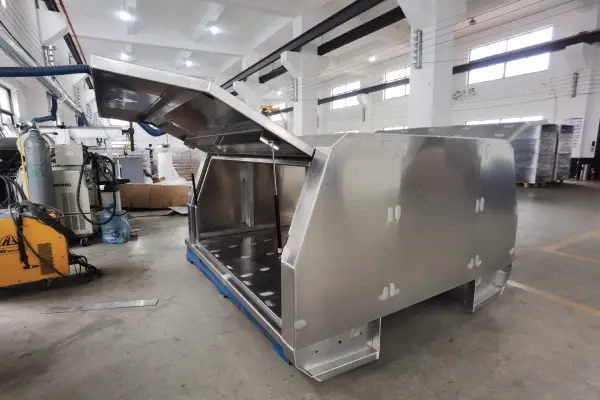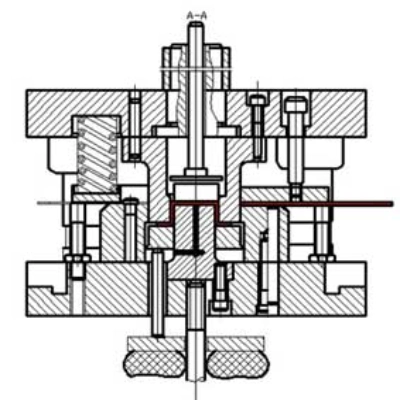
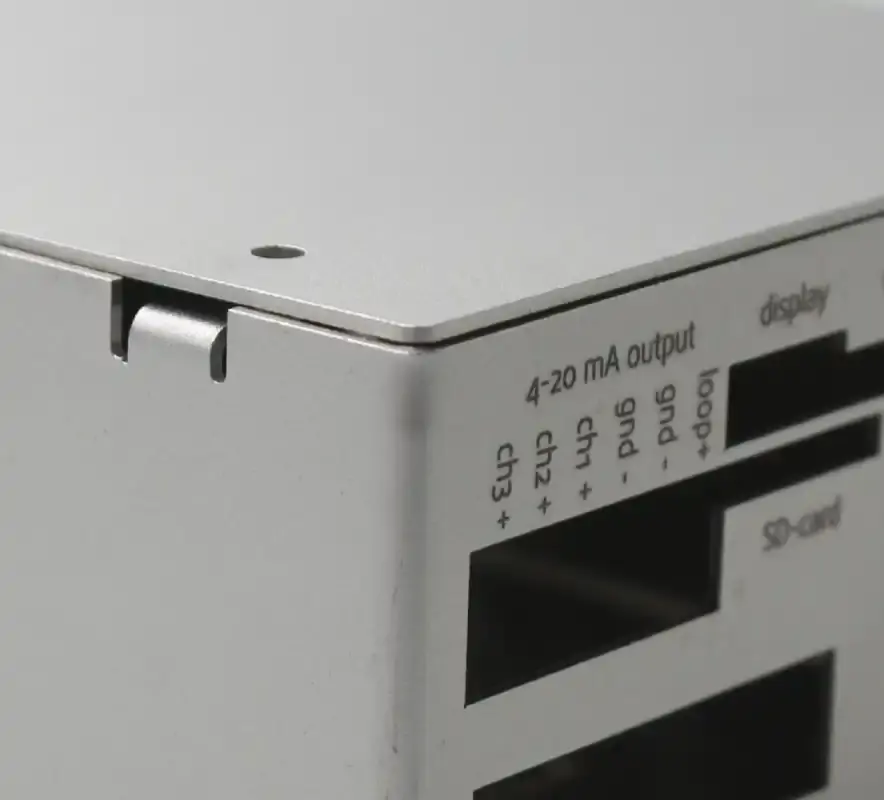
metal bending

custom sheet metal fabrication for aluminum Electrical enclosure manufacturing

DIN Rail Box:Basics and Different Types

In industrial automation and electrical control systems, we often use DIN rails, which are metal rails inside a din rail box, for mounting circuit breakers, relays, PLCs, power modules or other types of electrical components. Although DIN rails are relatively simple in design, they are very important for the operation, installation and maintenance of electrical equipment. Therefore, din rail box is a key component to ensure the safe and stable operation of electrical components, which not only fixes some important electrical components together, but also provides multiple functions such as containment and protection. In this article, we will discuss the basics of din rail box, introduce its main types, and analyze the small details to be paid attention to when selecting and installing it, which will help you to know and understand din rail box comprehensively! What is a din rail box A din rail box, also known as a DIN rail mounting box or electrical mounting box, is a […]

DIN Rail Box:Basics and Different Types Read More »

High quality sheet metal bending parts

Modular enclosures vs custom metal enclosures : How to Choose?

In the field of electronic equipment, industrial instruments, communication terminals, etc., metal enclosure is not only the core barrier of physical protection of the equipment, but also directly related to the adaptability of the equipment, production efficiency and cost control, and whether its selection is reasonable or not is crucial to the optimization of the project program. In the current market, custom metal enclosure and modular metal enclosure is very popular, but the two in the design logic, applicable scenarios and cost-effective differences are obvious, many project decision makers in the “on-demand customization” and “standardized module combinations” face difficulties in selecting the type between the In this article. The article will deeply analyze the core definition of custom metal enclosure and modular metal enclosure, and analyze the main differences between them through multi-dimensional comparison, aiming to provide you with a systematic decision-making guide to provide clear guidance for the selection of metal enclosure under different demand scenarios, and to help

Modular enclosures vs custom metal enclosures : How to Choose? Read More »

custom metal fabrication process

How to Prevent  corrosion of  fabricated metal products

Fabricated metal products are the cornerstone of modern industry and people’s daily life, from structural steel fabrication in public buildings to sophisticated daily tools, they are everywhere. However, custom fabricated metal products are susceptible to corrosion due to environmental factors, which often leads to performance deterioration, shortened service life, and even safety hazards and economic losses, so corrosion prevention has become a key aspect of protecting custom metal works. The article will systematically discuss the causes of corrosion of fabricated metal products, identify common types of corrosion, and introduce seven practical and efficient anti-corrosion methods in detail, aiming to provide you with a comprehensive guide to the protection of sheet metal products to help you maximize the service life of the products and protect their value and safety. What causes fabricated metal products to corrode? The nature of corrosion of fabricated metal products is the process of electrochemical corrosion reaction between the metal and the environment, which is a redox

How to Prevent  corrosion of  fabricated metal products Read More »

China Custom Galvanized steel precision sheet metal enclosure parts manufacturing

Custom sheet metal enclosure categories and applications: technical analysis and optimization

Sheet metal fabrication enclosure is an indispensable component in industrial manufacturing, and its function and design directly affect the performance, safety and service life of the equipment. In this article, we will classify sheet metal fabrication enclosures according to application scenarios, and analyze in-depth the advantages and disadvantages, design features, manufacturing difficulties and optimization solutions of each type of product, in order to provide practical references for engineers and purchasing decision makers. I. Industrial equipment control enclosures functional application Sheet Metal Enclosures are designed to protect precision electrical components and are widely used in automated production lines, power control systems and heavy machinery. Its high-strength structure can resist vibration, dust and liquid erosion (IP54/IP66 protection), and its modular internal layout facilitates the installation and maintenance of PLCs, inverters and other equipment. Typical scenarios include robotic arm control enclosures in manufacturing factories, power distribution boxes in energy facilities and signal cabinets in rail transportation. Through customized heat sinks, explosion-proof hinges and

Custom sheet metal enclosure categories and applications: technical analysis and optimization Read More »

custom metal cabinets power coating services

Ultimate Guide to Custom Metal Enclosures: How Sheet Metal Bending & Welding Enhance Your Project

In the fields of industrial equipment, electronic communication, new energy, etc., customized metal enclosures (customized metal cabinets) are the core components for protecting precision parts. Their performance depends directly on the precision of sheet metal bending and welding technology. In this article, we will analyze in depth how sheet metal processing technology creates durable metal enclosures with high strength and high precision, and provide selection guidelines for enterprises. Part I: Sheet metal bending technology – the cornerstone of precision metal enclosures 1.1 Sheet metal bending process From the design drawing to the finished product, the manufacture of precision metal enclosures involves the following key steps: Material selection: Cold rolled steel, stainless steel or aluminum alloy sheet thickness and ductility to match the application scenario; CNC Bending Programming: Bending angle control with ±0.1mm accuracy is achieved through computer numerical control (CNC) equipment; Rebound Compensation: Calculate the amount of rebound for different metal characteristics to ensure bending dimensional stability. Case: An industrial

Ultimate Guide to Custom Metal Enclosures: How Sheet Metal Bending & Welding Enhance Your Project Read More »

7075 aluminum CNC machining parts

anodic oxidation of metal parts

Anodic oxidation, the electrochemical oxidation of metals or alloys. In the real process, for aluminum alloy anodic oxidation, more, usually used in daily life, military industry, aerospace, communications equipment, and precision instrumentation manufacturing industry. Because of the characteristics of this process, the surface of the aluminum parts to produce a hard protective layer, so that the corrosion resistance of metal materials, wear resistance, decorative, insulation, as well as heat dissipation have been significantly improved. This article will discuss how anodizing works, its uses, material compatibility, and the advantages and disadvantages it has. What is anodic oxidation? Anodic oxidation, the electrochemical oxidation of metals or alloys. Anodic oxidation is an electrochemical process in which a dense oxide film is formed on the surface of aluminum and its alloys by means of an electric current to improve corrosion resistance, abrasion resistance and decorative properties. Depending on the electrolyte and temperature, it can be divided into acidic, alkaline, normal temperature and high temperature

anodic oxidation of metal parts Read More »

aluminum sheet metal bending services

Sheet metal bending technology: 10 essential and important knowledge

For the sheet metal manufacturing industry, having specialized manufacturing technology is one of the most important competencies. Superior manufacturing technology is demonstrated through the accumulation of extensive manufacturing experience, continuous technological updates, and advanced manufacturing equipment that optimizes the advantages of sheet metal bending in terms of low cost and high economic efficiency. In this article, Supro MFG’s team of senior sheet metal bending engineers, relying on 30 years of manufacturing experience, explains the technical knowledge and solutions of sheet metal bending that most designers are unaware of. 1.Types of bending molds Sheet metal bending tools (mold/dies) is one of the essential tools in the sheet metal forming process. Sheet metal bending molds are composed of upper and lower parts, with the upper mold representing the bending angle and the lower mold representing the forming angle. By applying pressure to the molds through the CNC bending machine, the sheet metal is pressed between the molds, and the sheet metal can

Sheet metal bending technology: 10 essential and important knowledge Read More »

China sheet metal fabrication services

About Sheet metal fabrication process

Cutting material: According to the unfolded graphics of the product design, use equipment or molds to cut the metal sheet, and pre-produce the required material size, which is helpful for the next sheet metal bending, deep drawing, sheet metal stamping and other sheet metal Forming work.Different cutting methods can be reasonably selected according to different materials, product requirements and quantity conditions. include: Laser cutting: Fast and efficient cutting of thin metal plates by laser beam, with flat cross section and no shape restrictions, suitable for large sheet metal parts, or cutting of complex shapes, but not suitable for high-thickness plates. Water jet cutting: suitable for thick metal plates, it can accurately cut complex shapes and neat sections, but the efficiency is low and the cost is high. Plasma cutting: suitable for cutting metal plates with a thickness of 10mm-50mm, it cannot be accurate, the section is not neat, and requires precision machining. Die blanking: It is suitable for cutting small-sized

About Sheet metal fabrication process Read More »

compound die stamping tools

Sheet Metal Bending Design Guide (Condensed)

Sheet metal bending is a manufacturing process that uses external pressure to plastically deform metal sheet materials to form a specific angle and curve shape. Commonly used sheet metal bending types are divided into: V-shaped bending, Z-shaped bending, back pressure Bending etc. The forming of high-quality sheet metal bending parts needs to refer to a variety of factors to avoid various quality risks, which requires rich manufacturing experience and technical knowledge. Supro MFG has been focusing on precision sheet metal bending parts for more than 25 years, providing a full range of manufacturing solutions for various industries around the world, including: product design, mold design and manufacturing, mass manufacturing of products, and surface treatment. But many times sheet metal designers do not take into account the actual production process, which makes the design of sheet metal parts too ideal, resulting in quality risks in the production process of products. Below I will introduce some common problems in the manufacture of

Sheet Metal Bending Design Guide (Condensed) Read More »

Scroll to Top