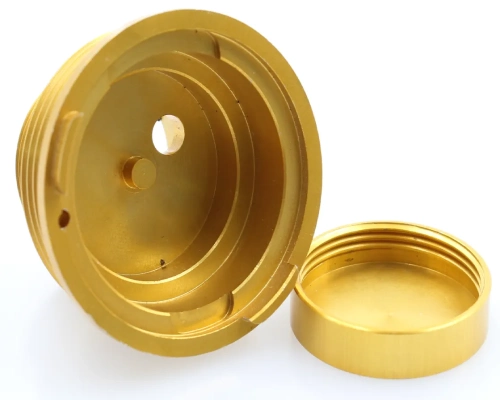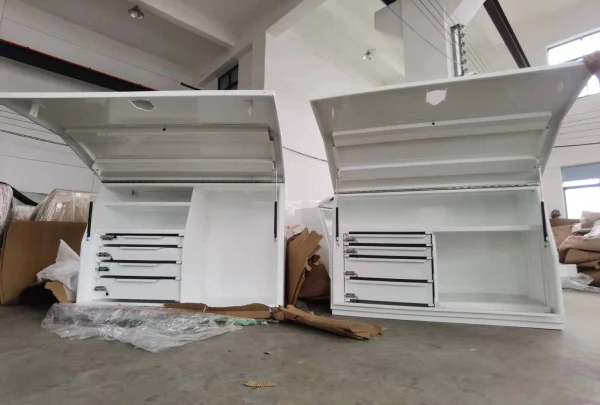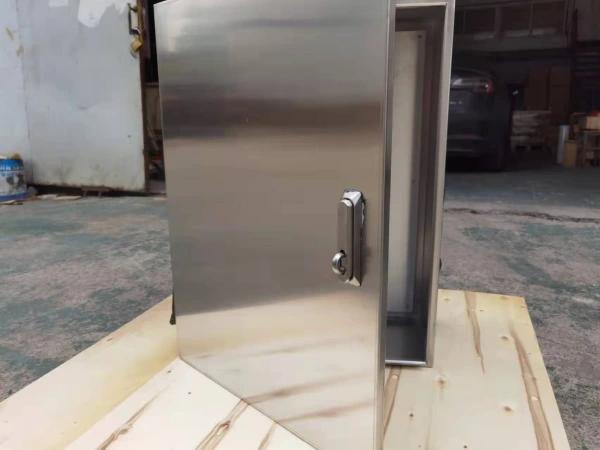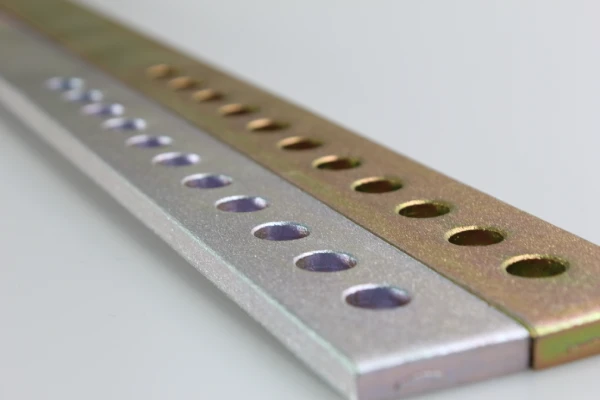

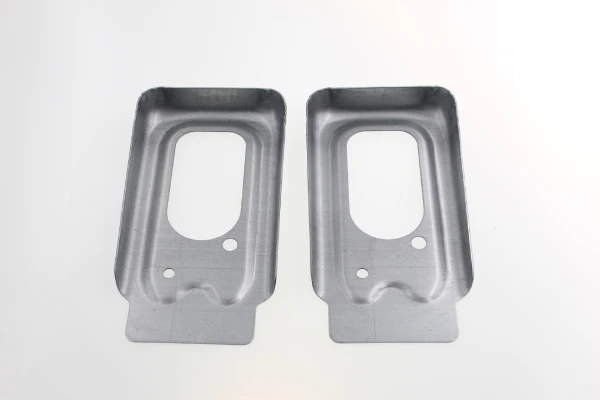
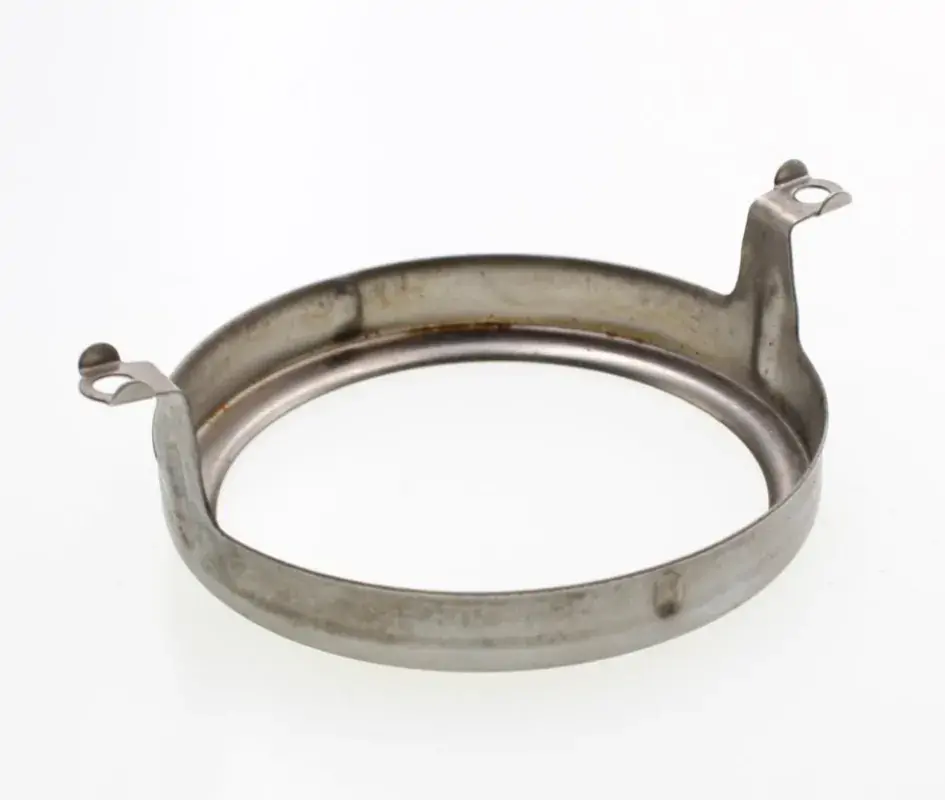
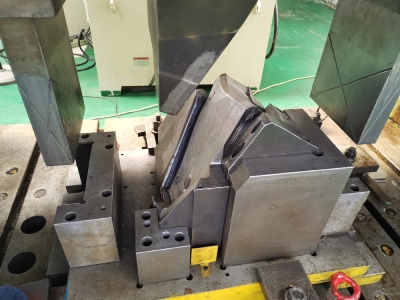
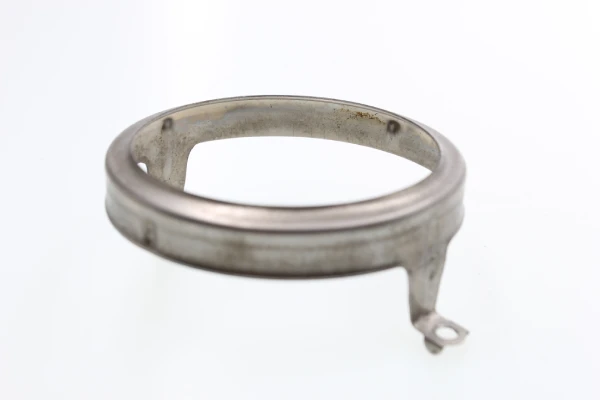
Modern commercial and household appliance housings must withstand extreme environmental conditions and provide an absolute physical and chemical seal to protect sensitive internal electronic components. Even the slightest dimensional deviation can directly affect the water- and dust-resistant performance of the final assembly. Standard continuous stamping processes often struggle to maintain strict geometric tolerances under high draw ratios, which is precisely where transfer die stamping stands out as the ultimate engineering solution.
By physically separating the metal blank from the restrictive continuous carrier strip at the initial station, transfer die stamping technology allows the material to flow naturally into the deep die cavity without external strip tension. This key capability significantly reduces localized wall thinning and the formation of structural microcracks during demanding deep-drawing operations.
For buyers seeking reliability in high-volume production, specifying the transfer die stamping process ensures robust structural integrity while optimizing the utilization of expensive raw materials. Ultimately, the use of custom transfer die stamping in the manufacture of complex home appliance housings avoids costly secondary sealing corrections and ensures zero-defect dimensional repeatability on demanding assembly lines.
Engineering Challenges in Deep Drawing of Home Appliance Housings
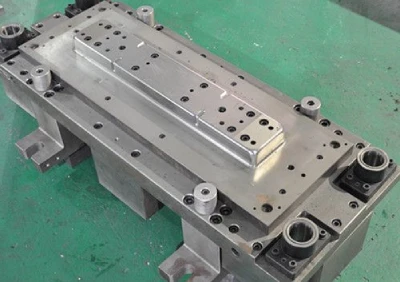
Deep drawing of equipment housings pushes metal alloys to their absolute yield limit. Uncontrolled material flow can lead to catastrophic wall thinning and structural failure. To overcome these severe forming challenges, procurement engineers are increasingly turning to transfer die stamping technology when selecting solutions for complex commercial housings.
Material Thinning and Structural Integrity Risks
When forming deep-drawn home appliance housings from high-quality materials such as 304 stainless steel or 5052 aluminum alloy, the extremely high draw ratio subjects the workpiece to immense tensile stress. As the punch forces the blank into the die cavity, the metal undergoes severe stretching, which in itself carries the risk of causing significant sidewall thinning and localized microcracks.
In standard coil feeding processes, the attached carrier strips generate counteracting tensile forces, thereby exacerbating this structural deformation. If the wall thickness falls below critical design thresholds, the fatigue life of high-pressure compressor housings or heavy-duty commercial pump housings will suffer catastrophic damage. By employing precision transfer die stamping, engineers can completely separate the blank prior to the deep-drawing stage. Without the resistance caused by the web, the material flows uniformly into the die cavity, thereby maintaining critical wall thicknesses.
For procurement teams sourcing pressure-resistant components, the transfer die stamping process ensures exceptional structural reliability and eliminates the risk of catastrophic failures in the field.
Overcoming Springback and Wrinkling in Metal Alloys
In addition to sidewall thinning, maintaining precise geometric tolerances during deep drawing is constantly threatened by springback and flange wrinkling. When advanced high-strength steel (AHSS) or work-hardening alloys are specified for robust commercial housings, the material’s natural elastic memory strongly resists permanent deformation. During the punch retraction phase, uncontrolled springback can severely distort critical mating surfaces, while improper material flow can cause significant wrinkling along the flange.
These dimensional deviations immediately compromise the sealing performance required for waterproof enclosures that strictly comply with NEMA or IP rating requirements. It is precisely at this point that the physical structure of custom transfer die stamping offers significant engineering advantages.
Independent stamping stations allow for highly customized blank holding pressures and enable precise bottom-coining operations, thereby permanently fixing the radius. As a result, procurement professionals rely on this process to ensure perfect gasket seating surfaces and defect-free automated assembly.
Why Transfer Die Stamping Is Superior to Continuous Stamping in This Field
Unlike progressive stamping processes, which are constrained by continuous carrier strips, transfer die stamping technology allows for the complete isolation of metal blanks. This physical isolation eliminates severe material drag, enabling engineers to perform extremely deep drawing of home appliance housings without localized tearing or deformation.
Transfer Die Stamping Completely Eliminates the Constraints of Continuous Carrier Strips
In traditional continuous stamping processes, metal blanks remain connected to a continuous carrier strip. This connection inherently restricts radial material flow during deep drawing, generating severe internal stresses that frequently lead to edge tearing. By adopting the transfer die stamping process, engineers completely separate the blanks at the initial shearing station. This advantage of being completely free from the constraints of the carrier strip allows high-strength alloys to flow naturally into the die cavity without opposing mechanical tension.
This physical separation ensures exceptional wall thickness consistency. Since the individual blanks can conform perfectly to the die without resistance from the strip edges, the advanced mechanical principles of precision transfer die stamping can easily achieve extremely deep drawing depths.
Ultimately, transfer die stamping technology enables manufacturers to produce deep-drawn shells that are seamless and free of localized thinning, thereby ensuring robust structural integrity.
Transfer Die Stamping Enables Multi-Axis Forming and Complex Flanging
Progressive dies are primarily limited to vertical, top-down forming actions; therefore, it is difficult to achieve complex lateral features without costly secondary operations. In contrast, custom transfer die stamping relies on automated three-axis servo systems to physically grip and move unsecured workpieces between independent stations. This robotic handling technology allows workpieces to be rotated, flipped, or repositioned to any optimal angle.
Consequently, engineers can integrate highly complex operations—such as multi-axis cam punching, reverse flanging, and deep chamfering—directly into a single stamping cycle.
For buyers managing complex home appliance supply chains, specifying the transfer die stamping process can significantly shorten production cycles. By integrating advanced flanging operations into a continuous, automated setup, transfer die stamping eliminates the substantial labor costs and cumulative tolerance errors associated with offline secondary forming, thereby delivering high-quality housings ready for direct assembly.
Economic and Quality Advantages of Transfer Die Stamping in Home Appliance Housing Manufacturing
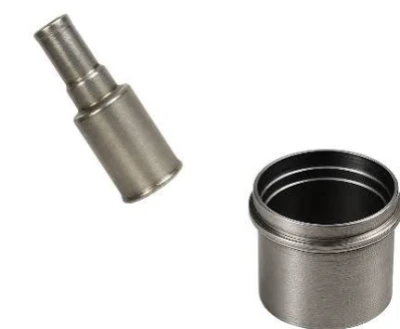
In high-volume home appliance manufacturing, optimizing material utilization and strictly controlling geometric tolerances directly determine a project’s overall profitability. Precision transfer die stamping not only ensures zero-defect housings by maximizing blank layout efficiency and eliminating secondary processing but also significantly reduces the cost per unit, thereby delivering unparalleled economic value.
Transfer Die Stamping Maximizes Material Utilization and Significantly Reduces Costs
In the highly competitive home appliance industry, raw material costs consistently dominate the final bill of materials (BOM). Standard progressive dies, which rely on continuous carrier strips to feed coil stock, generate excessive scrap. In contrast, the mechanical design of custom transfer die stamping completely eliminates this restrictive carrier strip. By shearing individual blanks at the first station, manufacturing engineers can achieve highly optimized, compact nesting layouts.
For home appliance housings manufactured from 304 stainless steel or specialized aluminum alloys, this reduction in scrap yields substantial financial benefits. By utilizing the transfer die stamping process, you can ensure that your budget covers only the net functional weight of the housing, rather than wasted structural scrap. Ultimately, the maximized material utilization achieved through transfer die stamping significantly reduces the long-term unit cost while ensuring the structural integrity of the final commercial appliance.
Transfer Die Stamping Achieves Superior Component Surface Finish
High-end home appliances require a flawless consumer-facing appearance right off the production line. Continuous coil-feeding processes typically drag heavy metal strips across the die, resulting in severe nicks, scratches, and micro-abrasions on the surface. However, the automated three-axis finger-type grippers inherent to precision transfer die stamping physically lift and transport individual workpieces between die stations. This non-contact transfer method prevents deep-drawn housings from being dragged across the die steel.
Furthermore, the independent stations in transfer metal stamping allow operators to apply localized, programmable lubrication to high-friction deep-drawing areas. This means the transfer die stamping process delivers flawless, mirror-like surface finishes. By eliminating costly and labor-intensive secondary polishing or heavy grinding operations, this advanced forming process not only significantly shortens time to market but also preserves the premium aesthetic appeal of your flagship home appliance models.
Transfer Die Stamping Strictly Meets NEMA/IP Rating Requirements for Dimensional Consistency
Commercial appliance enclosures—particularly outdoor HVAC units and industrial washing machines—must strictly comply with stringent NEMA and IP waterproofing ratings. Achieving this level of environmental sealing performance requires maintaining absolute geometric dimension and tolerance (GD&T) consistency across massive production volumes.
Because the workpiece is suspended, custom transfer die stamping avoids the flange warping caused by stress that is common in continuous strip stamping. The independent forming stations in this process enable highly precise bottom-coining and calibrated springback compensation on critical mating surfaces. For quality assurance engineers, this precise repeatability ensures that rubber gaskets are uniformly compressed along the perimeter of the stretched housing.
By ensuring flawless dimensional stability, the use of transfer die stamping technology protects home appliances from severe on-site leaks and costly product recalls, ensuring that every mass-produced component easily passes stringent North American environmental sealing certifications.
Only 4 steps
online custom metal fabrication parts
Contact our experts team and experience the efficiency and economic benefits of digital metal fabrication services.
Upload Design Files
STL , STEP (.stp), IGES (.igs), (.ZIP), or PDF.
Also be a sample or an idea
Quote & Design Analysis
Instant factory quotes and DfM reports, the most reasonable solution.
Manufacturing Begins
Digital processes can initiate order tasks within 24 hours.
On-Time Delivery
Keeping delivery promises, approved by 3000+ Global Company buyers.
Ideal Applications of Transfer Die Stamping in the Home Appliance Industry
When designing deep-drawn home appliance components that require significant metal displacement and a perfect airtight seal, traditional continuous strip forming methods often fall short. As a result, procurement engineers typically specify the transfer die stamping process for the production of heavy-duty motor housings and pressure-resistant pump housings. This process enables safe multi-axis forming without causing material fatigue or compromising structural integrity.

Compressor Housings and Heavy-Duty Motor Covers
The manufacture of high-pressure compressor housings and heavy-duty motor covers requires extremely high structural rigidity to withstand severe, continuous vibration and internal pressure. When forming these deep cylindrical geometries using robust materials such as deep-drawing grade steel, achieving uniform wall thickness presents a significant engineering challenge.
Because the automated three-axis system in precision transfer die stamping allows for the free manipulation of unsecured blanks, the material is not subjected to the intense restrictive stresses generated by continuous coil stock during flow. This physical freedom enables transfer metal stamping to achieve extremely high deep-draw ratios while completely avoiding localized sidewall thinning or the formation of microcracks.
This results in significantly enhanced product reliability. By employing the transfer die stamping process to manufacture these critical rotating equipment housings, manufacturers can ensure the production of seamless, stress-relieved housings that easily pass rigorous burst pressure tests, thereby substantially reducing warranty claims and catastrophic field failures in high-end HVAC equipment.
Waterproof Housings for Commercial Water Pumps
Housings for commercial water pumps operating in harsh, high-humidity environments must possess perfect airtightness and corrosion resistance. Forming these deep-drawn housings from high-strength alloys such as 304 or 316 stainless steel rapidly induces severe work hardening, making the continuous progressive forming process highly susceptible to flange wrinkling and dimensional distortion.
By isolating the workpiece, custom transfer die stamping enables engineers to apply localized holding pressure at points of peak material stress and perform precise bottom coining. This targeted, multi-stage forming process ensures that critical gasket mating surfaces remain perfectly flat and structurally distortion-free.
For procurement teams committed to achieving strict IP67 or NEMA 4X waterproof certifications, specifying the transfer die stamping process is a non-negotiable engineering safeguard. This process produces enclosures with sufficient depth, complete waterproofing, and perfect flange repeatability, thereby eliminating the need for costly secondary flattening operations and ensuring zero-leak performance in commercial piping equipment.
Partner with Supro MFG to Achieve Excellence in Transfer Die Stamping
At Supro MFG, we combine decades of deep-drawing expertise with state-of-the-art servo presses to fully leverage the economic and structural performance advantages of custom transfer die stamping. Our in-house engineering team conducts a rigorous Design for Manufacturability (DFM) review of your 3D CAD models to identify potential thin-wall risks before tooling begins.
By integrating precision springback compensation and localized blank holding into our transfer die stamping operations, we guarantee flawless sealed surfaces that meet NEMA and IP rating standards in every production run.
For technical specifications, customized project solutions, or OEM partnership inquiries, contact Supro today. Our professional engineering team is ready to provide you with a tailored application solution.