
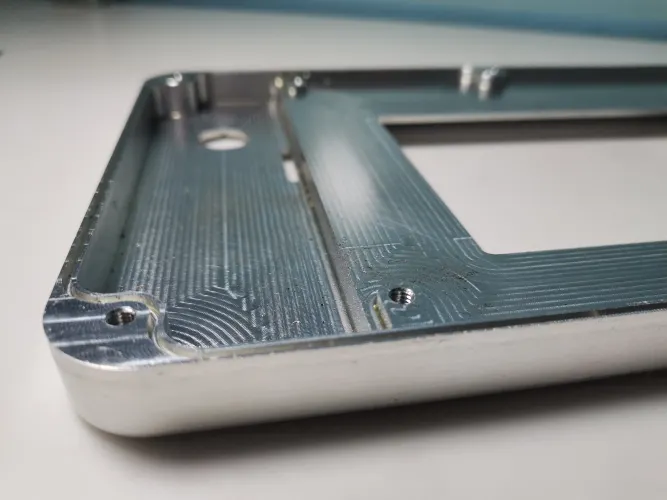
Stainless steel welding and fabrication are highly prevalent in industrial manufacturing and construction. Stainless steel sheets with thicknesses ranging from 0.5mm to 3.0mm are particularly favored for their exceptional corrosion resistance and structural properties. However, their inherent material characteristics—low thermal conductivity, high thermal expansion coefficient, and significant work-hardening tendency—pose significant challenges for subsequent welding and fabrication processes.
Practical experience reveals that thin-sheet stainless steel structures are highly sensitive to heat input, making them prone to defects such as warping, burn-through, and intergranular corrosion in the heat-affected zone during welding. Additionally, improper process control during cold working can lead to micro-cracks and surface damage, directly impacting component longevity and aesthetics.
To address these issues, establishing a systematic process control framework is essential. This paper delves into the core challenges of thin sheet stainless steel welding and fabrication, focusing on integrated strategies—including optimized welding methods, precision parameter design, rigid fixture application, and post-weld treatment—to achieve high-quality fabrication. These approaches deliver dimensionally stable, durable products for high-end applications.
Material Fundamentals: Metallurgical Properties and Physical Characteristics of Thin Sheet Stainless Steel Welding and Fabrication
The unique metallurgical properties and physical characteristics of stainless steel materials are central to determining the final quality of thin sheet stainless steel welding and fabrication. To achieve thin sheet stainless steel structural components with stable performance and flawless appearance, it is essential to thoroughly understand these properties and respond to them with precision.
Metallurgical Properties of Stainless Steel Sheet Materials
The metallurgical properties of stainless steel sheets (primarily austenitic systems like AISI 304/306L/316) directly determine their weldability and final performance. These materials feature chromium and nickel as primary alloying elements, forming a face-centered cubic crystal structure that provides excellent corrosion resistance. However, under the thermal cycling effects of stainless steel welding and fabrication, microstructural evolution occurs.
First, within the weld zone of stainless steel welding and fabrication, the formation and transformation of δ-ferrite significantly impact crack resistance. Its content must be controlled between 3% and 10% to prevent high-temperature cracking. Second, for molybdenum-containing stainless steel grades (e.g., 316L), molybdenum segregation accelerates the formation of intermetallic phases (e.g., σ phase), particularly in the heat-affected zone, leading to reduced toughness and corrosion resistance.
However, in thin sheet stainless steel welding and fabrication practice, we have observed that when friction stir welding super austenitic steel S32654, strictly controlling heat input effectively suppresses nitrogen loss and maintains austenite stability.
Influence of Physical Properties on Stainless Steel Welding and Fabrication
Thin sheet stainless steel exhibits low thermal conductivity and a high linear expansion coefficient, presenting core challenges in deformation control and residual stress management during thin sheet stainless steel welding and fabrication.
Its low thermal conductivity impedes rapid heat dissipation, creating concentrated high-temperature zones within the weld pool. Improper heat input control readily triggers burn-through and warping deformation.
The high expansion coefficient signifies that during custom stainless steel welding and fabrication, the material undergoes significant dimensional changes. When subjected to rigid constraints from surrounding structures, substantial tensile residual stresses develop. These stresses represent one of the fundamental precursors to stress corrosion cracking (SCC).
Hardening Sensitivity in Stainless Steel Welding and Fabrication
Thin sheet stainless steel, particularly austenitic and duplex grades, exhibits significant hardening sensitivity during welding and fabrication. This primarily stems from two mechanisms: metallurgical hardening and mechanical hardening.
Metallurgical Hardening: Sensitization of the heat-affected zone (HAZ) in thin sheet stainless steel welding and fabrication is a critical risk. Prolonged exposure within the critical temperature range (425–850°C) causes chromium carbide precipitation along grain boundaries, resulting in chromium depletion at these interfaces and subsequent intergranular corrosion.
Mechanical Hardening: Austenitic stainless steel exhibits extremely high hardening rates during cold working (e.g., shearing, bending). This causes strength to increase while ductility sharply decreases, elevating fracture risk in subsequent custom stainless steel welding and fabrication processes.
online custom metal fabrication parts
Only 4 steps
Contact our experts team and experience the efficiency and economic benefits of digital metal fabrication services.
Upload Design Files
STL , STEP (.stp), IGES (.igs), (.ZIP), or PDF.
Also be a sample or an idea
Quote & Design Analysis
Instant factory quotes and DfM reports, the most reasonable solution.
Manufacturing Begins
Digital processes can initiate order tasks within 24 hours.
On-Time Delivery
Keeping delivery promises, approved by 3000+ Global Company buyers.
Core Technical Challenges: Analysis of Difficulties in Thin Sheet Stainless Steel Welding and Fabrication
In thin sheet stainless steel welding and fabrication, we face several core technical challenges that directly impact product quality, performance, and overall cost.
Welding Distortion
The primary cause of distortion in thin sheet stainless steel welding and fabrication stems from the combined effects of its low thermal conductivity and high thermal expansion coefficient. Heat accumulates in the weld zone, leading to localized thermal buildup.
The material expands rapidly under heat but is constrained by surrounding cold regions. Upon cooling, significant residual stresses develop, ultimately manifesting as warping, angular distortion, or wave-like deformation.
Weld Formation and Defects
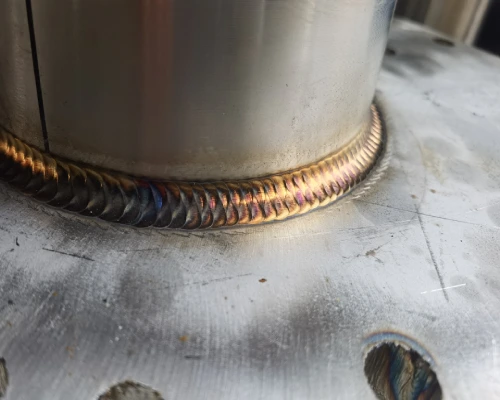
The weld formation window for thin sheet stainless steel welding and fabrication is narrow. Its low molten pool fluidity and high melting temperature impose extremely high demands on operator skill. Primary defect risks include:
- Burn-through: Caused by excessive heat input or too slow a welding speed.
- Lack of fusion: Resulting from insufficient heat input or too fast a welding speed.
- Back-side oxidation: Resulting from inadequate shielding gas coverage.
Surface Integrity of Stainless Steel Sheets
Stainless steel’s corrosion resistance relies on an intact, continuous chromium oxide passivation layer. During fabrication, multiple factors may compromise surface integrity:
- Welding spatter and arc scratches.
- Improper fixture marks.
- Contamination by foreign iron particles.
These damages are not merely cosmetic defects but also serve as initiation points for pitting corrosion. In chloride-containing environments, the corrosion resistance of damaged areas deteriorates significantly.
Structural Damage During Cold Working of Stainless Steel Sheets
During fabrication processes such as shearing, stamping, or bending, austenitic stainless steel sheets exhibit significant work hardening tendencies.
During bending operations, this can lead to cracking at relatively small bend radii. Additionally, uneven springback complicates angle control and compromises final dimensional accuracy.
Therefore, high-quality custom stainless steel welding and fabrication requires precise die design to compensate for springback and may necessitate adjusting the bending sequence and radii based on the material’s work-hardened state.
No design files? Let Supro MFG do it for you.
We often come across clients who have no professional design drawings and documentation, only a creative idea, which leads to the project being at a standstill.
If you are in this situation, then contact our team of experts.
Supro MFG, as an industry-leading custom metal fabricator, has an ever-experienced team of engineers who utilize their extensive fabrication experience and technical expertise to build your idea into a real product and create design files such as STEP/STP/SLDPRT/DXF/PDF/PRT/DWG/AI.
That’s what makes SUPRO MFG so great, and 2,000 corporate, entrepreneurial, artist, and other purchasers from around the world enjoy working with us and benefiting from our one-stop manufacturing services.
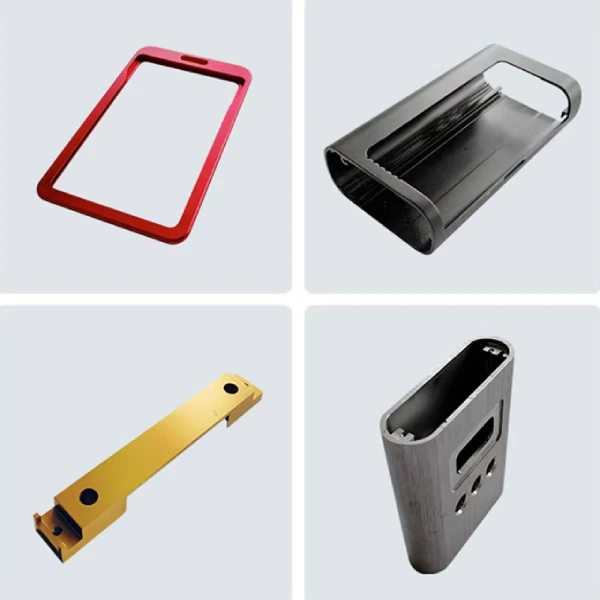
Systematic Solutions: Optimizing Stainless Steel Welding and Fabrication
Addressing the core challenges in thin sheet stainless steel welding and fabrication, we have designed a systematic solution integrating welding methods, parameters, and tooling. This approach provides the fundamental assurance for stable production of high-quality thin-sheet stainless steel components.
Welding Method Selection and Applicability Analysis
In thin sheet stainless steel welding and fabrication, the choice of welding method directly determines production efficiency and final quality.
Our experience indicates that pulsed GTAW (Gas-Tungsten Arc Welding) is the preferred solution for high-quality stainless steel welding and fabrication. By precisely controlling the base current, it reduces overall heat input by 30%-40%, effectively minimizing welding distortion.
For precision stainless steel welding and fabrication involving thicknesses below 1.0mm, Micro Plasma Arc Welding (MPAW) delivers a more concentrated arc and superior thermal control, reducing the heat-affected zone by 50% compared to conventional GTAW.
In automated production environments, laser welding demonstrates unique advantages, achieving welding speeds 3-5 times faster than traditional methods while producing nearly parallel weld bead profiles.
Precision Design of Welding Process Parameters
Thin sheet stainless steel welding and fabrication relies on precise quantitative control of process parameters. In practice, based on material thickness and joint configuration, we rigorously calculate to maintain heat input within a narrow window of 80–150 J/mm.
Key parameters for custom stainless steel welding and fabrication include:
- Welding current employs precise pulse control with a base/peak ratio of 1:3 to 1:4
- Shielding gas uses high-purity argon (≥99.996% purity), supplemented with 2-3% hydrogen when necessary to enhance molten pool fluidity
- Back-side shielding gas flow is strictly controlled within 8-12 CFM
Quality Assurance Measures for High-Quality Weld Formation
In precision stainless steel welding and fabrication, achieving high-quality welds requires systematic quality assurance measures. We employ specially designed copper backing plates and a modular fixture system. These tools not only provide rigid constraints but also function as highly efficient heat dissipation media, increasing weld cooling rates by approximately 40% and significantly refining the grain structure.
For full-penetration welds, we employ back-side protective drag shields during thin sheet stainless steel welding and fabrication to ensure the back-side finish meets the silvery metallic luster required by the AWS D17.1 standard. For filler material selection, we prioritize ultra-low-carbon welding wires (e.g., ER316L) with carbon content controlled at ≤0.02%, supplemented with appropriate molybdenum content (2.5-3.5%) to enhance pitting resistance.
Why choose Supro MFG's Custom metal enclosure Services
Provide the most cost-effective cost solution for manufacturing and assembling products, expanding product competitiveness.
a technical team specializing in custom shell manufacturing for more than 30 years.
Advanced Manufacturing Equipment: Industry-leading custom metal enclosure manufacturer with in-house sheet metal, die casting, precision machining workshops, and surface coating workshops.
ISO 9001-2015, PPAP III level, RoHS, NEMA, CE and other certified production standards.
24H*7 online English technical support: The professional English team responds quickly to users’ technical questions online at any time.
help users from product design, prototype, batch manufacturing, surface treatment, assembly and packaging, transportation and a series of value-added services.
With in-house mechanics and chemistry laboratories, it can quickly monitor manufacturing process quality control to ensure the delivery of high-quality products.
Accept to sign NDA documents to ensure that customers’ product information is protected.
Door-to-door delivery in customizable secure packaging after complying with the delivery details agreed with the customer.
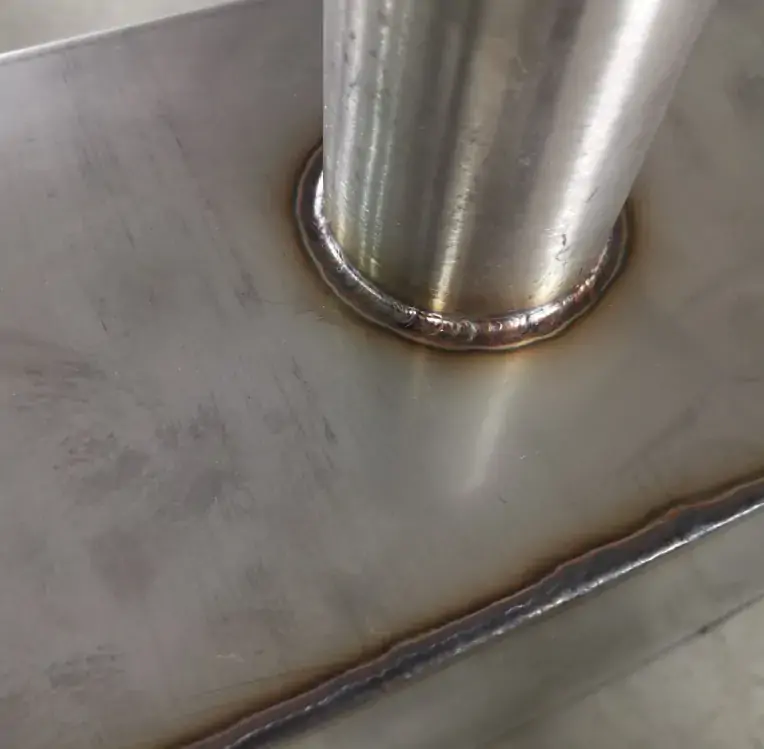
Quality Assurance in Stainless Steel Welding and Fabrication: Processing, Assembly, and Post-Treatment
Ensuring the final quality of stainless steel welding and fabrication components requires systematic control throughout the entire manufacturing chain. A comprehensive quality assurance system, spanning from material preparation to final treatment, guarantees that each structural component meets application requirements in dimensional stability, structural integrity, and corrosion resistance.
Precision Cutting
Precision cutting is the primary step in quality control, directly determining the reference accuracy for subsequent processes. In stainless steel welding and fabrication practice, we prioritize high-power fiber laser cutting systems, which can stably control cut widths within 0.15mm. This fundamentally eliminates the heat-affected zones and microcrack risks associated with traditional plasma cutting.
For thin sheet stainless steel welding and fabrication ranging from 0.5 to 1.2mm thickness, we minimize cutting heat input by precisely controlling pulse frequency and auxiliary gas pressure, preventing edge sensitization.
Rigid Constraint and Fixture Application
To address deformation during thin sheet stainless steel welding and fabrication, we employ a modular rigid restraint system. Its core is an internal support mechanism based on the three-point support principle, where hydraulically controlled support cylinders create radial support at the weld joint, effectively countering contraction stresses during welding.
For small-diameter thin-walled stainless steel welding and fabrication, we utilize specialized J-shaped positioning plates to ensure consistent axial restraint for multi-pass welds.
Welding Sequence and Heat Dissipation Strategy
In precision stainless steel welding and fabrication, a scientific welding sequence and heat dissipation control are critical for deformation management. In practice, we employ a symmetrical segmented back-welding process, dividing long welds into multiple segments of 80–120 mm length. This ensures uniform heat input distribution and prevents localized thermal accumulation. For interpass temperature management, we employ a real-time thermocouple monitoring system instead of traditional temperature pens, strictly maintaining interpass temperatures below 150°C.
Post-Weld Straightening and Surface Treatment
Post-weld processing aims to restore dimensional accuracy and ensure corrosion resistance. For unavoidable deformation during stainless steel welding and fabrication, we employ a high-frequency mechanical vibration stress relief system. This reduces residual welding stresses by 65-80% without inducing microstructural changes in the material.
Surface treatment employs a three-stage electrochemical polishing process (pretreatment → electropolishing → passivation) to precisely remove a 5-8μm surface layer. This reduces the surface roughness Ra value of stainless steel welding and fabrication components to ≤0.2μm while forming a chromium-rich passivation film 2.3-2.8nm thick. After acid pickling, a final rinse with softened water is performed to prevent calcium staining and contamination embedding in the oxide layer.
Conclusion
In summary, the final quality of thin sheet stainless steel welding and fabrication depends on the systematic integration of material properties, process control, and quality management.
Supro is a professional custom thin sheet stainless steel welding and fabrication manufacturer. Leveraging advanced equipment, extensive manufacturing experience, and a specialized engineering team, we provide perfect stainless steel welding and fabrication services to over 3,000 companies worldwide, along with genuine manufacturer quotes.
We deliver diverse products efficiently and on schedule. From product design and rapid sheet metal prototype fabrication to mass production, we provide expert technical support and exceptional quality. Furthermore, we offer one-stop manufacturing solutions and highly cost-competitive product supply!