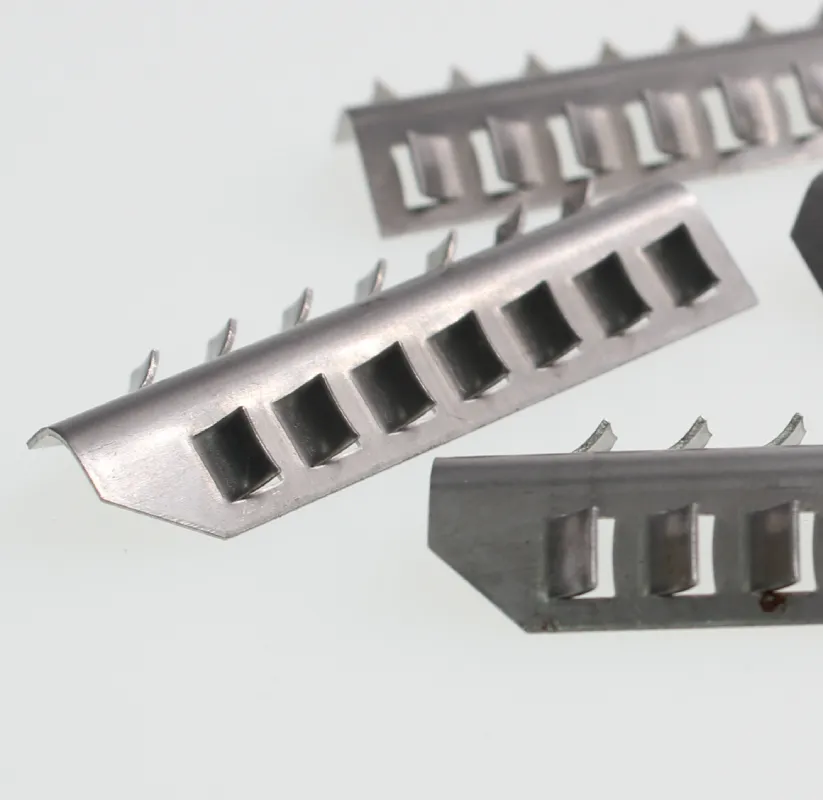
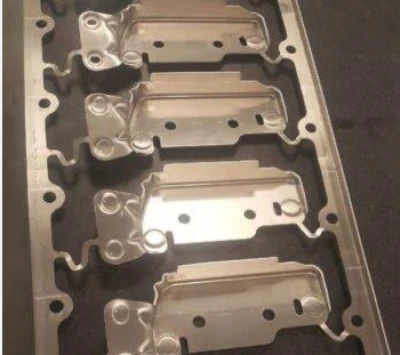

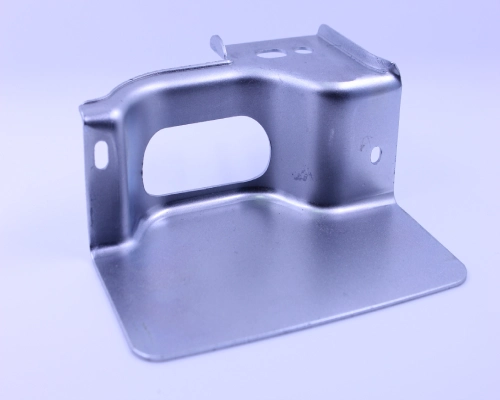
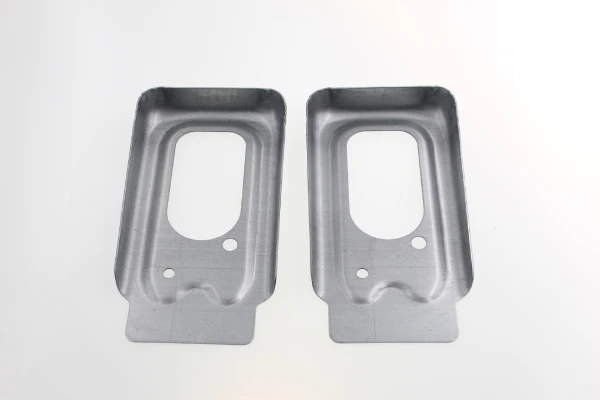
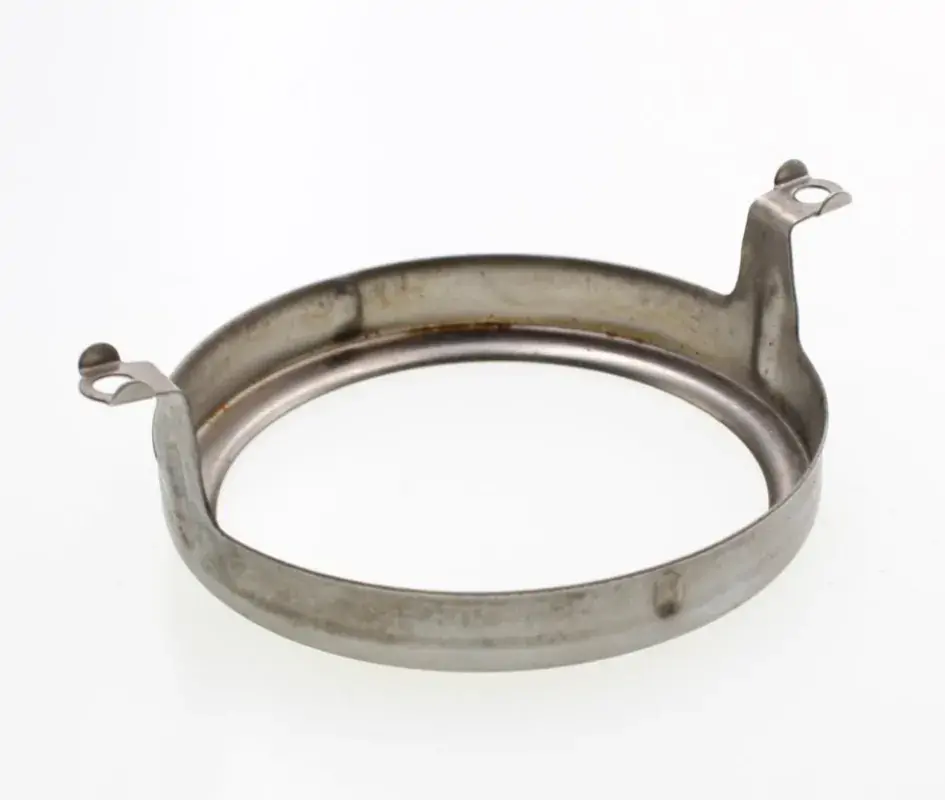
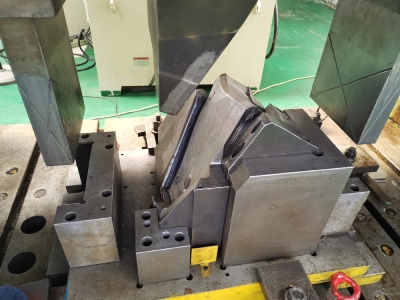
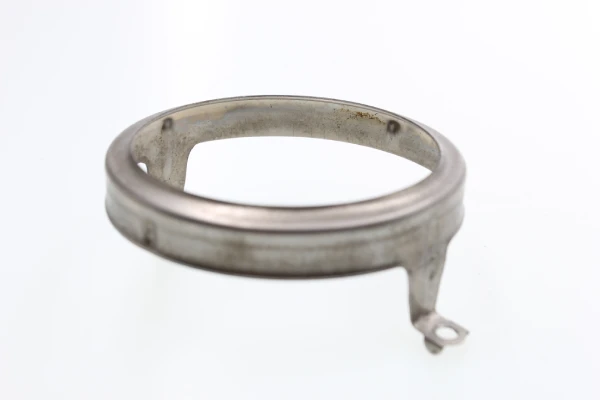
Heavy-duty embedded brackets and industrial mounting rails must withstand enormous static loads and continuous dynamic shear forces. When processing thick-gauge, high-yield-strength alloys—whether securing high-density server racks or aligning heavy machinery—the structural integrity of these thick-walled components directly determines the safety of the entire system.
When stamping thick-walled alloys, standard continuous stamping processes often result in severe strip warping and cumulative U-shaped spatial misalignment. This is precisely why transfer die stamping has emerged as the ultimate manufacturing solution.
By completely isolating the thick-walled metal blank from the carrier strip, the transfer die stamping process enables engineers to perform extremely high-tonnage bending and complex side-cam punching without causing destructive material warping. This independent part handling in precision transfer die stamping completely eliminates mechanical stresses caused by the strip, ensuring perfect dimensional tolerances and an absolutely zero-clearance fit.
Specifying transfer die stamping technology for critical infrastructure hardware not only guarantees perfect mechanical alignment and prevents catastrophic assembly failures but also ultimately reduces the unit cost in long-term, high-volume production.
Engineering Challenges in Stamping Thick-Walled Brackets and Guide Rails
Forming thick-walled brackets and guide rails requires extremely high stamping tonnage, which can cause catastrophic deformation of continuous carrier strip stock. This deformation can compromise critical geometric tolerances, such as U-Space alignment. To prevent such structural failures, procurement engineers should specify the use of a transfer die stamping process when sourcing thick-walled mounting hardware for critical infrastructure.
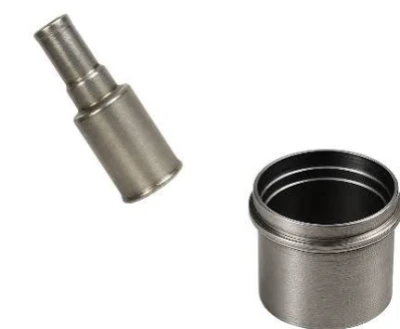
Addressing Enormous Stamping Tons and Continuous Strip Deformation
When forming thick-walled mounting rails or heavy-duty brackets, the immense mechanical forces required present a significant engineering challenge. Punching and bending thick-gauge carbon steel demands extremely high stamping tonnage. In traditional continuous stamping processes, these immense forces cause the continuous carrier strip to be severely stretched and twisted. This unpredictable strip deformation compromises accumulated geometric tolerances, directly leading to catastrophic misalignment of the U-Space in server racks.
To counter these destructive mechanical stresses, engineers have specified the use of transfer die stamping technology. By completely severing the heavy-gauge blank at the first station, this process completely eliminates the influence of the restrictive backplate. During high-tonnage punching, the individual workpieces remain in a completely stress-free state at all times. This means that precision transfer die stamping guarantees absolute dimensional stability, thereby avoiding the massive economic losses caused by damage to critical structural components due to spacing deviations.
Overcoming Springback in Thick-Gauge High-Strength Steel
In addition to severe strip warpage, manufacturing engineers face significant springback challenges when bending thick-gauge advanced high-strength steel (AHSS). When forming thick flat brackets into precise 90-degree angles, the metal’s high yield strength strongly resists permanent deformation. In continuous, strip-constrained processes, attempting to compensate for this springback by over-bending the material typically results in warping of adjacent components.
In contrast, the fully independent workstations in custom transfer die stamping provide unrestricted spatial freedom. This independence allows tooling experts to perform aggressive over-bending and high-pressure bottom coining directly on the blank. Since the material is not restrained, the transfer die stamping process can permanently set the bend radius without distorting the surrounding flanges.
For procurement teams requiring a perfect zero-clearance fit, precision transfer die stamping ensures that flush-mounted brackets maintain strict perpendicularity, thereby completely eliminating catastrophic assembly gaps that can occur in heavy industrial equipment.
Why Transfer Die Stamping Technology Dominates the Manufacturing of Heavy-Duty Hardware Components
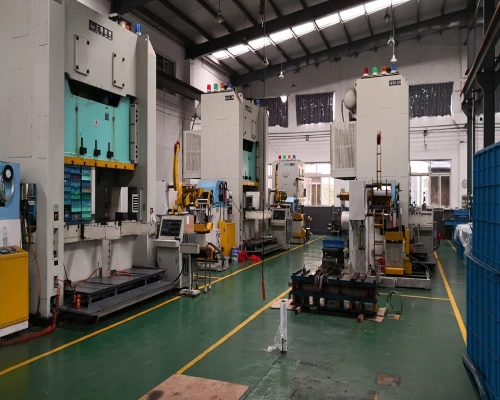
To achieve zero-defect tolerances in thick-walled hardware components, engineers must completely eliminate stress caused by ribs. By completely isolating the blank, custom transfer die stamping can safely withstand extremely high forming pressures, thereby enabling flawless multi-axis machining and providing unmatched structural integrity for thick-walled mounting systems.
Independent Blank Handling Enables Distortion-Free Bending
In thick-plate processing, attempting a sharp 90-degree bend while the metal is still connected to continuous edge strips inevitably leads to severe structural warping. When producing heavy-duty mounting rails, this tension caused by the edge strips irreversibly compromises the critical linear straightness required for the blind fits in server rack assemblies.
By employing a transfer die stamping process, manufacturing engineers can completely shear and separate the thick blanks at the initial tooling station. This thorough physical separation allows automated three-axis robots to handle the stress-free workpieces independently. Consequently, even when extremely high forming forces are applied, adjacent material is not pulled.
Specifying transfer die stamping technology ensures that robust, flush-mounted brackets feature perfectly flat mating surfaces and zero-distortion bending results. This advanced, independent processing method—inherent to the process—eliminates the need for costly secondary straightening operations, enabling structural components to achieve perfect alignment immediately upon exiting the press.
Transfer Die Stamping Enables Complex Side-Cam Punching and Extrusion
The production of industrial-grade embedded brackets typically requires complex side-cam punching, thread extrusion, and challenging thick-plate chamfering. Standard progressive die setups severely limit operational space, often forcing buyers to rely on expensive secondary CNC machining to process lateral features. In contrast, the automated transfer system in precision transfer die stamping can physically lift, rotate, and reposition heavy blanks to any optimal angle between independent stamping stations.
This unparalleled spatial freedom enables die experts to integrate complex side-cam punching and high-pressure thread extrusion directly into a single automated stamping cycle. This capability represents a significant economic advantage. By integrating these complex multi-axis operations, transfer metal stamping drastically reduces cumulative tolerance stacking errors and completely eliminates the costs associated with secondary CNC machining.
Ultimately, transfer die stamping technology enables the production of highly complex, ready-to-assemble mounting hardware at highly competitive unit prices.
Are you looking for reliable & cost-effective
China metal fabrication manufacturer
More than 150,000 OEM metal fabrication products delivered to 5,000+ global buyers.
And benefit from it!
Advanced Applications of Transfer Die Stamping for Embedded Brackets
Heavy-duty embedded mounting systems place extremely high demands on structural integrity and shear strength, as they must securely hold massive industrial loads. To ensure absolutely zero-gap alignment under severe dynamic loads, the transfer die stamping process is strictly employed to manufacture these brackets, which are critical in highly demanding commercial and architectural applications.
Commercial Server Racks and IT Infrastructure Cabinets
In modern high-density data centers, commercial server racks require heavy-duty brackets capable of securely supporting large enterprise-class IT enclosures. Achieving absolutely zero-clearance flush mounting is critical for preventing destructive high-frequency vibration resonance, which can severely damage sensitive hard drives and network hardware.
Since traditional progressive stamping processes struggle to address deformation issues in thick-gauge strip stock, procurement engineers strictly specify the use of precision transfer die stamping when manufacturing these critical structural nodes. By completely isolating the thick-walled blanks, this process ensures flawless dimensional accuracy and perfect 90-degree angles without generating residual material stress.
For IT infrastructure integrators, this precise geometric control ensures that extremely bulky server units can be seamlessly installed within racks. Ultimately, the use of custom transfer die stamping not only provides the rock-solid structural rigidity required to protect expensive data infrastructure but also significantly optimizes costs.
Alignment Systems for Heavy Machinery and Industrial Equipment
When assembling heavy machinery and automated production lines, the underlying alignment systems must be capable of withstanding extreme dynamic shear forces and continuous mechanical vibrations. Embedded mounting brackets used in these industrial environments provide critical, millimeter-precise parallel alignment for heavy-duty motors and robotic actuators.
Manufacturing these thick-walled components using continuous coil forming methods often results in severe flange warping. However, processing robust, high-strength steel alloys using transfer die stamping technology effectively prevents geometric deformation. The independent multi-axis stations in this stamping process perform high-tonnage bottom-coining, ensuring that mounting surfaces remain perfectly flat and eliminating residual stress.
This absolute structural stability is non-negotiable. By integrating the transfer die stamping process into your heavy-duty equipment supply chain, you can ensure that critical load-bearing brackets maintain their initial mechanical tolerances even after thousands of hours of high-intensity industrial operation.
Building Structure Installation and Exterior Wall Anchoring
Commercial building construction requires extremely robust structural anchors to safely suspend massive glass curtain walls and heavy metal exterior wall cladding. These flush-mounted architectural brackets must withstand extreme environmental wind loads and massive static loads while meeting strict aesthetic requirements for concealed, seamless installation joints.
Continuous dies often cannot handle the required thick materials and are prone to causing dangerous microcracks. Therefore, structural engineers require custom transfer die stamping to safely manufacture these critical load-bearing anchors.
The inherently stress-free material processing of transfer metal stamping eliminates internal fractures and maximizes the ultimate tensile strength of the mounting components. For architectural procurement teams, this ensures absolute safety compliance. Architectural components manufactured through precision transfer die stamping offer exceptional strength and precise angles, ensuring that commercial real estate projects maintain structural integrity over the long term while achieving flawless visual aesthetics.
Technical Specifications and Quality Control for the Installation of Transfer Die Stamping Guide Rails
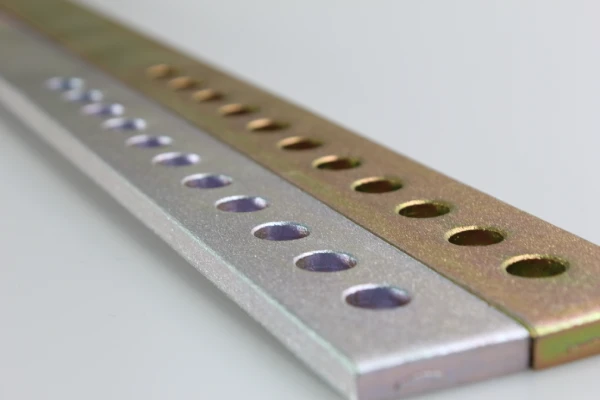
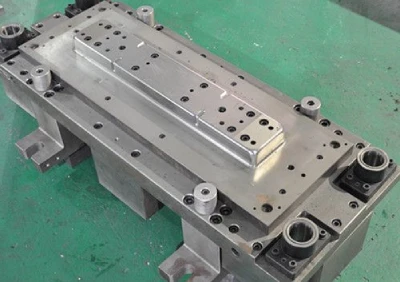
In the production of heavy-duty guide rails, strict dimensional repeatability and burr-free edges directly determine the success of automated assembly. To ensure flawless U-Space alignment and high consistency in Cpk values, we strictly adhere to the transfer die stamping process to guarantee that every component successfully passes rigorous North American PPAP inspections.
U-Space Alignment and Control of Dimensional Tolerances
The manufacture of heavy-duty server rack rails requires absolute precision in EIA-310 U-Space alignment. When stamping thick steel sheets using a continuous progressive die stamping process, the immense stamping force causes physical stretching of the load-bearing ribs. This tension results in cumulative pitch deviations along the entire length of the rail, thereby preventing the critical blind fits in IT enclosures from being achieved.
To thoroughly resolve these structural alignment issues, quality engineers strictly mandate the use of precision transfer die stamping. By completely isolating the heavy-duty blank from any restrictive ribs, this process ensures that each punching station operates on a completely stress-free workpiece. Consequently, transfer die stamping eliminates cumulative tolerance errors and ensures that every mounting hole maintains perfect Cpk consistency.
For procurement teams, maintaining dimensional tolerances through transfer die stamping technology is critical. This ensures that robust industrial guide rails align perfectly during automated assembly, thereby protecting sensitive data center hardware from destructive mechanical jamming and installation failures.
Superior Edge Quality and Burr-Free Ejection
In industrial hardware manufacturing, the edge quality of heavy-gauge mounting rails directly impacts the safety of automated assembly and long-term cable management. Traditional coil stamping processes often produce sharp, dangerous burrs and microscopic edge fractures when subjecting continuous metal strips to intense shearing and feeding forces. To achieve superior edge quality, modern manufacturing facilities have widely adopted the transfer die stamping process.
Since individual components are handled by precision servo-driven mechanical fingers, die engineers can seamlessly integrate dedicated trimming and fine-blanking stations into the stamping cycle. This localized edge treatment in transfer die stamping produces perfectly smooth, burr-free peripheries, completely eliminating the need for costly secondary roller polishing or grinding operations.
For quality assurance managers, specifying precision transfer die stamping ensures the production of defect-free guide rails—thereby protecting sensitive server cables from catastrophic cuts—while significantly optimizing the total cost per unit.
Partner with Supro MFG to Manufacture Heavy-Duty Hardware Components
To ensure a robust and reliable supply chain for thick-walled flush-mount brackets, it is essential to select a manufacturing partner with deep die-making expertise. At Supro MFG, our in-house engineering team optimizes your thick-walled hardware components using rigorous Design for Manufacturability (DFM) and Failure Mode and Effects Analysis (FMEA) frameworks.
By employing advanced transfer die stamping technology, we can easily withstand extremely high forming pressures, ensuring that critical mounting rails maintain absolute U-shaped gap alignment without deformation caused by ribs. Our transfer die stamping process strictly adheres to comprehensive PPAP (Production Part Approval Process) and First Article Inspection (FAI) protocols. This ensures that every zero-clearance bracket precisely meets your geometric tolerance requirements.
Submit your CAD files to Supro MFG today, and let us provide critical structural reliability for your next assembly project while effectively reducing your unit cost.