
In the field of custom metal stamping, dies represent a significant upfront capital expenditure for any industrial procurement department. When sourcing high-precision flat parts—such as bearing cages, thrust washers, or motor laminations—compound die stamping is often the preferred manufacturing method. By performing both punching and blanking operations simultaneously in a single stamping stroke, this process ensures exceptional concentricity and flatness—a level of precision that traditional progressive dies often struggle to achieve consistently.
However, compound die stamping technology also has its limitations. Integrating all cutting and punching elements into a single die station inherently increases the die’s structural complexity, which directly drives up initial engineering and machining costs. For procurement managers who need to balance strict quality standards with aggressive cost-reduction targets, reducing these upfront costs is critical.
The most effective strategy lies in early-stage engineering collaboration. By applying “Design for Manufacturability” (DFM) principles specifically tailored to custom compound die stamping, buyers can significantly reduce wire EDM machining hours and tool steel costs without compromising part functionality.
This article provides an in-depth analysis of the key cost drivers and reveals practical design optimization strategies to help you maximize your return on investment in precision compound die stamping.
Analyzing Die Costs in Compound Die Stamping
To effectively reduce capital expenditures, buyers must first understand the composition of the quote. In the compound die stamping process, die investment primarily depends on the grade of die steel, the labor hours required for high-precision wire-cut EDM, and the labor costs associated with complex die assembly. Let’s explore these key factors.
Key Cost Drivers in Die Manufacturing
When budgeting for custom compound die stamping, the core die costs primarily stem from material selection, precision machining, and labor costs for specialized technicians. Unlike simple blanking dies, these dies must accommodate both male and female cutting components simultaneously within a single, highly integrated station. This structural density requires the use of high-quality die steels, such as D2 or cemented carbide, to withstand repeated impacts.
However, the primary cost driver is machine tool processing time. Achieving the required minute clearances between the punch and the die body relies heavily on lengthy, slow-speed wire-cut EDM and precision CNC grinding. Additionally, the final die assembly—which involves meticulous manual alignment performed by experienced die makers—also adds a significant amount of labor hours.
The Relationship Between Cost and Precision
In custom metal stamping, there is a direct and inevitable correlation between specified part tolerances and die investment.
The primary advantage of compound die stamping technology lies in its perfect concentricity and exceptional part flatness. Since the punching of internal holes and the blanking of external contours occur simultaneously in a single stamping stroke, there is zero material indexing error. To ensure this level of precision, the die clearance—typically limited to just 5% to 8% of the material thickness—must be absolutely precise. Stricter part tolerances force die manufacturers to perform multiple precision wire-cutting and surface grinding operations, which cause machining costs to rise exponentially.
While progressive dies perform these operations separately, they often sacrifice true concentricity; in contrast, specialized dies for precision compound die stamping machine the precision directly into a single rigid die blank. Therefore, the purchaser is effectively paying in advance for guaranteed dimensional stability.
Reducing Mold Costs for Compound Die Stamping Through Design for Manufacturability (DFM)
Proactive Design for Manufacturability (DFM) is your most powerful tool for reducing costs. By optimizing part geometries early in the design process, engineers can reduce unnecessary wire-cutting time and minimize wear on stamping dies, thereby directly and significantly cutting initial capital expenditures.
Optimizing Dimensional Tolerances
Engineers often apply overly tight tolerances uniformly across an entire drawing, which inadvertently drives up quotes for custom metal stamping dies. Enforcing a ±0.001 tolerance on non-functional external edges will force die manufacturers to use ultra-fine wire-cutting processes and perform extensive contour grinding on the die blank.
To optimize the budget, apply strict tolerances only to critical quality dimensions (CTQs)—such as bearing fits or locating pins. Relaxing the tolerances for secondary dimensions to standard commercial tolerance ranges can significantly reduce the machining hours required for the die blank.
Since the compound die stamping process inherently maintains perfect concentricity between internal and external features in a single stamping operation, you are already assured of excellent alignment accuracy. By eliminating unnecessary precision requirements on the outer contour, the purchaser can significantly reduce the initial capital expenditure for custom compound die stamping without compromising the functional integrity of the final part.
Simplify the Geometry and Internal Features of Custom Metal Stamping Parts
Complex contours and extremely sharp internal corners are well-known cost drivers in custom stamping dies. Specifying zero-radius corners forces die manufacturers to use extremely fine EDM wires, which significantly reduces cutting feed rates and drives up machining costs. Furthermore, sharp geometries create severe stress concentrations on die components, thereby increasing the risk of punch breakage during high-volume production.
To mitigate this issue, engineers should apply generous fillets to all non-critical corners and notches—ideally larger than the material thickness. This specific DFM adjustment not only accelerates EDM processing speeds and extends the die’s overall service life but also significantly reduces maintenance costs. In the compound die stamping process, simplified and smooth geometries directly translate to a more robust die structure and save the procurement team on upfront die investment.
Standardization of Hole Sizes and Clearances
Specifying proprietary hole sizes or complex cutouts prevents manufacturers from using off-the-shelf standard die components. To maximize upfront cost savings in precision compound die stamping, be sure to align hole size specifications with standard punch catalogs.
Custom-ground punches not only substantially increase initial die costs but also cause costly delays during routine maintenance. Additionally, designers must adhere to regulations regarding the ratio of hole diameter to sheet thickness; if the specified punch diameter is less than 1.2 times the sheet thickness, the risk of punch instability and premature failure in the compound die stamping process increases significantly.
By standardizing punch diameters and ensuring adequate clearance, you enable die manufacturers to incorporate economical and readily available replacement parts into the die set. For custom compound die stamping, this is the quickest way to minimize both initial capital expenditures and long-term maintenance costs.
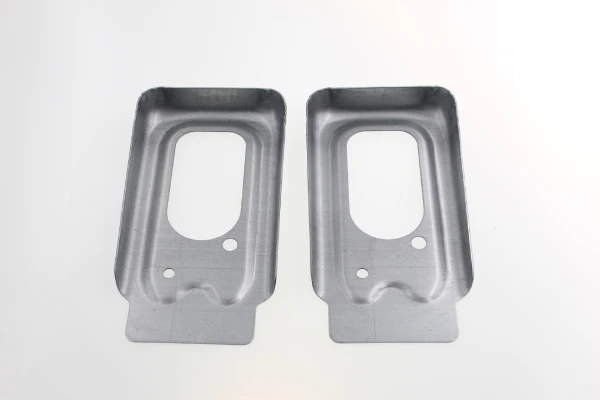
Material Selection for Compound Die Stamping: Striking a Balance Between Performance and Die Wear
The material specifications of the workpiece determine the extent of die wear. Processing high-yield-strength alloys using precision compound die stamping accelerates cutting edge wear, so expensive, high-quality tool steel must be used. Let’s explore how to strike a balance between the mechanical performance requirements of the part and die service life, thereby significantly reducing upfront capital expenditures.
How Material Hardness in Compound Die Stamping Affects the Selection of Die Steel
When a buyer specifies high-strength materials such as SUS304 stainless steel or Advanced High-Strength Steel (AHSS), this often inadvertently drives up the quoted price for stamping dies.
The shear strength of the workpiece directly determines the durability required for the cutting die cavity. When stamping soft cold-rolled steel (such as SPCC), die manufacturers can use standard, cost-effective D2 die steel. However, blanking harder alloys generates immense cutting pressure and friction, necessitating an upgrade to powder metallurgy (PM) steel or carbide inserts to prevent premature chipping of the cutting edges.
In custom compound die stamping, upgrading the die base to wear-resistant cemented carbide causes wire EDM machining hours and raw material costs to increase exponentially. In such cases, determining whether an alloy with a lower yield strength can meet the part’s functional requirements is a direct way to ensure a more streamlined die investment.
Mitigating Die Wear in Compound Die Stamping
Even when the most suitable materials are selected, abrasive wear remains a significant challenge in high-volume production. To address die wear in the compound die stamping process, engineers have applied advanced physical vapor deposition (PVD) coatings to the cutting punches. Coatings such as titanium nitride (TiN) or titanium carbonitride (TiCN) can significantly reduce the coefficient of friction and increase surface hardness, thereby preventing micro-welding (seizing) between the workpiece material and the die.
Although specifying a TiCN coating may slightly increase the initial cost of a custom compound die stamping quote, its long-term return on investment (ROI) is undeniable. It extends the intervals between scheduled die regrinding, significantly reduces maintenance downtime, and ensures consistent cutting edge quality.
For procurement managers responsible for high-volume compound die stamping projects, strategic investment in surface treatments is a proven engineering approach to minimizing total cost of ownership.
Are you looking for reliable & cost-effective
China metal fabrication manufacturer
More than 150,000 OEM metal fabrication products delivered to 5,000+ global buyers.
And benefit from it!
Output vs. Return on Investment for Custom Metal Stamping Dies: Making the Right Business Decision
Wise procurement decisions balance die capital expenditures against output over the entire lifecycle. Although precision compound die stamping requires a higher initial investment, its extremely high cycle efficiency and zero positioning error can significantly reduce the cost per unit. Let’s analyze how to reasonably amortize these costs.
Amortizing Mold Costs Through High-Volume Production
Purchasing professionals know that the initial capital expenditure for a mold is only half the equation; the true measure is the unit cost after amortization. Although the initial quote for compound die stamping technology may appear high due to its complex single-station mold structure, it still delivers significant economic returns thanks to its exceptional cycle efficiency.
Since all internal holes and external contours are cut simultaneously during each stamping stroke, direct labor and equipment runtime costs are significantly reduced. When planning high-volume production of 50,000 units or more, amortizing the upfront die cost over the total output reveals that the unit cost is far lower than that of laser cutting or turret punching. As production volume increases, the initial capital expenditure is gradually amortized, making the compound die stamping process an increasingly cost-effective strategy.
Comparison of Cost Efficiency Between Compound Die Stamping and Progressive Die Stamping
Selecting the correct die architecture directly determines a company’s long-term profitability. Purchasers typically weigh the pros and cons between progressive die configurations and precision compound die stamping. Progressive dies use multiple sequential stations to form complex 3D geometries, which causes die steel consumption and engineering hours to increase exponentially, leading to a significant rise in initial capital expenditures. Conversely, if your parts are strictly planar—such as precision motor laminations or thrust washers—the compound die stamping process is far more cost-effective.
It integrates all punching and blanking operations into a single, robust master die. This not only reduces die manufacturing costs compared to progressive dies but also ensures superior part flatness and absolute concentricity, as no material indexing is required between stations. For procurement teams, matching flat geometries with compound die stamping helps avoid over-engineering and ensures you do not pay progressive-die-level tooling costs for a two-dimensional part.
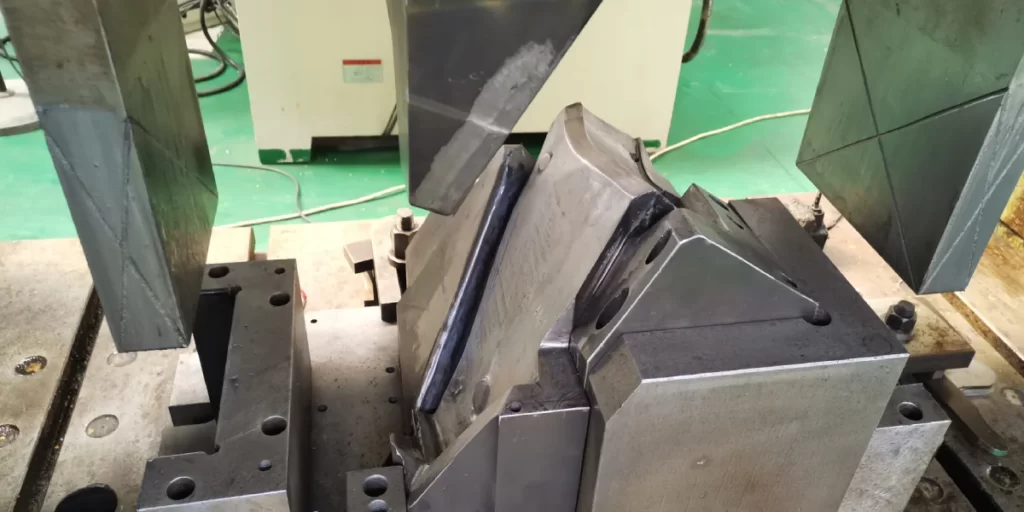
Optimize Tooling by Partnering with a Specialized Custom Metal Stamping Manufacturer
Selecting a custom metal stamping partner with robust in-house tooling capabilities is the ultimate safeguard against inflated capital expenditures. When buyers partner with manufacturers who outsource tooling to third-party toolmakers, they inevitably absorb hidden markups and suffer losses due to extended T1 trial runs.
Since the tight clearances required in precision compound die stamping demand rigorous table machining and precise die assembly, poor communication between the stamping supplier and an external die manufacturer often leads to costly engineering revisions. By partnering with a vertically integrated manufacturer, the procurement team can immediately receive proactive DFM (Design for Manufacturability) reviews before the first D2 steel billet is cut. This direct oversight allows engineers to instantly optimize wire-cutting parameters or modify punch geometries right on the shop floor.
Ultimately, entrusting custom compound die stamping projects to a supplier that assumes full in-house responsibility for die maintenance ensures a lower total cost of ownership for your stamping production runs.
Conclusion
In custom sheet metal fabrication, minimizing upfront tooling capital expenditures does not mean sacrificing part quality; rather, it requires implementing strategic engineering design as early as the drawing design phase.
As mentioned earlier, adopting forward-looking DFM practices—such as relaxing tolerances for non-CTQ parameters, standardizing punching dies, and eliminating zero-radius corners—can enable buyers to significantly reduce the wire-cutting time required for die fabrication in compound die stamping.
Furthermore, matching the material’s yield strength with appropriate die steel and surface coatings ensures that the die matrix can withstand the rigors of high-volume production cycles without unnecessary over-engineering. Ultimately, ensuring the lowest unit cost requires early collaboration with a vertically integrated supplier.
At Supro MFG, our in-house engineering team provides transparent and actionable DFM reviews designed to eliminate non-value-added processing time from your custom compound die stamping projects. Submit your PDF drawings or 3D CAD files to our engineering team today, and let us design a more streamlined and profitable custom metal stamping solution for you.