
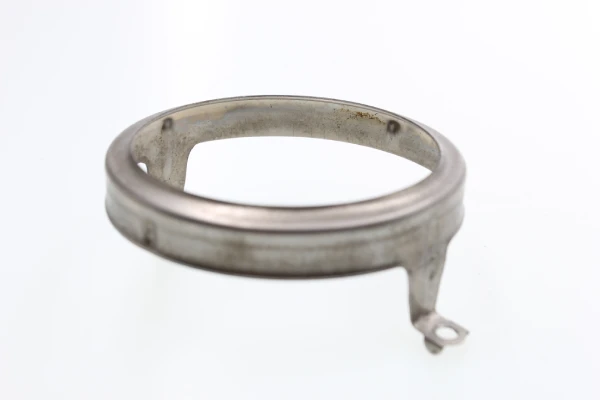
Although transfer die stamping technology offers unparalleled efficiency for high-volume, multi-feature parts, it also imposes strict mechanical threshold requirements. Unpredictable drops in yield—typically manifested as material tearing or dimensional springback—can severely disrupt assembly schedules and drive up unit costs.
Resolving these stamping defects requires not only superficial adjustments but also a rigorous approach to materials science and die physics. Tearing occurs when an alloy’s ultimate tensile strength decreases during tensile cycles, while springback stems from unresolved elastic recovery after forming. In high-precision transfer die stamping, mitigating these failure modes is essential for maintaining strict PPAP compliance and ensuring production stays within budget.
This article systematically analyzes the root causes of these two critical issues. We will explore how to eliminate tearing and springback through optimized die clearance, material selection, and die design based on finite element analysis (FEA), ensuring that your custom transfer die stamping projects consistently deliver zero-defect parts.
Mechanical Principles and Defect Formation Mechanisms of Transfer Die Stamping
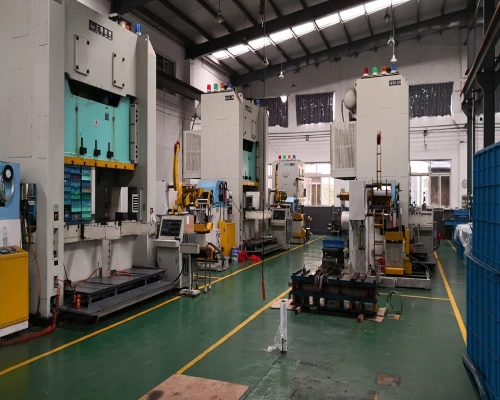
Understanding the mechanical principles behind the transfer die stamping process is crucial for evaluating a supplier’s true process capabilities. Unlike progressive dies, which rely on continuous carrier strips, this method uses mechanical automation to feed unconnected, discrete blanks sequentially through each forming station. While this independent material flow can meet the demands of complex deep-drawing geometries, it can lead to serious mechanical vulnerabilities if the die design is not well-engineered.
The fundamental mechanism behind common stamping defects lies in the delicate balance between the applied tonnage and the limits of the metal material. During the active deep-drawing cycle of precision transfer die stamping, if localized stresses exceed the alloy’s ultimate tensile strength (UTS)—due to excessive blankholder pressure or improper die clearance—material tearing will inevitably occur.
Conversely, when die pressure is released at the end of the stroke, uncontrolled residual stresses in the grain structure cause the metal to return to its original flat state—a geometric deformation known as elastic recovery, or springback.
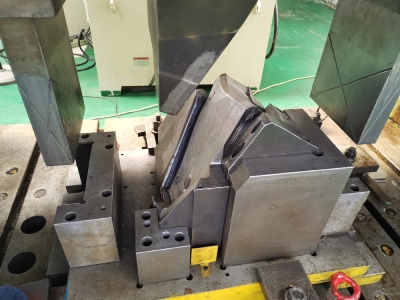
To mitigate these structural risks, it is necessary to collaborate with a transfer die stamping manufacturer that employs advanced finite element analysis (FEA) technology to predict and eliminate these stresses before the physical stamping die is machined.
Causes and Solutions for Tearing (Material Fracture) in Transfer Die Stamping
During the drawing process, material fracture occurs when localized stresses exceed the alloy’s ultimate tensile strength. To eliminate this critical defect in custom transfer die stamping, metallurgical specifications, material flow, and die mechanical properties must be precisely controlled to avoid unacceptable scrap rates.
Material Specifications and Grain Orientation Constraints
In sheet metal forming, the anisotropy of the metal determines how the material behaves under extreme stresses. When forming complex geometries, aligning the bending radius parallel to the material’s grain orientation can severely compromise structural integrity, leading to immediate fracture. The procurement team must verify that the specified alloy condition possesses sufficient ductility.
In high-volume precision transfer die stamping, a mismatch between the metal’s yield strength and the intended draw ratio can cause tearing before the stroke is complete. We recommend selecting deep-drawing steel grades with a high r-value (plastic strain ratio). By implementing rigorous raw material qualification and orienting the grain direction of the blank perpendicular to the primary bending axis, engineers can prevent the formation of microcracks and ensure optimal material flow throughout the transfer die stamping process, thereby permanently stabilizing your production yield.
Optimizing Die Clearance and Blank Holder Pressure
A significant portion of tear failures is caused by improper die alignment rather than material defects. If the blank holder pressure (BHP) is too high, it restricts the smooth flow of metal into the die cavity, leading to localized thinning that exceeds the physical limits of the alloy. Conversely, insufficient die clearance artificially increases friction and shear stress.
To address this issue in custom transfer die stamping, die clearance must be calculated strictly based on the material’s precise thickness and specific shear strength, typically maintaining a clearance ratio of 10% to 15% depending on the alloy’s temper. Through precise tonnage allocation and progressive cavity tuning, engineers can optimize material deformation and prevent fractures. A properly calibrated BHP ensures smooth stretching of the material during the multi-station transfer metal stamping process, thereby extending the service life of the die steel and eliminating costly scrap rates.
Friction and Lubrication Management in the Transfer Die Stamping Process
When processing discrete blanks through sequential forming operations, the management of thermodynamics and surface friction is essential. Without a continuous carrier strip, each individual station generates cumulative friction and heat. Insufficient lubrication disrupts the boundary layer between the metal sheet and the die steel, leading to micro-seizing and sudden material tearing.
For the extreme drawing depths common in precision transfer die stamping, standard free-flow coolant is completely inadequate. We employ a high-pressure boundary lubrication system that applies extreme pressure (EP) additives directly to critical stress zones. This targeted chemical barrier significantly reduces the coefficient of friction and dissipates kinetic heat. By stabilizing thermal parameters at each automated station, this advanced lubrication solution eliminates premature seizing and fracture, ensuring your custom transfer die stamping maintains strict dimensional tolerances even during full-load production.
Only 4 steps
online custom metal fabrication parts
Contact our experts team and experience the efficiency and economic benefits of digital metal fabrication services.
Upload Design Files
STL , STEP (.stp), IGES (.igs), (.ZIP), or PDF.
Also be a sample or an idea
Quote & Design Analysis
Instant factory quotes and DfM reports, the most reasonable solution.
Manufacturing Begins
Digital processes can initiate order tasks within 24 hours.
On-Time Delivery
Keeping delivery promises, approved by 3000+ Global Company buyers.
Advanced Troubleshooting of Springback in Transfer Die Stamping
Springback refers to geometric deformation caused by the release of residual elastic stress after forming. In high-volume transfer metal stamping, failure to properly address elastic springback can result in critical assembly tolerances not being met. Eliminating this dimensional instability requires strategic die compensation measures and rigorous analysis of material yield strength.
Physical Principles of Elastic Recovery
The springback phenomenon fundamentally depends on the delicate relationship between a metal’s yield strength and its elastic modulus. When the forming force is removed, the material naturally attempts to return to its original flat shape due to the release of residual internal stresses.
In high-performance transfer die stamping processes, this physical phenomenon becomes a critical process variable, particularly when machining high-strength low-alloy (HSLA) steel or specific grades of aluminum, as these materials exhibit a significantly greater elastic memory effect than standard low-carbon steel. Procurement teams must recognize that specifying thinner materials with higher tensile strength will directly exacerbate this geometric deformation. To mitigate this issue, the strain hardening index of specific alloy batches must be analyzed prior to production.
In high-speed transfer die stamping production, managing these metallurgical variables is critical for maintaining strict angular tolerances, thereby ensuring that parts fit perfectly for downstream assembly.
Tooling Compensation: Over-Bending and Bottoming Strategies
To counteract elastic springback, precision-engineered die interventions are required rather than passive machine adjustments. The primary method is over-bending, which involves intentionally machining the die cavity to a sharper angle than specified in the drawings, causing the metal to spring back precisely within the nominal tolerance range. However, for parts with tight tolerances produced using transfer die stamping technology, over-bending is sometimes insufficient.
In these scenarios, we implement bottoming—or coining—strategies. This technique applies concentrated pressure at the lowest point of the stamping stroke, inducing plastic yield across the entire cross-section and thereby effectively eliminating residual elastic stress.
While bottoming demands higher press capacity and robust tool steel design, it permanently stabilizes the part’s geometry. Integrating these mechanical compensation measures directly into the stamping die eliminates the need for expensive secondary restrike operations, thereby safeguarding your delivery schedule and ensuring cost-effectiveness per unit.
Application of Finite Element Analysis (FEA) in Die Design
Relying on physical trial-and-error methods to correct springback is a costly and outdated practice that disrupts product launch schedules. Modern manufacturing relies on finite element analysis (FEA) to digitally simulate the entire metal forming process before the first cut of die steel is made.
By inputting the mechanical properties of specific alloys, our engineering team can accurately predict the stress distribution and precise elastic springback at each station in the transfer die stamping process. This predictive modeling enables us to perform digital die compensation—adjusting bend radii and clearances—in a virtual environment.
For procurement teams, this upfront digital validation significantly reduces NRE (non-recurring engineering) costs and shortens die delivery cycles. Integrating FEA technology ensures that your custom transfer die stamping project passes First Article Inspection (FAI) during the first physical trial run, guaranteeing a smooth transition to mass production.
Integrating an Engineering Quality Control Framework into Transfer Die Stamping
To shift from reactive troubleshooting to proactive defect prevention, a rigorous quality system must be established. Integrating a proven engineering control framework directly into precision transfer die stamping operations stabilizes process capability (Cpk), ensures that procurement projects strictly meet dimensional requirements, and achieves zero-defect reliability.
Design for Manufacturability (DFM) in Transfer Die Stamping
Proactive defect prevention begins long before the die steel is milled, and is rooted in rigorous Design for Manufacturability (DFM). When evaluating blueprints for transfer metal stamping, our engineering team carefully reviews part geometries to eliminate stress concentration points that can lead to premature tearing. By standardizing bend radii, optimizing draw depth in relation to material thickness, and avoiding complex features near the blank edges, we can significantly reduce the likelihood of material fracture and unpredictable springback.
For procurement teams, conducting a comprehensive DFM review is the most cost-effective strategy for stabilizing production yield. By optimizing part designs to seamlessly align with the mechanical characteristics of precision transfer die stamping, we can prevent inherent defects from being incorporated into the die design, ultimately reducing the total cost of ownership and ensuring long-term production stability.
FAI and PPAP for Transfer Die Stamping Process Validation
Validating theoretical die adjustments requires actual measurement data; therefore, rigorous “First Article Inspection” (FAI) and “Production Part Approval Process” (PPAP) are indispensable. FAI provides a comprehensive dimensional layout to confirm that precise die compensation measures have successfully offset the springback effect. Once mass production begins, the PPAP framework—particularly the control plan and Process Failure Mode and Effects Analysis (PFMEA)—ensures that the custom transfer die stamping process maintains statistical capability (maintaining a Cpk value greater than 1.33).
By adhering to Level 3 PPAP documentation requirements, key variables such as Blank Holder Pressure (BHP) and boundary lubrication flow rate are permanently locked in. For the OEM supply chain, this level of engineering management ensures that every batch produced via precision transfer die stamping meets the same dimensional tolerances, effectively eliminating scrap rates in Incoming Quality Control (IQC) and preventing costly assembly line downtime.
Looking for a reliable custom sheet metal fabrication companies?
Talk To Supro MFG Expert Team
Contact us for competitive ex-factory prices,
and a full range of technical support services.
Partner with Supro MFG, Experienced Metalworking Experts
Basic machine adjustments alone are far from sufficient to address complex metallurgical defects such as tearing and springback; this requires a manufacturing partner with deep expertise in die engineering and materials science.
At Supro MFG, we do more than just produce to drawing—we are committed to ensuring manufacturing stability. Our engineering team utilizes predictive finite element analysis (FEA) modeling and rigorous DFM (Design for Manufacturability) protocols to eliminate the risks of elastic springback and fracture before your stamping dies are even cut.
By partnering with Supro MFG, you gain access to an ISO-compliant facility capable of consistently meeting strict PPAP (Production Part Approval Process) tolerance requirements during high-volume transfer die stamping production. We perform precise die compensation and manage multi-station boundary lubrication to ensure that every batch meets exact dimensional specifications.
Don’t put up with costly scrap rates and assembly disruptions caused by a subpar transfer die stamping process any longer. Contact Supro MFG’s engineering experts today to schedule a comprehensive DFM review for your most challenging custom transfer die stamping parts, ensuring a predictable, zero-defect supply chain.
Conclusion
Achieving consistent zero-defect production in complex sheet metal fabrication is by no means a matter of chance; rather, it is the direct result of strict engineering discipline. To overcome the issues of material tearing and dimensional springback in precision transfer die stamping, a comprehensive understanding of metallurgical physics and dynamic die mechanics is essential. When the ultimate tensile strength of the alloy is perfectly balanced with calibrated blank holder pressure (BHP) and precise die clearances, the risk of structural fracture is eliminated.
At the same time, eliminating elastic springback requires predictive finite element analysis (FEA) modeling and precise die compensation measures to ensure strict adherence to drawing tolerance requirements.
For procurement managers, the operational risks posed by improperly addressed forming defects are extremely high—this can directly lead to rejected FAI submissions, substantial losses due to assembly downtime, and a sharp increase in total cost of ownership. Partnering with a technologically advanced transfer die stamping manufacturer can transform this manufacturing risk into a competitive advantage.
By institutionalizing forward-looking frameworks such as DFM (Design for Manufacturability) and Level 3 PPAP (Production Part Approval Process), the transfer die stamping process evolves from reactive troubleshooting to high-volume production with statistical control capabilities.
Ultimately, optimizing every variable in custom transfer die stamping projects not only guarantees exceptional part integrity but also ensures supply chain resilience and stability.