
In precision sheet metal stamping, the ability to meet strict dimensional tolerances is typically not limited by the capabilities of the stamping press, but rather depends on the chosen die process. When manufacturing critical components such as server mounting rails or complex hardware brackets, traditional multi-station progressive stamping processes inevitably introduce cumulative positioning errors. Each material advance shifts the manufacturing reference point, causing minute deviations to accumulate continuously and ultimately affecting the alignment accuracy of the final assembly.
However, this is precisely where compound die stamping offers an irreplaceable engineering advantage. By performing both punching and blanking simultaneously in a single stamping stroke, compound die stamping technology fundamentally eliminates the variables associated with station-to-station transfers. Its unique inverted die structure locks in the geometric relationship between the internal hole features and the outer perimeter contour, ensuring absolute concentricity in a single operation.
For procurement managers who must meet strict GD&T (Geometric Dimensioning and Tolerancing) requirements, adopting the compound die stamping process means ensuring exceptional dimensional stability, superior flatness, and zero tolerance drift during high-volume production.
At Supro MFG, our engineering team employs this method to circumvent the inevitability of cumulative errors, ensuring that your custom parts fit perfectly every time.
Mechanism of Cumulative Positioning Error in Sheet Metal Stamping
Cumulative positioning error essentially stems from the continuous feeding of material. As the strip is transferred between consecutive workstations, gaps in the guide pins cause minute displacements. Unlike the precision of a single stamping operation in precision compound die stamping, these deviations accumulate exponentially, thereby severely compromising strict geometric tolerances during assembly.
How Multi-Station Transfer Introduces Discrepancies
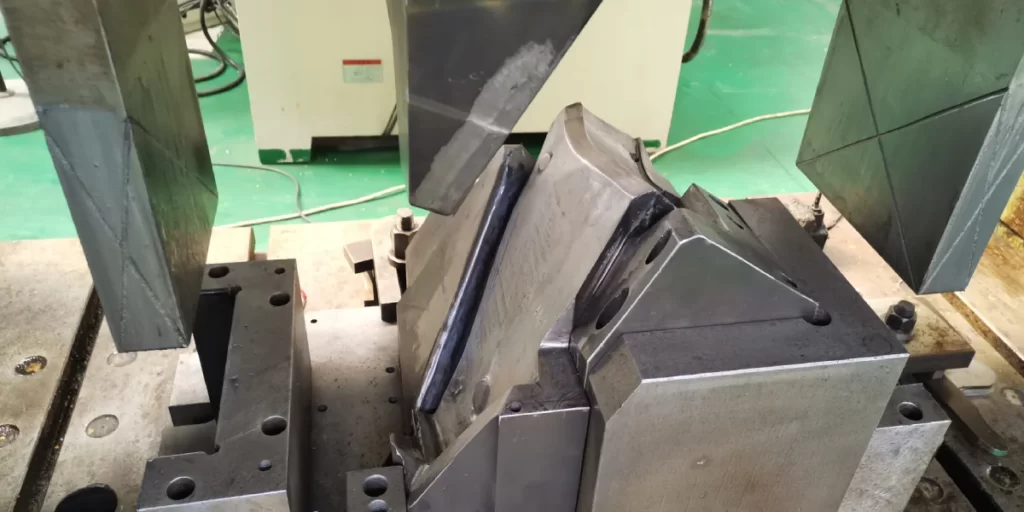
In traditional continuous stamping processes, metal strip passes sequentially through each station. This transfer relies on the interaction between guide pins and pre-punched holes to index the material. However, for practical mechanical reasons, a slight clearance must be maintained between the guide pins and the holes to prevent friction-induced jamming. This necessary clearance results in minute displacements during each stamping stroke.
If a part is punched at the second station and sheared at the sixth station, the displacement errors between these stations accumulate and amplify. By the time of the final shear, the geometric relationship between the internal features and the outer edge has already shifted.
Since compound die stamping performs all cutting operations simultaneously, it completely bypasses this transmission mechanism. Unlike progressive die stamping methods, custom compound die stamping prevents this multi-step feeding process from embedding cumulative positioning errors into the final part.
Impact on High-Precision Assembly Processes
For precision components such as precision enclosures or server mounting rails, tolerance accumulation is a nightmare on the assembly line. When cumulative positioning errors exceed acceptable GD&T (Geometric Dimensioning and Tolerancing) limits, mating parts fail to align.
This misalignment not only necessitates manual rework but also subjects metal structures to severe mechanical stress, driving up labor costs. Even a deviation as small as 0.1 millimeters can compromise tight modular integration. To eliminate these assembly bottlenecks, transitioning to the compound die stamping process is crucial.
Because precision compound die stamping locks the reference surface in a single stamping operation, it ensures that all mating features are stamped with perfect concentricity. For procurement teams prioritizing seamless automated assembly, adopting compound die stamping technology ensures absolute dimensional consistency and achieves a 100% first-pass yield on the production line.
Engineering Principles of Compound Die Stamping
The core advantage of the compound die stamping process lies in its single-stroke structure. By performing internal punching and external blanking simultaneously within a single station, this die configuration permanently locks the reference plane, thereby ensuring absolute concentricity of precision sheet metal parts.
Single-Stroke Operation: Simultaneous Punching and Blanking
The fundamental mechanical distinction of precision compound die stamping lies in its ability to complete both internal punching and external blanking simultaneously within a single, unified stamping stroke. In traditional progressive die setups, the metal strip moves between different stations, physically resetting its positioning reference each time. In contrast, compound die stamping technology condenses these cutting operations into a single powered process. The punch and die assembly act simultaneously on the stationary metal sheet.
Since the material remains firmly clamped at the same precise coordinate position throughout both cutting operations, the exact dimensional relationship between the internal features and the outer periphery is permanently locked in place. Ultimately, precision compound die stamping eliminates the mechanical drift associated with continuous feeding, ensuring that complex contours maintain precise geometric integrity as they exit the die.
Die Configuration and Exceptional Concentricity
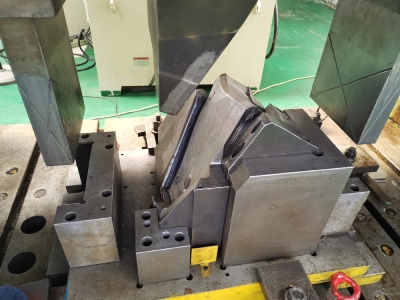
Achieving perfect concentricity requires a highly specialized die configuration, and this is precisely where inverted compound die stamping truly excels. In this specific setup, the die holder is typically mounted on the upper die base, while the main blanking punch is rigidly secured to the lower die base. This robust inverted configuration allows the internal punching punch to be precisely positioned inside the main blanking punch.
When the press is in operation, a heavy-duty stripper plate applies immense and uniform clamping pressure to the sheet metal before shear stress begins to act. This rigid clamping minimizes material warpage and limits inconsistencies in the fracture zone. As a result, custom compound die stamping ensures exceptional concentricity between the inner hole and the outer edge. For procurement engineers, this structural rigidity translates to perfect dimensional repeatability during high-volume production.
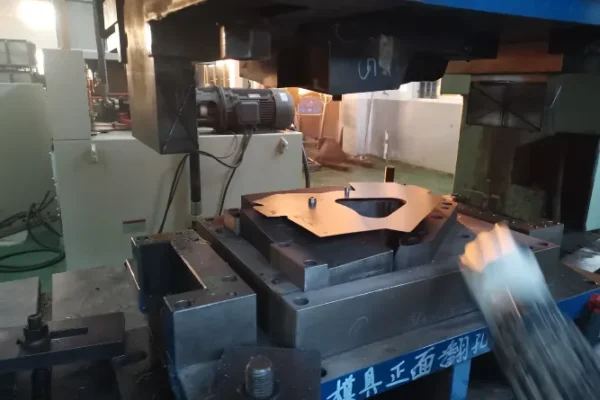
How Compound Die Stamping Eliminates Cumulative Errors
The compound die stamping process performs all geometric cutting operations without moving the metal strip, thereby fundamentally eliminating the variables associated with transfer between stations. This static clamping structure eliminates dimensional drift and ensures the strict flatness and absolute positioning accuracy required for mission-critical hardware components.
Zero Station-to-Station Transfer Variables
In precision metalworking, displacement is the number one enemy of accuracy. The primary cause of tolerance accumulation is the physical displacement of the metal strip between consecutive operations. By adopting compound die stamping technology, we reduce station-to-station transfer variables to absolutely zero. Unlike methods that rely on guide pins to repeatedly reposition the material across multiple consecutive stamping stages, the metal coil remains completely stationary throughout the critical cutting stages.
Since the punching of the inner hole and the blanking of the outer contour occur simultaneously at a single fixed reference point, there is absolutely no mechanical possibility for micro-displacement to occur. Precision compound die stamping mathematically eliminates the cumulative drift that plagues multi-step transfer dies, ensuring that every bracket or chassis component manufactured maintains perfect dimensional consistency with the original CAD model.
Compound Die Stamping Maintains Exceptional Flatness and Dimensional Stability
In addition to positioning accuracy, high-end hardware assembly requires strict control of geometric flatness. Standard continuous punching processes often release internal material stresses, causing sheet metal to warp, bend, or deform. The compound die stamping process, with its unique die structure, actively counteracts this physical deformation.
During the stamping cycle, before the shearing punch makes contact with the blank, heavy-duty ejector blocks and precision stripper plates apply substantial and uniform clamping pressure to the blank. This rigid clamping mechanism securely holds the material in place throughout the shearing process. As a result, custom compound die stamping completely prevents edge deformation and structural deflection. Specifying this metal stamping process is a proven strategy that ensures exceptional dimensional stability, significantly reduces costly secondary flattening operations, and guarantees seamless component fit.
Only 4 steps
online custom metal fabrication parts
Contact our experts team and experience the efficiency and economic benefits of digital metal fabrication services.
Upload Design Files
STL , STEP (.stp), IGES (.igs), (.ZIP), or PDF.
Also be a sample or an idea
Quote & Design Analysis
Instant factory quotes and DfM reports, the most reasonable solution.
Manufacturing Begins
Digital processes can initiate order tasks within 24 hours.
On-Time Delivery
Keeping delivery promises, approved by 3000+ Global Company buyers.
Compound die stamping strictly complies with North American and European tolerance standards.
The stringent Geometric Dimensioning and Tolerancing (GD&T) frameworks in North America and Europe require an extremely high level of process reliability. By eliminating mechanical variables, the compound die stamping process maximizes the Cpk value. This single-step stamping process ensures that high-volume production consistently meets the most stringent international dimensional tolerance standards without the need for secondary machining.
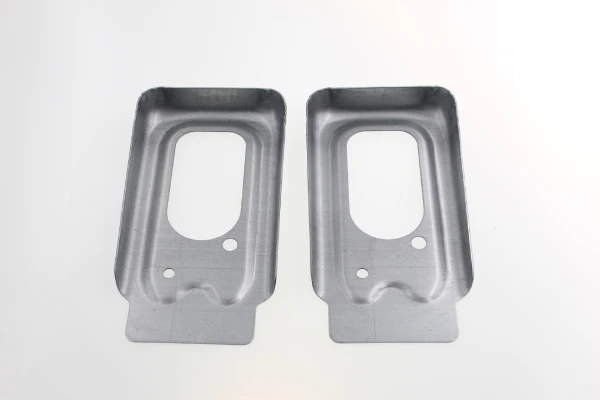
Statistical Process Control (SPC) in Compound Die Stamping
Traditional progressive dies inevitably introduce minor fluctuations at each transfer step, which negatively impact the standard deviation of critical dimensions. Since compound die stamping technology completes all punching and blanking operations simultaneously in a single stamping operation, it significantly reduces process variables. This static processing environment enables Supro MFG to maintain a highly concentrated data distribution, consistently achieving Cpk values far exceeding the stringent industry benchmark of 1.33.
When assessing supplier risk, quality engineers prefer the compound die stamping process because it guarantees zero defects in first-article inspection (FAI) and ensures long-term statistical process control that consistently meets strict international geometric tolerance standards over millions of cycles.
Material Considerations and Shear Edge Quality
To meet stringent European and American standards, exceptional edge quality is also required, particularly regarding the ratio of polished to fractured areas. Different materials—ranging from high-strength stainless steel to softer aluminum alloys—react differently to shear stress. The precise die clearance control and substantial, uniform clamping pressure inherent in custom compound die stamping perfectly optimize this material deformation.
By tightly constraining the metal at the precise moment of shearing, precision compound die stamping maximizes the smooth polished area and significantly reduces microcracks or rough burrs. For procurement teams, specifying the compound die stamping process means obtaining high-quality, burr-free parts directly from the stamping press. This exceptional shear edge quality not only completely eliminates the cost of secondary deburring operations but also strictly meets international functional requirements.
Supro MFG’s Expertise: Achieving High Precision in High-Volume Compound Die Stamping Production
At Supro MFG, our die engineers combine rigorous DFM specifications with the selection of high-quality die steel. By custom-designing robust and durable die structures, we guarantee repeatable precision over millions of stamping cycles. Even in your most demanding high-volume production runs, precision compound die stamping delivers zero-defect accuracy and absolute geometric precision.
Die Investment Strategies for Optimal Return on Investment
Although the initial non-recurring engineering (NRE) costs for the compound die stamping process are typically higher than those for standard progressive dies, procurement teams must evaluate the total cost of ownership (TCO).
At Supro MFG, we advise our customers that, for high-volume production, compound die stamping delivers an unmatched return on investment. By completely eliminating cumulative positioning errors, this tooling strategy significantly reduces scrap rates and prevents costly assembly line downtime caused by non-conforming parts.
Furthermore, since precision compound die stamping produces perfectly flat, concentric parts in a single stamping operation, there is no need for costly secondary flattening or hole reaming processes. Throughout a product’s entire lifecycle, the mathematical certainty and zero-defect output of the compound die stamping process enable rapid amortization of the initial die investment, ultimately reducing the true unit cost for our global partners.
Compound Die Stamping Case Study: Mounting Rails and Precision Brackets
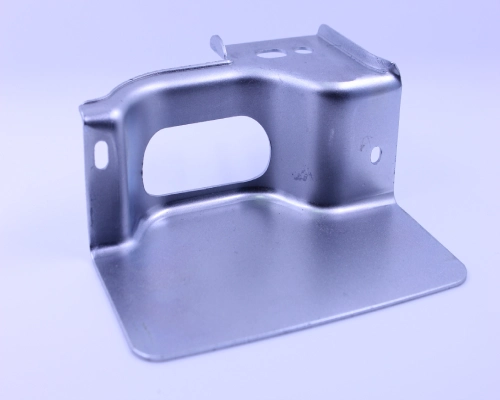
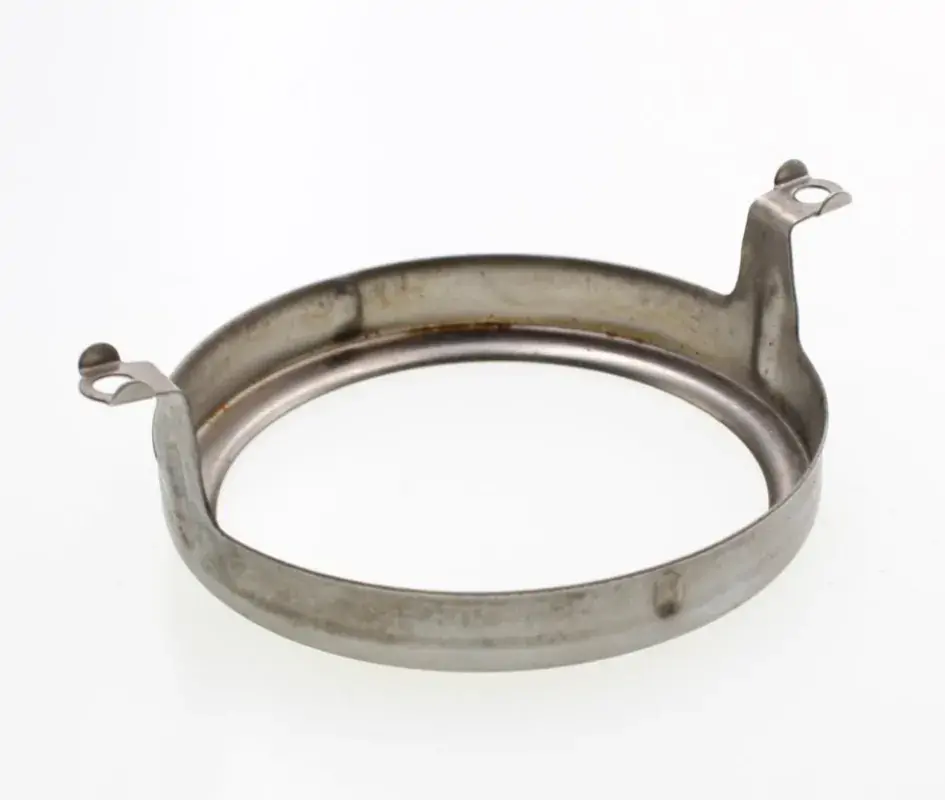
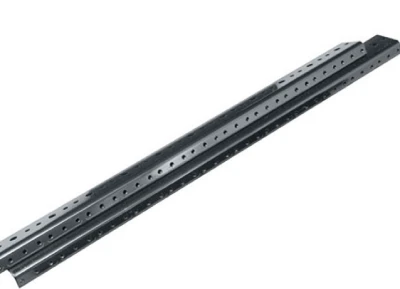
A recent collaboration with a North American data center hardware supplier perfectly illustrates this advantage of compound die stamping technology. The customer faced significant bottlenecks in the assembly of server rack mounting rails and precision brackets. The previously used continuous stamping batch production suffered from unacceptable tolerance accumulation and micro-cracks along the sheared edges. Supro MFG redesigned the manufacturing process by implementing a custom compound die stamping solution.
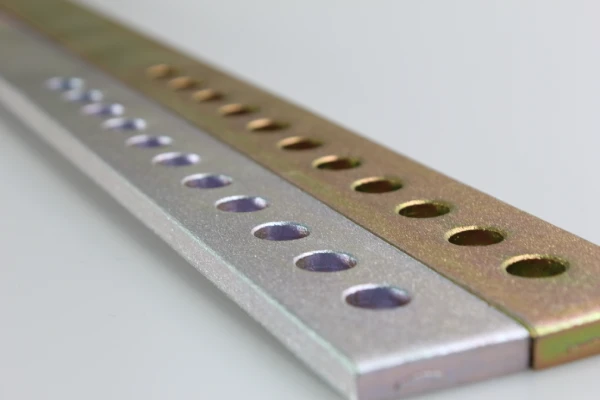
By simultaneously punching through a dense array of mounting holes and cutting the outer contour, we permanently locked in the geometric reference. This robust stamping method not only eliminated cumulative positioning drift but also optimized shear stress, completely preventing microcracks in high-strength steel. Ultimately, a 100% first-pass yield was achieved during the final chassis assembly process.
Conclusion
In the demanding field of precision sheet metal fabrication, tolerating cumulative positioning errors is no longer a viable option for high-end hardware assembly. The transition from traditional continuous turret stamping to the compound die stamping process is a fundamental engineering solution to address the issue of tolerance accumulation. By integrating internal punching and external blanking into a single, fixed-force process, we have mathematically eliminated the inter-station variables that cause dimensional drift.
For procurement teams sourcing critical structural components such as server mounting rails, adopting compound die stamping technology ensures exceptional concentricity, superior flatness, and a zero-defect first-pass yield during final integration.
At Supro MFG, our die engineers are ready to conduct a rigorous DFM analysis for your next project. Partner with us to implement a robust compound die stamping architecture, ensure zero-defect precision, and significantly optimize your total cost of ownership in high-volume production.