
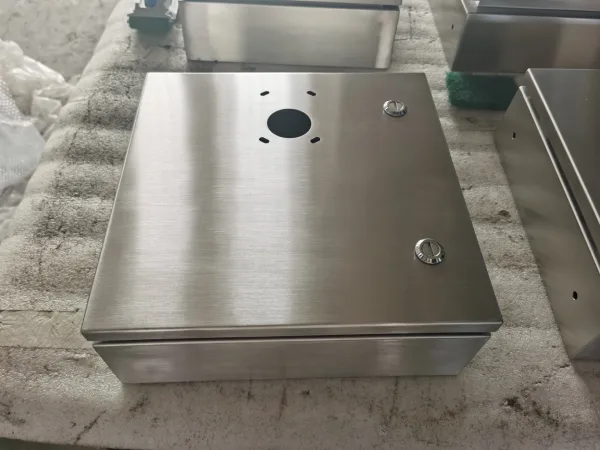
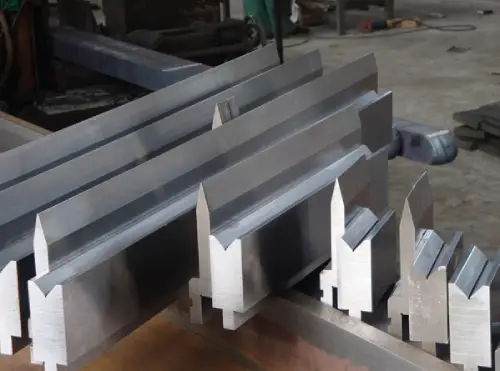
Stainless steel welding determines if a pressurized tank holds or ruptures. In critical sectors like food processing and marine engineering, defects are catastrophic. Laser welding and laser brazing eliminate heat distortion and costly rework with surgical precision.
With the global laser processing market projected to reach $38.22 billion by 2030, driven by advanced manufacturing demands, quality cannot be left to chance. If warped panels or joint porosity erode your margins, upgrading your laser process is the solution.
Key Points for Stainless Steel Welding Success
Grade & Gear: Select 304L/316L or duplex alloys matched with 1064nm wavelength fiber lasers for maximum absorption.
Joint Prep: Degrease, remove oxides, and fixture with gap tolerances within 10% of material thickness.
Parameter Tuning: Optimize power, speeds exceeding 5m/min, and precise gas blends (e.g., 98% Ar / 2% N2) to minimize the heat-affected zone (HAZ).
Post-Weld Care: Pickle, passivate, and mandate NDT to ensure corrosion resistance and structural integrity.
4 Key Steps In Stainless Steel Laser Welding
In laser-based fabrication, tiny adjustments dictate mechanical strength and pitting resistance. Here is how advanced shops, including supro mfg, handle the process.
Step 1: Selecting the Right Stainless Steel Grade and Equipment
Material chemistry drives thermal behavior.
Stainless Steel Grade
Austenitic
- 304L for general fabrication.
- 316L (contains 2-3% molybdenum) for chloride exposure.
Duplex
- Higher yield strength.
- Superior stress corrosion cracking resistance (PREN > 35).
Material Properties
- Corrosion resistance.
- Thermal conductivity limits.
- Crack sensitivity.
Equipment configuration dictates penetration:
Laser Welding Equipment
Laser Source
- Fiber laser for high-speed precision (1064nm).
- Disk laser for heavy-plate penetration.
Beam Delivery System
- Fiber optics.
- Automated focusing heads.
At supro mfg, systems are tuned so the process remains repeatable and spatter-free.
Step 2: Preparing Joints with Precision Cleaning and Fixturing
Contamination causes porosity. Preparation is non-negotiable.
Joint Preparation
- Butt joints for thin sheet.
- Lap joints for structural assemblies.
Surface Cleaning
- Remove oxide layers mechanically.
- Eliminate hydrocarbon shop dust.
Degreasing
- Solvent wipe.
- Alkaline cleaning.
Accurate alignment prevents burn-through:
Fixturing
- Clamp pressure control.
- Heat distortion allowance.
Weld Joint Design
- Gap control (<10% material thickness).
- Edge consistency.
Dimensional Accuracy
- Laser seam tracking.
- Pre-weld measurement.
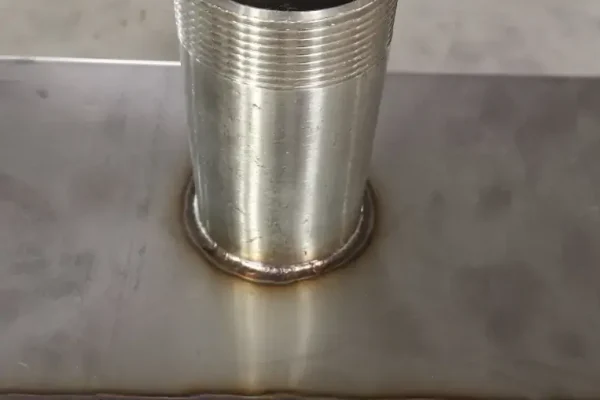
Step 3: Optimizing Laser Parameters and Shielding Gases
Dialing in thermal dynamics separates average from excellent.
Laser Power
- Low power for thin sheet.
- High multi-kilowatt output for thick plate.
Welding Speed
- Fast travel (up to 10m/min) slashes distortion.
- Balanced speed refines bead geometry.
Optics shape the root:
Focus Position
- Slight negative focus for deep Weld Penetration.
- Surface focus for wider cosmetic seams.
Heat Input
- Controlled to prevent carbide precipitation (sensitization).
- Balanced for duplex ferrite/austenite phase stability.
Shielding prevents atmospheric contamination:
Shielding Gas
- Argon for standard austenitic alloys.
- Nitrogen blends (98/2) for duplex to retain phase balance.
Gas Flow Rate
- Stable laminar coverage (typically 15-20 CFH).
- Minimal turbulence to prevent oxygen draw.
Step 4: Post-Weld Treatments and Quality Inspection
Finishing processes restore the passive chromium-oxide layer.
Post-Weld Heat Treatment
- Stress relief for restrained joints.
- Phase balance correction.
Surface Finishing
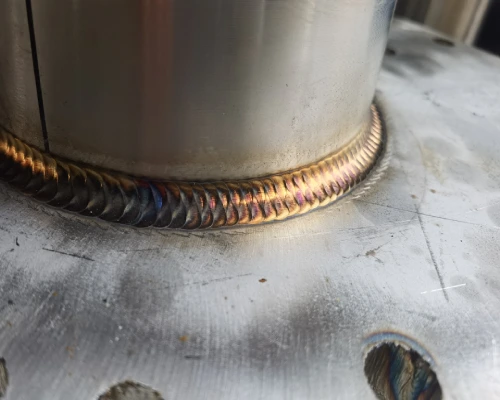
- Pickling to remove heat tint.
- Passivation to accelerate oxide formation.
Inspection confirms structural validity:
Visual Inspection
- Bead uniformity.
- Surface defect detection.
Weld Inspection
- Dimensional verification.
- Alignment checks.
Non-Destructive Testing
- Dye penetrant for micro-cracking.
- Ultrasonic testing for volumetric flaws.
Mechanical Testing
- Tensile strength testing.
- Bend testing for ductility.
Corrosion Resistance
- Salt spray exposure (ASTM B117).
- Service simulation.
Shops like supro mfg treat validation as seriously as fabrication, ensuring assemblies survive real-world service.
🛠️ Need rapid prototyping? Supro MFG can validate your product design in just 1-3 days. Explore our comprehensive sheet metal fabrication capabilities to optimize and iterate your designs at low costs.
Why choose Supro MFG's Custom metal Fabrication Services
Provide the most cost-effective cost solution for manufacturing and assembling products, expanding product competitiveness.
a technical team specializing in custom shell manufacturing for more than 30 years.
Advanced Manufacturing Equipment: Industry-leading custom metal enclosure manufacturer with in-house sheet metal, die casting, precision machining workshops, and surface coating workshops.
ISO 9001-2015, PPAP III level, RoHS, NEMA, CE and other certified production standards.
24H*7 online English technical support: The professional English team responds quickly to users’ technical questions online at any time.
help users from product design, prototype, batch manufacturing, surface treatment, assembly and packaging, transportation and a series of value-added services.
With in-house mechanics and chemistry laboratories, it can quickly monitor manufacturing process quality control to ensure the delivery of high-quality products.
Accept to sign NDA documents to ensure that customers‘ product information is protected.
Door-to-door delivery in customizable secure packaging after complying with the delivery details agreed with the customer.
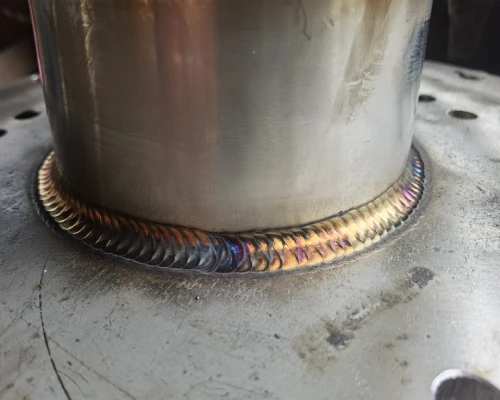
Laser Welding Vs. Laser Brazing: Crucial Differences
Heat control dictates joint mechanics. Choosing the correct laser process prevents metallurgical degradation while maintaining aesthetic requirements.
Laser Welding
Laser welding utilizes direct fusion, delivering high power density for deep penetration. Heat input is up to 80% lower than traditional TIG, but still melts the substrate.
Core Mechanism
Energy Input
- Concentrated beam minimizes the heat affected zone.
- Achieves keyhole penetration in thick plates.
Metal Behavior
- Base metal reaches ~1400°C–1450°C.
- Executes via autogenous fusion or precise filler material addition.
Performance Outcomes
Mechanical
- Maximum joint strength for pressure vessels.
- Homogeneous corrosion resistance.
Visual
- Narrow bead profile.
- Requires minimal secondary polishing.
Heavy fabrication facilities, including supro mfg, rely on laser welding for uncompromised load-bearing strength.
Laser Brazing
Laser brazing leaves the base metal solid. Only the filler metal (often CuSi3) melts, functioning below the substrate's liquidus temperature.
Thermal Principle
- No base metal melting (~980°C peak temp).
- Minimal heat input yields reduced distortion.
Bonding Mechanism
- Molten filler flows via capillary action.
- Aggressive surface wetting bonds dissimilar materials cleanly.
| Parameter | Laser Welding | Laser Brazing |
|---|---|---|
| Peak Temp (°C) | 1400–1500 | 900–1100 |
| Base Metal Melting | Yes | No |
| Distortion Level | Low | Very Low |
| Joint Strength (MPa) | 400–600 | 200–350 |
| Aesthetic Finish | Moderate | Excellent |
For architectural panels and automotive trims, brazing delivers a sleek Class-A finish.
Only 4 steps
online custom metal fabrication parts
Contact our experts team and experience the efficiency and economic benefits of digital metal fabrication services.
Upload Design Files
STL , STEP (.stp), IGES (.igs), (.ZIP), or PDF.
Also be a sample or an idea
Quote & Design Analysis
Instant factory quotes and DfM reports, the most reasonable solution.
Manufacturing Begins
Digital processes can initiate order tasks within 24 hours.
On-Time Delivery
Keeping delivery promises, approved by 3000+ Global Company buyers.
Budget Constraints? Cost Calculations For Laser Welding
Laser integration requires accurate lifecycle cost modeling to ensure profitability over high-volume runs.
Calculating Equipment Depreciation: Power Sources & Torches
Calculate capital expenditure based on actual component longevity:
Power Sources
- Initial Asset Value of the fiber laser.
- Useful Life (modern diodes offer ~100,000-hour lifespans).
- Annual Depreciation distributed across arc-on time.
Torches
- Protective glass and nozzle wear rates.
- Cooling system maintenance intervals.
Robotic cells and fume extraction amortizations.
At supro mfg, depreciation is modeled strictly on projected throughput, preventing hidden overhead.
Estimating Consumables Cost: Filler Wire and Shielding Gas
Consumable burn rates scale rapidly:
Filler Wire costs fluctuate by alloy grade.
- Measure strict Consumption Rate per meter of seam.
- Optimize wire diameter to reduce over-welding.
Shielding Gas usage (Argon/Nitrogen) requires calibrated flow meters to prevent turbulent waste.
Back purging gas constitutes a significant secondary Material Cost.
Factoring Operational Expenses: Labor, Energy & Maintenance
Labor Cost
- Wages for trained laser cell programmers.
- Procedure qualification (WPS) development time.
Energy Consumption
- Fiber lasers offer >30% wall-plug efficiency, slashing legacy energy costs.
- Chiller unit electrical draw.
Maintenance
- Optic lens replacements.
- Preventive alignment calibrations.
Are you looking for reliable & cost-effective
China Sheet Metal Fabricators
More than 150,000 OEM metal fabrication products delivered to 5,000+ global buyers.
And benefit from it!
FAQs about Stainless Steel Welding
What makes stainless steel welding suitable for demanding industrial environments?
It pairs material resilience with precision thermal control:
1.Material strength under stress
- 304L for standard architectural builds.
- 316L for pharmaceutical and marine chloride environments.
- Duplex arrays for high-pressure oil pipelines.
2.Process precision
- Laser processing drastically narrows the HAZ.
- Prevents carbide precipitation that leads to rust.
3.System stability
- Robotic integration ensures micron-level repeatability.
- Backing gas systems guarantee pristine root profiles.
How do I choose the right stainless steel grade and welding process?
Match the metallurgy to the service environment:
- Light architectural structures → 304L alloy. → Laser brazing for aesthetics or low-power laser fusion.
- Chemical processing → 316L alloy. → Deep-penetration laser welding with strict 98/2 gas coverage.
- High-stress/pressure parts → Duplex or 400-series martensitic. → High-kilowatt laser fusion with perfectly matched filler metallurgy.
How is weld quality protected in thick-section stainless steel fabrication?
Control is layered throughout the production cycle:
During welding
- Strict gap tolerances (<10% material thickness).
- Automated seam tracking to prevent lack of fusion.
Inspection phase
- Visual inspection for undercut.
- Radiographic/Ultrasonic testing for internal voids.
- Dye penetrant for surface micro-fissures.
- Formal NDT documentation.
After welding
- Acid pickling to remove heat tint.
- Chemical passivation to restore the chromium-oxide barrier.
- Mechanical polishing for sanitary-grade compliance.
Looking for a reliable custom sheet metal fabrication companies?
Talk To Supro MFG Expert Team
Contact us for competitive ex-factory prices,
and a full range of technical support services.
Partner with Supro MFG for Your Next Metal Fabrication Project
Struggling with inconsistent welds, long lead times, or high manufacturing costs? Supro MFG provides a one-stop sheet metal fabrication and OEM/ODM solution for over 3,000+ companies worldwide.
When you choose to work with us, you benefit from:
- Real Ex-Factory Prices: No middlemen. Get a cost-effective manufacturing quote directly from our 3000+ sqm factory.
- Speed & Agility: Rapid prototyping allows you to validate your design in just 1-3 days.
- Uncompromising Quality: We adhere to strictly “100% automotive-grade” QC standards, backed by ISO 9001 and IATF 16949 system certifications.
- Free DFM Analysis: Our 12 dedicated technical engineers will review your designs to optimize manufacturability and drive down costs.
📩 Ready to get started? Send your product ideas or design files to [email protected] or visit our Contact Us page to secure your free quote today!
References
- global laser processing market – grandviewresearch.com / Grand View Research
- 304L – matweb.com / MatWeb
- 316L – azom.com / AZoM
- fiber lasers – ipgphotonics.com / IPG Photonics
- heat-affected zone (HAZ) – sciencedirect.com / ScienceDirect
- NDT – asnt.org / American Society for Nondestructive Testing
- molybdenum – nickelinstitute.org / Nickel Institute
- PREN > 35 – bssa.org.uk / British Stainless Steel Association
- Disk laser – trumpf.com / TRUMPF
- sensitization – corrosionpedia.com / Corrosionpedia
- duplex ferrite/austenite phase stability – materials.sandvik / Sandvik Materials Technology
- Argon – linde-gas.com / Linde
- Dye penetrant – magnaflux.com / Magnaflux
- Ultrasonic testing – olympus-ims.com / Evident Olympus
- Tensile strength testing – instron.com / Instron
- ASTM B117 – astm.org / ASTM International
- pressure vessels – asme.org / ASME
- CuSi3 – lucasmilhaupt.com / Lucas Milhaupt
- ISO 9001 – iso.org / ISO
- IATF 16949 – iatfglobaloversight.org / IATF