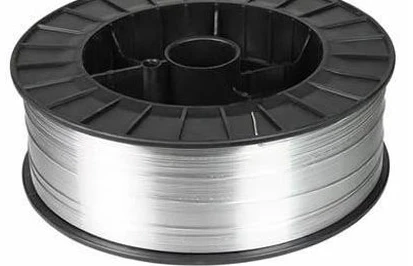

Selecting the right flux-cored welding wire is more than just a decision about consumables—it directly determines weld quality, post-weld cleanup time, and the total cost of the project. There are currently two main types of flux-cored wire: gas-shielded flux-cored wire (FCAW-G) and self-shielded flux-cored wire (FCAW-S). Although both types of wire have higher deposition rates than solid electrodes, their protective mechanisms perform very differently in workshop production.
FCAW-G is typically used with a 75%–85% argon/carbon dioxide gas mixture, enabling controlled penetration depth and minimizing spatter on 1.5–8 mm thick plates, making it ideal for manufacturing enclosures with tight tolerances. In contrast, FCAW-S relies on gases generated by the flux core during welding. While portable, it tends to produce more slag and is susceptible to hydrogen-induced cracking.
This article provides a detailed analysis of penetration depth curves, cost per meter of weld, and safety compliance data to help engineers select the appropriate flux-cored welding wire for various applications in sheet metal fabrication projects—ranging from indoor robotic welding cells to outdoor field repairs.
Protection Mechanism and Structure of Flux-Cored Welding Wire
The welding performance of any flux-cored welding wire depends on its ability to protect the arc and its metal transfer capability. FCAW-G wire requires an external shielding gas to achieve stable spray transfer during thin-sheet welding; FCAW-S wire, on the other hand, generates its own shielding gas through flux decomposition, sacrificing process control in exchange for portability.
Gas-Shielded Flux-Cored Wire (FCAW-G)
FCAW-G relies on an external gas mixture (typically 75%–85% argon, with the remainder being carbon dioxide) to stabilize the arc and protect the molten pool. This design allows for welding with smaller-diameter wires (0.8–1.2 mm) at higher current densities (up to 250 A for 1.2 mm wire) without excessive spatter.
In precision sheet metal fabrication, the key advantage of gas-shielded flux-cored wire lies in its controllable penetration depth: on 3–6 mm thick carbon steel, it produces smooth, convex-to-flat welds with excellent sidewall fusion. The slag system (typically rutile-type) falls off on its own or can be removed with light brushing, reducing grinding time by more than 50% compared to self-shielded flux-cored wire.
Additionally, FCAW-G can operate in DC reverse polarity and still provide stable spray transfer at voltages as low as 17 V. When specifying flux-cored welding wire for indoor mass production, FCAW-G wire is the preferred choice for workpieces with tolerances within ±0.5 mm.
Self-shielded flux-cored wire (FCAW-S)
FCAW-S wire incorporates gas-generating compounds (fluorides, carbonates) and deoxidizers into the flux core, eliminating the need for an external shielding gas. When heated by the arc, these compounds decompose to produce carbon dioxide and other gases, thereby displacing contaminants in the atmosphere. This gives self-shielded flux-cored wire (FCAW-S) inherent wind resistance, allowing it to maintain a stable arc at wind speeds of up to 25 mph—which is critical for on-site installation of large welded components.
However, the trade-offs are also significant. The flux formulation requires a longer arc extension (25–35 mm) to preheat the wire core, which reduces the operator’s flexibility. FCAW-S typically achieves deep penetration but is difficult to control, often burning through thin sheets less than 2 mm thick. Its slag system is aluminum oxide-based and adheres strongly, requiring removal with an electric brush.
For projects requiring the evaluation of flux-cored arc welding wire for field repairs or outdoor structural connections, FCAW-S wire remains indispensable despite its lower deposition rate (approximately 3 kg/h) and higher fume generation.
Are you looking for reliable & cost-effective
China Sheet Metal Fabricators
More than 150,000 OEM metal fabrication products delivered to 5,000+ global buyers.
And benefit from it!
Performance Comparison of the Two Flux-Cored Arc Welding Wires in Sheet Metal Applications
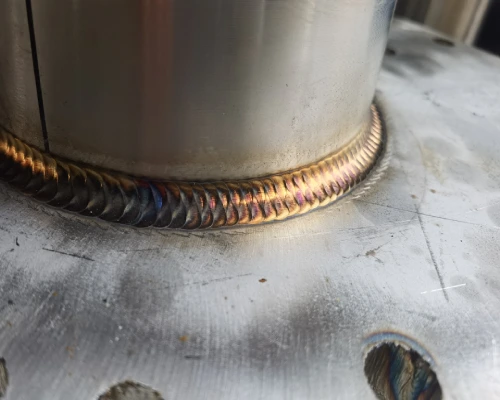
Selecting the appropriate flux-cored welding wire for thin sheets requires a direct comparison of weld bead appearance, spatter, and post-weld cleaning requirements. FCAW-G wire produces smooth weld beads with minimal spatter when welding thin sheets; while FCAW-S wire offers superior penetration, it increases the amount of post-weld grinding required.
Weld Bead Profile and Penetration Control
In sheet metal welding, flux-cored welding wire must provide consistent penetration while preventing burn-through. Thanks to its stable argon-rich shielding gas, FCAW-G wire produces smooth, shallow-to-moderate penetration profiles, making it ideal for materials 1.5–6 mm thick. At currents of 110–150 A, the penetration depth is typically 1.2–2.0 mm, with a width-to-depth ratio of 1.5:1, which minimizes distortion of the workpiece.
In contrast, FCAW-S produces a deeper, narrower finger-like penetration (often exceeding 2.5 mm at 140 A), which carries a risk of burn-through on sheet metal thinner than 2 mm.
When welding automotive brackets or electrical enclosures, the predictable fusion characteristics of gas-shielded flux-cored wire reduce rework.
Spatter, Slag Detachability, and Post-Weld Cleaning
Post-weld cleaning directly impacts the manufacturing cycle. A high-quality gas-shielded flux-cored wire (such as E71T-1C) produces less than 5% of the total weight in spatter, and its slag falls off on its own or can be gently brushed away with a soft steel brush. In the mass production of painted cabinets, this saves 30–40 seconds of cleaning time per meter of weld compared to FCAW-S wire.
Self-shielded flux-cored wire has a spatter rate of 8–12%, and its alumina-based slag adheres extremely strongly, typically requiring an electric grinder or chisel for removal. For a workshop welding 500 meters per week, this difference equates to a savings of over 10 man-hours.
Only 4 steps
online custom metal fabrication parts
Contact our experts team and experience the efficiency and economic benefits of digital metal fabrication services.
Upload Design Files
STL , STEP (.stp), IGES (.igs), (.ZIP), or PDF.
Also be a sample or an idea
Quote & Design Analysis
Instant factory quotes and DfM reports, the most reasonable solution.
Manufacturing Begins
Digital processes can initiate order tasks within 24 hours.
On-Time Delivery
Keeping delivery promises, approved by 3000+ Global Company buyers.
Application Scenarios: Advantages of Various Flux-Cored Welding Wires
Selecting the appropriate flux-cored arc welding wire based on the work environment is key to determining production efficiency. FCAW-G wire dominates indoor robotic welding cells and mass production; FCAW-S wire is suitable for outdoor installation work, where carrying gas cylinders is impractical.
Workshop Manufacturing: Gas-Shielded Flux-Cored Wire Dominates
In controlled manufacturing workshops, the preferred flux-cored arc welding wire is undoubtedly FCAW-G. With an ample supply of mixed gas (85% argon/15% carbon dioxide) and a fume extraction system, operators can set the feed rate to 250–300 inches per minute when welding 3–8 mm thick plates, achieving a deposition rate of over 4 kg per hour. More importantly, the welds produced by FCAW-G wire comply with the AWS D1.3 standard, are suitable for thin-plate structural applications, and produce minimal spatter.
For volume orders of enclosures, chassis, or agricultural equipment, predictable heat input reduces distortion of formed parts—a prerequisite for meeting ±0.5 mm tolerances.
On-Site Installation and Maintenance: Self-Shielded Flux-Cored Wire Is Indispensable
When working outdoors, flux-cored arc welding wire must be self-shielded since there are no external gas cylinders. FCAW-S maintains a stable arc even at wind speeds of up to 25 mph (40 km/h), whereas FCAW-G develops porosity within seconds under these conditions.
For on-site repairs of heavy equipment buckets, steel structure installation, or tool trailer fabrication, portability is more important than cleanup time. However, ensure that the selected self-shielded flux-cored wire meets the supplementary hydrogen diffusion limit—specifically, H8 or lower as per AWS A5.36—to prevent cold cracks when welding thick plates.
Typical parameters: 1.6 mm diameter, 180–220 A current, DC positive polarity, 25–35 mm arc length. Although the deposition rate is low (approximately 2.5 kg/hour), the ability to weld on scissor lifts or walkways without gas cylinders makes this flux-cored welding wire a viable solution for many installation contracts.
Hybrid Approach in Custom Orders
For projects involving both prefabricated subassemblies and on-site final assembly, a hybrid strategy using two types of flux-cored arc welding wire can optimize overall costs.
Welding operations performed indoors using robotic positioners employ the FCAW-G process to ensure welding speed and surface quality. In contrast, on-site connection points for the same component—where wind conditions and working space are often unpredictable—switch to FCAW-S wire. This approach requires a dual-process power source and training for operators on two sets of parameter settings.
A documented case study: In a modular staircase manufacturing project, specifying gas-shielded flux-cored wire for the main beams welded in the workshop and self-shielded flux-cored wire for the handrail joints on-site reduced on-site rework by 40%.
Equipping each type of wire with a dedicated feeder prevents cross-contamination of shielding gas composition, which could otherwise lead to porosity or cracks.
Looking for a reliable custom sheet metal fabrication companies?
Talk To Supro MFG Expert Team
Contact us for competitive ex-factory prices,
and a full range of technical support services.
Cost and Productivity Analysis: Total Cost per Meter of Welding
The total cost per meter determines which type of flux-cored arc welding wire offers greater advantages in production. While FCAW-G wire reduces cleaning work, it increases gas costs; conversely, FCAW-S wire requires no gas but adds labor costs associated with the grinding process. This section provides a quantitative analysis of these two cost factors in mass production.
Direct Materials and Gas Consumption
For FCAW-G flux-cored arc welding wire, direct material costs include the welding wire and shielding gas. E71T-1C welding wire typically costs $2.20–$2.80 per kilogram, while gas consumption is 25–30 cubic feet per hour, adding $0.80–$1.20 per arc hour. Taking a 1.2 mm fillet weld as an example, this equates to approximately $0.12–0.15 per meter.
Self-shielded flux-cored wire costs $2.80–3.50 per kilogram but requires no gas—making it appear cheaper on the consumables list. However, the purchaser must consider that FCAW-S wire has lower deposition efficiency due to spatter loss (approximately 85%, compared to 92% for gas-shielded welding).
When comparing the prices of flux-cored welding wires, a cost calculation per meter should be requested that includes gas, wire, and typical grinding wear during cleanup. A 10% difference in wire price is typically insufficient to offset the additional grinding costs.
Impact of Flux-Cored Welding Wire on Mass Production Productivity
Mass production magnifies subtle differences in wire performance. When using flux-cored arc welding wire, if the welding speed is 4 kg/hour (FCAW-G) compared to 2.7 kg/hour (FCAW-S), the arc time will be reduced by 30% for the same weld length. More importantly, FCAW-G is easy to deburr, reducing post-weld grinding time by 40–50 seconds per meter. For a weekly output of 600 meters (typical for a custom cabinet shop), this saves 7–8 man-hours.
Calculated at a shop rate of $65 per hour (including overhead), FCAW-G delivers net weekly savings of over $450 compared to self-shielded flux-cored wire. This advantage holds true even after deducting gas costs. In indoor batch welding environments, gas-shielded flux-cored wire almost always delivers higher productivity.
Conclusion
For precision sheet metal fabrication, selecting the appropriate flux-cored welding wire depends on the work environment and production volume. In indoor batch production, FCAW-G wire offers a lower net cost per meter—with less spatter, faster cleanup, and consistent penetration on materials 1.5–8 mm thick. For outdoor field operations, where gas cylinders can be cumbersome, FCAW-S remains a practical solution. Selecting the correct flux-cored arc welding wire can reduce rework and maintain product competitiveness.
Supro is a professional custom sheet metal fabrication manufacturer. Leveraging advanced equipment, extensive manufacturing experience, and a professional engineering team, we provide perfect custom metal fabrication solutions to over 3,000 companies worldwide, along with genuine manufacturer quotes.
We deliver a wide range of products efficiently and on time. From product design and rapid sheet metal prototype fabrication to mass production, we provide professional technical support and exceptional quality. We also offer one-stop manufacturing solutions and highly cost-competitive product supply!
For technical specifications, customized project solutions, or business partnership discussions, contact Supro immediately. Our professional engineering team is always ready to provide you with tailored application solutions.