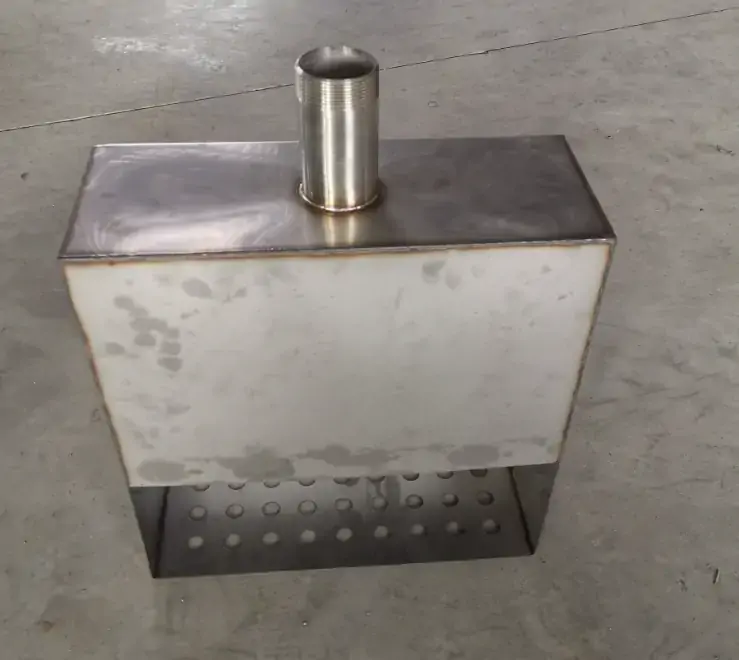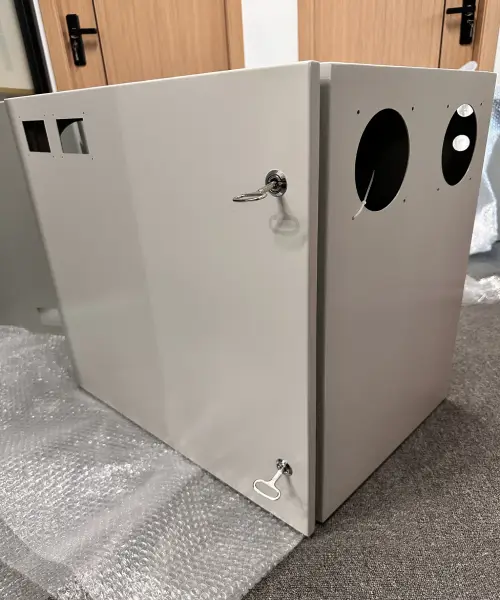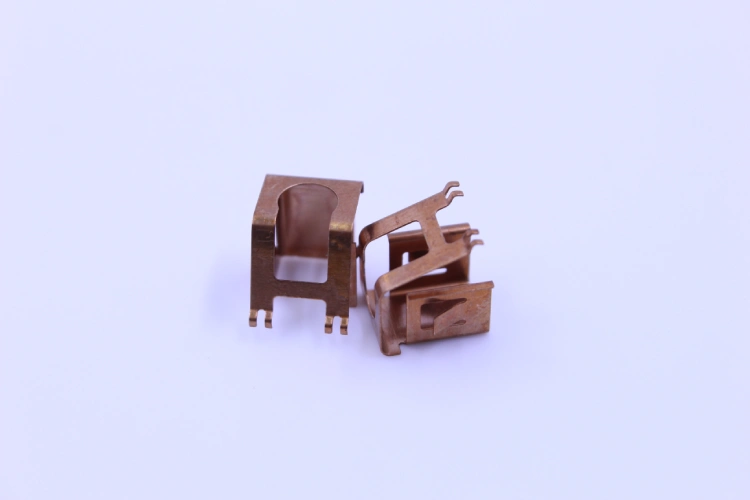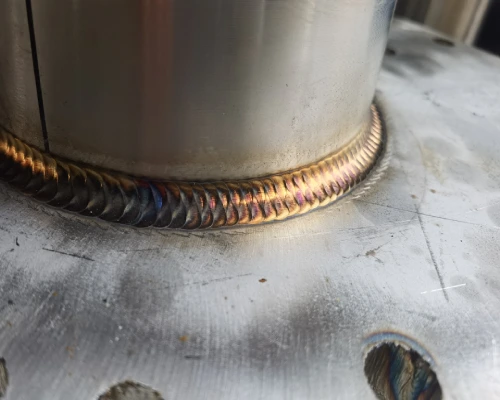


The interface between the metal fuel tank and its mounting straps is one of the most commonly overlooked corrosion pathways in automotive chassis assemblies. When different types of metal—typically galvanized steel straps and carbon steel fuel tanks—come into direct contact under the influence of road salt and moisture, an electrochemical cell is formed. The more active metal (the fuel tank) acts as the anode and undergoes accelerated corrosion, while the mounting strap acts as the cathode.
This is by no means a theoretical concern: when Ford recalled 1.1 million F-150 pickup trucks in 2011, it attributed mounting strap fractures to corrosion caused by de-icing chemicals in 21 “salt belt” states; such failures caused the fuel tank to come into contact with the ground, posing a risk of fuel leakage. Vibration exacerbates this problem by wearing away the protective coating, exposing bare metal and thereby creating a complete electrochemical circuit.
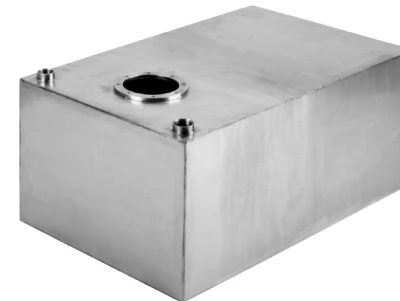
The engineering solution lies not in thickening the coating, but in breaking the circuit at its source—by installing a dielectric insulator, such as a neoprene or extruded plastic barrier, between the mounting strap and the surface of the custom metal fuel tank. From a manufacturing perspective, this requires precision in material selection, insulator integration, and forming processes to ensure complete isolation without compromising structural integrity.
Understanding Electrochemical Corrosion in Metal Fuel Tank Clamping Strap Assemblies
To mitigate corrosion in custom metal fuel tank mounting systems, it is first necessary to understand the underlying electrochemical mechanisms. In clamping strap assemblies, the combination of dissimilar metals, conductive electrolytes (moisture/road salt), and worn coatings creates a galvanic cell, thereby accelerating the loss of anodic material—a loss that typically occurs at the joints of the metal fuel tank. We will now explore this mechanism in detail.
Electrochemical Mechanism
Electrochemical corrosion occurs when two different metals come into electrical contact with an electrolyte. In a typical metal fuel tank strap assembly, carbon steel fuel tanks and their straps (usually made of galvanized steel or stainless steel) have different electrochemical potentials.
The metal with the more negative potential (i.e., the fuel tank) acts as the anode and experiences accelerated material loss, while the clamping band with the more positive potential acts as the cathode. This potential difference drives an ionic current through the electrolyte, and the corrosion rate is proportional to this potential difference.
Road de-icing salts and moisture complete the circuit, causing the dissolution rate of the anodic metal (typically the metal fuel tank itself) to far exceed that resulting from uniform atmospheric corrosion. In this case, the engineering solution lies in breaking the electrical continuity at the interface.
Factors Accelerating Corrosion of Metal Fuel Tank Mounting Systems in the Automotive Underbody Environment
The automotive underbody environment is highly corrosive for any metal fuel tank mounting system and is highly prone to electrochemical corrosion.
Road de-icing salts—particularly calcium chloride and sodium chloride—act as highly conductive electrolytes and greatly accelerate corrosion reactions. In states with so-called “salt belts,” where these chemicals are widely used during winter, corrosion-related failures of clamping straps are particularly prevalent.
Vibrations generated by normal vehicle operation exacerbate this problem, causing frictional wear at the interface between the clamping strap and the metal fuel tank, which gradually wears away the protective coating and exposes the base material. The alternating temperature changes between sub-freezing winter temperatures and high temperatures inside the engine compartment further exacerbate condensation and moisture retention. Mud and debris accumulating around the tie-down assembly trap moisture on the metal surface, allowing the electrolyte layer to persist over time.
The combined effect of these factors creates a corrosion cell that remains active throughout the vehicle’s entire service life.
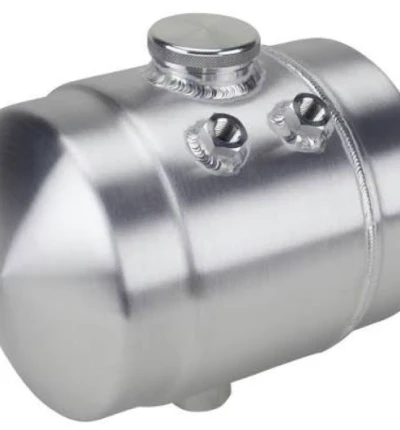
Why the Connection Between the Fastening Strap and the Metal Fuel Tank Is Critical
The connection between the fastening strap and the metal fuel tank is a critical area where electrochemical corrosion first occurs and progresses most rapidly. Two corrosion mechanisms are simultaneously at work at this interface: electrochemical corrosion caused by dissimilar metal contact, and crevice corrosion within the tiny gaps between the fastening strap and the surface of the metal fuel tank.
During routine inspections, this connection point is often not directly visible, meaning that corrosion may have progressed to a level that compromises structural safety before it is detected.
Data recorded by the U.S. National Highway Traffic Safety Administration (NHTSA) during a major recall campaign indicates that there were a total of 441 reports of strap failures caused by corrosion, of which 353 resulted in the metal fuel tank falling or dragging on the ground, and 180 resulted in fuel leaks. When corrosion at this interface compromises the integrity of the securing straps, the metal fuel tank loses its primary support, may come into contact with the ground, and consequently suffer damage to its structural integrity.
Therefore, this interface is not merely a maintenance issue but a critical safety concern that requires the attention of engineers during the design and manufacturing phases.
Only 4 steps
online custom metal fabrication parts
Contact our experts team and experience the efficiency and economic benefits of digital metal fabrication services.
Upload Design Files
STL , STEP (.stp), IGES (.igs), (.ZIP), or PDF.
Also be a sample or an idea
Quote & Design Analysis
Instant factory quotes and DfM reports, the most reasonable solution.
Manufacturing Begins
Digital processes can initiate order tasks within 24 hours.
On-Time Delivery
Keeping delivery promises, approved by 3000+ Global Company buyers.
Engineering Prevention Strategies for Metal Fuel Tanks
With the electrochemical mechanism now clarified, the focus has shifted to prevention. For any custom metal fuel tank strap assembly, effective prevention requires a multi-layered engineering approach—rather than a single solution. The following strategies involve material selection, dielectric isolation, coating integrity, and geometric design. Each strategy represents a manufacturing-level intervention, and these measures work together to eliminate electrochemical circuits at their source.
Dielectric Isolation: The Primary Defense for Metal Fuel Tanks
For electrochemical corrosion in any metal fuel tank strap assembly, the most reliable engineering intervention is dielectric isolation—that is, physically separating different metals using non-conductive barriers. This method directly breaks the circuit that causes ionic current flow between the metal fuel tank and its straps.
Materials such as neoprene or extruded plastic profiles serve as effective insulators; neoprene, for example, has a dielectric strength of approximately 3.75 kV/mm and remains stable over a temperature range of -30°C to +120°C. The insulator must completely cover the entire contact interface, as any exposed metal-to-metal contact—even if very small—will re-establish the electrochemical cell, thereby compromising the entire protection scheme.
From a manufacturing perspective, integrating the insulator as a permanent component of the retaining strap assembly—rather than as an add-on installed on-site—ensures consistent coverage and eliminates variability on the assembly line.
Material Selection and Compatibility
Material selection must be evaluated in conjunction with the electrochemical series applicable to the specific exposure environment. The potential difference between a custom metal fuel tank and its securing strap directly determines the corrosion current density—the greater the potential difference, the more severe the corrosion effect on the anodic components.
When carbon steel fuel tanks are combined with galvanized steel straps, the potential difference is relatively small; however, when stainless steel straps come into contact with carbon steel, a significantly stronger cathodic couple is formed, thereby accelerating the corrosion of the custom metal fuel tank.
Stainless steel fasteners can generally be used with other metals without causing significant electrochemical damage, but this general rule does not apply to large-area strap assemblies.
Practical metal fuel tank manufacturing strategies do not aim to completely eliminate the potential difference—which is virtually impossible—but rather to select material combinations that minimize it while ensuring the straps possess sufficient mechanical properties to fulfill their load-bearing functions.
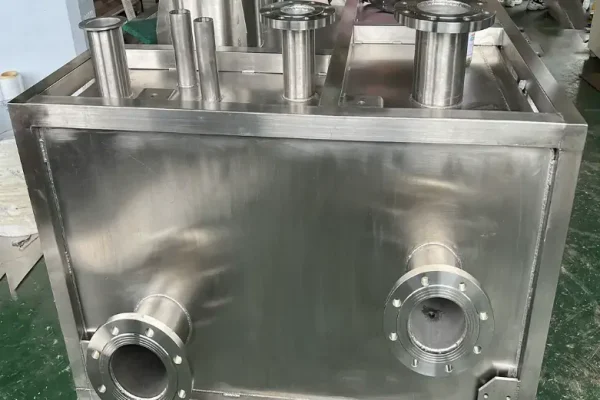
Coatings and Surface Treatments
Coatings serve as a protective barrier, isolating the strap substrate from the electrolyte that forms an electrochemical circuit. However, coatings alone cannot replace dielectric isolation; they serve only as a secondary line of defense.
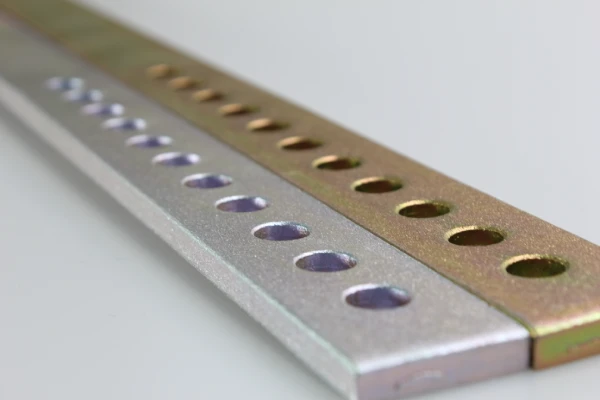
Electrodeposited powder coatings (EDP) have become the industry standard for metal fuel tank straps. The resulting surface coating is durable, corrosion-resistant, and effectively prevents premature rusting. Vinyl coatings also offer additional chemical resistance, protecting against acids, alkalis, and solvents commonly found in underbody environments.
A key consideration during manufacturing is the forming process: metal fuel tank mounting straps undergo significant bending and deformation during production; therefore, any applied coating must possess sufficient flexibility to withstand these operations without developing microcracks. Such cracks can serve as entry points for crevice corrosion and ultimately compromise the entire barrier.
A galvanized layer is typically used as a primer beneath the powder coating to provide sacrificial protection in the event of coating damage. From a quality assurance perspective, post-forming coating integrity inspections are essential for any strap assembly supplied for metal fuel tank applications.
Drainage and Debris Ejection Design
In terms of corrosion protection, the importance of design geometry is often underestimated. Straps that trap water near the surface of a custom metal fuel tank form a persistent layer of electrolyte, thereby keeping the galvanic cell active indefinitely. Road debris and dirt accumulating around the strap assembly exacerbate this problem, as they both retain moisture and act as a medium for salt concentration.
The solution is straightforward: incorporate drainage channels into the cross-section of the custom metal fuel tank’s tie-down straps and ensure that insulation does not obstruct moisture drainage. The straps should feature a geometry that allows moisture to drain away rather than accumulate, and they should be installed in a way that avoids creating dead zones where debris can accumulate.
This design consideration is particularly critical for vehicles entering “salt belt” states, where prolonged exposure to de-icing chemicals accelerates corrosion.
From a manufacturing perspective, this requires coordination during the design phase to ensure that the strap’s geometry—including bends, width, and mounting hole locations—promotes rather than hinders drainage.
Are you looking for reliable & cost-effective
China Sheet Metal Fabricators
More than 150,000 OEM metal fabrication products delivered to 5,000+ global buyers.
And benefit from it!
Implementation: Best Practices for Metal Fuel Tank Strapping Systems
Now that preventive strategies have been established, we turn our attention to implementation. For custom metal fuel tank strapping systems, only through strict manufacturing specifications can the gap between engineering design intent and on-site performance be bridged. The following sections will explore the integration of isolators, quality assurance procedures, and region-specific design adjustments—measures that collectively ensure the long-term reliable operation of metal fuel tank systems.
Integration of Dielectric Insulators
Integrating dielectric insulators into the strap assembly requires precise engineering. The insulators—typically extruded neoprene or EPDM rubber profiles—must completely encapsulate the contact interface between the straps and the custom metal fuel tank. Any exposed metal-to-metal contact, no matter how minute, will re-establish an electrochemical circuit, thereby rendering the insulation measures ineffective.
From a manufacturing perspective, the insulator’s width should be slightly greater than the strap’s dimensions to ensure complete coverage in the edge areas—where wear and coating damage are most likely to occur. The material must be resistant to fuel, engine oil, and underbody chemicals, while maintaining dielectric strength across the entire operating temperature range. Integrating it as a permanent component, rather than installing it as an aftermarket addition in the field, eliminates variability and ensures consistent protection across the entire production batch.
Quality Assurance During Manufacturing
Quality assurance procedures for metal fuel tank strap assemblies must cover both dimensional and performance standards. Geometric verification—including width, thickness, bend radius, and mounting hole locations—ensures that the strap fits the metal fuel tank contour perfectly.
Coating integrity checks are equally critical: electrodeposition (EDP) powder coatings or vinyl coatings must be tested for thickness uniformity and adhesion strength, as microcracks generated during the forming process can serve as initiation points for crevice corrosion.
Post-forming inspections should include a salt spray test to verify corrosion resistance under accelerated conditions. For welded clamp designs, non-destructive testing (using ultrasonic or magnetic particle testing) must be performed on the weld areas to detect internal defects that could compromise structural integrity.
Recall documents from the National Highway Traffic Safety Administration (NHTSA) further stipulate that the metal overlap area near the installation end of the clamps must be inspected to confirm the absence of cracks, perforations, or delamination.
Environmental and Regional Factors
Environmental exposure is the most significant factor affecting the service life of metal fuel tank clamps. Investigation data from the National Highway Traffic Safety Administration (NHTSA) confirms that approximately 97% of reported fastener failures involved vehicles operating in “salt belt” states, where road de-icing chemicals are used extensively during winter; accumulated de-icing agents and slush can cause metal fuel tank fasteners to corrode and detach from the vehicle frame.
For metal fuel tank manufacturers, this concentration of regional risk necessitates a tiered protection strategy: vehicles sold in high-corrosion regions should feature stronger dielectric isolation, thicker coatings, and more rigorous quality verification than those sold in markets with milder climates.
Looking for a reliable custom sheet metal fabrication companies?
Talk To Supro MFG Expert Team
Contact us for competitive ex-factory prices,
and a full range of technical support services.
Conclusion
Electrochemical corrosion in metal fuel tank installation systems is a foreseeable failure mode. The electrochemical conditions leading to dissimilar metal corrosion are well understood, and preventive measures—electrical isolation, selection of compatible materials, reliable coating systems, and designs that prioritize drainage—are proven and implementable. The challenge lies not in technical uncertainty, but in whether relevant specifications can be strictly enforced throughout the entire process of design, manufacturing, and quality assurance.
For metal fuel tank manufacturers, their value proposition has evolved beyond simply supplying components to providing fully integrated, corrosion-resistant installation systems. Early collaboration with Supro’s engineering team ensures that preventive strategies are incorporated during the design phase, rather than being applied as a remedial measure during inspection. This shift from remediation to prevention effectively extends the service life of custom metal fuel tanks.
If you require technical specifications, customized project solutions, or OEM partnership consultations, please contact Supro immediately. Our professional engineering team is ready to provide you with tailored application solutions.