


The widespread use of ethanol-blended fuels (particularly E10 and E15) has presented numerous compatibility challenges for metal gasoline tank systems. The most critical of these is corrosion in metal gasoline tank systems caused by ethanol’s hygroscopicity and the resulting phase separation.
The consequences are predictable: ordinary cold-rolled carbon steel, even when coated with a secondary inner lining, may develop perforations within a matter of months once exposed to this stratified ethanol-water environment.
For custom metal gasoline tanks, the fundamental issue is not whether phase separation will occur—it is merely a matter of time—but whether the selected material can withstand this environment. Aluminized steel and NI-TERNE-coated steel possess inherent corrosion resistance and offer a durable solution without the need for a secondary coating.
This paper explores the metallurgical basis of ethanol-induced corrosion, analyzes the mechanisms of phase separation, and proposes alternative material solutions that enable a long service life without the need for additional internal coatings.
Phase Separation of Ethanol-Blended Fuel in Metal Gasoline Tanks
When the amount of moisture absorbed by ethanol-blended fuel exceeds its solubility limit, phase separation occurs, forming a corrosive ethanol-water mixture layer that settles at the bottom of the metal gasoline tank. This acidic phase accelerates pitting and uniform corrosion of carbon steel; therefore, appropriate mitigation measures tailored to specific materials are required—the following sections will discuss its mechanism of action and its impact on the operation of metal gasoline tanks.
Hygroscopicity of Ethanol
Ethanol is chemically classified as a hygroscopic substance, meaning it actively adsorbs and traps water molecules from the surrounding environment. Unlike pure gasoline, which is inherently hydrophobic and typically contains only about 0.01% water, the polar groups in ethanol molecules give it a very high affinity for water. In ethanol-blended fuels such as E10 or E15, ethanol acts as a “moisture carrier,” significantly increasing the entire fuel system’s capacity to absorb and retain water.
For metal gasoline tanks, this means the interior of the tank will be exposed to a humid chemical environment far more severe than that of traditional gasoline over the long term; the continuous introduction of moisture is the root cause of a subsequent series of corrosion and phase separation issues.
Mechanism of Phase Separation
Phase separation occurs when the amount of moisture absorbed by the fuel exceeds its solubility limit. For E10 fuel, this critical point is approximately 0.4% to 0.41% moisture content; E15 has a slightly higher moisture tolerance, at approximately 0.85%. Once this limit is exceeded, the homogeneous fuel will separate into layers: the upper layer consists of ethanol-lean gasoline, while the lower layer is a mixture of high-concentration ethanol and water.
This process is significantly influenced by temperature; low temperatures drastically reduce the fuel’s solubility of water, thereby increasing the risk of phase separation.
This stratification poses a direct threat to metal gasoline tanks, as the ethanol-water phase that settles at the bottom of the tank is an electrochemically active, corrosive medium.
Impact of Phase Separation on the Operation of Metal Gasoline Tanks
Once phase separation occurs, the operational consequences are multifaceted and destructive. The most direct impact is that when the engine draws in the ethanol-water mixture from the bottom layer, it leads to difficulty starting, unstable idling, and even stalling while driving. At the same time, the upper layer of fuel, deprived of ethanol, experiences a significant drop in octane rating, severely affecting engine performance.
More critically, the ethanol-water phase that settles at the bottom is acidic and can directly cause chemical corrosion of the metal substrate of the custom metal gasoline tank. These corrosion byproducts and acidic substances may also flow with the fuel, contaminating the entire fuel system and clogging precision components such as fuel injectors and fuel filters.
Are you looking for reliable & cost-effective
China metal fabrication manufacturer
More than 150,000 OEM metal fabrication products delivered to 5,000+ global buyers.
And benefit from it!
Corrosion Mechanisms in Metal Gasoline Tank Systems
The corrosive ethanol-water layer deposited at the bottom of a custom metal gasoline tank triggers a series of electrochemical degradation processes. Understanding these mechanisms is crucial for selecting appropriate materials.
Corrosive Chemical Properties of Ethanol-Water Mixtures
The ethanol-water layer that settles at the bottom of the metal gasoline tank following phase separation is not an inert medium, but rather a corrosive electrolyte with electrochemical activity. Ethanol molecules possess both nonpolar alkyl chains and polar hydroxyl groups, enabling them to dissolve gasoline components and mix with water. However, once the water content exceeds a certain threshold, the overall polarity of the solution undergoes a fundamental change, and electrical conductivity rises significantly.
When the water content in an ethanol-hydrocarbon mixture reaches 4%, the corrosion rate of low-carbon steel increases sharply. This is primarily due to the presence of water, which reduces the solution’s ohmic resistance and facilitates charge transfer between the anodic dissolution reaction and the cathodic depolarization process on the steel surface.
At the same time, an increase in water content also raises the fuel’s acidity, further enhancing its corrosiveness. Soluble chloride ions in the fuel play a key role in this electrochemical system—chloride ions can penetrate the thin oxide film that may form on the steel surface, inducing localized pitting corrosion and exacerbating phase separation processes. When manufacturing metal gasoline tanks, understanding this electrochemical corrosion mechanism is the first step in assessing the suitability of the material.
Why Do Cold-Rolled Carbon Steel Metal Gasoline Tanks Fail?
The failure of ordinary cold-rolled carbon steel in metal gasoline tank applications is not caused by a single form of corrosion, but rather by the combined effects of multiple mechanisms: uniform corrosion, localized pitting corrosion, and stress corrosion cracking (SCC).
In terms of uniform corrosion, carbon steel undergoes continuous electrochemical dissolution in a water-containing ethanol environment, resulting in a gradual reduction in wall thickness. Even more destructive is localized pitting corrosion—chloride ions trigger selective dissolution on the steel surface, and the resulting corrosion pits can penetrate the tank wall in a very short time.
Furthermore, the stamping and welding operations involved in the manufacturing of metal gasoline tanks introduce residual stresses into the material, and these stress-concentration zones are particularly susceptible to stress corrosion cracking in ethanol-gasoline blended fuels. Stress corrosion cracking can cause brittle fracture at stress levels far below the material’s yield strength, and metallurgical changes caused by welding may further increase the risk of cracking.
When the aforementioned corrosion mechanisms act simultaneously on the same metal gasoline tank, its effective service life is significantly reduced.
Limitations of Secondary Coating Solutions
Some manufacturers have attempted to mitigate corrosion risks by applying protective coatings to the interior of cold-rolled carbon steel metal gasoline tanks; however, this strategy faces multiple fundamental limitations in engineering practice.
The protective effectiveness of the coating is highly dependent on its integrity—any minute pinholes, cracks, or areas of uneven coverage can serve as pathways for corrosive media to penetrate. Once a corrosive ethanol-water mixture comes into contact with the exposed steel substrate, localized corrosion begins at that point and spreads beneath the coating, ultimately leading to coating delamination and complete failure.
More critically, many commercially available coating materials have limited resistance to ethanol—as the ethanol content in the fuel increases, the coating’s resistance decreases significantly; some sealants begin to degrade and flake off upon contact with E10 fuel, and the resulting debris can clog fuel filters and fuel injectors.
Furthermore, the coating process adds steps to the manufacturing of metal gasoline tanks, extends delivery lead times, and makes quality control significantly more difficult as the internal geometry of the tank becomes more complex.
For custom metal gasoline tanks designed for long-term reliability, relying on secondary coatings as the primary means of corrosion protection essentially trades process complexity for uncertain protective results.
Only 4 steps
online custom metal fabrication parts
Contact our experts team and experience the efficiency and economic benefits of digital metal fabrication services.
Upload Design Files
STL , STEP (.stp), IGES (.igs), (.ZIP), or PDF.
Also be a sample or an idea
Quote & Design Analysis
Instant factory quotes and DfM reports, the most reasonable solution.
Manufacturing Begins
Digital processes can initiate order tasks within 24 hours.
On-Time Delivery
Keeping delivery promises, approved by 3000+ Global Company buyers.
Material Selection Strategies for Corrosion-Resistant Metal Gasoline Tanks
To address the aforementioned corrosion risks, fundamental adjustments to the base material specifications of metal gasoline tanks are required. The following alternative materials possess inherent resistance to ethanol-water corrosion, thereby eliminating the need for secondary coatings.
Aluminum-Coated Steel
Aluminum-coated steel (hot-dip aluminum-coated steel sheet) forms an aluminum-silicon alloy coating on the steel surface, providing a solution for custom metal gasoline tanks that resists ethanol corrosion without the need for secondary coating.
A series of laboratory corrosion tests has shown that aluminum-coated steel sheets exhibit excellent fuel resistance, including tolerance to fuels containing methanol and biodiesel. This material combines the formability of IF steel (gapless atomic steel), specifically designed for deep drawing, with the superior corrosion protection of an aluminum coating.
By controlling the composition of alloying elements such as Mg and Si in the aluminum coating and the cooling process after hot-dip coating, Mg₂Si particles are finely dispersed throughout the coating, imparting exceptional corrosion resistance to the steel sheet against flex fuels.
For metal gasoline tank manufacturers, the significant advantage of aluminized steel lies in its high compatibility with existing stamping and welding production processes, enabling long-term corrosion protection without the need for an additional internal coating process.
NI-TERNE-Coated Steel
NI-TERNE (also known as Ni-Terne or terne-coated steel) is a steel sheet coated with a lead-tin alloy, with a coating composition of approximately 92% lead and 8% tin, and a dark gray appearance. This material has been used in automotive metal gasoline tanks for decades, and its excellent rust and corrosion resistance are widely recognized.
The coating itself possesses good ductility and lubricating properties, which facilitate deep-drawing operations. In terms of corrosion resistance, lead and tin exhibit extremely low chemical reactivity with ethanol.
However, it should be noted that terne-coated steel sheets do not offer complete corrosion resistance against extremely corrosive fuels—such as alcohol-based fuels, alcohol-gasoline blends, and fuels containing organic acids. Once the coating is damaged due to processing or wear, the exposed steel substrate will corrode rapidly in ethanol-blended gasoline.
For custom metal gasoline tank applications, the advantage of NI-TERNE lies in its market-proven reliability and good compatibility with existing production equipment; however, its corrosion resistance is highly dependent on the integrity of the coating.
Comparative Analysis—Material Performance and Cost Considerations
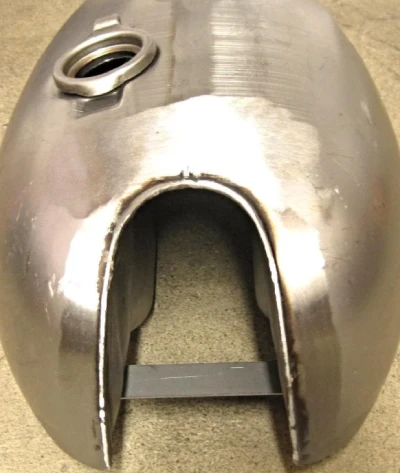
When selecting materials for metal gasoline tanks, a trade-off must be made between corrosion protection, compatibility with manufacturing processes, and overall cost.
Although cold-rolled carbon steel metal gasoline tanks have the lowest initial material cost, they pose significant downstream risks. The cost of applying an internal coating—as well as the risks associated with coating defects—often offset the initial cost savings. Although aluminum-coated steel and NI-TERNE-coated steel have slightly higher material costs, they offer excellent corrosion resistance and eliminate coating-related quality risks.
From the perspective of manufacturing metal gasoline tanks, the advantage of aluminum-coated steel lies in its seamless integration with existing production lines, requiring no process changes; with NI-TERNE, however, care must be taken to manage fumes during the welding process (lead-tin alloys produce lead-containing fumes during welding).
For purchasers seeking cost-effectiveness and long-term reliability, aluminum-coated steel offers a more competitive balance between overall performance and cost, while NI-TERNE retains its unique value in the repair market, where strict adherence to original OEM specifications is required.
Material | Corrosion Resistance | Secondary Coating Required? | Formability | Weldability | Cost Position |
Cold-Rolled Carbon Steel | Poor | Yes | Excellent | Excellent | Lowest |
Aluminized Steel | Excellent | No | Excellent | Good | Moderate |
NI-TERNE Coated Steel | Excellent | No | Good | Good | Moderate |
Looking for a reliable custom sheet metal fabrication companies?
Talk To Supro MFG Expert Team
Contact us for competitive ex-factory prices,
and a full range of technical support services.
Manufacturing Considerations for Corrosion-Resistant Custom Metal Gasoline Tanks
Although aluminum-coated steel and NI-TERNE are inherently corrosion-resistant, whether a metal gasoline tank can fully realize its potential depends largely on the manufacturing process itself. Processing parameters directly affect the integrity and long-term durability of the coating.
Maintaining Material Integrity During the Manufacturing of Metal Gasoline Tanks
The corrosion resistance of aluminized steel and NI-TERNE-coated steel depends on the continuity of the coating. During the stamping process, friction between the die and the sheet metal, excessive blank holder force, or improper lubrication strategies can all lead to coating scratches, peeling, or cracking.
Under hot stamping conditions, aluminum-coated steel may develop coating cracks due to the formation of brittle Fe-Al intermetallic compounds; during cold stamping, although the coating possesses some ductility, severe localized deformation can still cause the coating to rupture, exposing the steel substrate and creating a starting point for corrosion.
Supro’s engineering experience shows that using highly polished die surfaces, specialized lubricants optimized for the coating material, and precisely controlled stamping speeds and blank holder forces are key measures for maintaining the integrity of the coating on metal gasoline tanks.
Edge treatment is equally important—burrs or exposed cross-sections resulting from cutting and trimming must be protected through appropriate edge protection measures. For custom metal gasoline tanks designed for long-term reliability, the manufacturer’s process control capabilities are just as important as material selection.
Weldability and Joint Design
The upper and lower shells of metal gasoline tanks are typically joined using resistance roller seam welding or laser welding to form a sealed connection.
Aluminized steel exhibits good weldability, comparable to that of conventional coated steel; however, during welding, the aluminum coating reacts with the steel substrate to form Al-Fe intermetallic compounds, which may compromise the density and strength of the weld if process parameters are not properly controlled.
For NI-TERNE-coated steel, its lead-tin alloy coating performs well in resistance welding; however, lead-containing fumes generated during the welding process must be controlled through an effective local exhaust ventilation system.
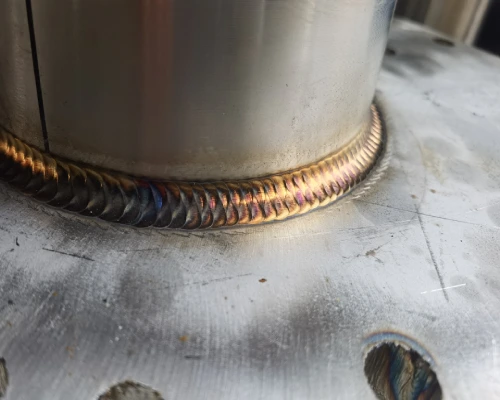
In terms of joint design, the weld zone is the most vulnerable area to corrosion—any welding defects (such as porosity, lack of fusion, or spatter) can become pathways for corrosive media to penetrate. Therefore, the welding process for custom metal gasoline tanks must undergo rigorous validation to ensure that the continuity and density of the weld meet design requirements.
Conclusion
The transition to ethanol-blended fuels is irreversible. E10 and E15 have now become the standard in many markets, and the industry continues to explore ethanol blends with even higher concentrations.
For custom metal gasoline tanks, the choice is clear: adjust material specifications based on the actual usage conditions of ethanol-blended fuels. Aluminum-coated steel and NI-TERNE-coated steel possess inherent corrosion resistance, eliminating the need for secondary coatings while ensuring a long service life. Furthermore, both materials can be seamlessly integrated into existing production processes with minimal process adjustments.
Supro is a specialized manufacturer of custom metal gasoline tanks. Leveraging advanced equipment, extensive manufacturing experience, and a professional engineering team, we provide perfect custom metal gasoline tank solutions to more than 3,000 companies worldwide, along with genuine manufacturer quotes.
If you need technical specifications, customized project solutions, or OEM partnership inquiries, please contact Supro immediately. Our professional engineering team is always ready to tailor a dedicated application solution for you.