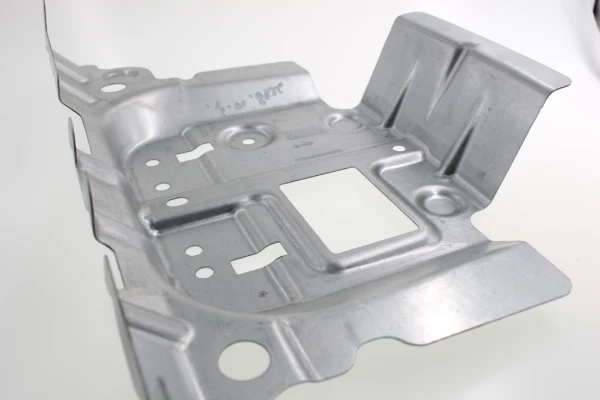

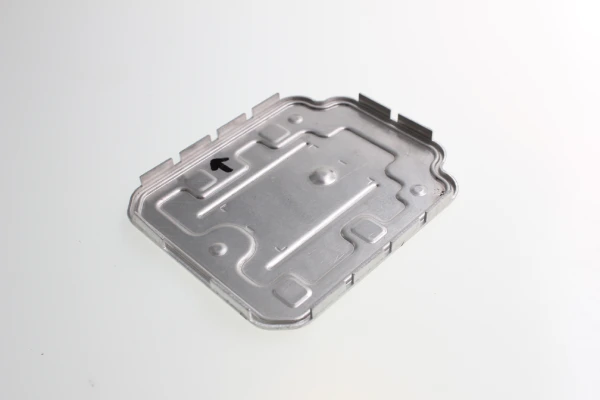
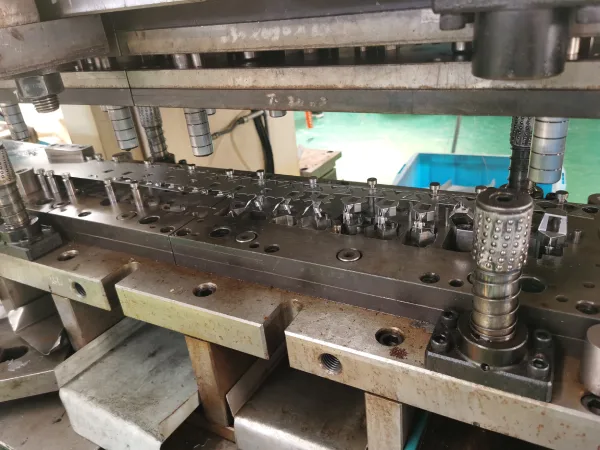

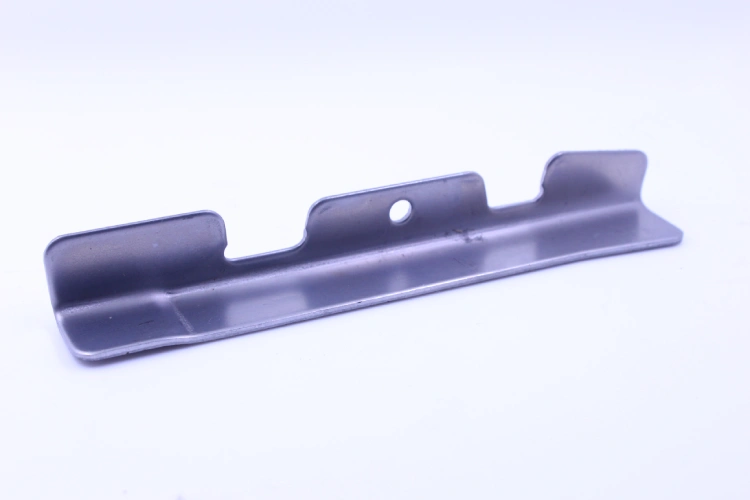
In high-volume progressive stamping production, the financial impact of defective parts extends far beyond the direct cost of scrapped sheet metal. Minor defects—such as excessive burrs or dimensional warpage—can trigger catastrophic downtime on automated assembly lines, severely undermining overall production efficiency and significantly driving up total cost of ownership.
Implementing a zero-defect custom progressive die stamping project is far more than just a mechanical stamping operation; it requires a rigorous, data-driven understanding of material properties, extremely high tensile yield strengths, and complex die geometries. Dimensional anomalies such as severe springback do not occur randomly but are highly predictable metallurgical reactions that must be eliminated through mathematical methods during the initial engineering design phase.
At Supro MFG, our DFM methodology mandates that troubleshooting begin well before the first coil of steel is actually fed into the press. By applying advanced failure mode analysis and precise shear gap calculations, our die experts eliminate the root causes of critical defects in progressive stamping dies.
This comprehensive guide delves into the structural mechanics principles behind these failures and details how our optimized progressive stamping process architecture uses mathematical methods to provide an absolute guarantee of Cpk stability for your most demanding hardware projects.
Root Causes of Excessive Burrs in Progressive Stamping
Excessive burrs indicate serious failures in the fracture mechanics of the material. During high-speed progressive stamping, improper die clearance or severe punch wear can cause plastic deformation to replace clean shearing, thereby instantly increasing the cost of secondary deburring and affecting the tolerance requirements of critical automated assembly lines.
Optimization of Punch-to-Die Clearance
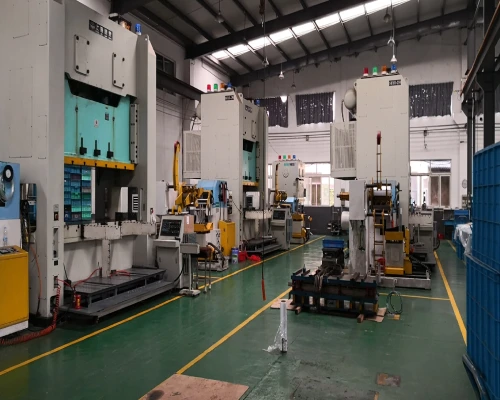
The key to preventing burrs lies in controlling the clearance between the punch and the die. If this critical clearance is calculated incorrectly, the sheet metal will undergo severe plastic deformation rather than clean fracture.
If the clearance is too small, secondary shearing will occur; if it is too large, the metal will curl and tear, leaving large, razor-sharp burrs. To achieve defect-free progressive metal stamping, this clearance must never be estimated based on experience—it must be precisely calculated using strict percentage values based on the material’s specific thickness and ultimate tensile strength.
Our die engineers conduct rigorous analysis during the Design for Manufacturing (DFM) phase to design the optimal burnish-to-break ratio. By locking in these precise mathematical tolerances, our progressive stamping dies ensure clean edges, completely eliminating the need for costly secondary roller polishing or deburring processes.
Wear of Progressive Stamping Dies and Maintenance of Carbide Punches
No matter how mathematically perfect the clearance may be, continuous mechanical friction remains the greatest obstacle to achieving clean sheared edges. After millions of stamping cycles in a high-speed progressive stamping environment, the edges of standard tool steel undergo microscopic rounding. Once the punch tip degrades, it loses the ability to decisively break through the material’s yield point, instantly producing out-of-spec burrs.
To effectively counteract this physical degradation, Supro MFG employs high-quality carbide punches and die inserts at all critical cutting stations. In addition, we enforce strict, data-driven preventive maintenance (PM) protocols. Rather than waiting for the quality assurance department to flag defects, we proactively regrind progressive stamping dies based on precise stroke count thresholds.
This proactive maintenance strategy ensures that burr height is strictly controlled within your specified micro-inch tolerances, thereby protecting automated assembly lines from the threat of catastrophic jamming.
Mitigating Springback in High-Strength Materials During Progressive Stamping
Springback in high-strength alloys is determined by elastic recovery following plastic deformation. To successfully mitigate this dimensional change during the progressive stamping process, advanced bending calculations are required, and coining stations must be configured to eliminate residual stresses, thereby ensuring that the product strictly meets geometric dimensional requirements.
Anisotropy and Yield Strength of Progressive Stamping Materials
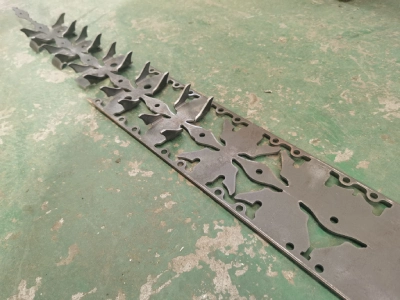
The springback phenomenon in high-strength materials is essentially a metallurgical challenge, caused by high yield strength and significant elastic recovery. When forming high-strength low-alloy (HSLA) steel or stainless steel variants, engineers must carefully consider the inherent anisotropy of the metal. The rolled grain orientation of progressive stamping materials significantly alters the behavior of internal stresses during the bending process. If the bend line runs parallel to these grain fibers, it will maximize springback and induce structural microcracks.
To address this issue, our die experts carefully analyze the strip layout to ensure that critical bends are perpendicular to the grain orientation. By incorporating this deep knowledge of materials science into the initial die design, our custom progressive die stamping solutions can predict and eliminate dimensional deviations, ensuring that high-volume parts fully comply with strict specifications and avoiding failures caused by unpredictable springback.
Advanced Coining and Over-Bending Techniques
To physically counteract the extreme elastic memory effect of high-strength metals, die engineers must employ robust mechanical interventions. Simply bending the material to the final angle would inevitably result in dimensional inaccuracies. Therefore, our heavy-duty progressive stamping dies incorporate precision over-bending stations, which are mathematically calculated to push the metal beyond the target angle, allowing it to spring back naturally to the exact specified tolerance range.
For ultra-rigid components, we integrate high-tonnage coining stations directly into the die base. The coining process applies concentrated compressive force to the inner bend radius, physically breaking the stress fibers within the material and permanently eliminating its elastic memory. By incorporating these advanced mechanical safeguards into the custom progressive die stamping process, Supro MFG guarantees absolute angular repeatability and thoroughly protects your components from bottlenecks on automated assembly lines caused by dimensional warpage.
Are you looking for reliable & cost-effective
China metal fabrication manufacturer
More than 150,000 OEM metal fabrication products delivered to 5,000+ global buyers.
And benefit from it!
Eliminating Warpage and Flatness Deviations in the Progressive Stamping Process
Warpage affects the assembly accuracy of critical mating surfaces and automated welding. During high-speed progressive stamping, unbalanced residual stresses generated by heavy-duty punching can cause sheet metal deformation. By designing dedicated leveling stations, we eliminate internal strains, thereby mathematically guaranteeing the absolute flatness required for the assembly line.
Residual Stress Management During the Punching Process
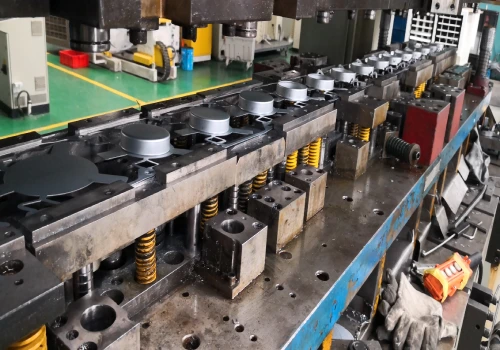
Warping in sheet metal is rarely caused by defects in the raw material; it is typically an engineering failure resulting from unbalanced residual stresses. During high-density punching operations in progressive stamping dies, extreme shear forces violently disrupt the metal’s internal stress matrix. This sudden release of energy causes uneven stretching of the material, resulting in severe dimensional warpage or the troublesome “oil drum effect.”
To address this physical deformation in the progressive die metal stamping process, our DFM engineers meticulously calculate the punch sequence. By strategically staggering punching operations across multiple stations rather than performing them simultaneously, we are able to prevent catastrophic stress concentrations.
This precisely calculated distribution of mechanical forces eliminates the root cause of warpage, ensuring that your structural chassis maintains strict geometric integrity during subsequent automated robotic welding processes.
Integrating Idle Stations and Flattening Dies into the Progressive Stamping Process
To meet stringent geometric dimensions and tolerances (GD&T) for flatness, advanced die architectures must incorporate carefully designed stress-relief mechanisms. In complex progressive metal stamping layouts, the most effective strategy is to strategically integrate idle stations. These idle stations provide the metal coil with critical microsecond-level time to naturally relax and eliminate accumulated strain before entering the next high-intensity forming operation.
Additionally, for parts requiring absolute surface coplanarity, Supro MFG integrates dedicated flattening or leveling dies at the end of the stamping sequence. These specific stations apply precise compression force to the parts, proactively eliminating microscopic ripples generated upstream.
By integrating these dedicated safeguards into our custom progressive stamping dies, we are able to consistently deliver perfectly flat parts, completely eliminating the high scrap rates caused by assembly misalignment during your final surface-mount technology (SMT) or automated assembly processes.
Integrating In-Die Sensors to Achieve Zero-Defect Progressive Stamping Production
To achieve zero-defect manufacturing, it is essential to shift from passive detection to predictive protection. By embedding advanced in-die sensors deep within the progressive stamping die, we can automatically detect minute deviations in real time and immediately halt the stamping press, thereby ensuring the delivery of flawless products to our customers.
Automated Defect Detection
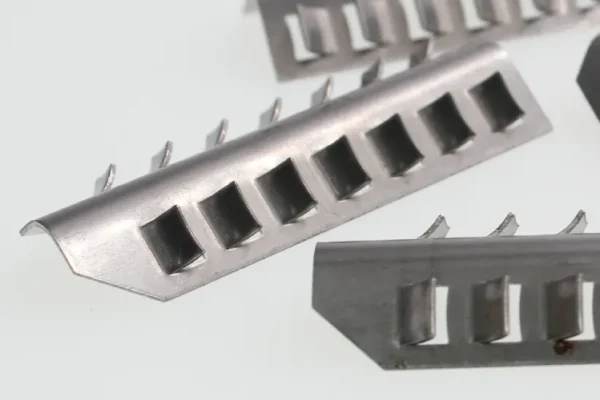
In modern, high-volume progressive die metal stamping production, relying solely on manual end-of-line inspections is a severely outdated strategy. To ensure absolutely zero defects in shipments, Supro MFG integrates advanced automated defect detection systems directly into the progressive stamping die assembly. We have strategically deployed a comprehensive array of precision microswitches, proximity sensors, and fiber-optic scrap detectors to monitor the internal dynamics of the steel strip at a rate of hundreds of strokes per minute.
If a guide hole deviates by even a fraction of a millimeter, or if punched scrap unexpectedly rebounds onto the die base, these precision sensors trigger an emergency press shutdown within milliseconds. This instantaneous mechanical intervention prevents the upper punch from striking misaligned coiled material, thereby completely eliminating the root cause of catastrophic dimensional warping, edge flattening, and severe burrs.
In addition, the dynamic tonnage monitoring system precisely tracks the shear force applied during each progressive stamping cycle. Any abnormal peaks in forming tonnage immediately alert our engineers to even minor die wear—long before this wear leads to a decline in part quality.
For purchasing directors, this rigorous, sensor-driven progressive metal stamping ecosystem not only powerfully protects your die investment but also mathematically ensures that only dimensionally perfect parts enter the automated assembly line.
Conclusion
To eliminate burrs, springback, and dimensional warpage in high-volume progressive die metal stamping production, it is essential to shift from reactive troubleshooting to proactive engineering. True manufacturing excellence means mathematically eliminating these physical defects before the first coil of steel is cut.
At Supro MFG, our engineers follow rigorous Design for Manufacturability (DFM) protocols, meticulously optimizing shear clearances deep within the progressive stamping die and eliminating metallurgical anisotropy. We reject reliance on manual end-of-line sorting, instead relying on immutable mechanical and physical laws and an advanced sensor-driven architecture.
Through rigorous control over the entire lifecycle of the progressive stamping process, we mathematically guarantee that the Cpk value maintains exceptional stability over millions of stamping strokes. This strict, data-driven process control aligns perfectly with rigorous Production Part Approval Process (PPAP) and First Article Inspection (FAI) standards.
Integrating these advanced engineering solutions into your custom progressive die stamping project will directly maximize material utilization and completely eliminate downtime. Submit your complex 3D CAD models to our technical team today for a comprehensive risk assessment, and let our custom progressive stamping technology deliver reliable, zero-defect production for you.