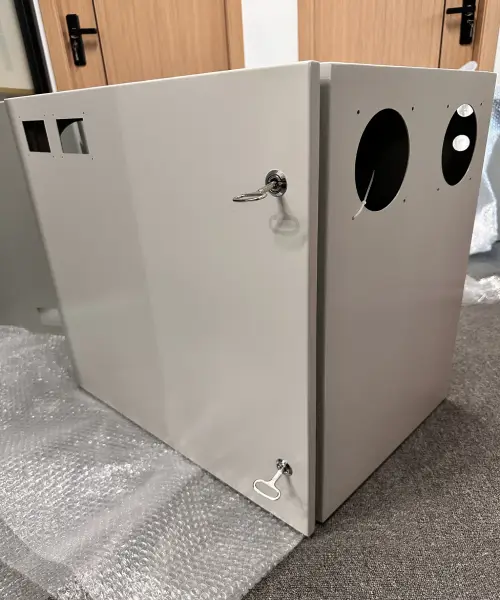

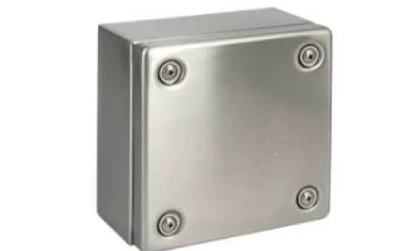


The accelerated deployment of public charging infrastructure has exposed EV charging station housings to unprecedented physical risks—acts of vandalism such as minor vehicle collisions, blows from blunt objects, and forced entry via lock tampering directly result in equipment downtime and high repair costs.
The IK10 protection rating defined by the IEC 62262 standard requires the housing to withstand an impact energy of 20 joules—equivalent to the impact force generated by a 5-kg object dropped from a height of 400 mm—while ensuring that the IP protection rating remains unaffected after testing and that the door operation and locking points remain undamaged. However, achieving IK10 compliance is not simply a matter of increasing material thickness.
From the perspective of EV charging station housing manufacturing, the failure modes of 2.5 mm aluminum alloy and 1.5 mm stainless steel under impact are fundamentally different—aluminum absorbs energy through plastic deformation, while stainless steel faces the risk of cracking due to stress concentration. At the structural design level, concealed hinges, a three-point multi-point locking system, and the principle of no exposed fasteners collectively form a systematic line of defense that eliminates external attack surfaces.
This article systematically breaks down the complete manufacturing strategy for an IK10-rated EV charging station housing, covering everything from base material selection and structural engineering to manufacturing process control.
Understanding the IK10 Protection Rating and Its Significance for EV Charging Station Housings
The IEC 62262 standard classifies the mechanical impact protection of electrical equipment enclosures into 11 levels, ranging from IK00 to IK10, with IK10 representing the highest protection level in this system.
An IK10-rated EV charging station housing must withstand an impact energy of 20 joules—equivalent to the impact force generated by a 5-kg object dropped from a height of 400 mm—and, following the test, the housing must not exhibit any through cracks or permanent deformation, and the internal electrical components must remain undamaged.
It is worth noting that the IK10 test is conducted using a large pendulum apparatus with a hemispherical impact head having a radius of 50 mm; each exposed surface is subjected to five impacts, with no more than four impacts in the immediate vicinity of any single location.
From a sheet metal fabrication perspective, passing the IK10 test depends not only on material thickness but also on structural rigidity design—specifically, the dispersion of impact energy transfer paths, the elimination of stress concentration zones, and the load-bearing capacity of welds and bends. These engineering details directly determine the structural integrity of the EV charging station housing under a 20-joule impact.
Material Selection—Deciding on the Base Material for the EV Charging Station Housing
The decision regarding the base material for an IK10-rated EV Charging Station Housing is essentially an engineering trade-off between aluminum alloy and stainless steel. The industry-standard solution employs 2.5 mm marine-grade aluminum alloy or 1.5 mm Grade 316/316L stainless steel.
The advantage of aluminum alloy lies in its ability to absorb energy through plastic deformation upon impact—deforming rather than fracturing—thereby maintaining the housing’s seal integrity; stainless steel, on the other hand, offers higher tensile strength and scratch resistance, but is more prone to cracks caused by stress concentration under high-energy impacts.
Aluminum Alloy EV Charging Station Housing
2.5mm marine-grade aluminum alloy is a proven material choice for IK10-rated EV charging station housings. When subjected to impact, aluminum tends to undergo plastic deformation rather than fracture—absorbing 20J of impact energy during deformation while maintaining the housing’s seal integrity.
This “deform without breaking” characteristic is particularly critical in public charging scenarios: while the custom EV charging station housing may sustain dents, the internal electrical components remain undamaged, and the equipment continues to operate. 5052 aluminum alloy is a common grade for this type of application.
Furthermore, aluminum has a density of approximately one-third that of stainless steel, significantly reducing installation difficulty and transportation costs; its natural oxide layer provides self-protective corrosion resistance in high-humidity environments such as coastal areas. Powder coating (such as the AkzoNobel system) further enhances the weather resistance and scratch resistance of custom EV charging station housings.
Stainless Steel EV Charging Station Housing
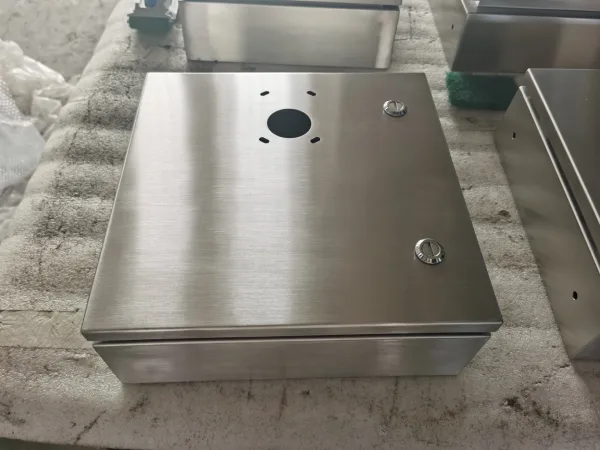
1.5 mm Grade 316L stainless steel is an alternative for IK10-rated EV charging station housings; Grade 304 may also be selected.
Stainless steel has a higher tensile strength (≥500 MPa) than aluminum and excels in corrosion resistance, scratch resistance, and long-term structural stability. However, under high-energy impacts, stainless steel is more prone to cracks caused by stress concentration—once a crack forms, it compromises the housing’s seal, allowing moisture and dust to penetrate and endangering the internal electronic components.
This difference in failure modes requires special attention during sheet metal fabrication to ensure quality control of welds and the elimination of stress concentration zones in stainless steel EV charging station housings.
Furthermore, stainless steel weighs three times as much as aluminum and has a thermal conductivity of only 15–25 W/m·K (compared to approximately 205 W/m·K for aluminum), which must be taken into account in heat dissipation designs. Material selection should be based on a comprehensive evaluation of the installation environment, cost budget, and protection rating requirements.
Are you looking for reliable & cost-effective
China metal fabrication manufacturer
More than 150,000 OEM metal fabrication products delivered to 5,000+ global buyers.
And benefit from it!
Structural Design of the EV Charging Station Housing
Structural design serves as the engineering bridge that translates material properties into IK10-level impact resistance. From the layout of reinforcing ribs and the concealment of hinges to integrated sealing, every design decision directly influences the structural response and failure modes of the EV charging station housing under a 20J impact.
Panel Thickness and Reinforcing Rib Layout of the EV Charging Station Housing
Panel thickness is the starting point for meeting IK10 standards—2.5 mm aluminum alloy or 1.5 mm stainless steel are the industry benchmarks. However, simply increasing thickness is not the optimal solution. The rib layout maximizes stiffness with minimal weight increase: by strategically arranging crisscross ribs on the back of the EV charging station housing panels, the 20 J impact energy is dispersed throughout the entire panel via the rib network, preventing permanent deformation caused by localized stress concentration.
Finite element analysis is indispensable in this process—simulation modeling identifies stress concentration zones, allowing for targeted adjustments to the spacing and cross-sectional shape of the stiffeners, ensuring that every gram of material contributes to impact resistance.
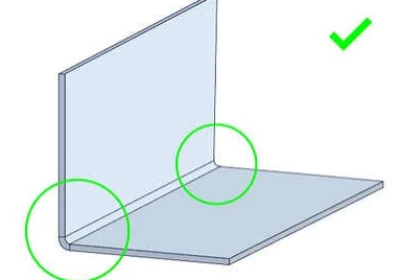
Furthermore, rounding sharp corners is a fundamental engineering principle—sharp corners act as natural focal points for impact forces, whereas rounded corners disperse the load along the curved surface.
Concealed Hinge Design
Exposed hinges are the most vulnerable component in the EV Charging Station Housing structural system—when subjected to impact, the hinge pins deform or break, directly causing the door to fail to close or lose its seal.
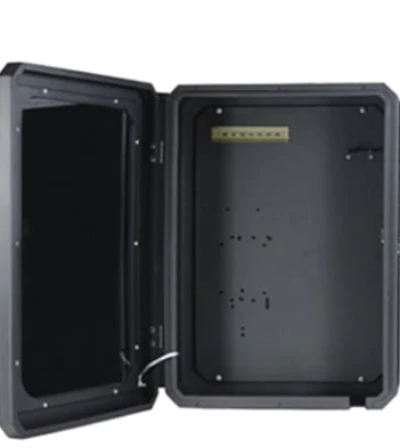
Concealed hinges house the entire pivot mechanism inside the door frame, physically eliminating any externally vulnerable structural features. From an engineering perspective, concealed hinges must precisely align with the door frame’s folded-edge structure—the door frame in the hinge installation area must have sufficient material thickness to withstand impact loads while maintaining smooth door operation.
This design logic stems from the “no exposed fasteners” principle: eliminating all external features that could serve as points of attack.
Integrated Door Frame Sealing and Impact Resistance
The clearance between the door frame and the door panel directly determines the path of impact energy transfer. The folded-edge structure and overlapping door frame design increase the length of the force transmission path—impact force travels from the panel through the folded edge, the door frame, and finally to the main structure of the enclosure; the longer the path, the more thoroughly the energy is dissipated.
The sealing system plays a dual role here: polyurethane on-site foam seals or silicone foam gaskets not only ensure the IP protection rating (IP54/IP65) of the custom EV charging station housing but also absorb part of the energy through elastic deformation at the moment of impact, slowing the transmission of the shock wave to the internal electrical components.
The key design consideration lies in matching the compression of the sealing strip with the rigidity of the door frame—a sealing strip that is too soft loses its supportive function upon impact, while one that is too hard cannot effectively absorb energy.
The integrated design of sealing and impact resistance essentially combines the two originally independent functional requirements of “protection” and “sealing” into a unified engineering system.
Only 4 steps
online custom metal fabrication parts
Contact our experts team and experience the efficiency and economic benefits of digital metal fabrication services.
Upload Design Files
STL , STEP (.stp), IGES (.igs), (.ZIP), or PDF.
Also be a sample or an idea
Quote & Design Analysis
Instant factory quotes and DfM reports, the most reasonable solution.
Manufacturing Begins
Digital processes can initiate order tasks within 24 hours.
On-Time Delivery
Keeping delivery promises, approved by 3000+ Global Company buyers.
Locks and Anti-Pry Hardware for EV Charging Station Housings—Eliminating External Attack Surfaces
Locks and anti-pry hardware serve as the final physical line of defense in the EV charging station housing’s anti-vandalism system. The engineering logic behind this design is to eliminate all externally accessible points of attack, leaving no foothold for prying tools.
Three-Point Multi-Point Locking System
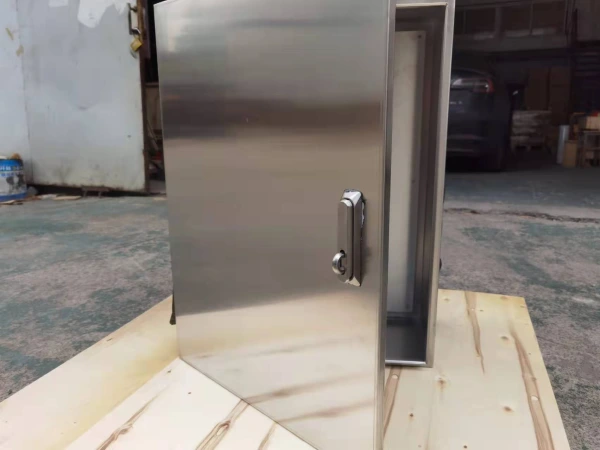
Single-point locks concentrate stress under prying loads, resulting in extremely limited resistance to forced entry. The three-point multi-point locking system uses a single control component to simultaneously drive the upper, middle, and lower locking points to lock in unison, distributing the locking force evenly across the full height of the custom EV charging station housing door.
The number of locking points can be flexibly configured based on the door’s height, supporting synchronized operation of up to seven or more locking points. The essence of multi-point locking is to disperse prying forces across multiple load-bearing points—even if one locking point fails, the remaining points keep the door closed, effectively preventing the door from being forced open under impact.
Lock Cylinder Protection and Anti-Prying Design
The lock cylinder is the most direct target of attack in the EV charging station housing’s anti-pry system. Professional lock models featuring a disc-type cylinder or padlock functionality are the standard configuration. More advanced protection strategies employ a free-rotating lock cylinder design—where the cylinder can rotate freely in the locked state without activating the unlocking mechanism, effectively resisting strong twisting and drilling attacks.
Anti-drill washers and a metal housing provide an additional physical barrier for the lock cylinder. The lock housing features beveled or rounded contours to eliminate flat surfaces that could serve as fulcrums for pry tools—a design principle consistent with the logic behind concealed hinges: eliminating all externally vulnerable geometric features.
Locks compliant with the DIN 1630 standard’s RC2 resistance class are the recommended choice for outdoor EV charging station housings.
Principle of No Exposed Fasteners
All fasteners on custom EV charging station housings—including hinge mounting bolts, lock mounting screws, and panel connection rivets—must be concealed within the door frame or use tamper-resistant screws. Externally visible metal fasteners, such as screw heads and rivet heads, essentially serve as leverage points for prying tools—allowing an attacker to apply force directly using a screwdriver or pry bar.
Engineering approaches to implementing the “No Exposed Fasteners” Principle include: positioning fasteners on the inner side of the door frame flanges, using blind rivet nuts for internal fastening, or employing countersunk screws covered with flat-head plugs. Additionally, modular designs—such as replaceable side panels—must strike a balance between maintenance convenience and security; quick-change mechanisms should not come at the expense of anti-pry performance.
Looking for a reliable custom sheet metal fabrication companies?
Talk To Supro MFG Expert Team
Contact us for competitive ex-factory prices,
and a full range of technical support services.
EV Charging Station Housing Manufacturing Process—Transforming Design into an IK10-Rated Product
Manufacturing precision is the decisive factor in translating design performance into IK10-rated impact resistance. From blanking and forming to welding and assembly, every process step directly affects the actual performance of custom EV charging station housings under a 20J impact, while mass-production consistency is the key threshold for translating engineering value from prototypes to mass production.
Precision Blanking and Forming
Laser cutting is the preferred process for the blanking stage of the IK10-rated EV Charging Station Housing. Laser cutting accuracy can reach ±0.1 mm, and high-end equipment can achieve positioning accuracy within ±0.03 mm, ensuring the positional accuracy of panel contours, mounting holes, and bend lines—these dimensional tolerances directly determine the alignment of subsequent bend angles and rib layouts. Cut edges must be free of burrs and thermal distortion, as edge defects can become sources of stress concentration under impact loads.
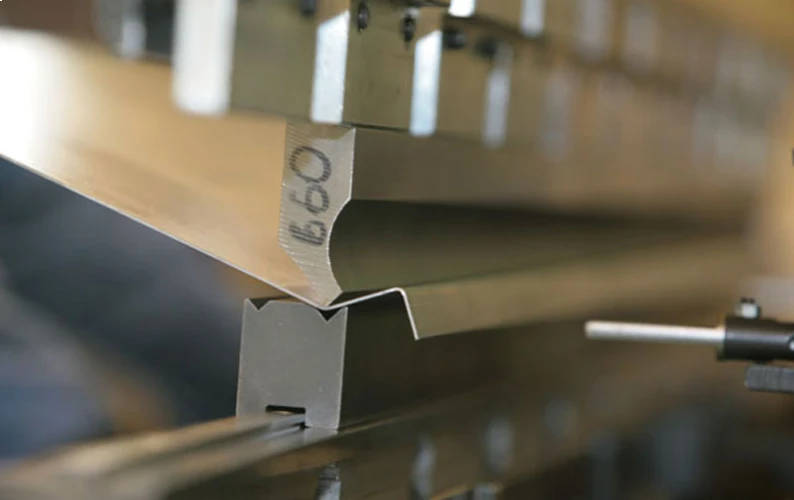
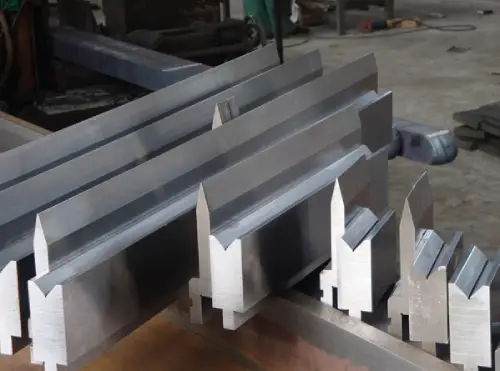
The CNC bending process is equally critical—modern CNC press brakes can achieve angle control accuracy of ±0.1°, with bending accuracy controlled between 0.05 mm and 0.1 mm. For 2.5 mm aluminum alloy and 1.5 mm stainless steel, springback compensation parameters must be precisely set according to material grade and thickness to ensure that the geometric accuracy of key features—such as the door frame flanges and stiffeners—of the custom EV charging station housing remains consistent during mass production.
Welding and Assembly Control for EV Charging Station Housings
Welding is the stage in EV charging station housing manufacturing most prone to introducing defects, and it is also a key variable affecting IK10 impact resistance.
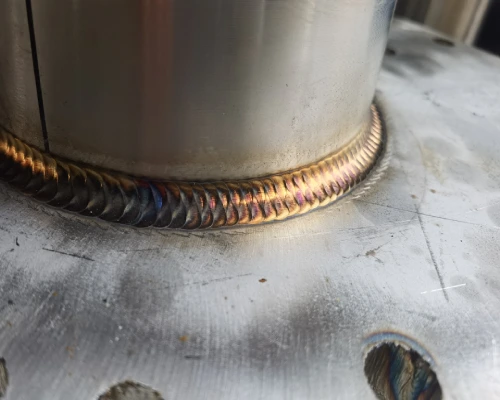
Weld quality directly affects the efficiency of impact load transfer within the custom EV charging station housing structure—weld defects (porosity, lack of fusion, undercut) will crack first under a 20J impact.
Due to its austenitic structure, stainless steel has low thermal conductivity and a high coefficient of thermal expansion, making it more prone to thermal deformation during welding. Control strategies include: securing workpieces with clamps and fixtures; planning the welding sequence to distribute heat evenly; using intermittent welding instead of continuous welds to reduce localized heat input; and controlling joint gaps and groove angles.
For aluminum alloy welding, attention must be paid to porosity control and weld strength degradation. Post-welding flattening and dimensional inspection ensure that the door panel’s flatness and the door frame’s parallelism remain within tolerance limits.
Surface Treatment and Weather Resistance of EV Charging Station Housings
The surface treatment system for outdoor EV charging station housings directly determines their long-term weather resistance and scratch resistance. Powder coating is the industry-standard solution—using a polyester powder coating system applied via electrostatic spraying to ensure coating adhesion. Coating thickness is typically controlled between 60 and 80 μm to balance impact resistance and flexibility.
Thermosetting polyester powder coatings for outdoor use must meet specific weather resistance and corrosion resistance standards; high-quality systems can provide a warranty of 8 years or more. The pretreatment stage—degreasing, phosphating, or chromating (for aluminum)—directly affects coating adhesion and salt spray resistance.
For coastal or high-humidity environments, it is recommended to use higher-grade weather-resistant powder coating systems. Additionally, all welded areas must be sanded prior to coating to remove weld slag and sharp edges, ensuring complete coating coverage without any weak spots.
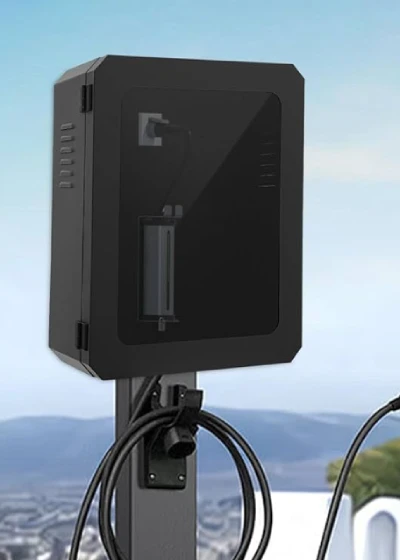
Testing, Validation, and Quality Assurance for EV Charging Station Housings
Testing and validation of IK10-rated EV charging station housings must strictly adhere to the framework of the IEC 62262 standard. Testing shall be conducted using a pendulum or free-fall apparatus with an impact energy of 20 joules.
Each exposed surface must withstand 5 impacts, with no more than 4 impacts in the immediate vicinity of the same location. Samples must be unused, complete housings with all components in place. After testing, the EV charging station housing must not exhibit any through cracks or functional damage, and door operation and locking points must remain functional.
Passing the sample test is only the starting point. During mass production, a process control system must be established—ranging from material batch traceability and consistency in laser cutting and bending parameters to strict adherence to welding process specifications.
First Article Inspection (FAI) verifies that the first unit of each batch matches the certified sample in terms of geometric accuracy and structural characteristics. Regular sampling tests and Statistical Process Control (SPC) ensure that every batch of custom EV charging station housings meets IK10 requirements. Third-party certification (from organizations such as SGS, TÜV, etc.) provides the purchaser with traceable, objective quality assurance.
Conclusion
The manufacturing of IK10-rated EV charging station housings has never been about optimizing a single process step, but rather a collaborative effort involving materials science, structural engineering, and manufacturing processes.
From the energy-absorption mechanism of plastic deformation in 2.5mm aluminum alloy, to the systematic anti-pry design featuring concealed hinges and a three-point multi-lock system, to the control of welding heat input and the weather resistance assurance provided by powder coating—every engineering decision directly impacts structural integrity under a 20J impact. Mass-production reliability depends on continuous verification through process control and third-party certification.
As a specialized manufacturer of EV charging station housings, our value lies in transforming the IK10 standard into verifiable, traceable product delivery—ensuring that every custom EV charging station housing stands up to the test in real-world public environments.
For technical consultations, system design solutions, or product specifications, please feel free to contact our engineering team at any time.