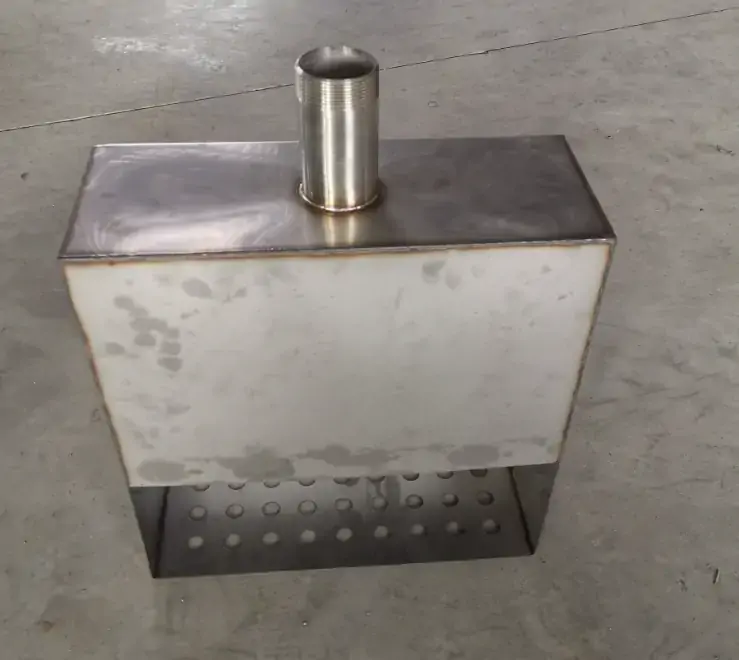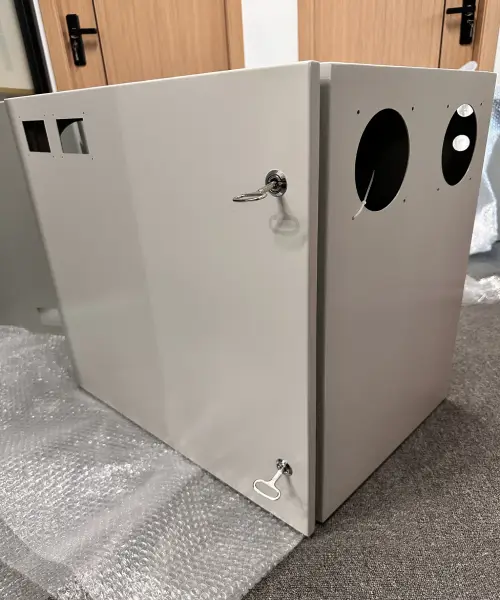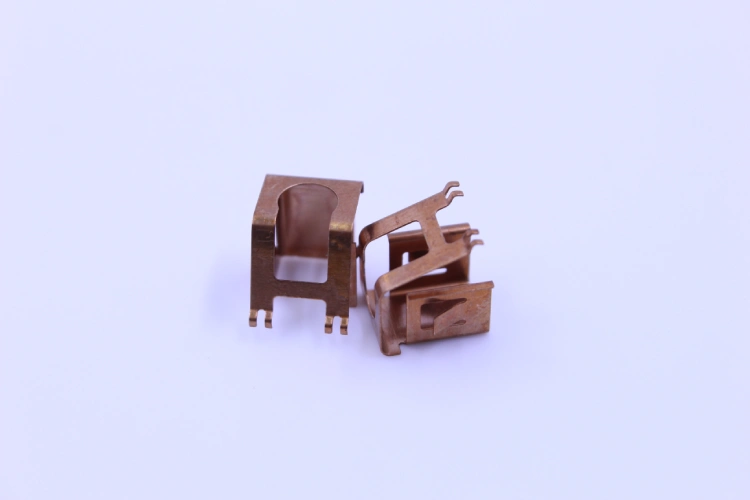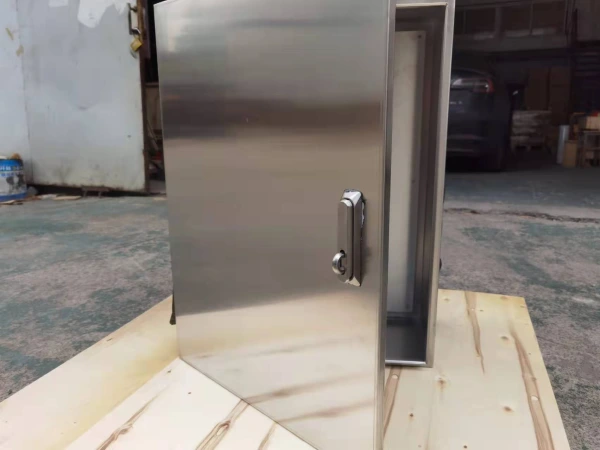
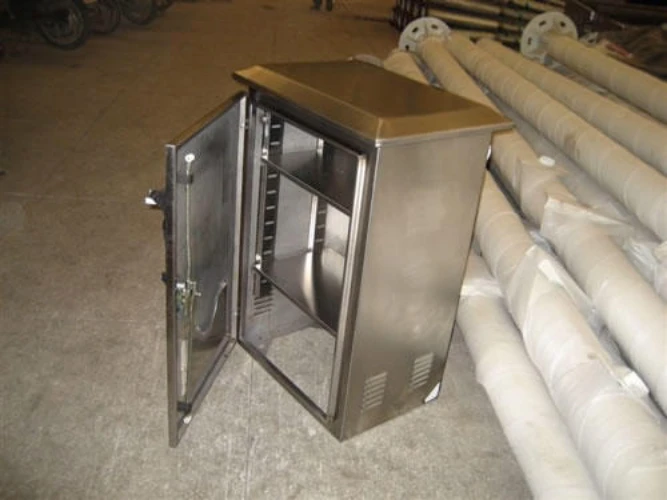

When brown spots appear on the surface of stainless steel IP enclosures a few months after installation, it is often assumed that this is due to the material grade. However, based on nearly two decades of custom fabrication experience, Supro has found that over 90% of premature rusting incidents can be attributed to four preventable factors: free iron contamination during cutting or grinding, thermal discoloration from unshielded welding, crevice designs that trap electrolytes, and the omission of passivation treatment.
Although the passivation layer on the surface of 304 or 316 stainless steel is robust, it cannot compensate for embedded particles or heat-affected zones with insufficient chromium content. To ensure that stainless steel IP-rated enclosures achieve their intended performance, the entire manufacturing process must be strictly controlled, from dedicated tooling to post-weld acid pickling.
This article analyzes each root cause from a manufacturer’s perspective, providing purchasers and engineers with actionable criteria to distinguish genuine metal defects from premature corrosion caused by manufacturing processes. Understanding these mechanisms directly extends the service life of IP enclosures and reduces on-site failures.
Material-Related Causes of Premature Corrosion in Stainless Steel IP Enclosures
The base material determines performance. When premature corrosion occurs in stainless steel IP-rated enclosures, the primary suspect is always the material itself—whether due to an inappropriate grade selection, residual mill scale, or cross-contamination from carbon steel. These issues can be prevented by implementing verified mill certifications and strict surface control measures before manufacturing begins.
Non-compliant or Mislabeled Stainless Steel Grades
Many IP enclosures claiming to use 304 or 316 grade stainless steel fail to meet the chemical composition limits specified in ASTM A240 or EN 10088. Common issues include excessively low chromium content (below 17.5%) or insufficient molybdenum content (below 2.0% for 316 grade), which directly reduces the pitting resistance equivalent number (PREN).
Some imported coils use 201 stainless steel as a substitute—which contains only half the nickel of 304 and no molybdenum—yet still label the IP-rated enclosures as “304.” Field tests have shown that these non-compliant alloys develop pinpoint rust spots within weeks in mildly humid environments. Buyers can effectively mitigate this risk by requesting mill test reports (MTRs) and conducting X-ray fluorescence (XRF) sampling verification on the delivered stainless steel IP-rated enclosures.
Residual Rolling Scale and Surface Contamination
A tough layer of scale remains on the surface of hot-rolled stainless steel sheets, consisting of iron oxide with low chromium content. If fabricators fail to thoroughly remove this scale through acid pickling or mechanical descaling before forming IP enclosures, the scale acts as a cathode, accelerating localized electrochemical corrosion.
To make matters worse, many workshops use the same slitting line for both carbon steel and stainless steel or store them on the same shelves. Free iron particles can transfer to the surface of stainless steel IP enclosures, forming microscopic rust spots. Under indoor conditions in non-marine environments, these contaminants will produce typical brown streaks or spots within 30 to 60 days. Therefore, proper post-treatment is essential—whether through comprehensive acid pickling or sandblasting with specialized stainless steel media.
Only 4 steps
online custom metal fabrication parts
Contact our experts team and experience the efficiency and economic benefits of digital metal fabrication services.
Upload Design Files
STL , STEP (.stp), IGES (.igs), (.ZIP), or PDF.
Also be a sample or an idea
Quote & Design Analysis
Instant factory quotes and DfM reports, the most reasonable solution.
Manufacturing Begins
Digital processes can initiate order tasks within 24 hours.
On-Time Delivery
Keeping delivery promises, approved by 3000+ Global Company buyers.
Manufacturing Defects in IP Enclosures
Even with correct material specifications, poor manufacturing practices can compromise corrosion resistance. Stainless steel IP enclosures often fail prematurely due to thermal discoloration from unshielded welding, iron particles left behind in shared abrasives, or contaminated deburring tools. These process-induced defects can be entirely prevented through specialized stainless steel production processes and post-weld passivation treatments.
Oxidation in the Heat-Affected Zone (HAZ) and Weld Discoloration
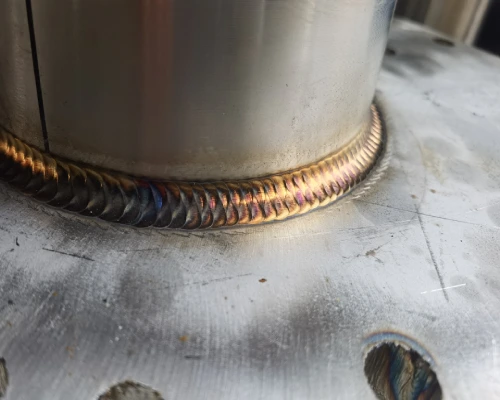
When welding stainless steel IP-rated enclosures, insufficient shielding gas coverage or improper heat control can cause a chromium-depleted layer to form in the heat-affected zone (HAZ) beneath the visible heat-affected discoloration layer. These oxides have lower corrosion resistance than the base metal.
In ASTM A967 testing, even a weld color as light as straw yellow can lower the pitting potential by more than 300 mV. Moisture condensing in these areas can cause rust within weeks, often leading to a misdiagnosis of “substandard stainless steel.”
The solution is prevention. Using argon or nitrogen back-blowing, combined with post-weld acid pickling paste or electropolishing, can restore chromium enrichment. For buyers, specifying a maximum heat-affected color intensity (e.g., no darker than light straw color according to AWS D18.2) and requiring post-weld passivation can significantly extend the service life of stainless steel IP-rated enclosures.
Iron Particles Embedded from Grinding and Cutting
Grinding or cutting stainless steel IP enclosures with abrasives previously used on carbon steel transfers free iron to the stainless steel surface. Plasma cutting with compressed air (rather than nitrogen) leaves a deposit layer rich in iron oxide. These embedded particles become initiation sites for electrochemical corrosion. At relative humidity levels below 50%, a single iron particle can produce visible rust spots within 72 hours.
While mechanical removal (e.g., using ceramic flanged grinding wheels designed specifically for stainless steel) is helpful, chemical passivation is the only reliable method that dissolves embedded iron without damaging the base material. Purchasing specifications should explicitly prohibit the cross-use of abrasives and require that all stainless steel IP-rated enclosures undergo citric acid or nitric acid passivation in accordance with ASTM A967 following any cutting or grinding operations.
Improper Deburring and Edge Treatment of IP Enclosures
Deburring IP-rated enclosures with carbon steel wire wheels or files can lead to re-contamination of newly exposed edges with iron. Furthermore, sharp burrs and edges trap moisture and capillary-drawn electrolytes more easily than flat surfaces, thereby accelerating crevice corrosion. During field inspections, early rust spots often originate at edge fractures and punch holes.
Proper deburring requires specialized stainless steel abrasives (e.g., non-woven nylon wheels or carbide files). After deburring, edges should be lightly polished using a method compatible with the passivation process to eliminate stress concentration points and remove trapped contaminants.
Reviewing the separation procedures for deburring media and requiring edge passivation (citric acid spray or immersion) for all stainless steel IP-rated enclosures can eliminate this often-overlooked failure point.
Are you looking for reliable & cost-effective
China Sheet Metal Fabricators
More than 150,000 OEM metal fabrication products delivered to 5,000+ global buyers.
And benefit from it!
Design and Assembly Defects Leading to Localized Corrosion in IP Enclosures
Materials and manufacturing processes alone do not guarantee performance. Many stainless steel IP enclosures rust prematurely due to geometric issues—such as narrow crevices, areas where water accumulates, or direct contact with carbon steel fittings. These design-related failures can be avoided through proper joint configuration, drainage design, and electrochemical isolation.
Crevice Corrosion at Overlapping Seams and Gaskets
Overlapping seams, gasket seats, and backplate interfaces create crevices in IP-rated enclosures, which impede oxygen diffusion. Within crevices ranging from 0.1 mm to 0.5 mm, chloride ions accumulate, causing a local drop in pH; even in 316 stainless steel, this can lead to the breakdown of the passivation layer.
In NACE TM0177 testing, the initiation potential for crevice corrosion is significantly lower than the pitting potential at the free surface. Many failures in IP enclosures do not occur on flat panels but rather in areas where moisture accumulates, such as door gaskets and mounting feet.
To prevent this, design changes are required: use welded through-joints instead of lap joints, apply a continuous bead of sealant (neutral-curing silicone), or use expanded polytetrafluoroethylene (PTFE) gaskets that compress fully to eliminate voids.
For stainless steel IP enclosures used in humid or washdown environments, employ a gap-free design or conduct accelerated crevice corrosion testing in accordance with ASTM G48.
Poor Drainage and Water Pooling in IP Enclosures
Flat tops, horizontal ribs, and recessed bottom flanges on stainless steel IP-rated enclosures can accumulate condensation, process drips, or rinse water. Accumulated liquid accelerates pitting corrosion—a puddle left for 48 hours can form rust spots and penetrate the passivation layer. Even IP 66 stainless steel enclosures require drainage measures if not installed perfectly vertically.
Field failures often occur at the heads of fasteners at the lowest points and at unsealed conduit entries. The solution is simple: add 3 mm to 5 mm drainage holes in the lowest corners (covered with a breathable hydrophobic membrane to maintain the protection rating), tilt the top cover by at least 3°, and avoid installing horizontal shelves inside IP enclosures. Checking the anti-water accumulation design in the CAD model before production begins can prevent this recurring and easily avoidable failure mode.
Electrochemical Coupling Between Dissimilar Metals
Mounting stainless steel IP enclosures directly on carbon steel support frames, using galvanized fasteners, or routing copper grounding wires through stainless steel flanges creates electrochemical couples.
The metal with the lower potential (carbon steel or zinc) will corrode first, but its soluble corrosion products will migrate and contaminate the stainless steel surface—a phenomenon often mistaken for “stainless steel rusting.” In an electrochemical series, pairing stainless steel (the cathode) with carbon steel (the anode) will accelerate the corrosion of the latter.
The solution is isolation: use nylon washers, rubber gaskets, or fully coated mounting brackets. Specifications for stainless steel IP-rated enclosures must explicitly prohibit dissimilar metal contact and include requirements for dielectric isolation. Without these requirements, premature staining is almost inevitable.
Why choose Supro MFG's Custom metal enclosure Services
Provide the most cost-effective cost solution for manufacturing and assembling products, expanding product competitiveness.
a technical team specializing in custom shell manufacturing for more than 30 years.
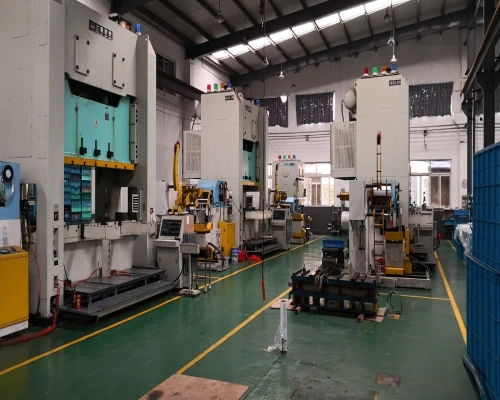
Advanced Manufacturing Equipment: Industry-leading custom metal enclosure manufacturer with in-house sheet metal, die casting, precision machining workshops, and surface coating workshops.
ISO 9001-2015, PPAP III level, RoHS, NEMA, CE and other certified production standards.
24H*7 online English technical support: The professional English team responds quickly to users’ technical questions online at any time.
help users from product design, prototype, batch manufacturing, surface treatment, assembly and packaging, transportation and a series of value-added services.
With in-house mechanics and chemistry laboratories, it can quickly monitor manufacturing process quality control to ensure the delivery of high-quality products.
Accept to sign NDA documents to ensure that customers’ product information is protected.
Door-to-door delivery in customizable secure packaging after complying with the delivery details agreed with the customer.
Environmental and Operational Factors Leading to Premature Staining of Stainless Steel IP Enclosures
Even stainless steel IP-rated enclosures manufactured to the highest standards may develop premature staining if exposed to chlorides, if not passivated, or if end users employ aggressive cleaning methods. These usage-related factors are often mistaken for material defects. Understanding these factors helps buyers distinguish between manufacturing defects and environmental factors, enabling them to establish appropriate cleaning protocols and chemical resistance requirements.
Chloride Exposure
Many buyers believe that only coastal areas or regions that use road de-icing salts pose a chloride risk to IP-rated enclosures. In reality, industrial cleaning agents containing hydrochloric acid, bleach-based disinfectants, or quaternary ammonium salts are common in food processing, pharmaceutical, and wastewater treatment facilities. Even tap water used for routine rinsing can contain chloride levels as high as 50–200 ppm. Once chloride comes into contact with the passivation layer, it can trigger pitting corrosion at microscopic defects.
In ASTM G48 testing, 304 stainless steel IP enclosures exhibit pitting corrosion within 24 hours in a 6% ferric chloride solution. While 316 stainless steel offers improved corrosion resistance, it still fails when chloride concentrations exceed 1,000 ppm in high-temperature environments. In corrosive environments, upgrading to 316L material or establishing a post-installation chloride wipe-down protocol can significantly extend the service life of IP-rated enclosures.
Insufficient cleaning and passivation of IP enclosures after manufacturing
Passivation is not an optional step—it is the final process to restore the chromium enrichment of stainless steel IP-rated enclosures after welding, grinding, and deburring. If chemical passivation (using citric or nitric acid per ASTM A967) is omitted and only wire brushing or solvent wiping is performed, free iron particles and heat discoloration will remain, leading to corrosion under normal indoor humidity conditions. In controlled tests, unpassivated 304 stainless steel IP enclosures developed rust spots within 60 days in an environment with 50% relative humidity, while passivated samples remained rust-free for years.
Aggressive Abrasive Cleaning by End Users
End users often clean stainless steel IP-rated enclosures with steel wool, carbon steel scrapers, or contaminated cleaning pads—practices that intentionally embed free iron particles into the surface. Within 48 hours, these embedded particles rust, producing unsightly brown streaks or “rust fingerprints.” This damage is often mistaken for a defect in the stainless steel itself, but it is actually caused purely by mechanical contamination.
In field audits, over 60% of complaints regarding premature rusting can be traced back to improper cleaning practices by maintenance personnel. The solution lies in prevention: specify the use of non-woven nylon pads, soft cloths, and approved stainless steel cleaners (neutral pH, chlorine-free). Supro includes a one-page cleaning instruction sheet with every shipment of stainless steel IP enclosures.
Looking for a reliable custom sheet metal fabrication companies?
Talk To Supro MFG Expert Team
Contact us for competitive ex-factory prices,
and a full range of technical support services.
Preventive Measures—Ensuring the Reliability of Stainless Steel IP Enclosures
To prevent premature corrosion in stainless steel IP-rated enclosures, systematic control is required from material validation through post-manufacturing passivation. The following measures address all the root causes discussed earlier—material substitution, residual iron, gap design, and chloride exposure. Auditing these five areas can effectively reduce field failures.
Material Verification and Traceability
Each batch of stainless steel IP enclosures must be supported by a verified mill test report (MTR) that complies with ASTM A240 or EN 10088 standards. Grade misrepresentation—such as labeling 201 stainless steel as 304—remains prevalent among uncertified suppliers.
Inspecting incoming materials with a handheld X-ray fluorescence (XRF) analyzer can confirm the content of chromium (Cr), nickel (Ni), and molybdenum (Mo) within seconds. For 316-grade material, the molybdenum content must be at least 2.0%; for 304-grade material, the chromium content must exceed 17.5%. Without these measures, IP-rated enclosures may still corrode prematurely, even with a flawless manufacturing process.
Dedicated Stainless Steel Manufacturing Workflow
To produce reliable stainless steel IP enclosures, dedicated tools and work areas are essential. Abrasives, wire brushes, molds, and storage racks must never come into contact with carbon steel. Cross-contamination can cause free iron particles to become embedded in the material, resulting in rust spots within weeks.
Standardized workflows include: using separate color-coded grinding wheels (labeled “Stainless Steel Only”), employing nitrogen-assisted plasma cutting instead of compressed air, and using ceramic flap wheels for weld beveling. After welding, applying argon for back-side inert gas shielding prevents heat discoloration.
Design Modifications to Eliminate Corrosion Traps
The design geometry directly affects the long-term performance of stainless steel IP-rated enclosures. Lap joints that create gaps should be avoided; full-penetration welded joints should be used. Where overlaps cannot be avoided (e.g., door gaskets), closed-cell silicone or expanded PTFE (PTFE) gaskets should be used, ensuring they are fully compressed to eliminate oxygen-depleted voids.
The top cover should be sloped at a minimum of 3° and feature 3–5 mm drainage holes integrated into the bottom corners, covered with hydrophobic vent holes to maintain the IP rating. Eliminate horizontal flanges or grooves that could trap rinse water. When installing the base, specify the use of nylon or rubber vibration-damping pads to prevent water accumulation at the bottom of the IP-rated enclosures. Reviewing CAD models using a corrosion prevention checklist prior to manufacturing can significantly reduce on-site failures.
Standard Passivation Processes for Stainless Steel IP Enclosures and End-User Guidelines
Passivation is a final chemical treatment applied after all machining operations to restore the chromium content of stainless steel IP-rated enclosures. Nitric acid (ASTM A967 Type II) or citric acid (Type VI) may be used—both acids dissolve embedded iron without damaging the base material. Never omit the passivation process based solely on “visual cleanliness.” Upon completion of passivation, verification must be performed via a water break test or a copper sulfate spot test.
Supro provides a one-page cleaning guide: Do not use steel wool or chlorine-based cleaners; use only non-woven nylon pads and approved stainless steel cleaners.
Conclusion
Premature rusting on stainless steel IP enclosures is not solely caused by “substandard batches” of metal. In most cases, it can be traced to free iron contamination, heat discoloration, gap design, or chlorides. From a sheet metal fabrication perspective, 95% of early rust spots can be eliminated by controlling materials, processes, and passivation treatments.
Selecting the right stainless steel IP-rated enclosures requires not only attention to material grades but also verification of the enclosure’s manufacturing, cleaning, and testing processes prior to deployment.
Supro is a professional custom metal enclosure manufacturer. Leveraging advanced equipment, extensive manufacturing experience, and a dedicated engineering team, we provide perfect enclosure fabrication solutions to over 3,000 companies worldwide and offer genuine manufacturer quotes. For technical specifications or OEM partnership inquiries, please contact our engineering team.