

For global procurement managers responsible for purchasing industrial electrical enclosures, addressing the differences between European and North American electrical standards is a key engineering challenge. European circuit diagrams generally adopt the IP protection ratings specified by the IEC 60529 standard, which strictly measures a device’s protection against the ingress of solid foreign objects and water.
In contrast, applications in North America mandate the use of NEMA Ratings (NEMA 250), a standard that assesses a broader range of environmental conditions, including electrochemical corrosion, structural icing, and exposure to industrial coolants.
Directly interchanging these specifications poses serious risks. Assuming that IP66-rated equipment automatically meets NEMA 4X requirements often leads to premature equipment failure in the field, while overspecifying can drive up the manufacturing costs of custom electrical enclosures. Bridging this technical gap requires a precise understanding of material behavior and sealing tolerances.
Drawing on Supro MFG’s expertise in precision sheet metal fabrication, this guide provides an in-depth analysis of the conversion logic. We provide the technical framework needed to specify the correct NEMA electrical enclosure, thereby preventing budget overruns and ensuring strict compliance.
Understanding IP Protection Ratings for Electrical Enclosures (IEC Standard)
The IP protection rating, based on the IEC 60529 standard, strictly quantifies the physical protection provided by electrical enclosures against the ingress of solid particles and liquids. This international standard establishes basic sealing thresholds; these requirements must be met before assessing whether the enclosure meets the equivalent environmental adaptability required by stringent North American building codes.

Interpreting the Two-Digit Coding System
According to the IEC 60529 standard, the IP protection rating system classifies the degree of protection that custom electrical enclosures provide against external intrusion. This system employs strict quantitative criteria. The first digit (ranging from 0 to 6) assesses protection against solid particles. For example, a “5” indicates a dust-resistant design that requires precise CNC bending tolerances, while a “6” requires an absolutely dust-tight seal achieved through on-site polyurethane sealant application.
The second digit (0 to 8) determines the enclosure’s resistance to moisture. A “4” rating provides protection against splashing water, which is common in typical manufacturing workshops. To achieve a “6” or “7” rating, advanced manufacturing techniques—such as continuous robotic seam welding—are required to ensure the electrical enclosure can withstand high-pressure water jets or brief immersion.
For procurement engineers, understanding this numerical matrix is a prerequisite for matching sheet metal enclosure designs to the target environment. The table below omits the lower protection ratings (such as 0–3) that are rarely used in industrial IP-rated electrical enclosures, focusing instead on the dust protection levels 5 and 6 and the water protection levels 4–7 that are of greatest concern in industrial procurement.
Digit Value | 1st Digit: Solid Particle Protection | 2nd Digit: Liquid Ingress Protection |
4 | Protection against solid objects > 1.0mm (e.g., wires, thin tools). | Protection against splashing water from any direction. |
5 | Dust-protected: Ingress of dust is not entirely prevented, but it cannot enter in sufficient quantity to impair equipment operation. | Water jets: Protected against low-pressure water jets (6.3mm nozzle) from any direction. |
6 | Dust-tight: Absolute zero ingress of dust; complete protection against contact. (Crucial for CNC machining environments). | Powerful water jets: Protected against powerful water jets (12.5mm nozzle) and heavy washdown conditions. |
7 | Not Applicable (Solid rating scale ends at 6) | Temporary immersion: Protected against water ingress when submerged up to 1 meter in depth for 30 minutes. |
8 | Not Applicable | Continuous immersion: Protected against sustained continuous submersion under pressure specified by the manufacturer. |
Limitations of the IP Protection Rating
Although the IEC standard is highly effective in defining protection against ingress, it is fundamentally inadequate for complex industrial applications. Its primary limitation lies in its complete disregard for broader environmental adaptability criteria.
While an IP66 rating certifies that a custom electrical enclosure is dust-tight and can withstand powerful water jets, it offers no assurance regarding corrosion resistance, UV aging, or structural integrity under conditions of external icing. The standard also overlooks the penetration of corrosive coolants and oil leaks commonly found in automated machining centers.
From the perspective of custom sheet metal fabrication, achieving a high IP protection rating for an electrical enclosure merely determines the method of mechanical sealing. To address atmospheric corrosion or chemical degradation, the purchaser must independently specify resilient materials—such as 316L stainless steel or 5052 aluminum alloy—as well as protective surface treatment processes.
Understanding NEMA Protection Ratings for Electrical Enclosures (North American Standard)
The NEMA rating evaluation system defined by the NEMA 250 standard assesses electrical enclosures far beyond basic protection requirements. Unlike IEC standards, this North American standard system tests for survivability in harsh environments, specifying the structural integrity an enclosure must maintain under conditions such as electrochemical corrosion, external icing, and exposure to industrial coolants.

Comprehensive Environmental Testing
Unlike European standards, which focus solely on strict ingress protection requirements, the NEMA 250 framework evaluates the overall environmental adaptability of custom electrical enclosures. For applications in North America, passing NEMA testing signifies the ability to withstand the rigors of extreme real-world operating conditions. This includes specific evaluations of electrochemical corrosion resistance, structural integrity during external icing, and material degradation resulting from prolonged exposure to oils or corrosive CNC cutting fluids.
From a custom manufacturing perspective, designing a NEMA electrical enclosure requires rigorous material selection—such as the use of 304 or 316 stainless steel—and ensuring precise powder coating thickness. We must also design robust hinge and latch systems to ensure proper operation even when ice accumulates. For procurement managers, this standard guarantees that NEMA-rated electrical enclosures will not fail mechanically or become unusable due to corrosion before the internal components reach the end of their service life.
Common Types of NEMA-Rated Electrical Enclosures
When procuring custom electrical enclosures for industrial or commercial projects, buyers typically encounter specific categories of protection ratings. NEMA 1 is the baseline standard for indoor dust protection, which can be achieved using standard cold-rolled steel. For outdoor utility applications, NEMA 3R provides basic protection against rain and frost, requiring a carefully designed drip lip and louver structure to prevent water accumulation.
In washdown or highly corrosive environments, procurement standards shift to NEMA 4 and 4X. Manufacturing NEMA 4X electrical enclosures requires the use of marine-grade stainless steel (316L) or specialized alloys, combined with flawless continuous seam welding and field-poured gaskets to prevent even trace amounts of liquid from penetrating.
Finally, NEMA 12 electrical enclosures are the standard choice for indoor production facilities, specifically designed to block airborne fibers and oil mist. Clearly specifying the exact rating helps avoid unnecessary manufacturing costs while ensuring reliability in the field.
NEMA Type | Typical Environment | Key Environmental Protections (Beyond IP) | Recommended Custom Sheet Metal Materials |
Type 1 | Indoor | Basic protection against contact and falling dirt. | Cold Rolled Steel (Powder Coated) |
Type 3R | Outdoor | Rain, sleet, and withstands damage from external ice formation. | Galvanized Steel, 5052 Aluminum |
Type 4 | Indoor / Outdoor | Windblown dust and hose-directed water. | 5052 Aluminum, Carbon Steel |
Type 4X | Indoor / Outdoor | Hose-directed water and severe corrosion resistance. | |
Type 12 | Indoor | Circulating dust, falling dirt, and dripping non-corrosive liquids (oil/coolants). | Cold Rolled Steel (Powder Coated) |
Only 4 steps
online custom metal fabrication parts
Contact our experts team and experience the efficiency and economic benefits of digital metal fabrication services.
Upload Design Files
STL , STEP (.stp), IGES (.igs), (.ZIP), or PDF.
Also be a sample or an idea
Quote & Design Analysis
Instant factory quotes and DfM reports, the most reasonable solution.
Manufacturing Begins
Digital processes can initiate order tasks within 24 hours.
On-Time Delivery
Keeping delivery promises, approved by 3000+ Global Company buyers.
Key Differences: Why Direct Interchange Poses Risks to Electrical Enclosures
Directly substituting IP protection ratings for NEMA standards poses serious engineering risks. IEC standards measure only physical intrusion, while NEMA requires broader environmental adaptability. Blindly interchanging the two often leads to premature failure of any industrial electrical enclosure in the field.
Performance Testing and Structural Specifications for Electrical Enclosures
The fundamental difference between IEC standards and North American standards lies in their evaluation criteria. IP protection ratings are based entirely on performance-based ingress tests. Laboratories simply spray water and dust onto custom electrical enclosures to check for leaks, but they do not specify how the equipment should be manufactured.
In contrast, the NEMA 250 standard specifies strict structural requirements and resistance to real-world environmental conditions. For example, to achieve the NEMA 4X rating, an enclosure must pass a grueling salt spray test lasting up to 200 hours to demonstrate its resistance to electrochemical corrosion.
From a sheet metal fabrication perspective, a basic carbon steel electrical enclosure with a standard powder coating may easily pass an IP66 water jet test but will quickly fail NEMA’s corrosion and external icing evaluations. If specifications are based solely on IP ratings, manufacturers may use cheaper materials that will eventually degrade in harsh industrial environments.
One-Way Conversion Rule
Given these comprehensive testing differences, procurement engineers must strictly enforce the one-way conversion rule. You can safely map NEMA ratings to equivalent IP ratings, but you must never do the reverse.
NEMA Class 4 equipment inherently meets the requirements of the IP66 protection rating, as NEMA’s water jet test standards are mathematically more stringent than those of the IEC. However, assuming that IP66 equipment compliant with European standards automatically meets the requirements for NEMA Class 4 or NEMA Class 4x electrical enclosures can lead to costly procurement errors. IP-certified equipment has never been validated for gasket durability under extreme temperature cycling conditions, nor for structural integrity under heavy ice loads.
Attempting a reverse conversion often results in failure during on-site acceptance testing and exposes the equipment to risk. When procuring industrial electrical enclosures for North American projects, buyers must explicitly require their sheet metal partners to provide verified proof of NEMA compliance.
NEMA to IP Conversion Guide for Electrical Enclosures
To streamline the cross-border procurement process, this validated one-way conversion table aligns NEMA’s stringent environmental thresholds with IEC’s benchmark ingress parameters. It ensures your custom electrical enclosure meets strict North American deployment standards while avoiding redundant engineering or manufacturing costs.
Practical Equivalency Chart
When comparing technical specifications, engineers use standardized conversion charts to translate North American standards into globally recognized metrics. For any industrial electrical enclosure, this conversion is strictly one-way.
A NEMA 12 electrical enclosure reliably meets IP54 requirements, effectively protecting against circulating dust and dripping non-corrosive liquids. For demanding outdoor or washdown environments, NEMA 4 structurally exceeds the parameter requirements of IP66. When it comes to chemical washdowns or coastal salt fog environments, NEMA 4X serves as the benchmark standard; it not only encompasses the IP66 standard but also requires superior corrosion resistance—typically achieved through the use of 316L stainless steel.
Purchasers must use this equivalence chart as a reference and understand that, although NEMA products meet the corresponding IP test requirements, structural modifications—such as custom CNC cutouts—can immediately compromise both protection ratings if proper sealing measures are not taken during assembly.
NEMA Type | Equivalent IP Rating (IEC 60529) | Primary Environmental Defense | Sheet Metal Construction Requirement |
Type 1 | IP20 | Indoor use; protection against falling dirt and solid objects. | Basic CNC bending; standard ventilation louvers permitted. |
Type 12 | IP54 | Indoor use; circulating dust, lint, and dripping non-corrosive liquids. | Fully gasketed doors; no conduit knockouts; tight mechanical tolerances. |
IP24 | Outdoor use; rain, sleet, and external ice formation. | Specialized drip-shield roofs; engineered drainage weeping holes required. | |
Type 4 | IP66 | Indoor/Outdoor; windblown dust and hose-directed splashing water. | Continuous welded seams; robust door clamping systems; high gasket compression. |
Type 4X | IP66 | Same as Type 4, plus severe galvanic corrosion resistance. | Must utilize 304 / 316L Stainless Steel or fiberglass; strict weld passivation. |
How to Apply This in Procurement?
Procurement managers should use this conversion data to review European circuit diagrams before requesting manufacturing quotes. If the drawings specify an IP66 protection rating for a North American deployment environment, do not automatically procure a NEMA 4x electrical enclosure without first assessing the actual environmental hazards.
When a standard powder-coated carbon steel electrical enclosure (NEMA 4) is sufficient to meet requirements, over-specifying the use of 316L stainless steel will unnecessarily increase the budget. Conversely, under-specifying may lead to catastrophic hardware failure. In your request for quotation, be sure to specify the exact deployment environment in detail—for example, whether the enclosure will be exposed to specific CNC machine tool cutting fluids, UV radiation, or marine salt fog—rather than simply listing the IP protection rating.
Specialized sheet metal fabricators like Supro MFG will evaluate these variables and, by optimizing material selection, polyurethane gaskets, and continuous welding processes, ensure that your custom electrical enclosure meets performance requirements while actively managing your overall procurement costs.
Looking for a reliable custom sheet metal fabrication companies?
Talk To Supro MFG Expert Team
Contact us for competitive ex-factory prices,
and a full range of technical support services.
Specifying Custom Industrial Electrical Enclosures
Transforming theoretical compliance into field-ready hardware requires flawless execution. To ensure that custom electrical enclosures pass certification, procurement engineers must specify strict manufacturing parameters—particularly prioritizing precise CNC bending tolerances, optimal material yield strength, and continuous robotic seam welding processes.
Material Selection and Manufacturing Tolerances for Electrical Enclosures
To meet NEMA 4X or IP66 standards, there can be no compromise on material selection or dimensional accuracy. For electrical enclosures used in harsh environments, specifying the correct alloy is critical.
While cold-rolled steel is sufficient to meet the basic requirements of a NEMA 12 electrical enclosure, 316L stainless steel or 5052 aluminum alloy must be used in corrosive environments to prevent premature electrochemical corrosion. However, even high-quality alloys will fail if manufacturing tolerances are too wide.
At Supro MFG, we understand that in CNC machining—such as cutting openings for connectors after CNC bending or extrusion—a deviation of just 0.5 millimeters can completely compromise the integrity of the sealing perimeter. Precise dimensional control ensures that the compressive force acting on the perimeter seal is mathematically evenly distributed during latching. Strict geometric tolerances are enforced during the manufacturing of custom electrical enclosures to ensure that the enclosure can withstand high-pressure water ingress and structural deformation in the field.
Sealing Gaskets and Surface Treatments for Electrical Enclosures
In addition to structural integrity, the service life of any industrial electrical enclosure depends largely on advanced sealing gaskets and robust surface treatments. Traditional adhesive tape gaskets inevitably age, peel, or lose their shape memory under extreme temperature cycling. To meet the stringent NEMA 4 and IP67 standards, engineers should specify in-situ molded (FIP) polyurethane gaskets. This automated CNC dispensing method forms a seamless, permanent bond on the metal sheet, ensuring consistent compression memory.
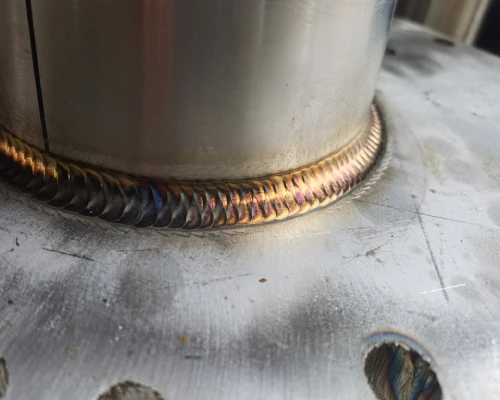
Surface treatment is equally critical. For carbon steel electrical enclosures, applying a zinc-rich primer followed by a rigorously cured, UV-resistant powder coating provides the necessary barrier protection against rust. Furthermore, when using stainless steel, all continuous robotic weld seams must undergo rigorous chemical passivation to remove free iron and prevent localized pitting—a critical detail in the manufacturing process of custom electrical enclosures that is often overlooked by low-end manufacturers seeking to drastically cut costs.
Partner with Supro MFG to Achieve Global Compliance
Navigating the intersection of IEC and North American standards requires a strategic manufacturing partner. At Supro MFG, we bridge the critical gap between theoretical schematics and certified hardware. Whether your application requires IP67-rated immersion protection or NEMA 4X-rated corrosion protection, we meticulously design every custom electrical enclosure to ensure full compliance with relevant standards.
By integrating precision CNC machining tolerances, robotic seam welding technology, and advanced FIP gasket processes, our facility transforms raw alloys into rugged, durable protection systems. For North American procurement managers, partnering with Supro MFG means gaining access to China’s premier manufacturing capabilities—reducing compliance risks and significantly optimizing total project costs while ensuring the structural integrity of electrical enclosures.
Standard-Compliant Precision Manufacturing
Delivering an electrical enclosure that fully meets certification requirements demands not only an accurate interpretation of technical specifications but also uncompromising production controls at the factory level.
At Supro MFG, our engineering team conducts a comprehensive Design for Manufacturability (DFM) review of your CAD model before cutting any metal parts. We utilize advanced CNC laser machining centers and precision press brakes to maintain extremely tight bending tolerances—an absolute prerequisite for achieving uniform compression of perimeter gaskets.
Whether your Request for Quote (RFQ) specifies 5052 aluminum alloy for NEMA 3R-rated applications or requires 316L stainless steel for severe-duty electrical enclosures, our in-house manufacturing capabilities ensure comprehensive environmental adaptability.
From continuous robotic seam welding to rigorous chemical passivation and industrial powder coating, every stage of the manufacturing process is strictly monitored. Submit your technical drawings today and let the experienced team at Supro eliminate the risks associated with cross-border procurement.