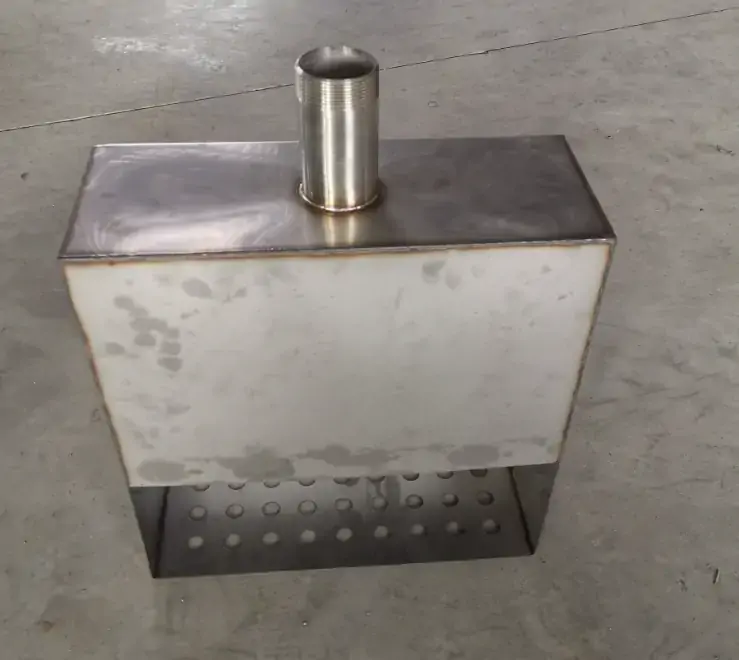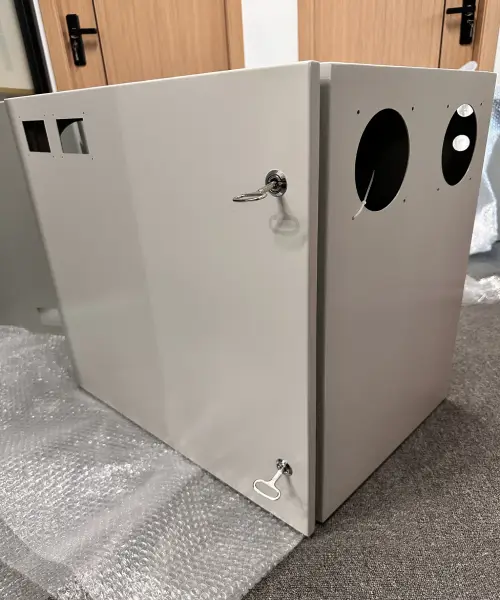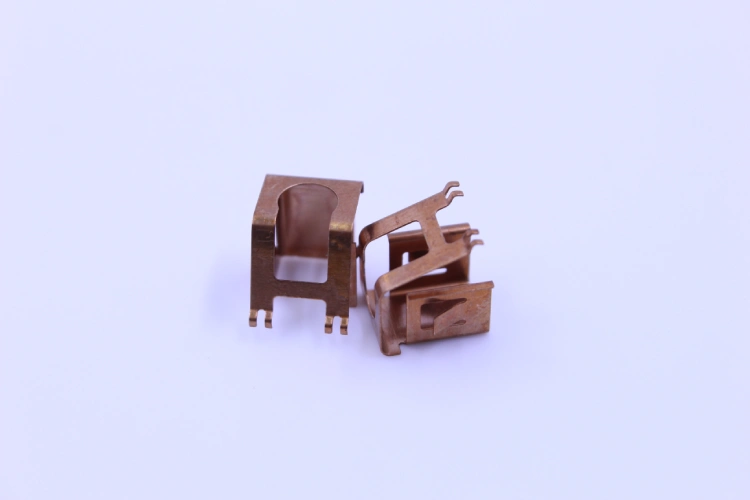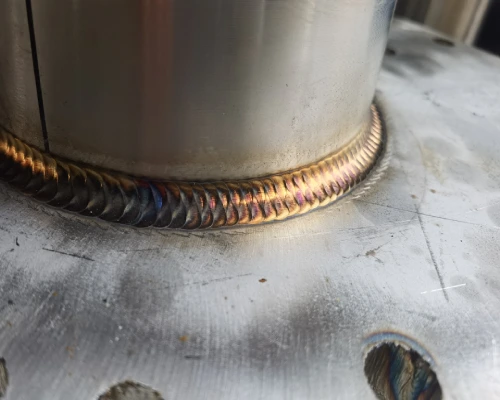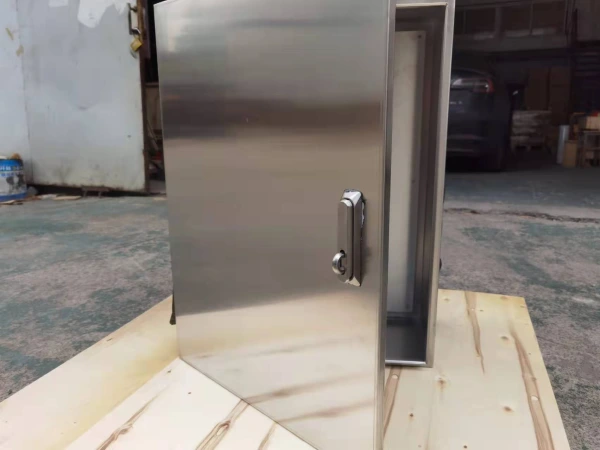
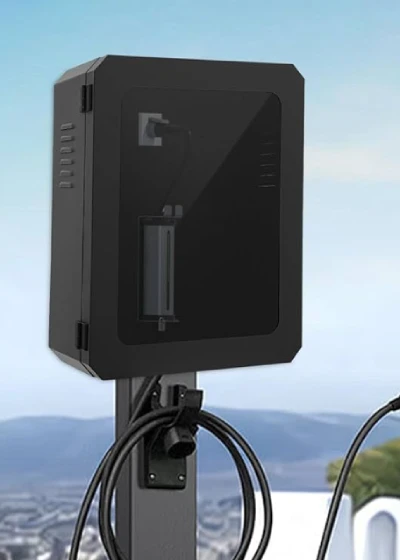

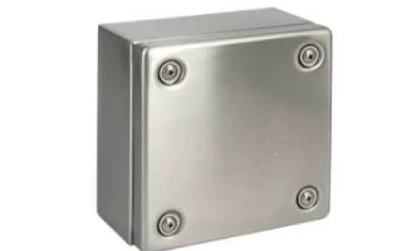


As the global penetration rate of electric vehicles continues to rise, the deployment of outdoor charging infrastructure is proceeding at an unprecedented pace. EV charging station housings, serving as the first line of defense for protecting internal electrical components, are continuously exposed to corrosive environments such as rain, condensation, temperature cycling, and road salt spray.
The bottom of the housing and the lower edge of the door panel are prime targets for corrosion—these areas are constantly exposed to capillary water absorption from concrete bases or accumulate salt-laden liquid splashed from the road. Once rust forms, it spreads rapidly, leading to coating peeling, reduced structural strength, and even compromising the safety of the internal electrical components.
While the NEMA 250 and UL 50E standards provide a graded framework for environmental protection of outdoor electrical enclosures, issues such as insufficient corrosion resistance of the base material (e.g., standard SPCC), a lack of drainage design at the bottom, and inadequate pretreatment before coating remain common causes of premature failure in custom EV charging station housings.
This article systematically analyzes the causes of early corrosion at the base and edges of EV charging station housings from the perspective of sheet metal manufacturing processes and proposes a comprehensive solution covering material upgrades, structural drainage, and coating optimization.
Root Cause Analysis—Why the Base and Edges of EV Charging Station Housings Fail First
Corrosion of the base material and edges of custom EV charging station housings typically begins at discontinuities in the coating. At these locations, trapped moisture forms electrochemical cells—a failure mode caused by a combination of inadequate base material, design flaws in the hydraulic system, and issues with pretreatment quality. We will analyze each of these factors in turn below.
Insufficient Corrosion Resistance of the Base Material in EV Charging Station Housings
Many EV charging station housing manufacturers select standard cold-rolled steel (SPCC) as the base material. SPCC is a type of cold-rolled low-carbon steel with no rust-inhibiting alloy elements or protective coatings on its surface; its corrosion resistance relies entirely on subsequent coating applications. Once the coating is damaged during handling, installation, or operation, the base material is directly exposed to corrosive media.
In practical applications, SPCC may develop rust spots within just a few months when exposed to humid outdoor environments. SGCC, on the other hand, employs a hot-dip galvanizing process, where the zinc layer protects the steel through a dual mechanism of physical barrier and sacrificial anode. A Z275-grade galvanized coating (total weight of 275 g/m²) can withstand over 1,000 hours of salt spray testing without showing red rust.
For products intended for long-term outdoor service, such as custom EV charging station housings, the selection of SPCC as the material is inherently a structural flaw.
Poor Drainage Design of EV Charging Station Housing Leads to Water Accumulation
The area where the bottom of the EV charging station housing contacts the concrete base or the ground is highly prone to moisture retention. Rainwater, condensation, and salt-containing liquids splashed from the road surface flow along the housing’s surface to the bottom; if there is no effective drainage path, they will accumulate over time along the bottom edge and the lower edge of the door panel.
The NEMA 250 standard explicitly stipulates that outdoor enclosures must be equipped with drainage openings to prevent moisture accumulation. According to the requirements of NEMA 250 and UL 50E, the diameter of drainage holes in 3R and 3RX type EV charging station housings should be between 3.2 mm and 6.4 mm.
A design lacking a bottom slope, as well as missing or improperly positioned drainage holes, will directly lead to continuous electrochemical corrosion in areas where water accumulates. The combination of standing water and the condensation cycle caused by diurnal temperature fluctuations significantly accelerates the corrosion process of outdoor EV charging station housings.
Inadequate Pre-Treatment Before Coating
Pre-treatment prior to spraying is a critical process that determines coating adhesion and corrosion protection lifespan. For SPCC substrates, standard iron-based or zinc-based phosphating treatments can form a phosphate conversion coating on the surface, providing a reliable adhesion base for powder coatings.
Incomplete degreasing can lead to poor adhesion between the coating and the substrate, causing the coating to blister and peel off in hot and humid environments; insufficient rust removal leaves rust nuclei beneath the coating, which expand inward from the inside out within a short period, resulting in flaking.
For SGCC galvanized steel sheets, a chromate or chromium-free passivation process must be used to activate the surface of the zinc layer. Silane pretreatment offers superior corrosion protection compared to traditional phosphating. Regardless of the process used for custom EV charging station housings, the process parameters for each step—degreasing, rust removal, and rinsing—must be strictly controlled; otherwise, the entire coating system will fundamentally lose its protective capability.
Are you looking for reliable & cost-effective
China metal fabrication manufacturer
More than 150,000 OEM metal fabrication products delivered to 5,000+ global buyers.
And benefit from it!
Material Solutions—Upgrading the Base Material of EV Charging Station Housings to Achieve Intrinsic Protection
Upgrading the base material of custom EV charging station housings from SPCC to SGCC Z275 or 5052 aluminum directly addresses the root cause—the Z275 galvanized coating provides over 1,000 hours of ASTM B117 salt spray resistance, while aluminum eliminates the possibility of electrochemical corrosion.
Hot-Dip Galvanized Steel—SGCC with Z275 Coating
Upgrading the base material from standard cold-rolled steel to hot-dip galvanized steel (SGCC) is the preferred approach to enhancing the corrosion resistance of EV charging station housings at the source. The Z275 designation indicates that the total weight of the galvanized coating on both sides of the steel sheet is 275 g/m². This zinc coating provides protection through a dual mechanism: physically isolating corrosive media and electrochemically protecting the exposed steel substrate via a sacrificial anode.
In the ASTM B117 neutral salt spray test, the Z275 coating typically withstands over 1,000 hours without red rust, whereas the conventional Z120 grade can only maintain performance for 500–800 hours.
For outdoor EV charging station housings, SGCC Z275 can achieve a service life of 20–30 years in coastal areas, industrial atmospheres, and high-humidity environments. Furthermore, SGCC maintains good formability and weldability, making it suitable for sheet metal fabrication processes such as bending, stamping, and welding. It is a proven solution that balances corrosion resistance with manufacturing feasibility.
Aluminum Alloy—5052 Alloy: Balancing Lightweight Design and Corrosion Resistance
For charging station applications where weight is a critical factor or where high salt fog exposure is present, the 5052 aluminum alloy offers an alternative technical solution. The 5052 alloy belongs to the Al-Mg series of corrosion-resistant aluminum alloys, and its resistance to salt fog corrosion is significantly superior to that of 3003 and 6061 alloys, performing particularly well in marine and chemical environments.
Unlike galvanized steel, aluminum alloys achieve protection through a dense oxide film that forms naturally on the surface. This eliminates the issue of red rust that occurs after coating damage and fundamentally eliminates the risk of substrate corrosion in electrochemical corrosion. The yield strength of 5052-H32 is approximately 193 MPa (28,000 psi), and its tensile strength reaches 228 MPa (33,000 psi). It offers good formability and is suitable for the complex bending and deep-drawing processes required for custom EV charging station housings.
Although the material cost is higher than that of SGCC, 5052 aluminum alloy EV charging station housings offer significant life-cycle cost advantages in highly corrosive environments, such as coastal areas with high salt fog or the vicinity of chemical plants.
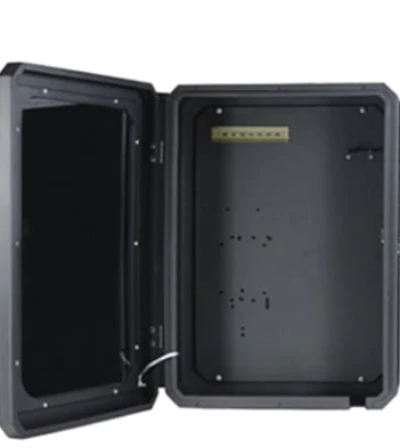
Material Selection Decisions for EV Charging Station Housings
The selection of materials for outdoor EV charging station housings should be based on a systematic assessment of the specific operating environment.
In inland urban environments, SGCC Z275 galvanized steel combined with a high-quality powder coating can be selected to balance cost and corrosion resistance; in coastal areas or environments where de-icing agents are applied to roads in winter, it is recommended to upgrade to 5052 aluminum alloy to eliminate the risk of red rust by leveraging its excellent salt spray resistance; in extremely corrosive environments, 304 or 316 stainless steel may be considered, but the higher material costs and processing difficulties must be weighed.
Additionally, factors such as weight restrictions, electromagnetic shielding requirements, UL certification needs, and target market pricing also influence material decisions. It is recommended to clearly define environmental classifications and performance objectives during the design phase to avoid premature failure of custom EV charging station housings due to material downgrading—corrosion protection costs account for only a tiny fraction of the total project cost in the early stages, while replacement and repair costs following failure are often several times higher.
Only 4 steps
online custom metal fabrication parts
Contact our experts team and experience the efficiency and economic benefits of digital metal fabrication services.
Upload Design Files
STL , STEP (.stp), IGES (.igs), (.ZIP), or PDF.
Also be a sample or an idea
Quote & Design Analysis
Instant factory quotes and DfM reports, the most reasonable solution.
Manufacturing Begins
Digital processes can initiate order tasks within 24 hours.
On-Time Delivery
Keeping delivery promises, approved by 3000+ Global Company buyers.
Structural Design of EV Charging Station Housing—Engineered Drainage and Isolation
The structural design determines whether the EV charging station housing actively expels moisture or allows it to remain near the base. Passive drainage—achieved through engineered slopes and drainage holes, combined with a height above the installation surface—is the primary protective measure against capillary action and water accumulation.
Incorporating a Slope into the Base Design of the EV Charging Station Housing
The structural design of the EV charging station housing’s base should guide moisture to flow naturally toward drainage holes rather than pooling along the bottom edge and in corners.
Typical design features of NEMA 3R-rated enclosures include sloped roofs and overlapping door panels; the core logic is to achieve active drainage through geometry rather than relying on seals. Extending this approach to the base design of custom EV charging station housings—incorporating a slight 1°–3° slope during the stamping of the base plate—creates a natural drainage gradient along the bottom edge, allowing water to continuously flow toward the lowest point under the force of gravity.
This passive drainage strategy does not rely on moving parts or regular maintenance and complies with the basic requirement of NEMA 250 for outdoor enclosures: “Drainage openings shall be capable of effectively draining accumulated water from the interior.”
A design without a bottom slope, on the other hand, means that moisture will remain stagnant on flat surfaces over the long term. Combined with the condensation cycle caused by diurnal temperature fluctuations, this accelerates the electrochemical corrosion process of the outdoor EV charging station housing.
Drainage Holes
Installing weep holes at the lowest point of the bottom is a standard engineering practice to prevent moisture accumulation inside the EV charging station housing. The NEMA 250 standard explicitly requires that the diameter of drainage openings in Type 3R enclosures be between 1/8 inch (3.2 mm) and 1/4 inch (6.4 mm), unless a baffle or drainage fitting is used.
Weep holes should be located at the lowest point of the outdoor EV charging station housing’s base plate to ensure that all rainwater flowing down the enclosure’s surface and internal condensation are promptly drained. If the hole diameter is too small, it is prone to clogging by dust or debris; if too large, it may compromise the protection rating.
In the design of custom EV charging station housings, Supro typically places one drain hole near each bottom corner, with a diameter controlled between 4–5 mm, and incorporates insect screens or labyrinth structures to prevent the entry of foreign objects. The installation instructions explicitly state that these drainage holes must not be blocked or used to route grounding conductors—any on-site modification of the drainage holes’ intended use will directly result in the invalidation of UL listing.
Raising the Enclosure Above the Installation Surface
Physically isolating the bottom of the EV charging station housing from a concrete base or the ground is an effective means of preventing capillary water absorption and the rise of ground moisture.
When the housing is placed directly on a concrete base, capillary action draws ground moisture into the contact interface between the bottom edge and the base, creating a persistently damp microenvironment. The solution is to install feet or a base at the bottom to raise the housing at least 25–50 mm above the installation surface, creating sufficient ventilation clearance to accelerate drying in the bottom area.
This design approach has been widely adopted in NEMA 3R and 4X-rated outdoor enclosures. The raised structure also facilitates the proper functioning of drainage holes—moisture can drain directly to the ground rather than accumulating at the bottom of the enclosure.
It is recommended that the material for the mounting feet be galvanized steel or stainless steel with a corrosion resistance rating equal to or higher than that of the outdoor EV charging station housing to prevent a decline in the overall structural stability due to corrosion of the feet themselves.
Looking for a reliable custom sheet metal fabrication companies?
Talk To Supro MFG Expert Team
Contact us for competitive ex-factory prices,
and a full range of technical support services.
Coating and Pretreatment of EV Charging Station Housings
For custom EV charging station housings, the performance of the coating system depends on the effectiveness of the pretreatment applied beneath it—the silane or phosphate conversion coating determines adhesion and the corrosion resistance of the primer layer, while the two-coat system consisting of a zinc-rich primer and a polyester topcoat, validated according to ASTM B117, provides salt spray test performance exceeding 1,000 hours.
The Critical Role of Pretreatment—Silane or Phosphate Cleaning
Pre-painting pretreatment is the first critical step in determining the corrosion resistance lifespan of the coating system for EV charging station housings. For SPCC substrates, standard iron-based or zinc-based phosphating treatments form a phosphate conversion coating on the surface, providing a mechanical interlock for the powder coating.
Silane treatment, as an environmentally friendly alternative to chromate passivation, offers both excellent barrier properties and process simplicity. For SGCC galvanized steel sheets, the zinc layer surface must be activated using a chromate or chromium-free passivation process. Regardless of the process selected, the process parameters for each step—degreasing, rust removal, and rinsing—must be strictly controlled; any oversight at any stage will directly compromise the protective capability of the entire coating system for outdoor EV charging station housings.
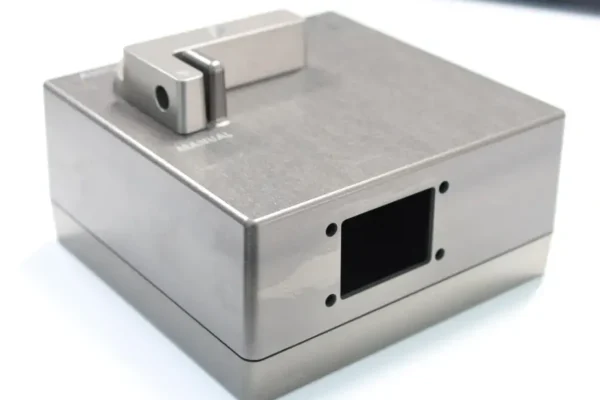
Two-Coat Coating System—Zinc-Rich Primer Plus Polyester Topcoat
For outdoor EV charging station housings, a two-coat spray coating system consisting of a “zinc-rich primer + polyester topcoat” is recommended. The zinc-rich primer contains 60%–80% zinc powder, providing cathodic protection to the steel through a sacrificial anode mechanism; the polyester topcoat offers excellent weather resistance, UV resistance, and chemical corrosion resistance.
This two-layer system exhibits a clear synergistic effect—the service life of the combination of hot-dip galvanized coating and paint is not simply the sum of their individual lifespans, but is multiplied by an environmental factor ranging from 1.5 to 2.7 times. Polyester powder coatings containing 80% zinc powder demonstrate excellent corrosion resistance in salt spray tests. The dry film thickness is recommended to be maintained between 75–100 μm to prevent cracking caused by excessive thickness.
Industry Standards and Certification Considerations
The coating and corrosion protection design of EV charging station housings must comply with multiple industry standards. The Chinese energy industry standard NB/T 33002-2010 explicitly requires that “the steel housing of charging stations and any exposed steel brackets and components shall be protected by a dual-layer anti-corrosion system.”
In the North American market, UL 50E is closely linked to NEMA 250, which defines the housing’s ability to protect against environmental factors such as water, dust, and corrosion; the NEMA 4X rating requires custom EV charging station housings to pass a 200-hour salt spray test. UL 2594 is a comprehensive safety standard for electric vehicle power supply equipment. ISO 12944 provides a framework for selecting coating systems under different corrosion environments (C3, C4, C5).
It is recommended to clarify the certification requirements of the target market during the design phase—the compliance of the corrosion protection solution directly affects whether the product can successfully enter the market.
Conclusion
Addressing the issue of premature corrosion in EV charging station housings requires a comprehensive approach—upgrading the base material to SGCC Z275 or 5052 aluminum, ensuring structural drainage through a sloped base and appropriately sized drain holes compliant with the NEMA 250 standard, and applying a two-layer coating system consisting of a zinc-rich primer and a polyester topcoat over a silane or phosphate pretreatment layer.
Each layer addresses a different failure mechanism: the base material provides inherent corrosion resistance, the design eliminates moisture retention points, and the coating effectively blocks environmental erosion.
Compared to the costs of on-site failures, the preventive costs are negligible—investing in corrosion protection during the design phase ensures that outdoor EV charging station housings achieve their expected service life without premature structural degradation.
Supro is a professional custom EV charging station housing manufacturer. Leveraging advanced equipment, extensive manufacturing experience, and a professional engineering team, we provide perfect custom EV charging station housing solutions to more than 3,000 companies worldwide, along with genuine manufacturer quotes.
We deliver a wide range of products efficiently and on time. From product design and rapid sheet metal prototype fabrication to mass production, we provide professional technical support and exceptional quality. We also offer one-stop manufacturing solutions and highly cost-competitive product supply!
For technical specifications or inquiries regarding OEM partnerships, please contact our engineering team.