
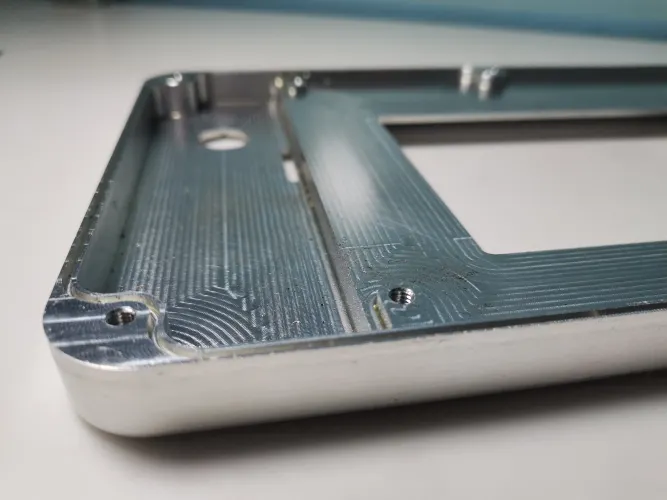
At its core, metal stamping is more than just a manufacturing method; it is a highly engineered pillar of scalable industrial manufacturing. For B2B procurement professionals, ensuring supply chain resilience requires a deep understanding of this foundational process.
By engineering definition, the metal stamping process is a highly controlled cold-forming process. It utilizes specialized die sets driven by high-tonnage mechanical or hydraulic presses to apply extreme compressive and shear forces. This induces precise plastic deformation in sheet metal blanks or coiled stock, transforming flat material into complex net-shape geometries without compromising the material’s structural integrity.
When evaluating the production feasibility of high-volume orders, precision metal stamping consistently outperforms alternative methods, such as CNC machining, in terms of cycle time and unit cost reduction. It brings predictability to the supply chain, maintaining strict Cpk (process capability) metrics and micron-level tolerances over millions of cycles.
Whether sourcing critical structural components for electric vehicle platforms or manufacturing high-precision shielding parts for the telecommunications industry, understanding the principles of custom metal stamping is the first step toward optimizing manufacturing costs, reducing scrap, and ensuring reliable production output on the assembly line.
How does the metal stamping process work?
Fundamentally, metal stamping relies on immense mechanical or hydraulic forces to induce controlled plastic deformation. A specialized die set applies precise shear and compressive stresses to flat coiled sheet metal, rapidly forming the net-shape geometry while maintaining the material’s integrity.
Blanking and Piercing
Blanking and piercing are critical first steps in the metal stamping process, utilizing immense shear forces to separate the material. During blanking, the punched-out workpiece becomes the final product, while the surrounding material becomes scrap. Piercing, on the other hand, creates precision holes in the material, and the punched-out scrap is discarded.
For B2B procurement, die clearance is the most critical parameter here. Precisely calculated clearance—typically 5% to 10% of the material thickness—minimizes burr formation and ensures a clean shear zone. An improperly designed metal stamping die will inevitably result in edge fractures or excessive curling.
When performing high-volume metal stamping, mastering this initial shearing stage ensures that the dimensional accuracy required for downstream assembly is met, which directly impacts the final CPK (Process Capability Index) of the manufactured parts.
Bending and Flanging
Bending and flanging involve altering the geometry of a workpiece through controlled plastic deformation without changing its original volume. Bending involves applying force to metal along a linear axis to form a specific angle, such as a V-shape or U-shape; flanging, on the other hand, involves forming a raised edge along a curved or straight contour to increase stiffness.
In any precision metal stamping process, controlling springback is a primary engineering challenge. Due to elastic recovery, the material naturally tends to return to its original flat state. Experienced manufacturers compensate for this phenomenon by applying an over-bend, taking into account the material’s specific yield strength and grain orientation. For buyers, clearly specifying the correct minimum bend radius in sheet metal stamping RFQs prevents the formation of microstress cracks, thereby ensuring structural integrity in demanding industrial applications.
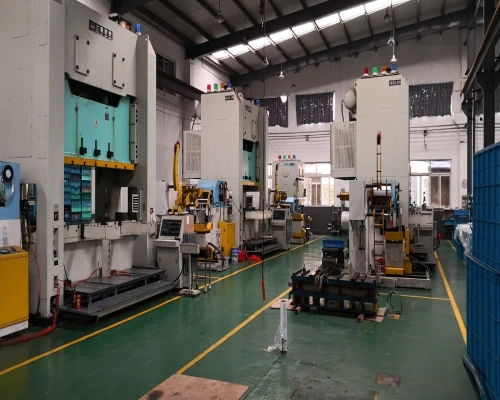
Coining and Embossing
Unlike standard shearing or bending, coining and embossing permanently alter the shape of the material by applying immense compressive stress.
Embossing creates raised or recessed patterns on the surface of a metal sheet without changing its overall thickness; it is commonly used to add reinforcing ribs or part numbers. Coining, on the other hand, requires metal stamping equipment with extremely high tonnage. The punch forcefully compresses the metal, effectively altering its thickness and forcing it into the die cavity. This intense pressure causes localized work hardening, which significantly increases the component’s surface strength.
When sourcing precision parts, coining in the custom metal stamping process is the ultimate solution for achieving extremely tight dimensional tolerances and sharp, complex features—features that would otherwise require costly secondary CNC machining operations.
Deep Draw Metal Stamping
Deep drawing is arguably the most complex process in precision metal stamping. This process uses a mechanical punch to draw a flat metal blank into a forming die, creating hollow, seamless shapes such as cylinders, hemispheres, or rectangular shells. When the drawing depth exceeds the part’s diameter, the process is considered “deep drawing.”
The essence of this engineering technique lies in the control of material flow. If the blank holder pressure is too low, the metal will wrinkle; if it is too high, excessive drawing stress will cause the material to tear. Advanced metal stamping manufacturers use finite element analysis (FEA) to predict and mitigate these failure modes. For buyers in the automotive or aerospace sectors, deep drawing is a highly cost-effective method for mass-producing lightweight, watertight, and structurally robust housings.
Are you looking for reliable & cost-effective
China metal fabrication manufacturer
More than 150,000 OEM metal fabrication products delivered to 5,000+ global buyers.
And benefit from it!
Major Types of Metal Stamping
Determining the optimal sheet metal stamping solution depends on three variables: geometric complexity, production volume, and part size. Selecting the correct die configuration not only directly maximizes output but also determines the overall efficiency of die amortization and unit cost within your supply chain.
Progressive Die Metal Stamping
The progressive die configuration represents the pinnacle of efficiency for high-volume sheet metal stamping. In this process, a continuous coil of sheet metal passes through multiple stamping stations. The workpiece remains attached to the carrier strip and advances precisely by one pitch with each stamping stroke. Each station sequentially performs its respective operation—such as piercing, bending, or coining—until the final cutting operation separates the finished part.
For procurement managers, this method is the gold standard when order volumes exceed 100,000 pieces. By utilizing internal guide pins for fine positioning, progressive metal stamping ensures exceptional repeatability and maintains strict micron-level tolerances. Because this process minimizes material handling and operates at extremely high speeds (typically exceeding 1,000 SPM), it delivers the lowest unit cost for complex micro-components, electrical contacts, and automotive brackets.
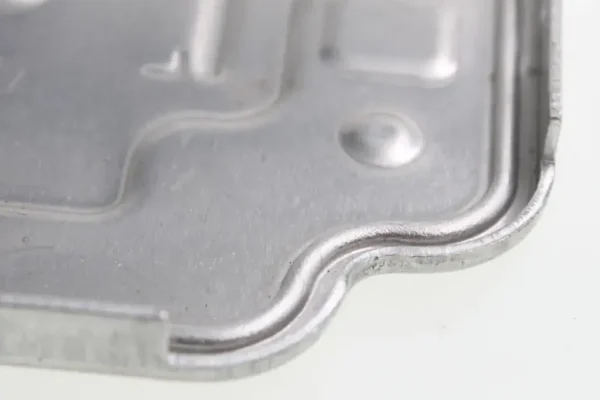
Transfer Die Stamping
When manufacturing large or deep-drawn parts, the carrier strip used in the progressive die metal stamping process can become a geometric constraint. Transfer die technology solves this problem by separating the blank from the metal coil at the first station.
Subsequently, mechanical transfer fingers or servo-driven automated devices seamlessly pick up and convey individual workpieces through the subsequent stamping stations. This specialized precision metal stamping method is essential for producing complex automotive structural panels, deep-drawn housings, or tubular geometries requiring 360-degree unobstructed forming.
Since the workpiece is completely separated from the coil, engineers can employ complex side-cam punching or reverse deep-drawing processes. For supply chains requiring the production of large, structurally complex parts, transfer metal stamping not only involves lower initial die investment compared to large progressive dies but also significantly reduces scrap rates for high-cost materials such as thick-gauge stainless steel.
Compound Die Stamping
Compound dies are designed with precision rather than speed in mind and can perform multiple internal and external cutting operations—such as blanking and piercing simultaneously—within a single stamping stroke. Unlike multi-station setups, the blank remains completely stationary in the same position throughout the entire process. This unique metal stamping mechanism ensures absolute concentricity between the inner diameter (ID) and outer diameter (OD), which is a critical requirement for manufacturing precision washers, gear blanks, and motor laminations.
Because the material is securely clamped between the punch and die throughout the entire stamping stroke, this metal stamping process also achieves exceptional flatness. For components that require high symmetry, flatness, and zero tolerance for displacement of internal features, compound die stamping is the optimal engineering choice. Although it has a lower strokes per minute (SPM) rate, it eliminates dimensional drift caused by multi-stage material transfer.
Only 4 steps
online custom metal fabrication parts
Contact our experts team and experience the efficiency and economic benefits of digital metal fabrication services.
Upload Design Files
STL , STEP (.stp), IGES (.igs), (.ZIP), or PDF.
Also be a sample or an idea
Quote & Design Analysis
Instant factory quotes and DfM reports, the most reasonable solution.
Manufacturing Begins
Digital processes can initiate order tasks within 24 hours.
On-Time Delivery
Keeping delivery promises, approved by 3000+ Global Company buyers.
Selecting the Right Materials for Custom Metal Stamping
In any custom sheet metal stamping project, the choice of material directly determines the service life of the die and the functionality of the parts. Engineers must rigorously evaluate yield strength, elongation, and work hardening rates to strike a balance between structural integrity and manufacturability among ferrous, non-ferrous, and specialty alloy materials.
Ferrous Metals (Carbon Steel and Stainless Steel)
In high-volume custom metal stamping applications, ferrous metals remain the material of choice for ensuring structural integrity. Cold-rolled carbon steel (such as SPCC or ASTM A1008) offers excellent formability and weldability, making it highly cost-effective for the manufacture of automotive brackets and chassis components. However, when B2B buyers require superior corrosion resistance without secondary plating, stainless steel (typically grades 304 or 316) is undoubtedly the best upgrade option.
It is important to note that stainless steel undergoes significant work hardening during the precision metal stamping process. This metallurgical characteristic requires the use of higher stamping tonnage and special die coatings (such as titanium nitride (TiN)) to prevent galling and extend die life. For heavy-duty industrial applications, engineering teams typically employ high-strength low-alloy (HSLA) steel to reduce component weight while maintaining strict structural safety factors.
Non-Ferrous Metals (Aluminum, Copper, and Brass)
As the automotive industry transitions toward lightweight electric vehicles and advanced electronics, requests for non-ferrous metals in metal stamping RFQs are on the rise. Aluminum alloys, particularly 5052 and 6061, offer an excellent strength-to-weight ratio and superior anodizing properties. However, due to aluminum’s low modulus of elasticity, springback compensation by experts is required during the forming stage.
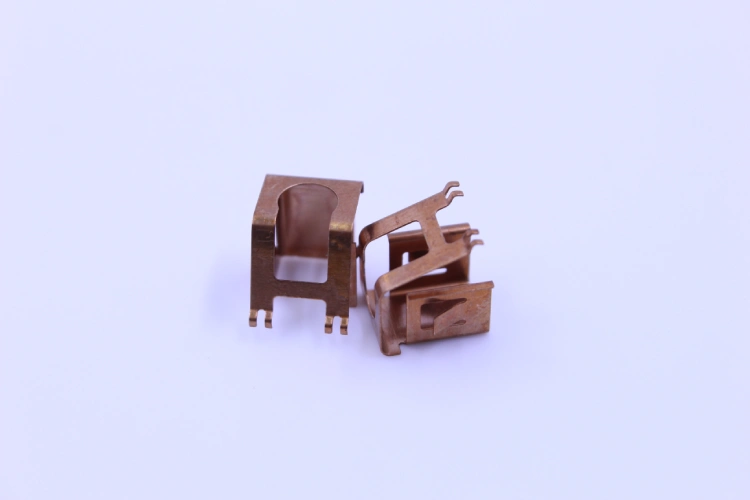
Conversely, copper and brass are indispensable for electrical conductivity and thermal management. Beryllium copper and phosphor bronze are widely used in progressive die metal stamping to produce precision connector pins, lead frames, and electromagnetic interference (EMI) shielding components. These alloys offer excellent ductility and fatigue resistance, ensuring that electronic terminals possess reliable elastic properties.
Specialty Alloys
Components made from specialty alloys push the limits of precision metal stamping technology to the extreme. Materials such as titanium, Inconel, and Kovar are designed for extreme environments and offer unprecedented heat resistance, biocompatibility, or specific coefficients of thermal expansion. For example, Kovar is critical for glass-to-metal seals in the aerospace and telecommunications sectors, while titanium is the standard material for implantable medical devices.
Processing these superalloys through custom metal stamping presents significant manufacturing challenges, including rapid die wear and high springback. Only top-tier manufacturers with advanced, in-house-built dies can successfully form these metals without causing microcracks. When procuring these parts, purchasing managers must work with suppliers certified to ISO 13485 or AS9100, as strict batch traceability and rigorous dimensional verification are just as critical as the forming process itself.
Why choose Supro MFG's Custom Metalworking Services
Provide the most cost-effective cost solution for manufacturing and assembling products, expanding product competitiveness.
a technical team specializing in custom shell manufacturing for more than 30 years.
Advanced Manufacturing Equipment: Industry-leading custom metal enclosure manufacturer with in-house sheet metal, die casting, precision machining workshops, and surface coating workshops.
ISO 9001-2015, PPAP III level, RoHS, NEMA, CE and other certified production standards.
24H*7 online English technical support: The professional English team responds quickly to users’ technical questions online at any time.
help users from product design, prototype, batch manufacturing, surface treatment, assembly and packaging, transportation and a series of value-added services.
With in-house mechanics and chemistry laboratories, it can quickly monitor manufacturing process quality control to ensure the delivery of high-quality products.
Accept to sign NDA documents to ensure that customers’ product information is protected.
Door-to-door delivery in customizable secure packaging after complying with the delivery details agreed with the customer.
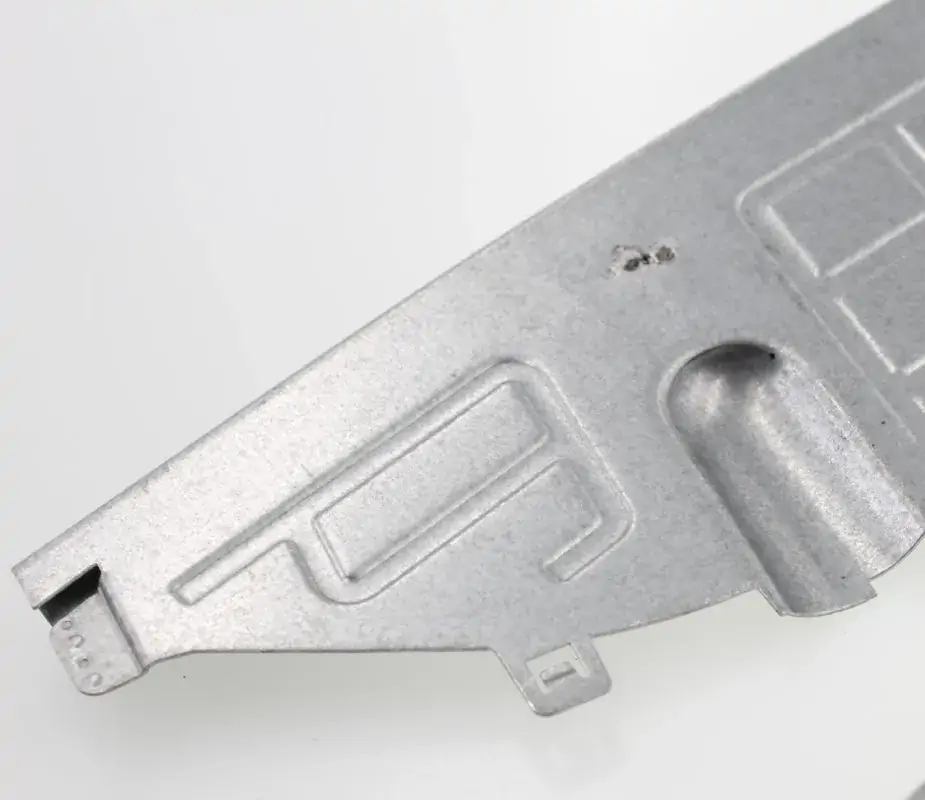
Key Advantages of Metal Stamping in the B2B Supply Chain
In the realm of B2B procurement, the metal stamping process has transcended the realm of basic manufacturing to become a strategic driver for enhancing supply chain resilience. By optimizing material utilization and ensuring strict dimensional repeatability, this process delivers ultra-low unit costs and predictable yield rates for automated high-volume assembly lines.
Metal Stamping Offers Unparalleled Cost-Effectiveness in High-Volume Production
Although the initial capital expenditure (CapEx) for custom dies in sheet metal stamping can be substantial, the return on investment (ROI) for high-volume production projects is unmatched. Once a die is validated, the production process can run at extremely high speeds, typically exceeding 1,000 strokes per minute (SPM). Such rapid cycle times greatly reduce manual intervention and significantly lower overhead costs per unit.
For B2B procurement managers sourcing millions of parts annually, this means that the high cost of tooling can be efficiently amortized over the entire production cycle, resulting in a negligible cost per part. Unlike CNC machining—where cycle times increase linearly with production volume—progressive die metal stamping enables an exponential reduction in unit costs. By locking in a reliable die solution, supply chain directors can effectively hedge against labor market fluctuations and stabilize long-term procurement budgets.
Dimensional Accuracy and Repeatability of Metal Stamping Parts
In modern automated assembly, dimensional deviations in parts are a major obstacle to production yield. A major engineering advantage of custom sheet metal stamping is its ability to lock in physical geometries using hardened steel or tungsten carbide dies. This hard-die process eliminates dimensional fluctuations caused by numerical drift and equipment wear, which are common in other manufacturing methods. A well-maintained metal stamping die can consistently produce parts with tolerances in the micrometer range and maintain a strict CPK (Process Capability Index) value of 1.33 or higher over millions of stamping cycles.
This strict dimensional repeatability directly translates to a zero-defect assembly line and significantly reduces bottlenecks in the Incoming Quality Control (IQC) process. When sourcing critical automotive or electronic components, partnering with a metal stamping manufacturer that implements rigorous First Article Inspection (FAI) and routine die maintenance ensures that the one-millionth part is identical to the very first one.
Exceptional Material Utilization
In the metalworking industry, raw materials typically account for the largest portion of the total cost of goods sold (COGS). Unlike subtractive manufacturing, which generates large amounts of swarf, precision metal stamping optimizes material utilization through advanced strip nesting and blanking software. By strategically positioning part contours along the grain direction of the coil, engineers can minimize the thickness of the separators between blanks, reducing scrap rates to the lowest level physically possible.
Furthermore, the resulting scrap consists of clean, highly recyclable offcuts that manufacturers can resell to steel mills, thereby offsetting overall production costs. For supply chains heavily impacted by global commodity price fluctuations, the high material utilization inherent in custom metal stamping not only reduces bill of materials (BOM) costs but also strongly supports companies in fulfilling their environmental, social, and governance (ESG) sustainability responsibilities.
Looking for a reliable custom sheet metal fabrication companies?
Talk To Supro MFG Expert Team
Contact us for competitive ex-factory prices,
and a full range of technical support services.
Major Industrial Applications: In which fields is metal stamping used?
From high-voltage electric vehicle architectures to life-saving medical devices, the metal stamping process is the cornerstone of mission-critical manufacturing. With consistent micron-level precision and scalable repeatability, this engineered process meets the stringent regulatory and performance standards required by the most demanding B2B sectors.
Automotive and Electric Vehicle Components
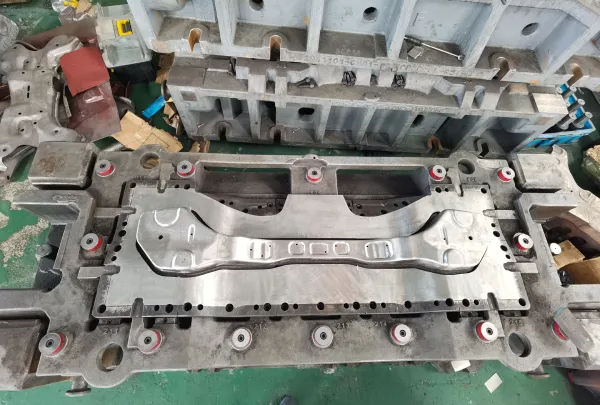
As the automotive industry accelerates the adoption of electric vehicles, the demand for lightweight yet structurally rigid components is driving supply chain strategies. For Tier 1 suppliers manufacturing critical EV architectures, precision metal stamping is indispensable. These architectures include battery pack housings, highly conductive copper busbars, and high-strength low-alloy (HSLA) chassis brackets. These components must withstand extreme vibration fatigue and crash test stresses without structural failure.
For procurement teams sourcing these components, the use of advanced progressive die metal stamping processes ensures strict compliance with IATF 16949 quality standards and meets rigorous PPAP (Production Part Approval Process) documentation requirements. By leveraging this hard-die stamping process, original equipment manufacturers (OEMs) can achieve the large-scale production capacity required for global automotive platforms while simultaneously reducing vehicle curb weight and total assembly costs.
Applications of the Metal Stamping Process in the Electronics and Telecommunications Industries
With the rapid evolution of 5G infrastructure and Internet of Things (IoT) hardware, telecommunications engineering requires components with microscopic precision and absolute reliability. Precision metal stamping is the ultimate manufacturing solution for producing complex beryllium copper connector pins, heat sinks, and rugged electromagnetic interference (EMI)/radio frequency interference (RFI) shielding enclosures.
These electronic components require extremely tight tolerances—typically accurate to a few micrometers—to ensure signal integrity and optimal heat dissipation in high-density PCB assemblies. For supply chain managers, adopting high-speed composite stamping and progressive metal stamping processes eliminates the dimensional drift issues commonly found in traditional low-speed manufacturing methods.
Partnering with manufacturers capable of in-house die production ensures that these critical electronic contacts consistently maintain precise geometric profiles and elastic properties over millions of defect-free stamping cycles.
Applications of the Metal Stamping Process in Medical Device Manufacturing
The medical device industry is subject to the most stringent regulatory standards, where any deviation in components is absolutely unacceptable. Custom metal stamping plays a critical role in the manufacture of surgical instrument housings, implantable structural components, and durable pacemaker housings made from specialized alloys such as titanium and 316L stainless steel.
These biocompatible materials require advanced die coatings and specialized tonnage control to ensure precision during the forming process while preventing the formation of microcracks. For procurement professionals in the healthcare industry, sourcing from ISO 13485-certified metal stamping facilities is a non-negotiable requirement. This ensures full traceability of material lots, flawless surface finishes ready for direct passivation, and strict compliance with FDA standards.
Ultimately, this process delivers the absolute dimensional consistency necessary to ensure patient safety while maintaining predictable procurement budgets.
Select a Reliable Metal Stamping Manufacturer
When selecting a trustworthy metal stamping partner, do not focus solely on the initial unit price; you must also assess the manufacturer’s true level of manufacturing maturity. Manufacturers that rely on outsourced tooling maintenance pose unacceptable risks, such as dimensional drift and extended assembly downtime. Instead, prioritize partners that conduct rigorous Design for Manufacturability (DFM) reviews and manufacture their own tooling to ensure that issues are resolved quickly and that the tooling remains in good condition over the long term. Additionally, you should require them to have an uncompromising quality control system.
A top-tier sheet metal stamping facility will seamlessly provide First Article Inspection (FAI) reports, ongoing CPK data, and Level 3 PPAP documentation to verify process stability. At Supro MFG, we integrate these core capabilities into our daily operations. By combining ISO-certified precision with deep metallurgical expertise, we deliver comprehensive custom metal stamping solutions that safeguard production lines and permanently optimize total cost of ownership.