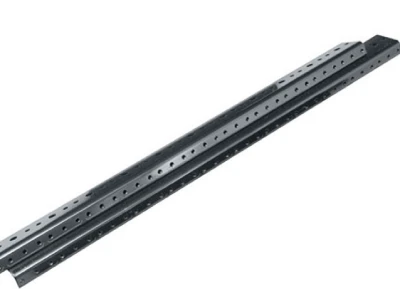
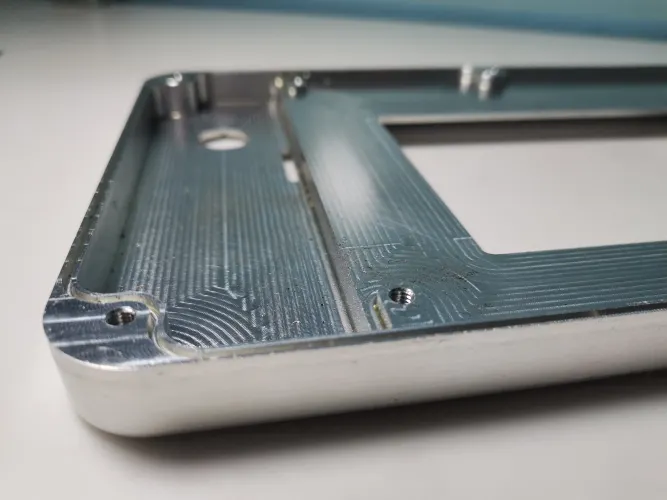
As a manufacturer specializing in galvanized steel stamping, Supro understands that dezincification is one of the key challenges affecting the quality, corrosion resistance, and reliability of stamped parts. In custom galvanized steel stamping production, the zinc coating does not merely adhere to the substrate but forms a metallurgical bond with it.
However, during dynamic stamping operations, the material undergoes complex plastic deformation, shearing, and friction. Improper process control can easily lead to localized zinc layer peeling, micro-cracks, or abrasion—known as “de-zincing.” This not only directly compromises the surface’s corrosion barrier, triggering premature rusting, but may also impact subsequent processes like welding and painting, while reducing the mechanical integrity and service life of galvanized steel stampings.
From a technical perspective, dezincification is never caused by a single factor. It results from the interaction of material properties, process parameters, and environmental conditions. Particularly in precision galvanized steel stamping, demands on die design, coating consistency, and process stability are exceptionally stringent.
This paper systematically analyzes the core mechanisms influencing dezincification and shares best practices accumulated as a galvanized steel stamping manufacturer. It aims to provide actionable solutions and a quality assessment framework, ensuring galvanized steel stampings maintain exceptional coating integrity and long-term performance even under extreme efficiency demands.
Four Key Factors Affecting Dezincification in Galvanized Steel Stamping Parts
As an experienced galvanized steel stamping manufacturer, Supro Mfg has concluded through extensive production practice that dezincification in stamped parts stems not from isolated process failures, but rather represents a systemic challenge spanning material selection, manufacturing techniques, and design. Understanding these interconnected core variables is essential to ensuring part quality and supply chain reliability.
Impact of Material Thickness Specifications on Dezincification
Variations in galvanized steel sheet thickness influence zinc layer behavior under stress:
Thinner gauges often exhibit accelerated zinc layer failure due to increased strain during forming processes.
Thicker materials offer greater resistance, but improper die geometry matching may cause cracking in galvanized steel stampings.
Thickness mismatches frequently cause uneven stress distribution, accelerating localized zinc layer loss. Therefore, thickness selection must align with the functional requirements of galvanized steel stamping parts—too thin invites corrosion, while excessively thick material may crack under stress. In actual production, Supro MFG, as a professional galvanized steel stamping manufacturer, emphasizes balancing material strength and formability to minimize post-stamping corrosion issues.
Mechanical Property Requirements: Critical Factors in Galvanized Steel Stamping Processes
When processing high-strength low-alloy steels, mechanical properties directly dictate material performance:
Exceeding recommended tensile strength thresholds induces micro-cracks, exposing the steel substrate and triggering accelerated dezincification.
Insufficient hardness increases friction during precision galvanized steel stamping, damaging the outer zinc coating thickness.
Inadequate ductility heightens the risk of coating stripping during complex bending or deep drawing operations.
Therefore, optimizing mechanical properties during material selection prioritizes not only strength but also ensuring the protective zinc layer remains intact throughout each stamping cycle.
Burrs and Sharp Edges: Impact on Dezincification
Edge quality in galvanized steel stamping parts affects not only aesthetics but also corrosion resistance:
- Burrs act as conduits, drawing moisture to exposed metal edges.
- Sharp edges often shear the metal intermetallic compound layer, exposing bare steel to corrosive environments.
- Such defects disrupt the uniformity of the coating’s microstructure, accelerating localized corrosion formation.
Research by Ducker Carlisle Group in early 2024 revealed: After salt spray testing, parts with untreated burrs exhibited nearly double the dezincification rate compared to deburred parts.
Surface Rusting Due to Coating Adhesion Failure
Poor adhesion weakens the bond between the zinc layer and the steel substrate, facilitating moisture penetration. Once moisture infiltrates beneath the coating, even minor scratches can escalate into extensive rust spots. During high-speed forming processes, elevated temperatures weaken the bond strength at critical points on galvanized steel stampings, significantly heightening the risk of corrosion.
Test Sample | Lubricant Type | Coating Adhesion Score | Rust Spread (%) |
Sample A | Synthetic Oil | Excellent | <5% |
Sample B | Dry Film Wax | Moderate | ~18% |
Sample C | Water-Based | Poor | >35% |
As mentioned above, poor coating adhesion not only affects appearance but also directly accelerates dezincification in galvanized steel stamping parts over time. To truly master the galvanized steel stamping process and prevent premature dezincification, pay close attention to these four critical factors—from edge treatment to mechanical properties—each plays a vital role in safeguarding the final product’s performance.
Best Practices for Preventing Dezincification in Galvanized Steel Stamping
In custom galvanized steel stamping, effectively preventing dezincification hinges on informed choices—selecting the right tools, employing proper methods, and rigorously controlling the coating process. Supro not only possesses advanced equipment but also deep process expertise, enabling the integration of these best practices into a stable, repeatable production system. This fundamentally ensures strong coating adhesion and long-term corrosion resistance for galvanized steel stamping parts.
High-Speed Presses: Optimal Preventative Technology
High-speed pressing minimizes contact surface dwell time, reducing temperatures to lower zinc dissolution risks.
Advanced press control systems maintain stable forming speeds, preventing coating damage in galvanized steel stampings caused by stress point fluctuations.
Maintain low-friction conditions using high-performance lubricants to prevent micro-scratches and eliminate electrochemical corrosion hazards.
Prioritize servo-driven presses over mechanical equipment for their superior precision, particularly suited for precision-coated materials like galvanized steel.
Embedded sensors monitor peak pressure between dies and workpieces, effectively preventing coating fractures in high-strain zones of galvanized steel stamping parts.
Supro meticulously checks die alignment before each run—this minor step avoids major coating damage issues later. In galvanized steel stamping processes, details determine success or failure. Minor deviations in stamping timing or prolonged dwell times can cause localized overheating, leading to surface wear or micro-cracks that accelerate material degradation. While short, high-intensity impacts appear efficient, they often damage the zinc layer far more than they boost output. The key to precision galvanized steel stamping lies not in force magnitude, but in balanced control.
Mold Manufacturing Equipment: Enhancing Coating Quality
Supro’s practical grouping strategy: For mold material selection, opt for tungsten carbide or quenched tool steel, which offer superior wear resistance and maintain the coating integrity of galvanized steel stampings. For surface finish control, polishing mold surfaces reduces friction and minimizes scratches on galvanized surfaces. In precision machining, CNC grinding molds ensures tighter tolerances, reducing stress concentration that causes premature intermetallic compound separation. Regarding maintenance cycles, regular mold regrinding prevents burr formation on galvanized steel stamping parts, avoiding cuts to the protective layer.
“According to the Global FormTech Insights Q1 2024 report, factories using precision-ground progressive dies reduced zinc layer failure rates by 38% within three months.” This single statistic alone should prompt factories to reevaluate their tooling strategies when handling galvanized steel stampings.
Progressive Die Stamping: Risk Minimization Approach
Supro practices decompose the progressive die stamping process into multiple stages: First, in design considerations, the galvanized steel stamping process employs multi-stage forming steps to distribute loads progressively rather than concentrating them at once. This reduces localized pressure peaks and prevents micro-cracks in the zinc coating.
Second, in lubrication integration, lubricants are directly incorporated into each station rather than relying on pre-coating methods. This ensures uniform lubricant film thickness throughout the cycle and enhances resistance to copper redeposition effects. Finally, in flow management of galvanized steel stamping blanks, optimizing blank holder force enables smooth material flow across the die surface without excessive dragging. This is a critical measure to prevent friction-induced wear on the plated substrate.
Proper use of progressive dies minimizes operational steps, protecting the galvanized coating from unnecessary exposure or rough handling between processes. However, precise calibration at every station is essential, as a single misaligned station can instantly render an entire coil scrap.
Only 4 steps
online custom metal fabrication parts
Contact our experts team and experience the efficiency and economic benefits of digital metal fabrication services.
Upload Design Files
STL , STEP (.stp), IGES (.igs), (.ZIP), or PDF.
Also be a sample or an idea
Quote & Design Analysis
Instant factory quotes and DfM reports, the most reasonable solution.
Manufacturing Begins
Digital processes can initiate order tasks within 24 hours.
On-Time Delivery
Keeping delivery promises, approved by 3000+ Global Company buyers.
Impact of Humidity on the Galvanized Steel Stamping Process
High-humidity environments (typically defined as sustained relative humidity exceeding 60%) affect the galvanized steel stamping process through multiple pathways. First, it directly threatens the galvanized coating itself. Exposed zinc surfaces accelerate the formation of “white rust” (basic zinc carbonate) in humid air. This porous corrosion product fundamentally weakens the adhesion between the coating and substrate, making galvanized steel stamping blanks more susceptible to zinc stripping during subsequent forming operations.
Second, humidity alters the friction state between dies and sheet metal. Moisture may alter the performance of specialized lubricants or directly form micro-electrolyte films on metal surfaces. Under the high pressure and friction during stamping, this intensifies localized electrochemical corrosion and adhesive wear—a phenomenon particularly pronounced in complex custom galvanized steel stamping operations. Supro, a galvanized steel stamping manufacturer with mature process control capabilities, treats temperature and humidity control in the production environment as a foundational condition equally critical to die precision.

Interaction Between Dimensional Tolerance Requirements and Humidity
Increased humidity causes slight expansion or warping of molds and tools.
Moisture alters the thermal expansion rate of stamping equipment.
Condensation may cause slippage, affecting the alignment accuracy of galvanized steel stamping parts.
Elevated humidity accelerates oxidation at mold edges, reducing dimensional stability.
When moisture induces microscopic displacement on metal surfaces, mold calibration becomes complex. Even minute deviations (e.g., within ±0.05 mm) may cause high-precision galvanized steel stampings to become scrap.
Therefore, environmental humidity fluctuations during galvanized steel stamping processes can compromise dimensional accuracy—even at the micrometer level—with particularly significant impacts on high-speed presses or complex mold geometries. Moreover, transient humidity changes (e.g., post-rain or air-conditioning cycles) cause measurement deviations during operations. Surface tension from condensation affects sheet positioning accuracy and repeatability:
– Shorten calibration intervals during humid seasons;
– Anti-condensation coatings stabilize mold performance;
– Real-time monitoring systems provide early warnings for deteriorating micro-deviations.
Hot-Dip Galvanized Steel vs. Pre-Coated Galvanized Steel: Humidity Effects
When moisture is present, hot-dip galvanized steel and pre-coated galvanized steel exhibit differing stamping behaviors:
Hot-dip galvanized steel possesses a thicker zinc coating, leading to faster white rust formation in high-humidity environments—especially when stamped sheets are tightly stacked.
Pre-coated galvanized steel resists surface oxidation better, but coating delamination occurs if moisture trapped during storage or forming causes “sweating” beneath the coating.
Humidity also alters how galvanized steel stamping blanks interact with stamping lubricants:
Hot-dip galvanized steel: Excess moisture dilutes the oil film, increasing friction resistance.
Pre-coated galvanized steel: Water vapor may trap between paint layers and at metal grain boundaries.
According to a May 2024 report by the Materials Performance Institute: “Under controlled humid conditions, the corrosion initiation point for pre-coated galvanized substrates is up to 65% lower than for bare hot-dip galvanized substrates.”
Measures to reduce the risk of zinc stripping in galvanized steel stamping processes:
Store coils vertically with ventilation gaps;
Use dehumidified air around coil feeding equipment;
Select water-resistant lubricants tailored for different surface treatment types.
Frequently Asked Questions About Galvanized Steel Stamping
How does sheet thickness affect stamping quality?
Galvanized steel sheets meeting material thickness specifications possess a robust texture, enabling progressive die stamping or deep-draw metal stamping while maintaining coating integrity. Thinner sheets accelerate coating wear, leading to premature surface rusting at edges. In automotive body panel stamping, deviations as small as fractions of a millimeter can cause dimensional inaccuracies and misalignment issues, impacting mass production.
How to prevent coating adhesion issues during high-speed production?
Hot-dip galvanized steel performs reliably when stamping equipment is sharp, properly aligned, and clean. Hydraulic metal stamping machines rely on precision operation; minor misalignments can cause galvanized steel stamping parts to crack or zinc layer peeling. Strictly controlling coating weight specifications prevents premature failure of metal stamped parts for home appliances in humid storage environments.
Why are mechanical property requirements critical for large components?
High-strength low-alloy steel or thick galvanized parts must withstand hydraulic press pressure without tearing during forming. Sufficient hardness ensures the integrity of architectural hardware stampings; controlled tensile strength enables servo presses to shape curves without cracking—adherence to ISO 9001 certified manufacturer standards is not mere formality but a survival imperative in mass production cycles.
What causes stubborn edge burrs, and how should they be addressed?
Burrs emerge when dies wear or stamping forces are excessive:
Worn dies scratch zinc coatings, exposing areas with protective luster to corrosion.
Sharp dies paired with continuous lubrication minimize trimming marks during transfer stamping of metals for electronic housing projects.
What environmental conditions accelerate corrosion during coil processing?
Factor | Effect on Material | Recommended Control |
High Humidity | Accelerates oxidation → surface rust | Climate-controlled rooms |
Temperature Swings | Micro-cracking in coatings | Stable temp systems |
Why is progressive die stamping so favored by automotive sheet metal buyers?
Automated stamping lines seamlessly integrate processes while minimizing manual intervention, preventing hot-dip galvanized steel sheets from exposure to air moisture. The resulting sheet metal parts precisely meet dimensional tolerance requirements. As a high-volume supplier, we consistently offer highly competitive unit pricing by minimizing scrap and optimizing production cycles.
Summary
Supro, a galvanized steel stamping manufacturer based in China, leverages exceptional precision stamping technology and manufacturing capabilities to produce standard/custom metal stampings and high-precision components.
Our 2,500-square-meter precision stamping facility houses 80 presses ranging from 6 to 1,000 tons, processing materials from 0.005 inches to 5 inches thick and manufacturing stamped parts up to 24 inches wide. Supro ships over 5 million metal stamped parts annually to global buyers, maintaining a 1,000-ton annual production capacity. If you require galvanized steel stamping services, contact us immediately!