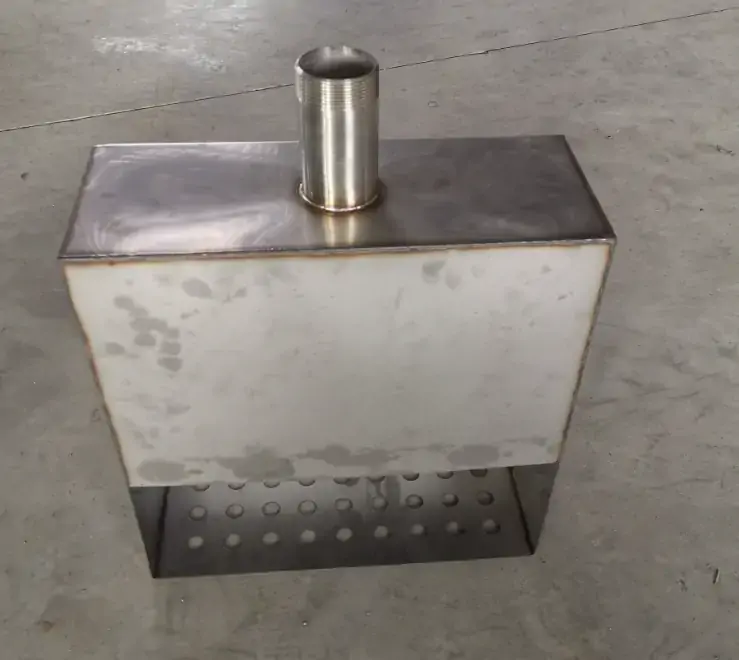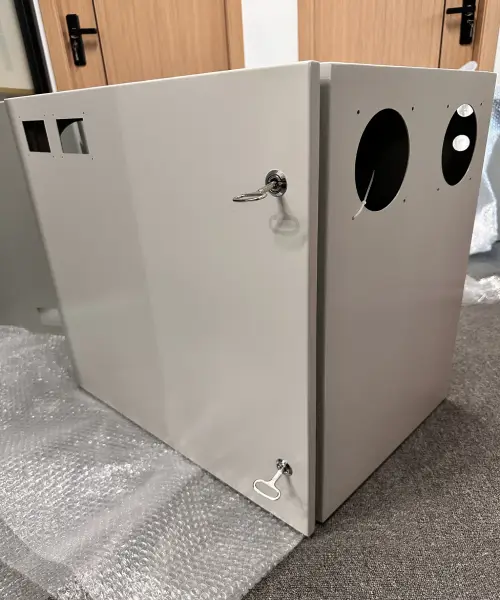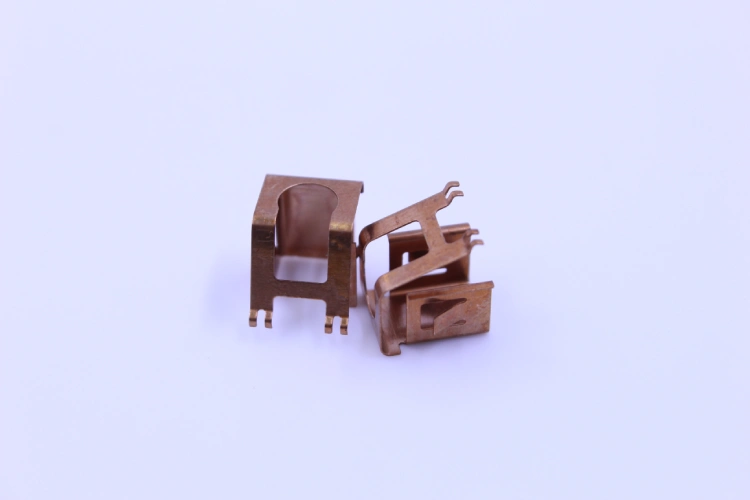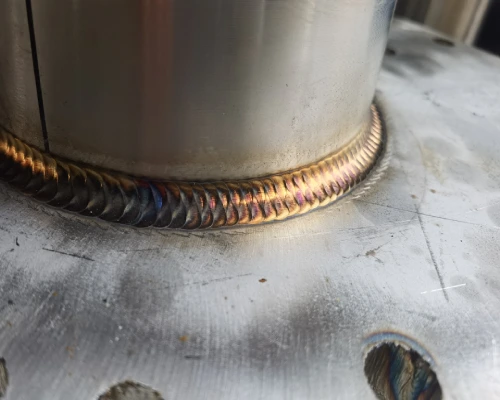


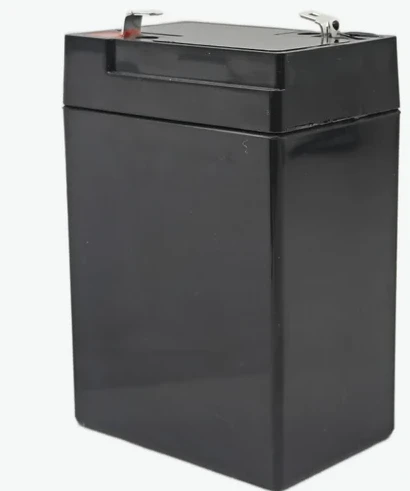
Stainless steel’s exceptional strength and corrosion resistance make it an essential material for demanding applications ranging from automotive components to medical devices. However, these very properties present unique manufacturing challenges, particularly when producing precision parts in volume. Custom stainless steel stamping processes serve as an efficient and stable metalworking method, transforming stainless steel into complex geometries while maintaining strict dimensional tolerances and material integrity for stamped parts.
The success of any stainless steel precision stamping solution hinges on a deep understanding of the interplay between material metallurgy, process engineering, and die design. Unlike softer metals, stainless steel alloys exhibit higher work hardening rates, demanding greater forming forces. This necessitates precisely optimized stamping process parameters and sufficiently robust die systems. Professional stainless steel stamping manufacturers must master these complexities to prevent issues like excessive springback, galling, or stress cracking.
This article delves into the core technical elements of stainless steel stamping, covering material selection, advanced forming techniques, and quality control practices. For engineers and procurement specialists, mastering these factors is key to achieving the optimal balance of performance, durability, and cost-effectiveness in custom metal fabrication.
Overview of Stainless Steel Stamping Process
The stainless steel stamping process is a systematic manufacturing method that employs precision dies to plastically deform stainless steel coils or sheets under high pressure, producing components with specific shapes, dimensions, and functionalities. Stainless steel metal stamping is not merely a single “stamping” action but encompasses a complete engineering chain—from material flow control to final part performance assurance.
Compared to standard carbon steel stamping, the core challenges of stainless steel precision stamping stem from the material’s inherent high strength, pronounced work-hardening tendency, and stringent surface integrity requirements.
Material Characteristics of Stainless Steel Stamping
The cornerstone of a successful stainless steel stamping process lies in the precise understanding and systematic application of the material's metallurgical properties. Stainless steel is not a homogeneous material but a vast family encompassing austenitic, ferritic, martensitic, and duplex grades. Its stamping formability, ultimate strength, and corrosion resistance are directly determined by its internal crystal structure and chemical composition.
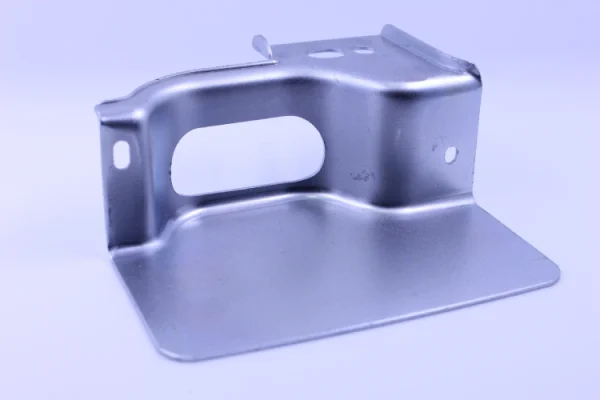
Why Stainless Steel is an Ideal Choice for Stamping
Stainless steel emerges as the preferred choice for metal stamping due to its unique combination of properties, perfectly balancing manufacturing feasibility with end-use requirements.
First, it offers an exceptional strength-to-weight ratio, enabling the design of lighter yet robust stainless steel stampings—critical for automotive lightweighting and consumer electronics. Second, its inherent chromium oxide passivation layer provides unmatched corrosion resistance, eliminating the need for subsequent plating or coating processes. This aligns perfectly with the stringent hygiene standards of medical and food-grade applications.
From a formability perspective, premium austenitic stainless steels like 304 exhibit excellent uniform elongation and high plastic strain ratio. This enables them to withstand complex deep drawing and multi-step forming processes, achieving the intricate geometries demanded by stainless steel precision stamping. The material’s balanced combination of aesthetics, durability, and manufacturability makes it an ideal substrate for high-end custom stamped components.
Stainless Steel Stamping Material Classification
Selecting the appropriate material for specific applications is fundamental to the success of the stainless steel stamping process. Commercially, materials are primarily categorized into several series:
Austenitic, 300 series, such as 304 and 316. These are the most commonly used stamping materials, offering excellent formability and corrosion resistance. Among them, 304 DDQ (Deep Draw Quality) grade is particularly well-suited for stainless steel precision stamping.
Ferritic, 400 series, e.g., 430, 439. Magnetic properties, lower cost, slightly reduced formability but excellent resistance to stress corrosion cracking. Commonly used in automotive exhaust systems.
Martensitic, e.g., 410, 420. Achieve high hardness through heat treatment but exhibit poor formability. Typically used for simple blanking parts requiring high strength and wear resistance.
Duplex stainless steel, e.g., 2205. Extremely high strength but poses significant stamping challenges requiring specialized processes.
Grade | Tensile Strength (MPa) | Yield Strength (MPa) | Elongation (%) | Hardness (HB) | Formability Rating | Typical Applications |
304 | 515–620 | 205–310 | 40–60 | 180–200 | Excellent | Kitchen sinks, automotive trim, chemical vessels |
304L | 515–620 | 170–310 | 40–60 | 180–200 | Excellent | Deep drawn parts requiring welding, chemical equipment |
316 | 515–720 | 205–275 | 45–60 | 180–220 | Good | Marine hardware, pharmaceutical equipment, surgical components |
316L | 485–620 | 170–290 | 40–60 | ≤217 | Good | Marine environments, chemical processing, medical devices |
301 (Annealed) | 515–758 | 205–276 | 40–60 | 217 | Moderate | Springs, clips, high strength brackets |
301 (1/4 Hard) | 860 | 515 | 25 | — | Limited | High elasticity components, electronic contacts |
301 (Full Hard) | 1275 | 965 | 8–9 | — | Poor | High strength springs, wear resistant parts |
430 | 450–600 | 180–270 | 20–30 | ≤200 | Fair | Appliance panels, decorative parts, low cost brackets |
201 | 450–650 | 200–300 | 30–55 | 180–253 | Good | General stampings, decorative tubes, cost effective alternative to 304 |
410 (Annealed) | 485–520 | 290–410 | 20–22 | 162 | Limited | Wear resistant parts, valve plates, components requiring hardening |
Stainless Steel Stamping Material Selection
Material selection must balance functionality, processability, and cost. For components exposed to chloride environments (e.g., marine equipment), prioritize 316 stainless steel stamping parts. For deep-drawn parts requiring subsequent severe deformation, specify low-carbon grades (e.g., 304L) or deep-drawing quality (DDQ) materials. In automotive structural applications, high-strength ferritic stainless steels (e.g., 441) may be selected to balance mechanical properties with cost control.
As an experienced stainless steel stamping manufacturer, Supro does not procure materials based solely on grade designations. Instead, we collaborate with steel mills to specify critical performance parameters—such as yield strength ranges, grain size, and r-values—providing precise inputs for subsequent stainless steel metal stamping process simulations and die design. This ensures repeatable production outcomes.
Only 4 steps
online custom metal fabrication parts
Contact our experts team and experience the efficiency and economic benefits of digital metal fabrication services.
Upload Design Files
STL , STEP (.stp), IGES (.igs), (.ZIP), or PDF.
Also be a sample or an idea
Quote & Design Analysis
Instant factory quotes and DfM reports, the most reasonable solution.
Manufacturing Begins
Digital processes can initiate order tasks within 24 hours.
On-Time Delivery
Keeping delivery promises, approved by 3000+ Global Company buyers.
Stainless Steel Stamping Process Analysis
Transforming stainless steel sheet into high-precision components hinges on systematically deconstructing and engineering the stamping process. This demands deep integration of material metallurgy, plastic deformation mechanics, and tooling/equipment dynamics. The core challenge lies in balancing stainless steel's high strength with forming requirements while overcoming work hardening and springback tendencies—distinguishing ordinary processing from precision stamping.
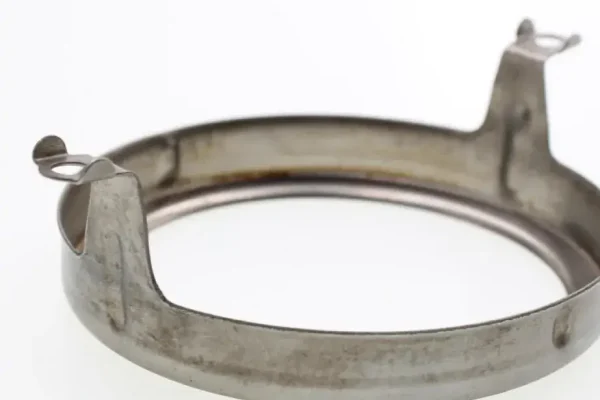
Precision Stamping System Design
An exceptional stainless steel metal stamping system constitutes a highly integrated engineering solution tailored to material properties. This necessitates employing multi-station progressive dies or precision transfer die systems, coupled with servo presses featuring precise parallelism and sufficient nominal force reserves to counteract stainless steel’s high deformation resistance.
Die structure design must prioritize guiding precision, typically employing ball-bearing guide pillar assemblies. Cutting clearance is strictly controlled within 8%-12% of material thickness to balance cutting edge longevity and cross-section quality. For stainless steel precision stamping, the system must also integrate real-time tonnage monitoring and a built-in hydraulic blank holder within the slide. The former detects material batch variations or mold anomalies, while the latter provides dynamically adjustable blank holder force (BHF) for drawing and forming operations.
Optimization of Stainless Steel Stamping Process Parameters
Process parameter optimization serves as the dynamic bridge connecting design intent to qualified products. During stainless steel precision stamping, each parameter must be fine-tuned based on real-time material response:
- The blanking gap requires precise setting according to the strength and ductility of specific alloys (e.g., 304 or 430).
- Optimizing blankholding force (BHF) is more complex. Initial stages require sufficiently high pressure to prevent wrinkling in stainless steel stampings, while later drawing phases necessitate force reduction to avoid excessive thinning or cracking.
- Lubricant type, application volume, and placement are critical for minimizing adhesion wear between stainless steel and dies while controlling material flow.
- Stamping speed directly impacts strain rate and temperature rise, which in turn influence material flow stress and work hardening behavior.
Optimizing the stainless steel stamping process relies on data-driven approaches. Sensors collect data such as stamping force curves and material flow trajectories, continuously cross-referenced with CAE simulation results to form a closed-loop feedback and adjustment system. This constitutes the core technological element for achieving efficient and reliable stainless steel metal stamping production.
Stainless Steel Stamping Forming Process Technologies
To overcome stainless steel forming challenges, a mature technology library is key to producing complex stainless steel stamping parts:
- For deep drawing, employ multi-pass, progressive draw ratios—potentially combined with reverse redrawing—to safely guide material to target depth while controlling wall thinning rates.
- To counter springback in stainless steel stamping parts, the most effective techniques are “overforming” and die surface compensation. This involves machining the die surface with a predetermined deviation from the final part shape, based on FEA predictions or empirical data, ensuring the part achieves nominal dimensions after elastic recovery.
- For high-strength stainless steel or complex flanges, employing hot forming or localized induction heating-assisted forming significantly reduces flow stresses and enhances material plasticity.
These stainless steel metal stamping forming technologies are not applied in isolation but require coordinated planning within a complete process chain. Supro consistently executes these techniques, transforming challenging designs into manufacturable, profitable products.
Mold Engineering for Stainless Steel Stamping
The mold serves as the core physical carrier in the stainless steel stamping process, acting as the decisive interface that translates design intent into qualified products. Unlike stamping ordinary steel, stainless steel imposes more stringent demands on molds: exceptional wear resistance to counteract material strength, outstanding rigidity to control springback, and superior surface integrity to prevent part scratches.
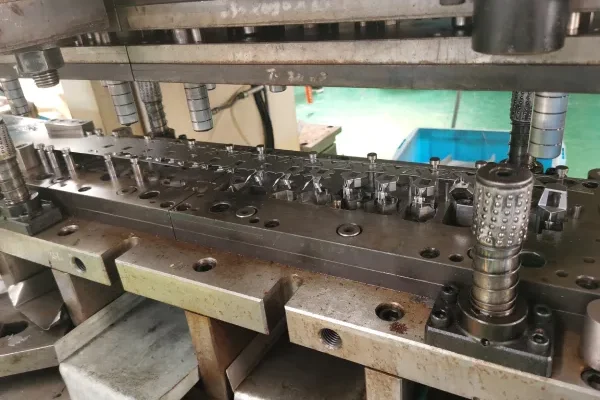
Material Selection Criteria for Stainless Steel Stamping Dies
The criteria for selecting die materials in stainless steel metal stamping involve resisting extreme wear from high-strength materials, high contact stresses, and adhesion (cold welding) tendencies. Cutting edges endure maximum impact and shear stresses, making powder metallurgy high-speed steels (e.g., ASP 2023 or ASP 2060) the preferred choice. Their uniformly distributed carbides deliver an exceptional combination of wear resistance and toughness, typically requiring hardness levels of HRC 62-65.
For long-life, high-volume stainless steel stamping processes, carbide inserts (e.g., YG15) are a reliable choice. Their extremely high compressive strength and wear resistance significantly extend die life.
Forming and drawing dies (punch and die) require a balance between wear resistance and anti-stick properties. High-chromium, high-vanadium cold work tool steels (e.g., D2 or DC53) are typically selected and heat treated to achieve sufficient hardness (HRC 58-60).
Key Considerations for Stainless Steel Stamping Die Structure Design
The primary objective of die structure design is to achieve and maintain exceptional rigidity and dynamic precision to counteract stainless steel’s high deformation resistance and springback force. The die base and plate must possess sufficient thickness, prioritizing four-column or eight-column guide structures with ball or roller guides to ensure precise upper-lower die alignment during high-speed operation.
Addressing stainless steel’s work-hardening properties, mold design must provide optimal flow paths for material, typically achieved by optimizing drawbead geometry and layout to control feed resistance. In stainless steel precision stamping, uniformity of blanking gaps is critical, requiring mold structures to minimize elastic deformation caused by lateral forces. Additionally, integrated nitrogen springs provide stable, adjustable blankholding force (BHF).
Surface Treatment Technologies for Stainless Steel Stamping Dies
Advanced surface treatments are key to enhancing die performance, extending service life, and ensuring surface quality of stainless steel stamping parts. Their primary objectives are reducing friction coefficients to minimize wear and enhancing surface anti-adhesion properties to prevent stainless steel from welding to the die under high pressure. Physical vapor deposition (PVD) coatings, such as titanium aluminum nitride (TiAlN) or diamond-like carbon (DLC), are widely used in stainless steel metal stamping dies due to their high hardness, low friction coefficient, and minimal chemical affinity with stainless steel.
For forming dies, mirror polishing (typically requiring Ra ≤ 0.1 µm) is essential to prevent scratches on the bright surfaces of stainless steel stampings. In high-friction applications, thicker chemical vapor deposition (CVD) coatings may be considered to provide superior thermal insulation and wear resistance. Supro scientifically selects and combines these surface engineering techniques based on specific material, process, and production volume requirements to ensure stable operation of the stainless steel stamping process and produce high-quality parts.
Stainless Steel Stamping Quality Control System
For custom stainless steel stamping solutions, a robust quality control system extends far beyond final inspection. It is a data-driven, preventive engineering management system integrated throughout the entire value chain. As a professional stainless steel stamping manufacturer, Supro understands that buyers prioritize not only individual sample compliance but also long-term consistency and traceability in mass production. Therefore, an advanced quality control system must proactively identify and manage sources of variation in the stainless steel stamping process—such as batch fluctuations in material properties, progressive tool wear, and minor drifts in process parameters.
The quality control system for stainless steel stamping processes rests on three core pillars: preventive controls, process monitoring, and verification testing. Preventive controls begin at the design stage with Design Failure Mode and Effects Analysis (DFMEA) and process simulation, aiming to eliminate defects at their source. During production, implementing Statistical Process Control (SPC) for real-time monitoring of critical dimensions and stamping tonnage curves is central to ensuring stable stainless steel metal stamping.
Finally, full-dimensional inspection (FAI) and periodic verification of stainless steel stamping parts are conducted using precision equipment like coordinate measuring machines (CMM) and optical profilometers. Combined with functional testing such as metallographic analysis and salt spray testing, these measures collectively provide the ultimate assurance for the performance and reliability of stainless steel stampings.
Advanced Stainless Steel Stamping Technologies
Cutting-edge stainless steel metal stamping technologies are shifting from discrete process improvements toward systematic innovation grounded in data interconnectivity and materials science.
The core objective of this evolution is to proactively overcome the inherent characteristics of stainless steel—high strength and tendency to springback. Current innovation converges on two primary directions: achieving functionally perfect edges through precision trimming and blanking techniques, and establishing a self-aware, decision-making, and self-optimizing production environment via intelligent stamping systems.
Precision Trimming and Blanking Technology
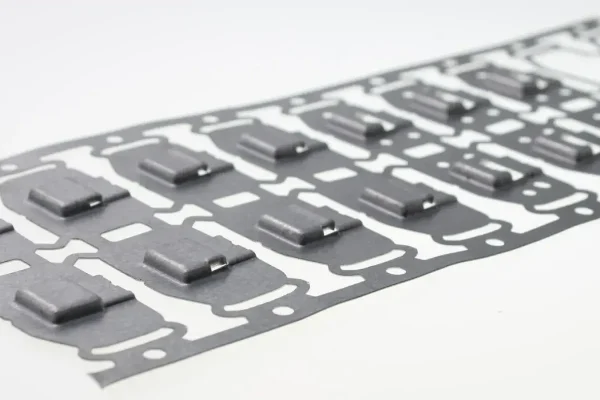
Conventional blanking often produces burrs and corner collapse when shearing stainless steel due to its high strength and toughness. Fine blanking and negative clearance blanking processes, combined with high-rigidity equipment and specialized dies, achieve fully bright-finished, near-vertical shear surfaces in a single stroke.
This significantly reduces secondary processing, which is critical for stainless steel stamping parts requiring sealing or high fatigue strength. Furthermore, laser micro-joint technology integrated with precision blanking enables stainless steel stamping parts to undergo complete forming within the die before being separated by laser, ensuring absolute dimensional stability in the final product.
Intelligent Stamping System
The core of the intelligent stamping system lies in deeply integrating sensing technology, real-time data processing, and adaptive control into the stainless steel stamping process. By installing force, temperature, and displacement sensors at critical mold locations, the system continuously monitors the tonnage curve, material flow state, and mold thermal expansion during each stamping operation.
This real-time data is compared against a pre-set digital model of the stainless steel metal stamping process. Any abnormal fluctuations are instantly identified, prompting the control system to automatically adjust the servo press’s ram motion curve, blank holding force (BHF), or lubrication volume to achieve closed-loop compensation.
Conclusion
In summary, stainless steel precision stamping is a metalworking technology involving multiple operations. This cost-effective process can be used to manufacture various sheet metal parts. If you require stainless steel stamping services, contact us immediately—Supro can assist you.
Supro is a stainless steel stamping manufacturer from China. With outstanding precision stamping technology and manufacturing capabilities, we produce standard/custom metal stampings and high-precision precision stampings. Our 2,500-square-meter precision stamping facility houses 80 sets of presses ranging from 6 tons to 1,000 tons. We process materials from 0.005 inches to 5 inches thick and manufacture stamped parts up to 24 inches wide.
Supro ships over 5 million metal stamped parts annually to global buyers, maintaining a 1,000-ton annual production capacity. If you require stainless steel stamping services, contact us immediately!