
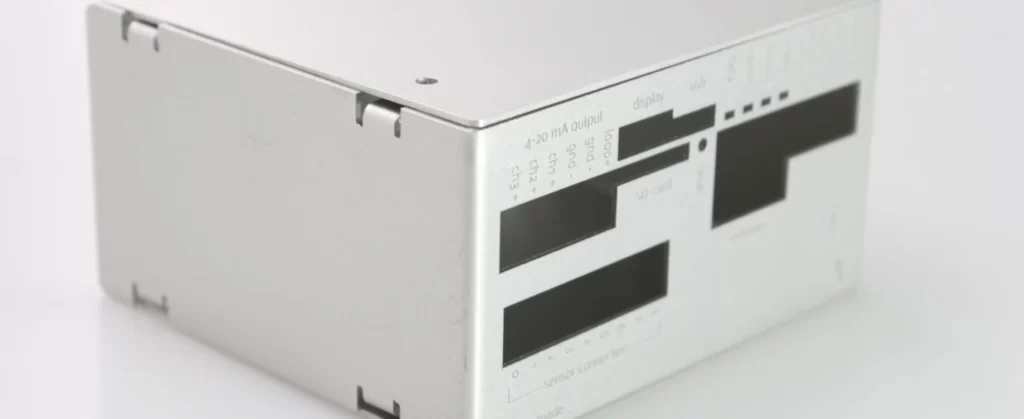
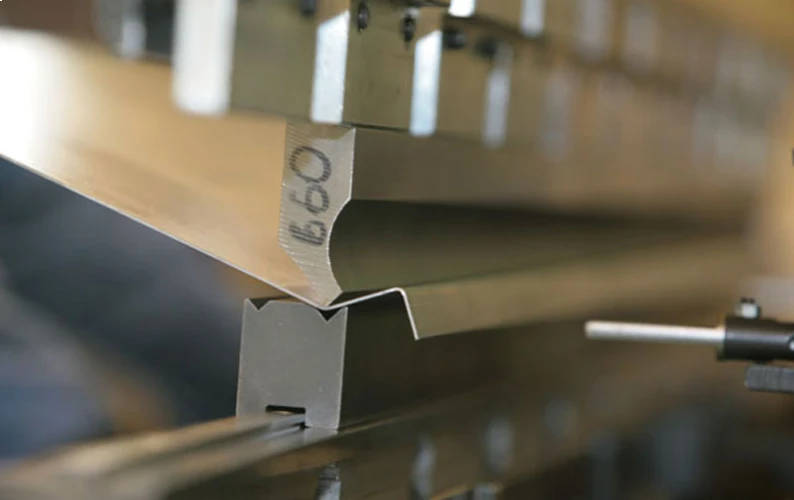
For industrial-grade terminal boxes, the integrity of grounding stud threads is by no means a minor detail; rather, it is a core manufacturing characteristic directly related to equipment safety and system reliability. Once the threads are damaged, not only does it become impossible to securely fasten grounding cables on-site, but it also directly increases the impedance of the grounding loop, causing the electrical terminal box to lose its protective function—a particularly critical issue in high-vibration or high-humidity industrial environments.
From a sheet metal manufacturing perspective, the root causes of such failures often lie deep within the early processing and assembly stages—deviations in tapping parameters, uncontrolled assembly torque, and installation defects in self-clinching fasteners (such as PEM nuts). This article will provide an in-depth analysis of the common root causes of thread damage in grounding studs for custom terminal boxes and explore how to achieve reliable thread quality through manufacturing process optimization, ensuring that every part meets the most stringent on-site installation requirements.
The Critical Role of Grounding Studs in Terminal Box Integrity
For any industrial-grade terminal box, the function of a grounding stud extends far beyond that of a mechanical connection. It serves as the physical and electrical interface for the equipment’s safety grounding system and ensures a low-impedance fault current path. According to UL 508A standards, the grounding circuit must maintain extremely low contact resistance, which depends directly on the integrity of the threaded connection and the clamping force.
When the stud threads are damaged due to manufacturing defects or installation errors, the effective conductive contact area is drastically reduced, leading to increased contact resistance. Under fault conditions, this can cause localized overheating or even insulation breakdown, causing the electrical terminal box to lose its safety protection function.
The losses resulting from thread damage extend throughout the entire supply chain. For procurement, the explicit costs include labor costs for on-site rework, delayed project timelines, and the replacement of scrapped parts. More subtle, hidden risks lie in the fact that unreliable grounding connections may cause equipment to fail acceptance tests (such as grounding continuity verification) and could even lead to safety incidents and product liability disputes.
Therefore, ensuring the initial thread quality of grounding studs in custom terminal boxes is a critical step in mitigating these technical risks and commercial losses at the source.
Analysis of the Root Causes of Thread Damage in Terminal Boxes
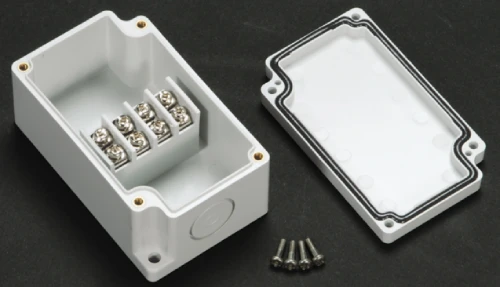
To effectively prevent thread failure in the grounding studs of electrical terminal boxes, it is essential to systematically trace the root causes. These causes typically do not exist in isolation but stem from process defects or operational oversights throughout the entire manufacturing chain, from raw material processing to final assembly.
Manufacturing Defects in Terminal Boxes—Taps and Tooling Factors
In the early stages of thread machining for custom terminal boxes, defects often stem from uncontrolled tapping processes. Using worn taps or those with mismatched geometric parameters directly results in incomplete thread profiles, rough surfaces, or mean diameter dimensions outside the tolerance range.
Furthermore, improper cutting speed, feed rate, and coolant application during tapping can cause thread surface tearing or work hardening, thereby compromising the thread’s load-bearing strength and fitting accuracy. These initial defects are highly likely to escalate into complete failure during subsequent installation, potentially rendering the entire electrical terminal box housing unusable.
Terminal Box Assembly Errors—Human Factors
During the assembly of custom terminal boxes, the operator’s assembly technique is a critical factor affecting thread integrity. Using uncalibrated pneumatic or electric screwdrivers can easily result in excessive torque, causing plastic deformation or “thread slippage,” which directly compromises the reliability of the ground connection.
More commonly, studs are not inserted perpendicular to the axis of the threaded hole, causing “misalignment.” This forces the first thread to be cut or squeezed, resulting in irreversible structural damage and significantly reducing the clamping force and electrical continuity of the ground connection.
Fastener Installation Issues—PEM Nut Problems
For electrical terminal boxes using self-clinching nuts (PEM nuts), the installation process directly determines the initial state of the threads. If the clinching force is insufficient or the clinching head is not aligned perpendicular to the sheet metal surface, the nut will not seat completely flush.
This misalignment not only causes initial deformation of the nut’s own threads but also generates additional radial stress when the bolt is subsequently tightened, significantly increasing the risk of thread seizing or fatigue fracture, thereby greatly compromising the long-term reliability of the ground connection.
Manufacturing Solutions to Ensure the Reliability of Terminal Box Threads
To eliminate thread failure issues in custom terminal boxes at the source, quality control must be integrated into every stage of the manufacturing process, rather than relying solely on final inspection. By implementing rigorous process specifications, introducing automation technology, and supplementing these with precise torque management, it is possible to significantly improve thread forming quality and assembly reliability, thereby fundamentally eliminating potential hazards.
Process Control During Tapping and Thread Forming
During the tapping stage of terminal box production, priority should be given to using extrusion taps instead of traditional cutting taps. Forming threads through the plastic flow of the material significantly improves thread profile density and fatigue strength.
The tap’s rotational speed and feed rate must be precisely set based on the sheet metal’s material and thickness, and sufficient lubricating coolant at an appropriate concentration must be ensured. At the same time, strict tool life management is implemented: taps are replaced periodically based on the number of parts processed, and in-line spot checks using thread go/no-go gauges are conducted to monitor the stability of the mean diameter in real time, thereby ensuring the thread forming quality of industrial-grade terminal boxes from the source.
Automated Fastener Insertion with Force Monitoring
For self-riveting nuts used in terminal boxes, manual riveting should be phased out in favor of automated riveting equipment equipped with a force monitoring system.
This technology captures and records the force-displacement curve in real time during the crimping process, enabling precise determination of whether the nut is embedded vertically and flush with the sheet metal. The system automatically identifies and rejects abnormal crimping forces caused by fluctuations in material hardness or tooling misalignment, ensuring that the installation status of every nut is completely consistent. This data-driven process control effectively eliminates the uncertainties associated with manual operations.
Implementing Torque Control at Assembly Stations
To prevent human error from damaging threads on electrical terminal boxes during final assembly, torque control protocols must be strictly enforced at all assembly stations.
Specific measures include: using precision screwdrivers or electric torque wrenches with preset torque values, and strictly setting maximum tightening torque limits based on the specifications and grades of the grounding bolts. At the same time, a log of periodic calibrations for torque tools must be established to ensure their output accuracy.
By standardizing and making assembly operations traceable, thread damage caused by over-tightening or misalignment can be completely eliminated, ensuring the long-term reliability of grounding connections.
Are you looking for reliable & cost-effective
China metal fabrication manufacturer
More than 150,000 OEM metal fabrication products delivered to 5,000+ global buyers.
And benefit from it!
Verifying the Thread Quality of Terminal Boxes—Inspection and Standards
Improvements in manufacturing processes must be complemented by a rigorous verification system to ensure closed-loop control of the thread quality of custom terminal boxes. Visual inspection alone is far from sufficient to guarantee the functionality of the threads; it is essential to implement systematic inspection procedures based on internationally recognized measurement standards to objectively verify the dimensional accuracy and fit grade of the threads, ensuring they meet design specifications and on-site installation requirements. The following outlines Supro’s validation practices.
Validating Terminal Box Threads with Go/No-Go Gauges
Go/No-Go gauges are the definitive tools for verifying whether the threads of electrical terminal boxes meet dimensional requirements. The Go gauge should be able to screw through the entire thread length completely and smoothly, verifying that the effective mean diameter and thread profile are correct. The No-Go gauge should stop after being screwed in no more than three turns, thereby controlling the maximum mean diameter of the thread and preventing an overly loose fit.
This inspection must be performed in accordance with the Unified National (UN) or Metric (M) thread standards. For critical grounding points, we conduct 100% Go/No-Go gauge inspections and maintain detailed records as objective evidence of part traceability, ensuring that every terminal box reliably matches standard fasteners.
Beyond Gauges—Visual and Dimensional Inspection of Terminal Boxes
In addition to Go/No-Go gauges, comprehensive quality verification must include visual and critical dimensional inspections.
Visual inspections should focus on checking the threaded entry end for deformation, burrs, or metal debris caused by stamping or riveting, as these defects may prevent bolts from being inserted properly. At the same time, the uniformity of the threaded surface coating (such as galvanization) must be verified to prevent excessively thick coatings from affecting the fit.
Critical dimensional inspections include measuring the perpendicularity of the stud relative to the mounting surface using a vernier caliper, as well as confirming that there are no protrusions or indentations around the threaded counterbore caused by the riveting process.
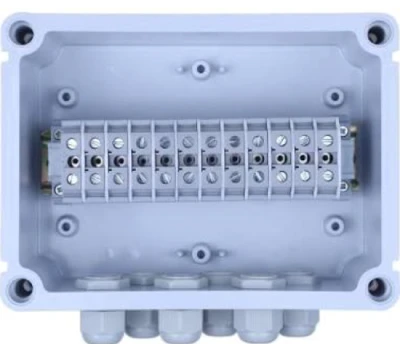
These inspections ensure that the threads of the custom terminal box are not only functionally and dimensionally compliant but also physically intact, thereby preventing micro-defects from causing on-site assembly difficulties or stress concentration during long-term use.
Conclusion
The thread integrity of grounding studs in terminal boxes is not an isolated quality metric, but rather a systematic engineering process that spans the entire design, manufacturing, and assembly workflow. Fundamentally, reliable thread quality cannot be guaranteed by final inspection alone; it must be “manufactured” through rigorous process design, automated process control, and standardized verification methods.
As a professional terminal box manufacturer, Supro controls tap parameters and tool life from the source, incorporates force monitoring technology during the riveting process to ensure fasteners are correctly positioned, and establishes torque control specifications at the assembly stations. At the same time, we establish a complete closed-loop quality control system through go/no-go gauge verification and meticulous visual dimensional inspections. This mastery of process details directly translates into smooth on-site installation and the long-term operational reliability of the equipment.
Founded in 2004, Supro has provided one-stop terminal box manufacturing solutions to more than 3,000 companies worldwide, leveraging our extensive manufacturing experience, strong technical team, and comprehensive manufacturing resources.
At Supro, we have a professional quality control team, an experienced QC staff, and scientific quality control processes to ensure that products undergo rigorous inspection, meet specified technical standards, and allow for the traceability of defective products at any time. This includes raw material inspection, mold inspection, equipment inspection, process sampling, packaging inspection, and final inspection. We conduct QA (Quality Assurance) to ensure products meet the necessary tolerances and quality standards.
We guarantee on-time delivery of all products. From product design and rapid prototype fabrication to mass production, we provide professional technical support and exceptional quality. For inquiries regarding technical specifications, customized project solutions, or OEM partnerships, please contact Supro immediately. Our professional engineering team is always ready to provide you with tailored application solutions.