Selecting the right materials for custom metal stamping projects is not merely a preliminary step—it is a critical engineering decision that directly impacts performance, cost, and manufacturability. Precise material selection saves time and prevents production disasters.
From automotive giants to consumer tech brands, companies are pursuing lower costs and shorter cycles—but did you know? Nearly 38% of mass production delays stem from material mismatches (Source: McKinsey Manufacturing Pulse Report, 2023). Therefore, rigorously selecting metal stamping materials based on specifications like tensile strength, elongation, surface finish, and thickness tolerance is critical to project success.
Wouldn’t you double-check lumber quality before building a house? The same principle applies here. Whether evaluating cold-rolled steel’s formability and surface finish, assessing galvanized steel’s corrosion resistance, or selecting 5052 aluminum’s strength-to-weight ratio—every decision must align with the functional requirements and production scale of metal stamping parts. Choosing the wrong steel grade or underestimating thickness needs… leads directly to inventory waste and delivery delays.
This guide breaks down how to select the right metal stamping materials for mass production: choosing between cold-rolled steel and 5052 aluminum alloy, plus high-strength options that won’t bend under pressure. If you’ve ever faced order errors because “drawing specs seemed correct,” buckle up—you’ve found the solution.
Understanding Metal Stamping Materials: Fundamentals
In the precision metal stamping field, materials are far from a commodity; they form the engineering core that determines part functionality, cost, and manufacturability. Every metal stamping process—whether blanking, bending, or drawing—imposes specific demands on material formability, strength, and hardness. Grasping these fundamentals is the first step toward avoiding production disruptions, ensuring part performance, and facilitating efficient technical communication with manufacturers.
Key Material Types in Metal Stamping
From everyday goods to aerospace components, the selection of metal stamping materials determines a product’s success or failure. Common materials used in actual production include:
Cold-rolled steel—Cost-effective and easy to form, ideal for high-volume production.
304 Stainless Steel—Corrosion-resistant and durable, suitable for food-grade or outdoor applications.
5052 Aluminum Alloy—Lightweight, high-strength, and highly ductile, ideal for automotive panels.
Galvanized steel sheet—Features a protective zinc coating, particularly suited for applications requiring long-term durability.
High-strength steel—Possesses high yield strength, suitable for structural components subjected to stress.
The selection of these metal stamping materials is based not only on their mechanical properties but also on their performance under repeated forming loads.
Material Type | Representative Grade / Condition | Tensile Strength (MPa) | Yield Strength (MPa) | Elongation (%) | Hardness | Typical Applications |
Cold Rolled Steel | ST14 / DC04 (deep drawing grade) | 270–350 | ≥220 | ≥34 | ≤50 HRB | Automotive body panels, appliance housings, complex deep drawn parts |
Cold Rolled Steel | 08Al (stamping grade) | ≥325 | ≥185 | ≥33 | ≤131 HB | Deep drawn parts, driver cabins, instrument shells |
304 Stainless Steel | 304 (annealed bar) | ≥620 | ≥310 | ≥30 | — | Chemical equipment, food machinery, automotive components |
304 Stainless Steel | 304 (sheet / tube) | ≥520 | ≥205 | ≥40 | ≤187 HB | General stampings, corrosion resistant applications |
5052 Aluminum Alloy | 5052 H32 | 228 | 193 | 12 | 60 HB | Aircraft fuel tubes, fuel tanks, sheet metal parts, lighting fixtures |
5052 Aluminum Alloy | 5052 H36 | 276 | 241 | 10 | 73 HB | Stamped structures requiring higher strength |
Galvanized Steel | ASTM A653 CS Type A | ~310 | ~230 | ~20 | — | Building panels, general stampings |
Galvanized Steel | ASTM A653 SS Grade 40 | ≥310 | ≥275 | 20 | — | Structural parts, durability demanding applications |
High Strength Steel | 22MnB5 (hot stamped) | 1480–1520 | 1030–1113 | ≥8.0 | ≥500 HV | Automotive hot stamped structural parts, crash beams |
High Strength Steel | Advanced High Strength Steel (AHSS) | 900–1400 | 600–1100 | — | — | Automotive structural components, load bearing brackets |
Essential Equipment for Metal Stamping Processes
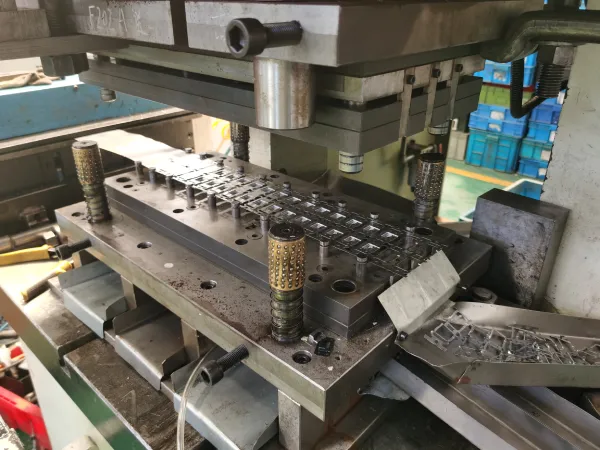
When discussing custom metal stamping, equipment is indispensable. Depending on part complexity, each machine serves a specific function:
Progressive Die Press: High-speed execution of multiple operations—cutting, bending, embossing—in a single stroke.
Turret Press System: Most suitable when metal stamping parts require movement between stations during forming.
Hydraulic deep-draw presses: Apply controlled pressure for deep cavity forming.
Servo presses: Deliver high precision and programmable motion, engineered for high-accuracy machining.
Automatic coil feed lines: Directly transport metal coils to presses, ensuring continuous production.
These machines work in tandem, continuously enhancing production efficiency and maintaining consistent metal stamping quality through thousands of cycles.
Common Process Flows in Metal Stamping
You might assume custom metal stamping is as simple as “pressing a button,” but the intricacies involved are far more than meets the eye:
▪ Deep Drawing Process — Stretching metal into complex shapes without tearing; kitchen sinks or fire extinguisher casings are prime examples.
▪ Progressive Die Stamping — A single metal strip undergoes multiple operations; each punch adding detail until the final part takes shape.
▪ Fine blanking — Achieves smooth edges and tight tolerances, widely used for gears and safety-critical components.
▪ Metal forming processes — Includes operations like flanging, hemming, and rolling, essentially shaping through deformation rather than cutting.
▪ Automated stamping — Integrates robotics with metal stamping dies to boost output while reducing labor costs.
Each process caters to distinct production needs based on volume, complexity, and tolerance requirements.
Key Specifications for Metal Stamping Materials: Thickness, Surface Treatment, and Strength
Selecting premium materials is insufficient; precise compliance is essential every time:
Metal stamping material thickness tolerance—even a ±0.05 mm deviation impacts assembly fit accuracy.
Surface treatment requirements—smooth surfaces enhance aesthetics and corrosion resistance.
Dimensional accuracy standards—strict tolerances ensure precise alignment in subsequent processes.
Tensile strength requirements—higher values indicate greater load-bearing capacity but demand more stringent forming conditions.
Yield strength specifications—determine the bending limit a metal stamping material can withstand before permanent deformation occurs.
According to Frost & Sullivan’s Q1 2024 Advanced Manufacturing Trends Report, over 62% of OEMs now incorporate detailed traceability of metal stamping material specifications into their quality control processes—indicating precision is no longer optional.
When supro mfg manages your tooling setup from project inception, we ensure these specifications are not only met but also precisely controlled throughout the entire process—from coil to finished product.
Cost-Effective Choices for Metal Stamping Materials in Large Orders
Selecting the right metal stamping materials isn't just about part strength—it's a budgetary balancing act. When planning large-scale custom metal stamping projects, cost-benefit analysis must look beyond material unit prices to focus on total cost of ownership (TCO). For precision metal stamping, material selection directly impacts production cycle times, die life, and final part performance, ultimately determining the project's overall profitability.
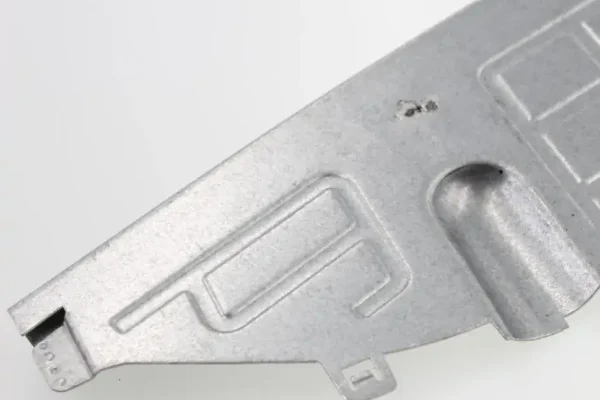
Cold-Rolled Steel vs. Galvanized Steel: Which Offers Greater Value?
In large-scale custom metal stamping, both cold-rolled steel and galvanized steel present distinct advantages—but which delivers superior cost-effectiveness?
Cold-Rolled Steel:
Initial cost approximately 10-15% lower.
Smooth surface ideal for precision metal stamping.
Weaker corrosion resistance—requires additional coating protection in exposed environments.
Galvanized Steel Sheet:
Higher initial cost due to zinc coating.
Built-in rust resistance translates to lower long-term maintenance costs.
Better suited for outdoor or humid environments.
If you require large-volume stamping of indoor brackets, cold-rolled steel may be the ideal choice. However, for any metal stamping parts subjected to outdoor environmental conditions, galvanized steel sheets are the superior option. The key to selecting metal stamping materials lies in balancing material cost with the durability of service life.
Advantages of 5052 Aluminum Alloy in Mass Production
5052 aluminum alloy is not only lightweight but also excels in high-efficiency, mass-produced precision metal stamping.
Superior bending performance with minimal cracking—exceptional formability translates to lower scrap rates.
Exceptional corrosion resistance eliminates the need for additional coatings, saving time.
Lighter than steel, reducing shipping costs for large-volume orders.
The comprehensive advantages of 5052 aluminum alloy significantly boost production speed and reduce scrap rates, making it the preferred alloy for manufacturing thousands to millions of metal stamping parts:
In terms of production efficiency, 5052’s formability reduces wear on metal stamping dies and shortens press cycle times.
Regarding cost savings, 5052 eliminates post-processing steps, while its lightweight design lowers transportation expenses.
Regarding supply chain flexibility, 5052’s coil form facilitates convenient handling and compatibility with automated feeding systems.
Cost Efficiency of High-Strength Steel for Mass Production
Though seemingly expensive, high-strength steel offers significant advantages for mass-producing high-strength components:
Thinner sheets can be used without compromising performance—thinner sheets mean reduced raw material consumption per metal stamping part.
Reduced failure rates during forming minimize scrap waste, enabling more effective control over total material costs.
The enhanced strength of metal stamping parts eliminates reinforcement requirements, simplifying assembly processes and boosting overall production efficiency.
For OEMs pursuing end-to-end supply chain efficiency, the tangible benefits of such steels far exceed per-ton price advantages. They optimize the entire process from coil to finished product while enhancing overall cost-effectiveness for high-volume orders:
In material reduction, high-strength steel enables thinner gauges, resulting in lighter metal stampings and lower tonnage requirements per part.
In tooling and process optimization, its stable deformation characteristics extend tool life, while uniform yield strength optimizes metal stamping process parameters.
In end-product value, its streamlined design achieves higher load-bearing capacity, and structural optimization delivers competitive advantages.
Only 4 steps
online custom metal fabrication parts
Contact our experts team and experience the efficiency and economic benefits of digital metal fabrication services.
Upload Design Files
STL , STEP (.stp), IGES (.igs), (.ZIP), or PDF.
Also be a sample or an idea
Quote & Design Analysis
Instant factory quotes and DfM reports, the most reasonable solution.
Manufacturing Begins
Digital processes can initiate order tasks within 24 hours.
On-Time Delivery
Keeping delivery promises, approved by 3000+ Global Company buyers.
Common Mistakes in Selecting Metal Stamping Materials
In custom metal stamping projects, technical errors in material selection often directly lead to cost overruns and delivery delays. As a professional metal stamping manufacturer, Supro has found that the most frequent mistakes stem not from misunderstanding material properties, but from underestimating the dynamic interplay between material specifications and manufacturing processes. Let's examine which aspects demand meticulous attention.
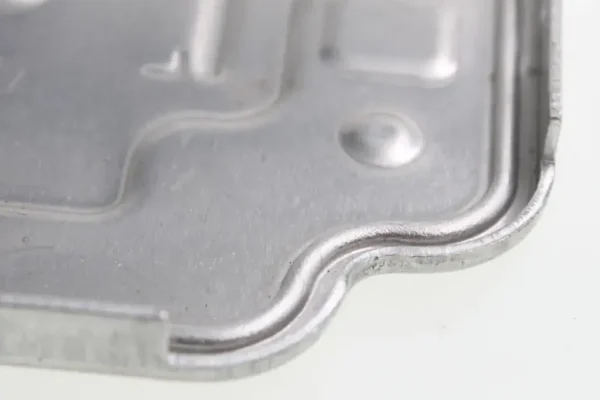
Neglecting Material Thickness Tolerances
Ignoring material thickness tolerances is like throwing darts blindfolded—you might hit the board, but hitting the bullseye is impossible.
Metal stamping material thickness below expectations? Scrap rates will skyrocket.
Excessive thickness? Die life is in jeopardy—tool wear accelerates.
Thickness inconsistencies? Dimensional stability suffers.
The problem often spirals into this vicious cycle:
Engineers mistakenly assume nominal thickness suffices, while procurement prioritizes lowest-cost specifications. Production suddenly encounters forming failures, and quality inspection reveals dimensional deviations in metal stampings. Project delays + rework lead to budget overruns. In short, custom metal stamping operations must account for tolerance ranges during material selection—the savings extend far beyond mere cost.
Neglecting Surface Finish Requirements
Surface finish impacts not only appearance but also the functionality of metal stampings. This is especially critical for precision-fit components or coatings requiring smooth substrates.
- Poor surface finish can cause surface roughness to exceed acceptable Ra values, compromising coating adhesion or electroplating quality.
- In high-end consumer electronics, even minor scratches from inadequate surface treatment control can severely diminish product value.
- Neglecting surface specifications on automotive panels may result in visible rippling after painting.
Case Study Warnings:
- Customer demanded mirror finish metal stampings but received a matte effect, resulting in batch rejection.
- Omitting pre-polishing for custom metal stamping amplified mold scratch defects after forming.
- Ignoring surface roughness specifications caused downstream processes to fail completely.
Therefore, surface treatment is critical throughout the entire precision metal stamping process.
Misinterpreting Tensile Strength and Yield Strength Specifications
Confusing tensile strength with yield strength often leads to severe consequences—such as metal stamping parts cracking or molds deforming during production.
The distinctions are as follows:
Yield strength = Critical threshold at which material begins to deform
Tensile strength = Ultimate limit at which material fractures completely
Underspecified values cause metal stamping parts to lose shape under stress, posing particular risks for structural components like brackets or frames.
Overspecified values subject metal stamping dies to excessive wear, incurring unnecessary costs without tangible benefits—a classic case of material over-engineering.
As highlighted in Ducker Carlisle’s Q1 2024 Global Automotive Materials Report: “Tier 1 suppliers selecting steel grades exceeding necessary yield thresholds resulted in up to 12% higher die maintenance costs.” The lesson? Precisely master material performance data and ensure it aligns with the part’s actual load-bearing behavior during the metal stamping process.
Failure to Consider Application Type in Material Selection
Different industries have distinct requirements. Mismatching metal stamping materials with application types can have dire consequences:
1) Automotive components demand excellent formability + fatigue resistance. Duplex steel is recommended for its balanced ductility and tensile properties (e.g., high fatigue strength and moderate elongation).
2) Aerospace applications demand lightweight alloys with high strength. Aluminum alloys, offering low density and superior corrosion resistance, are recommended.
3) Consumer electronics require tight tolerances and premium surface finishes. Stainless steel or copper alloys provide exceptional surface roughness and electrical conductivity.
4) Industrial machinery often demands toughness and wear resistance. Carbon steel or high-hardness quenched materials are particularly suitable, especially under continuous friction conditions.
5) The home appliance industry prioritizes cost-effectiveness and aesthetics. Low-carbon steel with appropriate coating treatments performs excellently in this sector without excessive material cost investment.
Frequently Asked Questions About Custom Metal Stamping
Which materials are suitable for large-scale custom metal stamping?
Cold-rolled steel—Consistent thickness, stable under pressure.
304 stainless steel—Corrosion-resistant, meets industrial equipment demands.
5052 aluminum alloy—Lighter transport, stronger grip, ideal for consumer electronics mass production.
Galvanized steel sheet—zinc-coated armor for automotive body panels, resisting outdoor corrosion.
High-strength steel—durable structural support frames enduring repeated stress cycles.
How do cold-rolled steel and galvanized steel compare in cost analysis?
Cold-rolled steel offers lower initial budget pressure; galvanized steel demonstrates its value advantage later by delaying corrosion and reducing quality control inspection workload in long-cycle projects.
Why choose 5052 aluminum alloy for mass production?
Its excellent strength-to-weight ratio effectively reduces logistics and transportation costs, while outstanding tensile strength ensures appliance housing components safely enter the mass market.
What mistakes in metal stamping material selection can destabilize projects?
Neglecting material thickness tolerances triggers assembly deviations and rework delays.
Ignoring surface treatment requirements causes visible defects in consumer-facing electronic housing components.
Misjudging yield strength specifications exposes aerospace stampings to heightened fatigue risks.
When does high-strength steel take center stage?
In metal forming processes for heavy-duty structures—whether automotive application frames or aerospace support structures—it dominates when yield strength specifications must withstand severe loads while maintaining dimensional accuracy standards over extended periods.
Summary
Supro is a professional metal stamping manufacturer. Leveraging advanced equipment, extensive manufacturing experience, and a specialized engineering team, we provide flawless metal stamping services to over 3,000 companies worldwide, offering genuine manufacturer pricing.
As an industry-leading metal stamping manufacturer, we efficiently deliver diverse products on schedule. From product design and rapid sheet metal prototype fabrication to mass production, we provide expert technical support and exceptional quality. We offer one-stop manufacturing solutions and highly cost-competitive product supply!