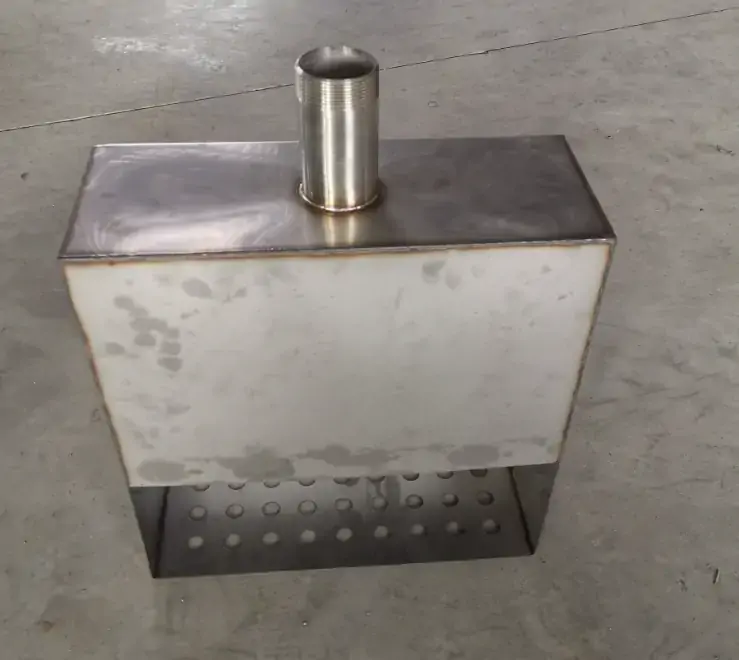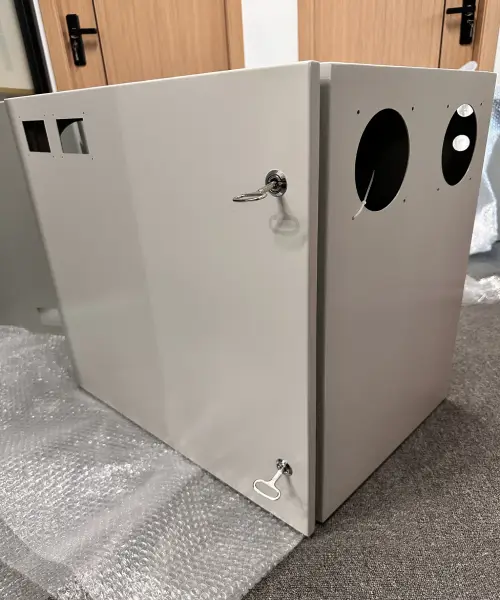

Deterioration of the outer coating due to fuel leakage is a long-term and costly challenge faced by any metal fuel tank throughout its service life.
Accidental leaks are almost inevitable during refueling operations; when traditional coatings or powder coatings with poor adhesion come into contact with hydrocarbon fuels, solvents rapidly penetrate the coating substrate. This leads to coating swelling, loss of adhesion at the substrate interface, and ultimately coating delamination—leaving the bare steel exposed to atmospheric corrosion. The result is widespread rusting and coating flaking, which jeopardizes structural integrity and operational safety.
Addressing this failure mode in metal fuel tanks requires a systematic, standards-based approach rather than relying on general workshop practices.
For custom metal fuel tanks, the foundation of a durable protective system begins with surface preparation in accordance with the SSPC-SP10/NACE No. 2 standard (i.e., near-white metal blast cleaning). This standard stipulates that at least 95% of the surface area must be free of all visible contaminants, including scale, rust, and existing coatings. Achieving this level of cleanliness, combined with an appropriate anchor profile, provides the mechanical interlock necessary for any high-performance coating system to perform as intended.
Once surface preparation is complete, selecting chemically resistant coatings is critical. When properly cured and validated through MEK solvent resistance testing in accordance with ASTM D5402, these coating systems provide the necessary cross-link density to withstand long-term fuel erosion.
This article delves into these interdependent variables—surface preparation, coating selection, and curing verification—with the aim of establishing a set of repeatable engineering procedures to eliminate fuel-induced coating failure in custom metal fuel tanks.
Understanding the Mechanism by Which Fuel Causes Degradation of Metal Fuel Tank Coatings
The degradation process that occurs in any unprotected metal fuel tank initially begins at the molecular level. Hydrocarbon fuels—whether gasoline, diesel, or jet fuel—are complex mixtures composed of aliphatic and aromatic solvents, whose solubility parameters are extremely close to those of many traditional organic polymer binders.
When leaked fuel comes into contact with the outer surface of a metal fuel tank coating, these low-molecular-weight substances penetrate the coating matrix through free volume and micropores. Once absorbed, the solvent molecules weaken the intermolecular van der Waals forces between polymer chains, causing the coating to swell, plasticize, and lose its glassy rigidity.
This solvatation effect gradually degrades the coating’s cross-linked network—a phenomenon well-documented in epoxy-based systems, where aromatic fuel components trigger measurable chemical degradation detectable via spectroscopic analysis.
The second, more severe failure mechanism involves the loss of adhesion at the interface between the coating and the substrate. For any custom metal fuel tank, the performance of the coating fundamentally depends on the mechanical interlock formed during the coating process. When fuel penetrates the interface, it desorbs adsorbed moisture and contaminants from the film; more critically, it forms a boundary layer that eliminates the thermodynamic driving force required for adhesion. The result is delamination—the coating peels away laterally from the point of penetration.
This interfacial failure is accelerated by permeation-induced blistering, in which fuel-soluble degradation products accumulate beneath the intact coating, creating localized pressure. For metal fuel tanks repeatedly exposed to fuel, the combined effect of this volumetric expansion and interfacial delamination creates a self-propagating failure cycle—each leak causes the coating to gradually degrade until extensive rusting and peeling become inevitable.
The Foundation for Long-Lasting Coating Protection on Metal Fuel Tanks
The durability of any protective coating on a custom metal fuel tank depends almost entirely on the pretreatment of the underlying surface. Strict adherence to the SSPC-SP 10 near-white blast cleaning standard creates the required anchoring roughness and ensures the thorough removal of scale, rust, and soluble salts—conditions that, if not met, even the most advanced topcoats cannot compensate for.
Definition of Near-White Metal Blasting
The SSPC-SP 10 / NACE No. 2 Near-White Metal Blasting standard specifies the cleanliness grades that can be achieved on carbon steel surfaces using dry blasting methods. This standard requires that at least 95% of the surface area must be completely free of all visible contaminants—including scale, rust, old coatings, and other foreign matter.
The only permissible residue is slight staining, which must not cover more than 5% of the surface area. Compared to the SSPC-SP 5 White Metal standard (which does not allow any staining), the Near-White grade offers a more economical compromise in engineering practice.
For any metal fuel tank, achieving this cleanliness level is a prerequisite for subsequent high-performance coating systems to provide the expected protective function—surface preparation below this standard will directly result in insufficient coating adhesion and premature failure.
Achieving the Required Anchor Profile
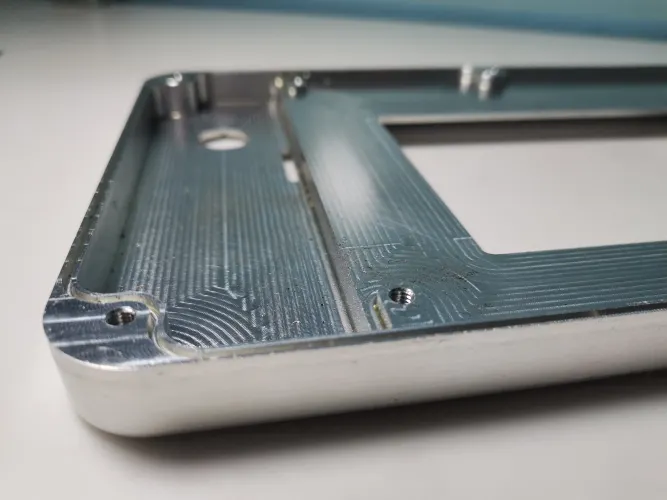
Sandblasting is not only about cleanliness but also about creating the microscopic surface texture required for mechanical interlock with the coating—that is, the anchor profile or surface roughness.
The anchor profile is the undulating structure of peaks and valleys formed when the blasting media impacts the substrate; its depth is measured in mils (one-thousandth of an inch). For the external protective coating system of custom metal fuel tanks, the recommended anchor profile depth is 1.5 to 2.0 mils; in some severe operating conditions, depths of 2.5 to 5.0 mils are required. If the profile is too shallow, the coating lacks sufficient mechanical interlock and is prone to peeling; if the profile is too deep, the coating may fail to fully cover the peaks, resulting in pinholes.
Measurement of the anchor profile should be performed in accordance with ASTM D4417, which specifies three on-site measurement techniques: visual comparison, duplicate tape, and optical microscopy. The choice of blasting media—such as angular steel grit—directly determines the resulting profile morphology and depth.
Pre-Blasting Cleaning and Contaminant Control
The effectiveness of any blasting operation begins with the removal of contaminants prior to blasting. The SSPC-SP 1 Solvent Cleaning Standard is a prerequisite for implementing all SSPC blasting specifications. This standard stipulates that, prior to blasting, all visible soluble contaminants—such as oil, grease, dirt, drawing compounds, and cutting compounds—must be thoroughly removed from the surface of metal fuel tank materials using methods such as solvents, steam, alkaline solutions, or emulsions.
This step is particularly important for custom metal fuel tanks: if cutting oils, rust-preventive oils, or release agents left over from the manufacturing process are not removed before sandblasting, they will be forced into the micro-pores of the substrate surface by the high-pressure medium during the sandblasting process.
These embedded hydrocarbon contaminants will form an interfacial contamination layer after subsequent coating, preventing any coating from establishing a durable chemical or mechanical bond on that surface. After solvent cleaning is complete, any residual dust on the surface must also be removed before proceeding to the sandblasting process.
Only 4 steps
online custom metal fabrication parts
Contact our experts team and experience the efficiency and economic benefits of digital metal fabrication services.
Upload Design Files
STL , STEP (.stp), IGES (.igs), (.ZIP), or PDF.
Also be a sample or an idea
Quote & Design Analysis
Instant factory quotes and DfM reports, the most reasonable solution.
Manufacturing Begins
Digital processes can initiate order tasks within 24 hours.
On-Time Delivery
Keeping delivery promises, approved by 3000+ Global Company buyers.
Coating Systems Specifically Designed for Metal Fuel Tanks
Any coating system specified for metal fuel tanks must inherently possess resistance to hydrocarbon penetration and dissolution. Polyurethane powder coatings and epoxy primer/acrylic topcoat combinations are industry-proven solutions, provided they are applied at the appropriate film thickness and cured to achieve the cross-linking density required for fuel-exposed environments.
Polyurethane Powder Coatings: The Preferred Solution
Polyurethane powder coatings have become the preferred system for the external protection of metal fuel tanks due to their high cross-linking density and exceptional chemical resistance.
Thermosetting polyurethane powder forms a dense three-dimensional polymer network during curing. The urethane bonds in its molecular structure impart excellent flexibility and impact resistance to the coating while effectively blocking the penetration of fuel molecules.
Compared to epoxy systems, polyurethane powder offers superior weather resistance and gloss retention while maintaining good fuel resistance, making it suitable for metal fuel tanks exposed to outdoor environments. Furthermore, polyurethane powder coatings exhibit excellent flow properties, resulting in a smooth surface finish that facilitates subsequent cleaning and maintenance.
For metal fuel tanks frequently exposed to fuel spills, the comprehensive performance of polyurethane powder coatings makes them the most reliable protective solution in engineering practice.
Epoxy Primer with Acrylic Topcoat as an Alternative
A two-coat system consisting of an epoxy primer and an acrylic topcoat provides a cost-effective alternative protective solution for metal fuel tanks. Epoxy primers offer exceptional adhesion to metal substrates and excellent corrosion resistance, effectively blocking the penetration of moisture and corrosive media. However, epoxy coatings are prone to chalking and yellowing when exposed to UV light over the long term; therefore, a topcoat must be applied for protection.
Acrylic topcoats provide outstanding weather resistance, color retention, and gloss retention, while also exhibiting good intercoat adhesion with the epoxy primer.
It should be noted that the solvent resistance of acrylic topcoats is generally lower than that of polyurethane systems. Therefore, this two-coat system is suitable for applications with infrequent fuel contact, or where equipment is primarily located indoors or in sheltered environments. For demanding applications involving frequent exposure to fuel, it is recommended to prioritize the use of polyurethane powder coating systems.
Situations to Avoid for Metal Fuel Tanks: Conventional Coatings and Improperly Cured Powder Coatings
Conventional industrial paints—such as alkyd paints—are widely used on general-purpose sheet metal components due to their low cost. However, the ester bonds in their molecular structure are extremely sensitive to hydrocarbon solvents; upon contact with fuel, they rapidly swell, soften, or even dissolve completely. Such coatings are unsuitable for any area of a metal fuel tank that comes into contact with fuel.
Equally concerning are improperly cured powder coatings. The chemical resistance of powder coatings depends on the cross-linking density formed during the curing process—when curing is insufficient, the polymer network is not fully established, and the coating’s resistance to chemicals such as fuel and cleaning agents is significantly reduced, manifesting as surface softening, staining, or even film dissolution.
The degree of curing can be verified through the MEK solvent resistance wipe test (ASTM D5402). Coatings that fail this test should not be put into service. For metal fuel tank manufacturers, avoiding these two types of coating systems is a fundamental prerequisite for ensuring the long-term reliability of their products.
Are you looking for reliable & cost-effective
China metal fabrication manufacturer
More than 150,000 OEM metal fabrication products delivered to 5,000+ global buyers.
And benefit from it!
Quality Assurance for Metal Fuel Tanks: MEK Solvent Resistance Test
The MEK solvent wipe test (ASTM D5402) is a key quality control measure for verifying the cure level and fuel resistance of the external coating on custom metal fuel tanks; its results directly reflect whether the coating is capable of withstanding fuel corrosion.
ASTM D5402 as an Industry Standard
ASTM D5402 specifies a standard method for evaluating the solvent resistance of organic coatings using the solvent wipe technique, applicable in laboratory, field, or manufacturing workshop environments. The core principle of this standard is based on the cross-linked network formed by thermosetting coatings during the curing process—the higher the cross-linking density, the greater the coating’s resistance to solvent dissolution.
During testing, an operator rubs a cotton swab or gauze soaked in MEK solvent back and forth across the coating surface of a custom metal fuel tank at a controlled pressure (typically 2,000 to 3,000 kli). One forward stroke followed by one backward stroke counts as one “double rub.” Coating manufacturers typically specify the minimum number of double rubs required to pass the test; common requirements are 50 or 100 double rubs.
For coating systems on metal fuel tanks, ASTM D5402 provides a means of verifying curing quality that can be rapidly performed on the production line—compared to laboratory methods such as FTIR infrared analysis or TMA thermomechanical analysis, this test offers irreplaceable practicality in industrial settings.
Interpreting MEK Test Results for Metal Fuel Tank Applications
The interpretation of MEK test results is directly related to the determination of the delivery quality of custom metal fuel tank coatings. The test is terminated when, after reaching the predetermined number of double rubs, no substrate exposure is observed, or when the coating is penetrated to the substrate during the wiping process.
Industry experience indicates that for thermosetting coatings, 200 double-rub cycles without failure are considered indicative of full cure; 100 cycles are sufficient to meet the requirements of most coating applications; and 50 cycles represent the minimum acceptable threshold.
However, MEK responses vary among different coating systems—polyurethane powder coatings, due to their high cross-linking density, typically pass tests exceeding 100 cycles with ease, whereas epoxy systems often exhibit softening or penetration at lower cycle counts when curing is insufficient.
It should be noted that MEK test results are qualitative assessments and are influenced by various variables, including film thickness, curing uniformity, and coating defects. As a professional metal fuel tank manufacturer, Supro combines MEK testing with other inspection methods—such as film thickness measurement and adhesion pull-off testing—to establish a multidimensional quality verification system, rather than relying on a single test result as the sole basis for judgment.
Looking for a reliable custom sheet metal fabrication companies?
Talk To Supro MFG Expert Team
Contact us for competitive ex-factory prices,
and a full range of technical support services.
Best Practices for Manufacturing Metal Fuel Tanks
To translate coating specifications into reliable performance for custom metal fuel tanks on the production floor, three operational pillars are essential: seamlessly integrating the SSPC-SP 10 sandblasting process into the manufacturing workflow; strictly controlling electrostatic spraying and heat curing cycles; and conducting systematic post-curing inspections while maintaining traceable documentation.
These practices directly determine the coating’s durability during long-term exposure to fuel and mechanical damage, and together form the core of the quality assurance system.
Integrating Surface Preparation into the Metal Fuel Tank Production Process
Incorporating SSPC-SP 10 near-white blast cleaning into the standard manufacturing process for metal fuel tanks is a critical decision for ensuring long-term coating adhesion. After forming, a thin layer of corrosion rapidly forms on the surface of the steel; some manufacturers use chemical treatment, which, although lower in cost, does little to alter the surface topography and contributes only minimally to coating adhesion.
Sandblasting, on the other hand, effectively removes the corrosion layer and creates microscopic roughness on the substrate surface, providing mechanical interlock for the coating. In the manufacturing process of metal fuel tanks, the time window between sandblasting and coating must be strictly controlled—the surface after sandblasting is highly susceptible to environmental contaminants, and flash rust can form in as little as 30 minutes.
Coating Application and Curing Parameters
The application of powder coatings on metal fuel tanks typically employs an electrostatic spraying process, in which high-voltage static electricity causes powder particles to adhere to the surface of the grounded workpiece, ensuring uniform film thickness coverage even in corners and edges. The spraying voltage is generally controlled between 40–60 kV, and the distance between the spray gun and the workpiece is maintained at 15–30 cm.
Curing is a critical step that determines the final performance of the coating—polyurethane powder coatings require the workpiece to be maintained at 180–200°C for 10–20 minutes to achieve full chemical cross-linking.
Insufficient curing temperature or holding time will prevent the polymer network from fully forming, resulting in a significant reduction in the coating’s resistance to fuel. The temperature uniformity of the curing oven is equally critical; regular calibration is required to ensure that temperature variations across all areas of the oven remain within acceptable limits.
Post-Curing Inspection and Documentation
Post-curing quality inspections and documentation constitute the final line of defense before the custom metal fuel tank coating is delivered. Inspection items should include: coating film thickness measurement (typically required to be 60–100 μm), adhesion pull-off testing (in accordance with ASTM D4541), and MEK solvent resistance wipe testing (in accordance with ASTM D5402).
Film thickness measurements should be taken at multiple points across all areas of the metal fuel tank using a dry film gauge to ensure there are no areas with insufficient or missed coating. All inspection data should be compiled into a comprehensive quality documentation file, including pre-blasting cleaning records, anchor profile measurement data (in accordance with ASTM D4417), curing oven temperature profiles, and the results of various coating performance tests.
A comprehensive, traceable documentation system is not only a key focus during customer audits but also serves as the technical basis for the metal fuel tank manufacturer’s internal continuous process improvement.
Conclusion
To eliminate fuel-induced coating failure on metal fuel tanks, a systematic, standards-based approach must be adopted. Its technical foundation rests on three interdependent pillars: surface preparation in accordance with the SSPC-SP 10 standard to achieve the required anchor profile and ensure the surface is free of contaminants; selection of a high-crosslinking-density coating system to resist hydrocarbon permeation; and verification of curing integrity through the MEK solvent resistance test in accordance with ASTM D5402.
Supro is a specialized custom metal fuel tank manufacturer. Leveraging advanced equipment, extensive manufacturing experience, and a professional engineering team, we provide perfect custom metal fuel tank solutions to more than 3,000 companies worldwide and offer genuine manufacturer quotes.
For technical consultations, design solutions, or product specifications, please feel free to contact our engineering team at any time.