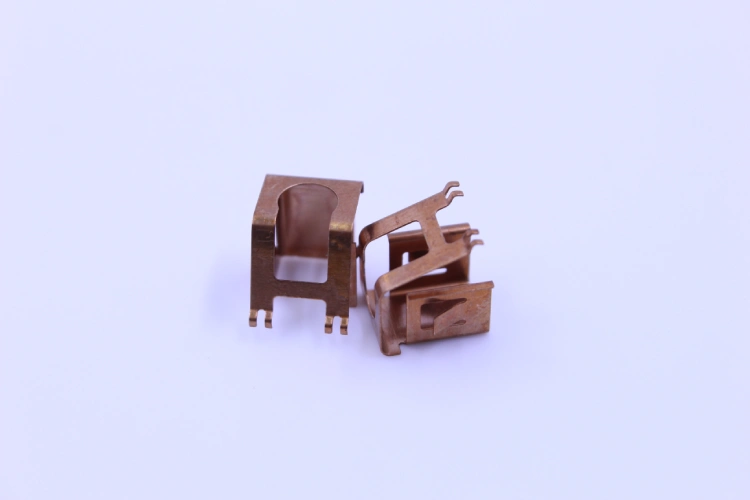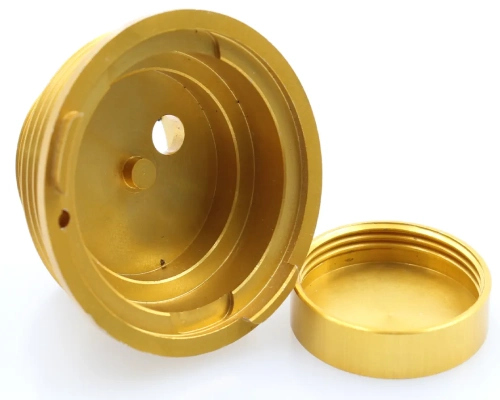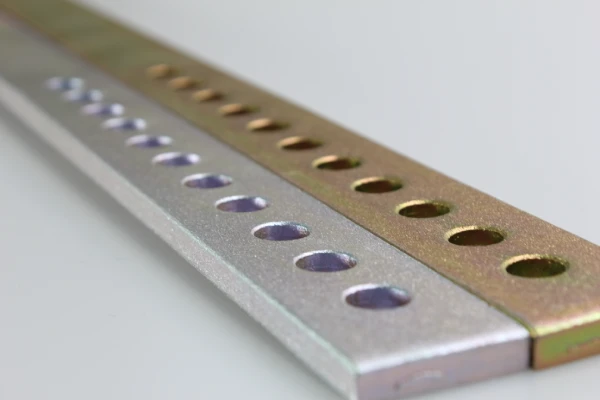
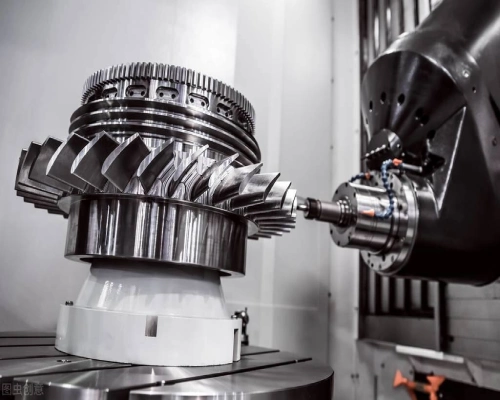

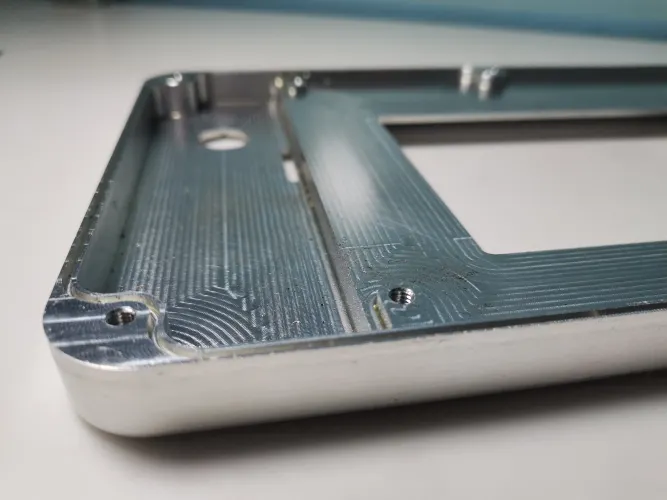

For precision CNC machining bronze, C54400 phosphor bronze represents a critical yet challenging material. Its exceptional strength, wear resistance and corrosion resistance make it indispensable for high-reliability components such as connectors, bearings and valves. However, the conventional CNC machining bronze process has long faced three major bottlenecks: short tool life, difficulty in controlling surface finish, and inefficient cutting parameters. These issues not only inflate costs but also compromise product quality.
In CNC machining bronze practice, Supro has increased the cutting speed for C54400 phosphor bronze from 5m/min to 20m/min, achieving a 40% improvement in surface quality and a 20% reduction in cutting force. Furthermore, innovations in CNC machining bronze tool technology have amplified these gains. The application of physical vapour deposition (PVD) coatings, such as AlTiN, significantly enhances the hardness and wear resistance of bronze CNC machining tools.
This enables higher cutting speeds and extended tool life under dry or near-dry cutting conditions, while maintaining exceptional surface finish. Moreover, advanced strategies like resonant vibration cutting, by introducing controlled high-frequency vibrations, can further improve surface quality by 35% and reduce cutting forces by 20%.
This paper will systematically analyse the bottlenecks faced by traditional CNC machining bronze processes. It will focus on recent technological breakthroughs in tool geometry design, coating technology, machining dynamics simulation, and cooling lubrication strategies. These advances comprehensively enhance the cutting performance, surface integrity, and machining efficiency of C54400 phosphor bronze, providing an actionable roadmap for achieving predictable, high-quality, and cost-effective CNC machining of C54400 phosphor bronze.
CNC Machining C54400 Phosphor Bronze—Opportunities and Challenges Coexist
Within the CNC machining bronze sector, C54400 phosphor bronze stands as an ideal choice for demanding applications such as high-load bearings, bushings, and intricate valve components, owing to its exceptional strength, wear resistance, and corrosion resistance. However, CNC machining of C54400 phosphor bronze presents challenges including short tool life, difficult surface quality control, efficiency bottlenecks, and dimensional accuracy fluctuations.
The Irreplaceable Nature of C54400 Phosphor Bronze
In precision CNC machining of bronze, material selection underpins component performance and reliability. C54400 phosphor bronze features a copper matrix alloyed with 3.5% to 4.5% tin (Sn) to enhance strength and corrosion resistance, alongside 0.01%–0.50% phosphorus (P) acting as a deoxidiser to improve hardness, fatigue strength, and wear resistance. Concurrently, C54400 incorporates 3.0% to 4.5% lead (Pb).
These lead particles function as an internal lubricant during CNC machining bronze processes, significantly improving chip breaking and ejection properties. This endows C54400 with easy machinability or free-machining characteristics.
This material, combining high strength, excellent wear resistance and good corrosion resistance, is particularly suitable for manufacturing precision CNC machining bronze components subjected to high loads and cyclic stresses, such as bearings, bushings, gears and various valve components.
Consequently, when design requirements demand high strength, extended service life, and complex geometries for wear-resistant components, C54400 is typically the default choice for engineers. The inherent advantages of this material render it virtually irreplaceable in high-end CNC machining bronze applications.
Limitations of Conventional CNC Machining of C54400 Phosphor Bronze
Despite C54400's widespread adoption due to its mechanical properties, its exceptional performance also presents unique manufacturing challenges during actual CNC machining processes. These include short tool life and difficulty in controlling surface finish, limitations that directly impact production costs, efficiency, and quality consistency.
Short tool life
The unexpectedly rapid wear of cutting tools represents one of the most significant challenges encountered during CNC machining of C54400 phosphor bronze. Its high strength and wear resistance necessitate tools enduring greater cutting forces.
Moreover, the CNC machining of C54400 phosphor bronze is highly prone to work hardening: the cutting zone undergoes plastic deformation under elevated temperatures and pressures, significantly increasing the hardness of the machined surface. When subsequent tool paths cut at constant or shallow depths, the cutting edge continuously contacts the hardened layer formed by the previous pass, leading to severe ‘gouge wear’ at specific locations (typically near the tool tip).
Difficult Surface Quality Control
Achieving consistent, high-quality surface finish is a core requirement for precision bronze components in CNC machining. However, C54400’s tendency towards stickiness readily causes chip build-up on the cutting edge. These unstable built-up edges periodically shed, leaving scratches or indentations on the machined surface that compromise finish quality. Concurrently, if cutting parameters (such as speed and feed rate) for machining C54400 phosphor bronze are improperly selected, the work-hardened layer itself can cause increased surface roughness.
Machining Efficiency Bottlenecks
To counter rapid tool wear and unstable surface quality, operators are often compelled to adopt conservative machining strategies for C54400 phosphor bronze. This entails reducing cutting speed (Vc), feed rate (fz), and depth of cut (ap) to prolong tool life. However, this efficiency trade-off directly results in low machine utilisation and extended CNC machining times per part, creating efficiency bottlenecks.
Dimensional Accuracy Fluctuations
For high-precision components, dimensional stability is paramount. When machining C54400 phosphor bronze parts, particularly thin-walled or complex-structured workpieces, dimensional fluctuations primarily stem from two aspects of the machining process. Firstly, cutting heat: inappropriate cutting parameters generate excessive thermal energy, causing localised thermal expansion of the workpiece. Upon cooling, this induces dimensional shrinkage deviations.
Secondly, cutting forces during machining: excessive radial cutting forces induce elastic deformation in the workpiece. Post-machining elastic recovery leads to dimensional overspeeds. Furthermore, cutting force instability caused by work hardening exacerbates dimensional uncertainty.
CNC Machining of Bronze: Composition, Heat Treatment and Work Hardening Control of C54400 Phosphor Bronze
When undertaking CNC machining of bronze, a thorough understanding of the material's inherent properties is paramount to ensuring success. For C54400 phosphor bronze, both its exceptional machinability and unique challenges stem directly from its precise alloy composition and microstructural design.
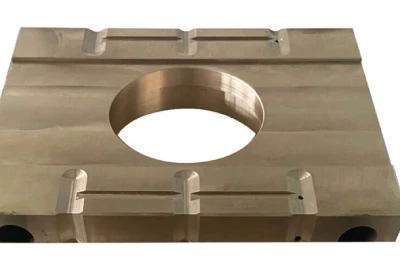
Composition and Phase Diagram Analysis of C54400 Phosphor Bronze
Mastering CNC machining of C54400 phosphor bronze necessitates starting with its chemical composition.
Copper forms the alloy’s matrix, guaranteeing excellent electrical and thermal conductivity; Tin (3.5–4.5%) significantly enhances strength, hardness, and corrosion resistance through solid solution strengthening; phosphorus (0.01–0.50%), acting as an efficient deoxidiser, purifies the melt while its hard phosphide phases directly improve wear resistance and stiffness; zinc (1.5–4.5%) aids flowability and reduces segregation; Lead (3.0–4.0% content), which does not dissolve in the copper matrix but disperses as fine, discrete particles, acts as an inherent chip breaker and lubricant during CNC machining of bronze.
Understanding the phase diagram correlating C54400 phosphor bronze composition with microstructure is fundamental to predicting and controlling CNC machining of this material.
Different Heat Treatment Conditions of C54400 Phosphor Bronze
When planning CNC machining processes for C54400 phosphor bronze, clearly defining the material’s heat treatment condition (Temper) is crucial as it directly determines the starting point for machining. Common conditions for C54400 include soft conditions (e.g., OS035) and hard conditions after cold working (e.g., H02, H04).
Taking 1mm thick plate data as an example, the yield strength of the soft condition (OS035) is approximately 131 MPa, with elongation reaching 50%, demonstrating excellent plasticity and formability. This condition exhibits low internal lattice distortion, resulting in lower cutting forces during initial CNC machining of bronze but increased susceptibility to plastic deformation and tool sticking.
Conversely, the cold-rolled hardened semi-hard condition (H02) exhibits a yield strength of approximately 276 MPa, with elongation reduced to 24%. This signifies higher initial strength and hardness, demanding greater tool wear resistance. However, the workpiece itself possesses superior rigidity, better resisting deformation during CNC machining of C54400 phosphor bronze. Consequently, improved dimensional stability may be achieved.
Hardening Mechanism and Control of C54400 Phosphor Bronze
The work hardening challenges encountered during CNC machining of bronze fundamentally represent the microscopic outcome of mechanical energy conversion. When the tool edge compresses and shears the material, it induces severe plastic deformation within the cutting zone.
For C54400, its copper-tin solid solution matrix responds to this deformation through a sharp increase in dislocation density, leading to a significant localised enhancement in material hardness and strength—a phenomenon termed strain hardening. Should subsequent machining of C54400 phosphor bronze employ excessively shallow cutting depths, the tool edge will persistently engage this hardened surface layer. This accelerates tool wear, induces fluctuating cutting forces, and ultimately compromises dimensional accuracy and surface finish.
The core principle for controlling hardening during CNC machining of C54400 phosphor bronze is ‘proactive management rather than passive acceptance’. Firstly, during rough machining, employ a sufficiently deep and stable cutting depth (ap) to ensure the cutting edge consistently operates beneath the unhardened material layer, avoiding oscillation within the hardened zone.
Secondly, combine the use of sharp positive rake angle tools with an appropriate cutting speed (Vc) to promote ribbon chip formation, thereby evacuating the majority of deformation and heat via the chips. High-pressure cooling technology (HPC) further enhances this cooling and chip evacuation effect. Through this synergistic process design, work hardening can be controlled within predictable, manageable limits – the key to achieving efficient, stable CNC machining of bronze.
Only 4 steps
online custom metal fabrication parts
Contact our experts team and experience the efficiency and economic benefits of digital metal fabrication services.
Upload Design Files
STL , STEP (.stp), IGES (.igs), (.ZIP), or PDF.
Also be a sample or an idea
Quote & Design Analysis
Instant factory quotes and DfM reports, the most reasonable solution.
Manufacturing Begins
Digital processes can initiate order tasks within 24 hours.
On-Time Delivery
Keeping delivery promises, approved by 3000+ Global Company buyers.
The Core of CNC Machining Bronze Cutting Performance Upgrades: Advances in Tool Technology
Advancements in CNC machining bronze processes fundamentally stem from breakthroughs in cutting tool technology, which directly address core machining challenges in materials like C54400 phosphor bronze. Traditional CNC machining bronze processes suffer from tool wear and unstable surface quality due to the material's abrasive nature and tendency to form built-up edges, thereby increasing production costs and extending machining cycles.
Specialised Geometric Flute Profiles for CNC Machining Bronze
Within the field of CNC machining bronze, cutting edge design demands a precise equilibrium between sharpness and toughness. Extreme sharpness (e.g., edge radius rβ < 5 μm) compromises edge stability, making it susceptible to chipping during cutting impact. Conversely, excessively large edge radii (e.g., > 40 μm) allow the ‘ploughing effect’ to dominate, significantly increasing cutting forces, temperatures, and plastic deformation. This exacerbates work hardening during bronze CNC machining and compromises surface integrity.
Precision edge grinding techniques can form an asymmetric micro-edge band within the 10–20 μm range. This design effectively converts bending and shear stresses acting on the wedge-shaped tip into compressive stresses, enhancing resistance to impact and groove wear. This lays the foundation for stable, controllable bronze CNC machining.
Efficient chip evacuation is paramount for ensuring continuous bronze CNC machining production, protecting machined surfaces, and maintaining tool life. Optimised flute designs, based on in-depth analysis of chip formation and curling mechanisms, precisely control chip flow direction, curling radius, and breakage frequency.
For CNC machining of C54400 phosphor bronze, the rake face should incorporate sufficiently large and smooth chip evacuation grooves to minimise friction and adhesion between chips and the rake face. Chip breakers or specialised surfaces effectively guide chips into compact spiral or ‘C’-shaped fragments, ensuring smooth ejection. This not only enhances operational safety but also reduces downtime caused by chip jamming, safeguarding the efficiency and consistency of CNC machining C54400 phosphor bronze.
Next-Generation Tool Coating Technologies
Coating technologies significantly enhance tool performance in bronze CNC machining. Traditional aluminium titanium nitride (AlTiN) coatings offer excellent hardness and thermal stability; Aluminium Chromium Nitride (AlCrN) coatings form a dense aluminium oxide layer that remains stable at elevated temperatures, delivering superior oxidation resistance and diffusion wear resistance. This makes them particularly suitable for CNC machining bronze at higher cutting speeds.
Nanostructured coatings incorporate multi-layered or composite structures at the nanoscale, significantly enhancing coating hardness, toughness, and thermal stability. Furthermore, under cutting temperatures, such coatings generate a soft, lubricating oxide film on their surface (e.g., coatings containing sulphur or molybdenum), dynamically reducing the coefficient of friction. For CNC machining C54400 phosphor bronze, this in-situ lubrication effect effectively mitigates built-up edge formation, reduces cutting forces, and further enhances machined surface quality.
Tool Selection for CNC Machining Bronze
Selecting suitable tools for CNC machining bronze processes constitutes a systematic endeavour requiring comprehensive consideration of substrate, geometry, and coating. For substrates, sub-micron carbides with excellent toughness to prevent chipping are recommended, featuring sharp, resilient cutting edges and efficient chip evacuation grooves.
Coating selection for bronze CNC machining tools must align with specific process objectives: coatings with smooth surfaces and lubricating properties are preferable when prioritising surface finish and reducing adhesion. Conversely, when tool life enhancement is paramount, high-hardness, thermally stable AlCrN or nano-composite coatings represent the optimal solution.
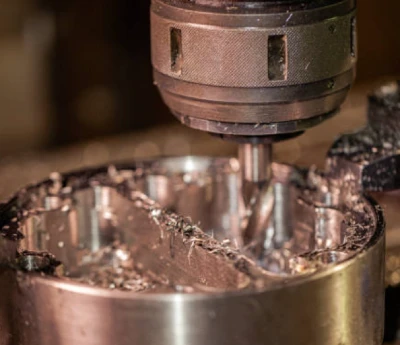
Precision Techniques for CNC Machining Bronze
To achieve efficient and stable CNC machining of C54400 phosphor bronze, optimising process parameters, cooling lubrication techniques, toolpaths, and dynamics is paramount.
Fine-Tuning Cutting Parameters for CNC Machining Bronze
For CNC machining C54400 phosphor bronze, the selection of cutting speed (Vc) directly determines work hardening levels and surface finish quality. Excessively low Vc causes tool friction within the work-hardened layer, accelerating wear; conversely, excessively high Vc risks overheating, compromising dimensional stability.
An efficient Vc window typically ranges between 60 and 100 metres per minute. Within this range, employing sharp positive rake angle tools promotes the formation of ideal ribbon-like chips, effectively dissipating most cutting heat to achieve stable, smooth CNC machined bronze surfaces.
High feed rates (fz) combined with shallow axial depths of cut (ap) constitute a specialised strategy for machining hardened phosphor bronze C54400. Employing moderately high feed rates with reduced axial depth creates thicker chips that enhance thermal conductivity, facilitating heat dissipation.
Crucially, this ensures the cutting edge consistently penetrates beneath the unhardened substrate material, preventing tool scraping on the hardened surface layer. This significantly reduces cutting force fluctuations, extends tool life, and fundamentally enhances the dimensional accuracy and consistency of CNC machined C54400 phosphor bronze components.
Cooling and Lubrication Techniques for CNC Machining Bronze
During CNC machining of bronze, effective cooling and lubrication serve not only to reduce temperatures but also to control the friction-chemical state within the cutting zone, thereby safeguarding surface integrity. The core function of cutting fluids lies in cooling and lubricating the contact interface between the tool, workpiece, and chips.
High-Pressure Coolant (HPC) technology delivers coolant with pressures exceeding 70-100 bar, precisely directing it into the separation zone between the tool tip and chips during bronze CNC machining. Its advantages include: the high-pressure jet aids in breaking chip adhesion, enabling forced chip breaking; secondly, it significantly enhances heat transfer efficiency, rapidly dissipating cutting heat; finally, the high-velocity fluid effectively flushes and removes chips, protecting machined surfaces.
For deep hole drilling or cavity machining of bronze components, HPC is an indispensable process for preventing built-up edge and ensuring hole wall quality.
Minimum Quantity Lubrication (MQL) employs only minimal quantities of lubricant (typically 50-500 millilitres per hour), atomised by compressed air and precisely directed to the bronze CNC machining zone. The resulting micron-scale oil film provides effective lubrication, substantially reducing friction coefficients and cutting forces while generating virtually no waste fluid, ensuring cleanliness and environmental sustainability.
MQL excels in high-precision bronze machining operations demanding superior surface finish without extreme heat dissipation requirements. Conversely, cryogenic cooling (e.g., liquid nitrogen) addresses exceptionally high cutting temperatures by drastically lowering localised bronze machining temperatures, thereby suppressing thermal deformation and tool diffusion wear.
Optimisation of Tool Paths and Kinematics in CNC Machining Bronze
Advanced toolpath strategies provided by modern CAM software constitute the final precision defence in ensuring the stability of CNC machining bronze processes from a kinematic perspective.
Eccentric milling employs tool feed along cycloidal curves, maintaining a constant and minimal radial depth of cut (ae). This CNC machining bronze process strategy allows the cutting edge to cool in air for most of the time, engaging the material only briefly at high feed rates. This significantly reduces cutting forces and heat generation, making it particularly suitable for CNC machining thin-walled C54400 phosphor bronze components, effectively suppressing chatter.
Dynamic high-speed cutting, conversely, maintains a constant material removal rate and smooth tool motion vector, avoiding abrupt acceleration changes. This ensures stable CNC machining bronze process performance and yields superior surface finish.
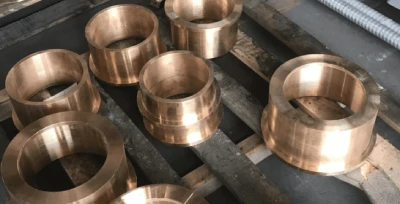
Achieving Comprehensive Cutting Performance Enhancement in CNC Machining of Bronze
Evaluating the efficacy of CNC machining bronze extends far beyond individual part processing times, encompassing a comprehensive system that includes final part quality, dimensional accuracy, and production stability.
Surface Integrity
Surface integrity in CNC-machined bronze parts transcends roughness (Ra value) as a core metric, directly determining the component’s fatigue life, wear resistance, and corrosion performance. For C54400 phosphor bronze, achieving exceptional surface integrity hinges on controlling work hardening and micro-defects.
Supro’s CNC machining of C54400 phosphor bronze employs refined techniques—such as high feed rates, shallow cutting depths, and sharp tools—to effectively suppress plastic deformation in the material’s surface layer. This yields a more favourable residual compressive stress state and a thinner work-hardened layer. Concurrently, dry turning with PVD-coated tools (e.g., AlTiN) significantly reduces cutting forces and enhances surface finish.
Dimensional Stability
Dimensional stability underpins batch production consistency and assembly precision. During bronze machining, thermal expansion from cutting heat and elastic deformation from cutting forces are the primary causes of dimensional variation.
Supro achieves superior dimensional accuracy when CNC machining C54400 phosphor bronze by optimising the spindle speed, feed rate, and depth of cut combination to specific levels (e.g., 1200 rpm, 0.10 mm/rev, 0.6 mm).
Furthermore, employing high-pressure directional cooling (HPC) during CNC machining of bronze enables precise temperature management within the cutting zone, while advanced toolpaths such as cycloidal milling maintain constant cutting forces. Collectively, these techniques stabilise dimensional tolerances for complex thin-walled components within the micrometre range – a critical factor for the batch production of precision bronze components like bearings and bushings.
Looking for a reliable custom sheet metal fabrication companies?
Talk To Supro MFG Expert Team
Contact us for competitive ex-factory prices,
and a full range of technical support services.
Conclusion
Overcoming the challenges of CNC machining C54400 phosphor bronze and unlocking its full performance potential relies not on breakthroughs in any single technology, but on the profound synergy between three pillars: material science understanding, cutting tool innovation, and process strategy optimisation.
Should you require CNC machining bronze services, please contact us immediately! Supro, a CNC machining bronze manufacturer based in China, operates a fleet of 80 3-axis, 4-axis, and 5-axis CNC machines. We offer over 120 types of metal and plastic materials, with all production processes completed in-house. We provide professional CNC machining bronze services and online technical support. Whether you require rapid prototyping or batch production of metal and plastic components, we deliver comprehensive manufacturing solutions!