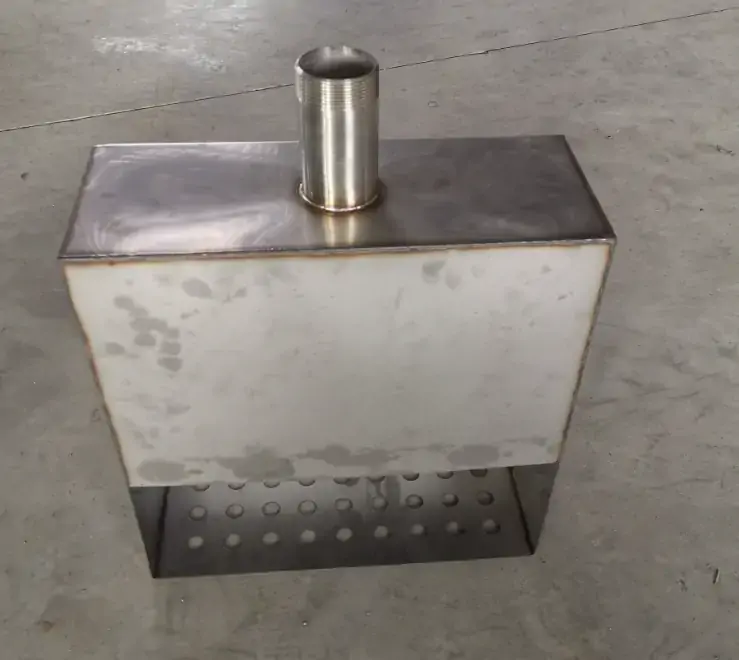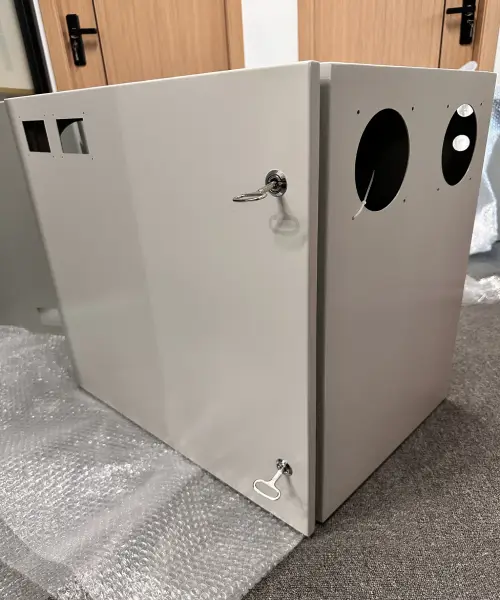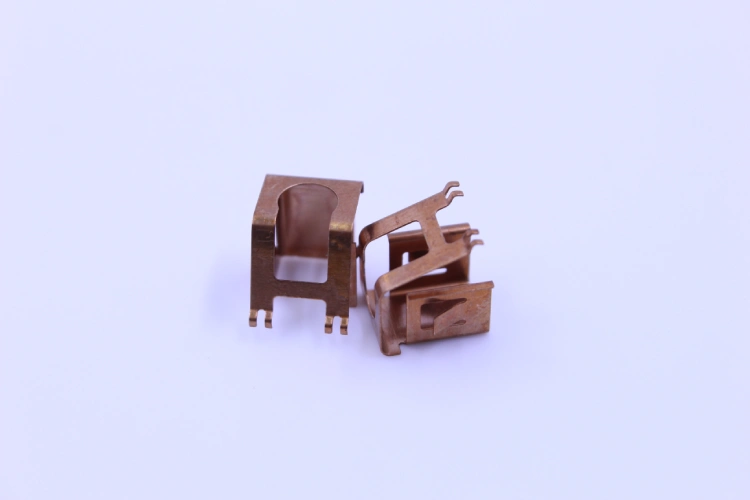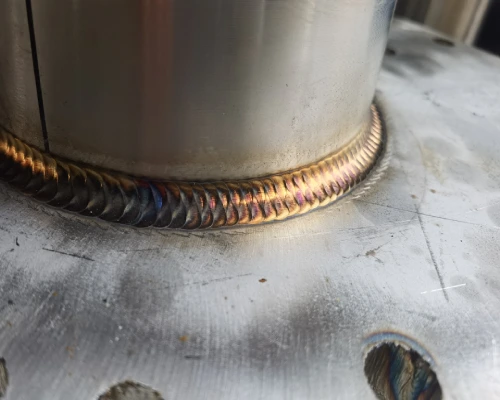
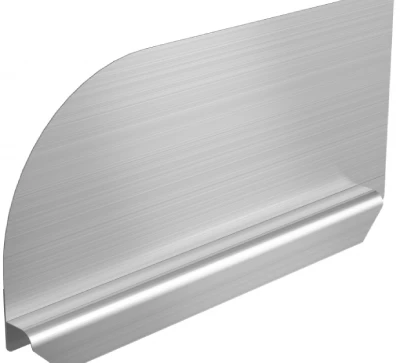
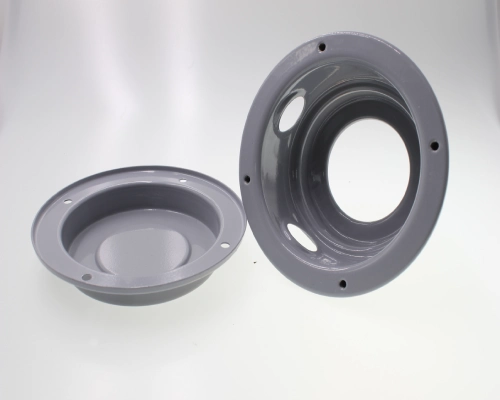
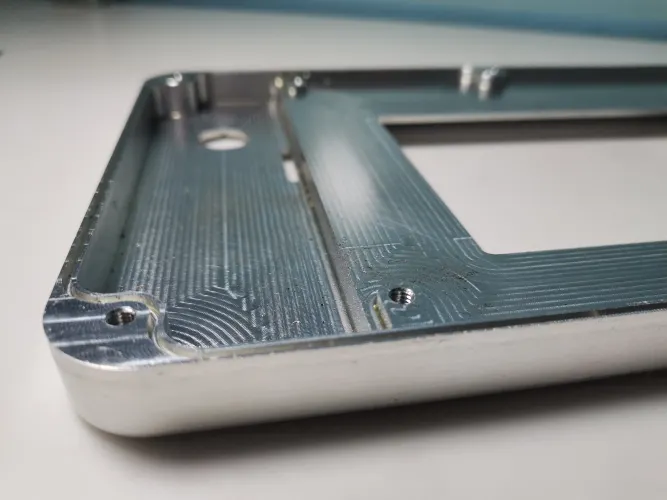

Stainless steel splash guards installed in cleanrooms or food-grade processing lines serve the primary function of protecting surrounding equipment and the environment from liquid exposure while maintaining the integrity of their own surfaces. However, in practical applications, these components often exhibit premature surface rust and pitting within weeks or months of being put into service.
Typically, three interrelated factors lead to premature corrosion of splash guards: the use of 304 stainless steel instead of molybdenum-containing 316L in environments containing chlorides or corrosive chemicals; manufacturing splash guards in areas where carbon steel is processed, where embedded iron particles cause cross-contamination and act as cathodes for electrochemical corrosion; and the absence or inadequacy of chemical passivation treatment after splash guard fabrication—a critical step that removes free iron from the surface and promotes the formation of a more uniform, corrosion-resistant oxide film.
This article analyzes each of the aforementioned failure mechanisms from an engineering perspective and proposes practical corrective measures—ranging from steel grade selection criteria and material segregation procedures to passivation operations compliant with the ASTM A967 standard—to ensure that custom splash guards achieve the corrosion resistance performance promised by their specifications.
Understanding the Corrosion Mechanism in Splash Guard Applications
Corrosion in stainless steel splash guards is a form of electrochemical corrosion: under the influence of chloride attack, the passivated chromium oxide film breaks down, triggering self-sustaining pitting corrosion, which causes the surface passivation layer to fail and shortens the service life.
The Passivation Layer of Stainless Steel Splash Guards
The passivation layer on the surface of stainless steel is a chromium-rich layer, typically 1 nm to 3 nm thick. This layer forms spontaneously when the chromium content in the alloy exceeds 10.5%. This layer is not merely a coating—it is an integral part of the metal surface and exhibits thermodynamic stability in a wide range of oxidizing environments. Its protective function stems from its self-healing ability: when subjected to mechanical damage, the exposed chromium reacts with oxygen in the environment to reform the oxide layer (provided oxygen is present).
However, the stability of the passivation film depends on environmental conditions. In acidic or chloride-containing media, the film undergoes continuous dissolution and re-passivation; this dynamic equilibrium is disrupted when the local chemical environment becomes sufficiently corrosive. For custom stainless steel splash guards installed in food processing facilities or cleanrooms, the presence of chlorine-based disinfectants or acidic process residues can shift this equilibrium toward the net degradation of the film, thereby undermining the core mechanism that confers corrosion resistance to stainless steel.
Pitting Corrosion—Localized Erosion of the Passivation Layer
Pitting corrosion is a highly localized form of corrosion that begins at discrete locations where the protective oxide layer of the passivation film is compromised. Once a pit forms—typically at inclusions, surface defects, or sites of mechanical damage—anodic dissolution of the metal within the pit creates a highly acidic microenvironment, thereby inhibiting repassivation.
Chloride ions are the most corrosive species in this process; which penetrate the passivation film through defects, weakening the oxide bonds and thereby accelerating the localized dissolution of splash guards.
The key parameter determining the pitting resistance of custom splash guards is the pitting potential—that is, the electrochemical threshold at which the passivation film breaks down. For 316L stainless steel, the pitting potential decreases linearly with increasing chloride ion concentration, following a log[Cl⁻] relationship. This explains why molybdenum-containing grades such as 316L (with a pitting resistance equivalent number (PREN) of 22.6 to 27.9) perform far better in chloride-containing environments than Type 304 (with a PREN of 18.0 to 20.0).
For custom splash guards used in high-chloride environments, this difference means the distinction between a service life of several years and premature failure.
Main Causes of Premature Corrosion in Splash Guards
Premature corrosion of custom splash guards is rarely caused by a single factor; it typically stems from three main causes: improper selection of material grade, iron contaminants resulting from shared molds, and insufficient passivation treatment after manufacturing.
The mechanisms underlying each failure mode differ, but in the actual manufacturing of splash guards, these factors often compound. To develop effective preventive strategies covering the entire manufacturing process, it is essential to understand these mechanisms individually.
Inappropriate Selection of Splash Guard Material Grade
Using Type 304 stainless steel splash guards in environments with high chloride content or strong acids is the most fundamental and severe error in material specification.
Type 304 stainless steel has a pitting resistance equivalent number (PREN) of approximately 18 to 20 and lacks molybdenum in its composition; molybdenum significantly enhances the material’s resistance to chloride-induced pitting corrosion.
In contrast, 316L contains 2% to 3% molybdenum, with a PREN value of 23 to 25; in chloride-containing media, its corrosion resistance is approximately 1.5 to 1.8 times that of 304. In acidic chloride environments, 304 exhibits the highest corrosion rate and the most severe pitting corrosion, whereas 316L maintains excellent performance under the same conditions.
This difference is particularly significant in applications such as food processing and cleanrooms, where chlorine-based disinfectants are routinely used.
Cross-Contamination During Carbon Steel Processing
Cross-contamination occurs when custom stainless steel splash guards are manufactured in areas where carbon steel is also being processed, and when shared tools, work surfaces, or grinding wheels are used.
During cutting, grinding, or forming operations, embedded iron particles from carbon steel are mechanically transferred to the stainless steel surface. These particles form an electrochemical couple with the stainless steel substrate—with iron acting as the anode and stainless steel as the cathode—thereby creating a localized electrochemical cell.
As the embedded carbon steel particles rust, iron oxide is produced, which subsequently converts to ferric chloride in the presence of chlorides, thereby eroding the passivation layer and triggering pitting corrosion. Cross-contamination is the single most common cause of manufacturing-related corrosion failure.
For custom splash guards used in cleanroom or food-grade environments, this type of contamination is particularly problematic because surface defects compromise both corrosion resistance and hygienic performance.
Inadequate Post-Fabrication Surface Treatment of Splash Guards
Even when the correct steel grade is selected and cross-contamination is avoided, custom splash guards remain susceptible to premature corrosion if post-fabrication surface treatment is inadequate or omitted entirely.
Machining, forming, and handling operations inevitably leave free iron, shop dust, and organic contaminants on the stainless steel surface. These contaminants physically interfere with the natural formation of the passivation layer and serve as starting points for localized corrosion. Therefore, chemical passivation in accordance with the ASTM A967 standard is essential to chemically remove these surface contaminants and accelerate the formation of a uniform, chromium-rich passivation layer.
The passivation process is not a coating treatment but rather a chemical surface modification designed to restore the stainless steel’s inherent corrosion resistance. If this step is omitted, the surface performance of custom stainless steel splash guards will be compromised upon use, and rust will be a matter of time, not a matter of if.
The ASTM A967 standard provides several alternative test methods—including water immersion, high humidity, and copper sulfate tests—to verify the effectiveness of the surface treatment on stainless steel splash guards.
Only 4 steps
online custom metal fabrication parts
Contact our experts team and experience the efficiency and economic benefits of digital metal fabrication services.
Upload Design Files
STL , STEP (.stp), IGES (.igs), (.ZIP), or PDF.
Also be a sample or an idea
Quote & Design Analysis
Instant factory quotes and DfM reports, the most reasonable solution.
Manufacturing Begins
Digital processes can initiate order tasks within 24 hours.
On-Time Delivery
Keeping delivery promises, approved by 3000+ Global Company buyers.
Engineering Solutions to Prevent Premature Corrosion of Splash Guards
To effectively address the issue of premature corrosion in custom splash guards, three coordinated engineering measures must be implemented: selecting the appropriate steel grade for chloride-exposed environments, isolating the splash guards from carbon steel molds, and performing a validated passivation treatment in accordance with the ASTM A967 standard.
These measures address the chain of failure at its source—material specifications eliminate inherent susceptibility to corrosion, process controls prevent contamination during the splash guard manufacturing process, and chemical passivation restores a surface condition that cannot be guaranteed by the alloy steel grade alone. The comprehensive implementation of these measures constitutes a holistic corrosion prevention strategy that ensures custom splash guards achieve their specified service life.
Selection of Splash Guard Materials Based on the Operating Environment
The selection of stainless steel grades for custom stainless steel splash guards must be determined based on the specific chemical composition of the operating environment—not on availability, cost, or historical precedent.
The formula for calculating the Pitting Resistance Equivalent Number (PREN) is: %Cr + 3.3(%Mo) + 16(%N), and this value provides a quantitative basis for comparison. The PREN value for Type 304 ranges from 18.0 to 20.0, while that for Type 316L ranges from 22.6 to 27.9—this difference stems from the addition of 2% to 3% molybdenum, which significantly enhances the ability of 316L stainless steel splash guards to resist chloride-induced pitting corrosion.
In applications involving chlorine-based disinfectants, acidic process residues, or chloride-laden coastal atmospheres, 316L is the minimum acceptable grade. For splash guards used in food processing or cleanroom environments, this relationship is not merely theoretical—it determines whether the component will last for years or fail within months.
Material Segregation and Dedicated Tooling
Cross-contamination occurs when stainless steel splash guards are manufactured using tools, work surfaces, or abrasive media previously used to process carbon steel. Embedded carbon steel particles form a galvanic couple with the stainless steel substrate; when these particles rust, they produce iron oxide, which converts to ferric chloride in the presence of chlorides, thereby severely corroding the stainless steel surface and triggering pitting corrosion.
Preventive strategies require physical isolation: the machining areas for carbon steel and stainless steel must be completely separated, and dedicated tools—including cutting blades, grinding wheels, forming dies, and workbenches—must be provided for each material. Work surfaces should be covered with cardboard or plastic sheeting and replaced regularly. Crane hooks, forklift tines, and warehouse shelving must be protected to prevent the transfer of iron particles during handling.
For custom stainless steel splash guards used in cleanrooms or food-grade applications, this isolation is not merely an administrative preference—it is a fundamental process control requirement.
Passivation in Compliance with ASTM A967
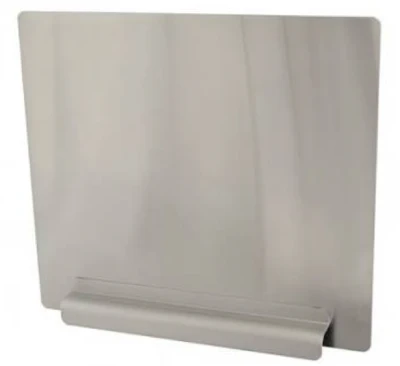
Chemical passivation is the final and critical step in ensuring the corrosion resistance of splash guards. Passivation involves chemically treating stainless steel with nitric acid or citric acid solutions—or performing electrochemical treatment—to remove impurity iron and other foreign substances, thereby forming a higher-quality passivated metal oxide film.
For austenitic stainless steels such as 304 and 316L, ASTM A967 recommends Nitric Acid Method 2 or Nitric Acid Method 3. Citric acid passivation has been widely adopted because it is less hazardous and achieves equivalent results. After immersion, components must be thoroughly rinsed with water having a total solids content of less than 200 ppm.
Validation tests—including water immersion, high humidity, salt spray, copper sulfate, and potassium permanganate-nitric acid tests—confirm that free iron has been removed and that the surface treatment is effective.
Supro MFG’s Quality Assurance Procedures for Splash Guards
At Supro MFG, corrosion protection measures for custom splash guards are integrated into every stage of production—not just as a final inspection step. Our process begins with material verification: Each coil of 304 or 316L steel is verified against the steel mill’s test reports before being released. Machining takes place in a dedicated stainless steel machining unit, which is physically isolated from carbon steel processing operations and equipped with specialized tools—cutting blades, forming dies, and grinding wheels—and features work surfaces covered with replaceable protective film.
Upon completion of machining, each custom stainless steel splash guard undergoes chemical passivation in accordance with the ASTM A967 standard, which specifies the nitric acid method 2 for austenitic-grade materials. Validation tests conducted in accordance with this standard confirm that free iron has been completely removed.
This systematic approach—from material validation and process isolation to passivation—ensures that every splash guard leaving our facility meets the surface integrity requirements for cleanroom and food-grade applications.
Conclusion
Premature corrosion observed in stainless steel splash guards is a preventable consequence resulting from improper material selection, process control, or surface treatment. Relevant engineering principles include selecting the appropriate steel grade based on chloride exposure, physically isolating the material from carbon steel during processing, and performing passivation in accordance with the ASTM A967 standard to remove free iron and restore the passivation oxide film.
These are the fundamental process requirements that any splash guard used in cleanroom or food-grade applications must meet. By consistently adhering to these specifications, the passivation film will perform as designed, and the splash guard will achieve the service life promised in the specifications.
Supro is a professional custom splash guard manufacturer. Leveraging advanced equipment, extensive manufacturing experience, and a dedicated engineering team, we provide perfect custom splash guard solutions to over 3,000 companies worldwide and offer genuine manufacturer quotes.
For technical specifications, customized project solutions, or business collaboration opportunities, contact Supro immediately. Our professional engineering team is always ready to provide you with a tailored application solution.